

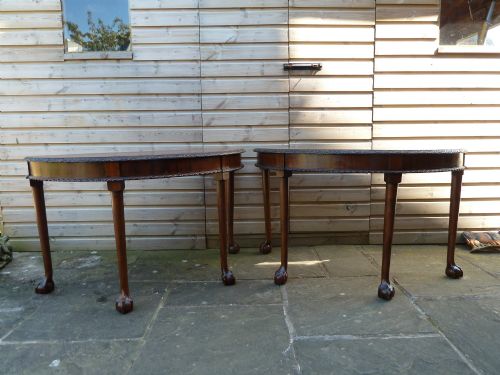


Carved Demilune Table
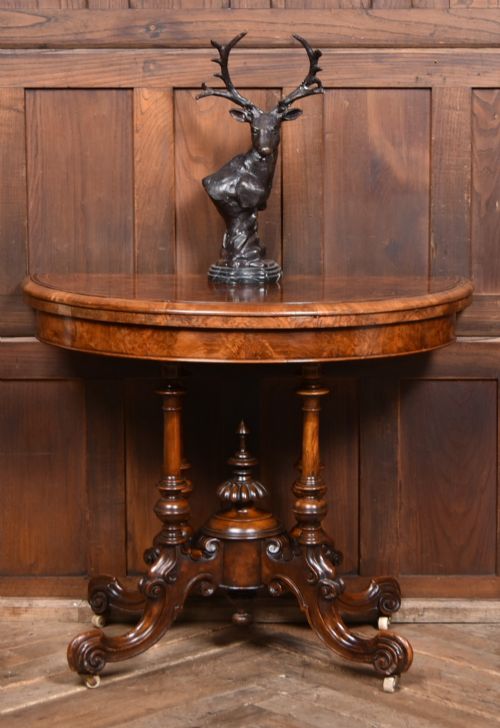
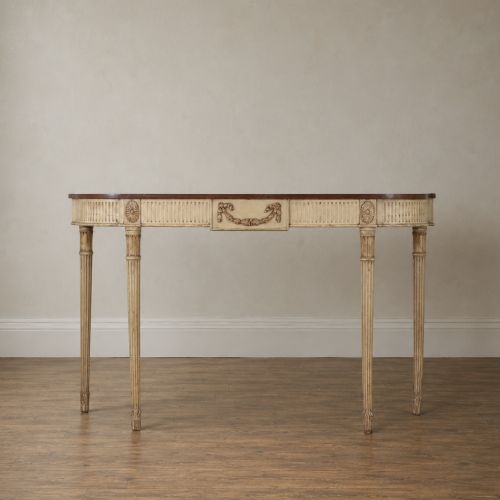
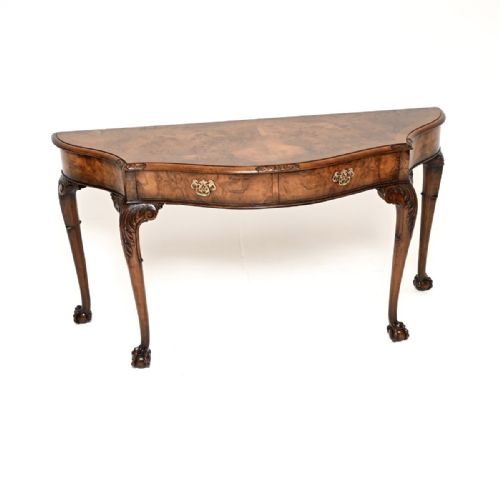
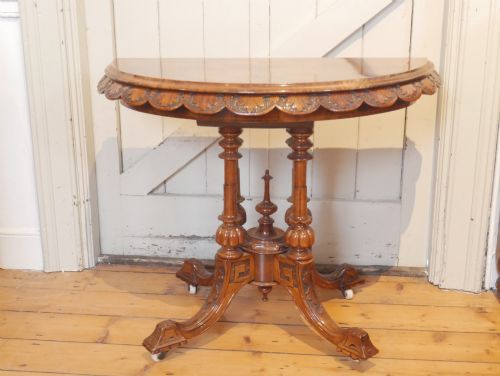
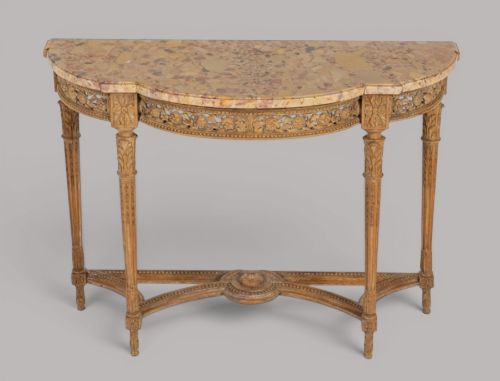
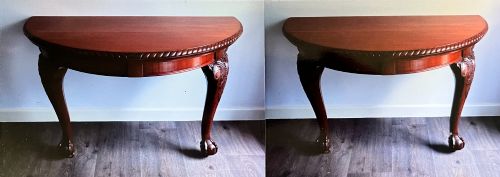
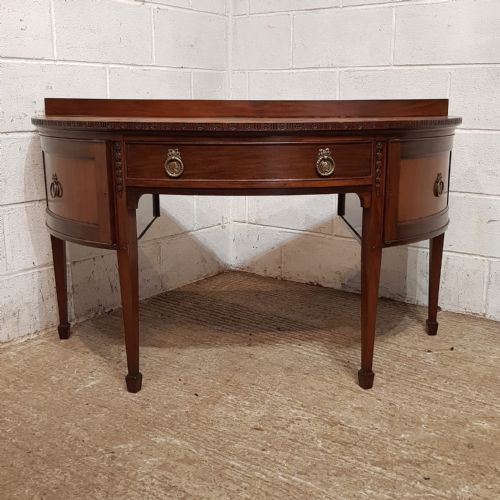
A carved demilune table offers a semicircular silhouette designed to sit flush against a wall while adding classical proportion to a hallway or drawing room.
Carved Demilune Table
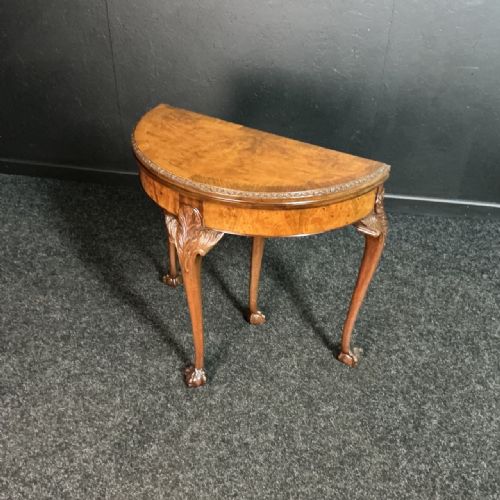
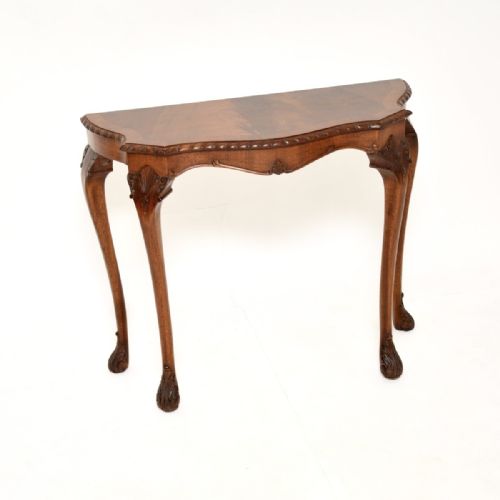
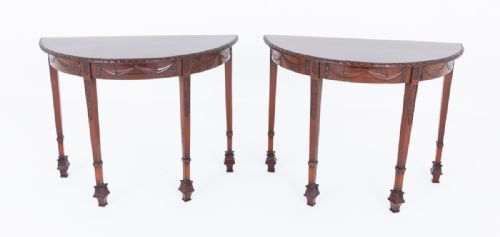
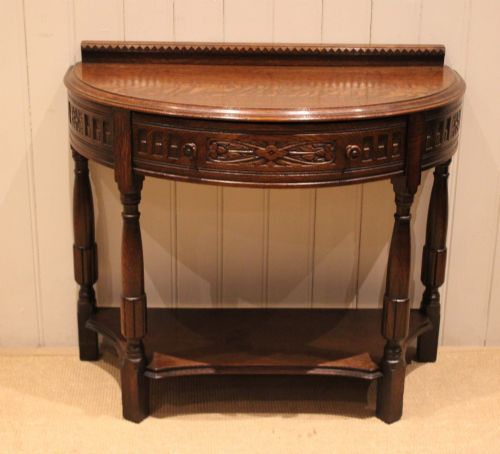
A carved demilune table functions primarily as a console, card, or games table, utilising its flat rear edge to stand neatly against vertical surfaces. Buyers searching this phrase most frequently encounter Victorian, Edwardian, and earlier revival pieces shaped from mahogany or walnut.
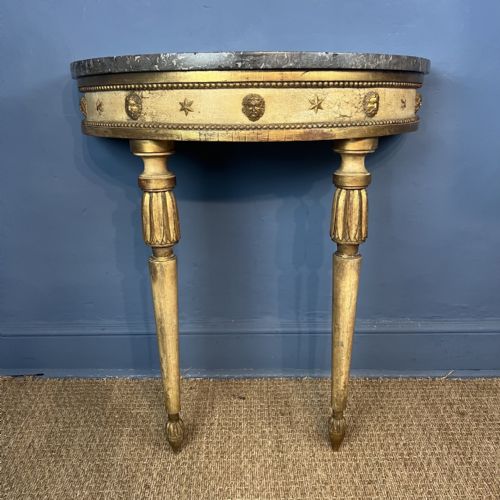
The form spans several centuries of design, encompassing Georgian tea tables, Regency D-shaped side tables, and elaborate continental console tables topped with marble. Many examples adapt easily to modern interiors as compact entrance or display surfaces.
How they were made
Cabinetmakers constructed these tables using native and exotic timbers such as solid mahogany, walnut, and burr walnut veneers, frequently mounting heavy marble slabs onto the upper surface. Giltwood, gesso, and painted finishes appear on continental and revival pieces to create ornate decorative schemes.
Joinery techniques combined traditional frame-and-panel construction with turning, hand-carving, and parcel-gilding. Surfaces often featured figured grain patterns highlighted through French polishing or intricate hand-chiselled mouldings.
Listings span the eighteenth, nineteenth, and twentieth centuries, incorporating Victorian, Regency, and Queen Anne revival styles.
What varies in quality
The grade of timber selection and the crispness of the hand-carved detail dictate the distinction between standard production and superior craftsmanship. Fine walnut and mahogany examples display closely matched grain veneers and deep, well-defined moulding profiles.
Structural integrity relies on the retention of original tabletops, supportive friezes, and unaltered leg fixings. Tables retaining their original marble tops, gilding, or folding mechanisms command greater interest among collectors.
The Carved Demilune Table Glossary
- Demilune
- A half-moon shape used to describe tables with a flat back and a curved front edge. This configuration allows furniture to occupy minimal floor space in narrow corridors.
- Console table
- A wall-mounted or freestanding table designed to stand against a vertical surface. They often feature decorative legs at the front and simpler brackets at the rear.
- Giltwood
- Timber that has been coated with a thin layer of gold leaf or gold paint. This technique accentuates carved ornamentation on formal console and side tables.
- Burr walnut
- Timber taken from the wart-like growths on walnut trees, yielding highly ornamental swirling grain patterns. Cabinetmakers applied it as veneer to the top surfaces of high-status tables.
- Pie crust
- A decorative raised moulding carved along the outer edge of a tabletop in a series of undulations. This detail frequently appears on Regency and Georgian occasional tables.
Carved Demilune Table: Frequently Asked Questions
Where should I place a demilune table?
These tables suit narrow entrance halls, landings, or living rooms where floor space is limited. Their flat rear edge allows them to sit flush against the wall.
They also function effectively beneath mirrors or artwork as display surfaces for lamps and decorative objects.
How do I identify the wood type?
Examine the grain pattern and colour under natural light to distinguish between mahogany, walnut, and exotic veneers. Mahogany tends to display a reddish-brown tone with straight grain, whilst walnut shows darker figuring.
Burr walnut exhibits intricate, swirling circular patterns created by abnormal tree growths.
Are these tables sturdy enough for daily use?
Most solid wood and marble-topped console tables provide stable surfaces for everyday objects. However, folding card and games tables require careful handling when opening and closing the hinged top.
Checking the joints and leg stability helps ensure the table can support normal weight.
How do I care for antique wood surfaces?
Maintain polished wood by dusting regularly with a soft, dry cloth and avoiding exposure to direct sunlight or excessive moisture. Periodic application of quality beeswax preserves the finish and nourishes the timber.
Keep marble tops clean using mild soapy water and avoid acidic cleaners.