





Painted Entryway Table
A painted entryway table welcomes guests with enduring style, offering surface space and architectural presence in a hallway.
Painted Entryway Table
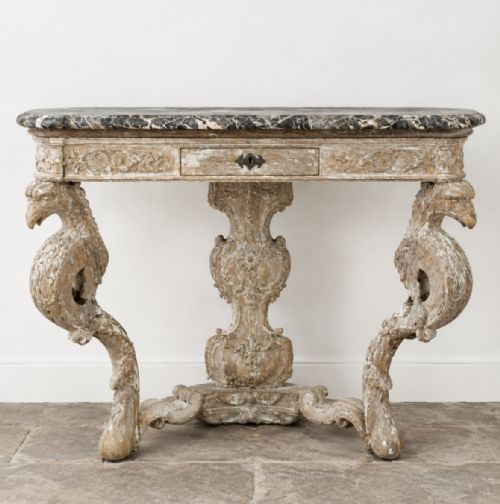
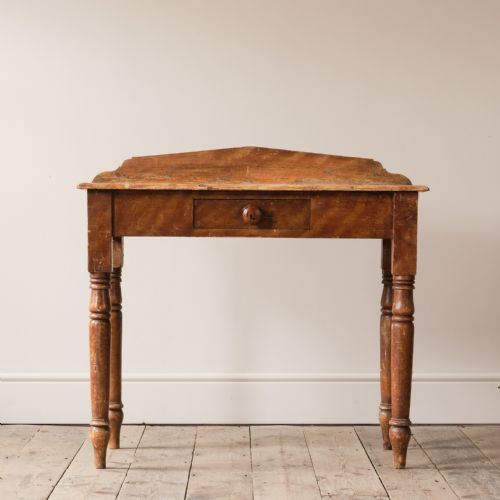
A painted entryway table serves as a functional anchor in a hall, typically taking the form of a console or side table designed to stand flat against a wall. When searching for a painted entryway table, buyers encounter pieces spanning the 18th century through the 1930s, reflecting diverse origins from English country houses to French chateaux.
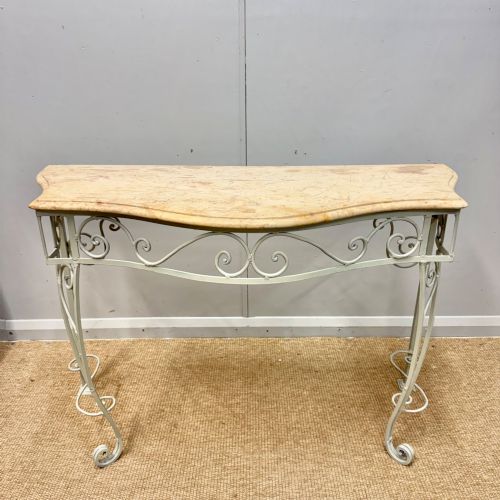
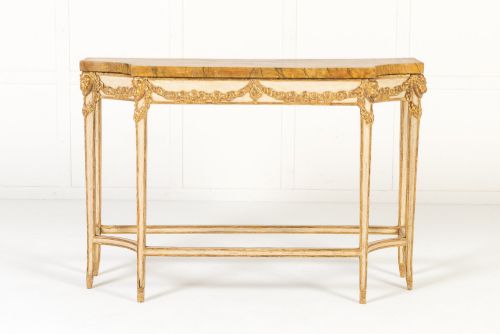
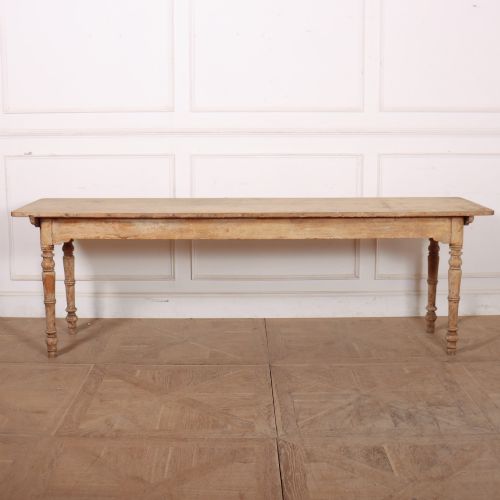
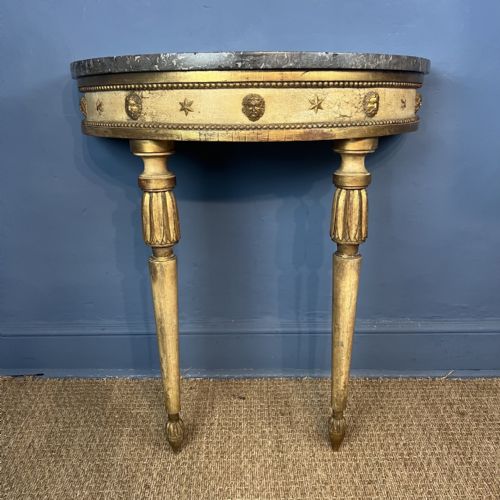
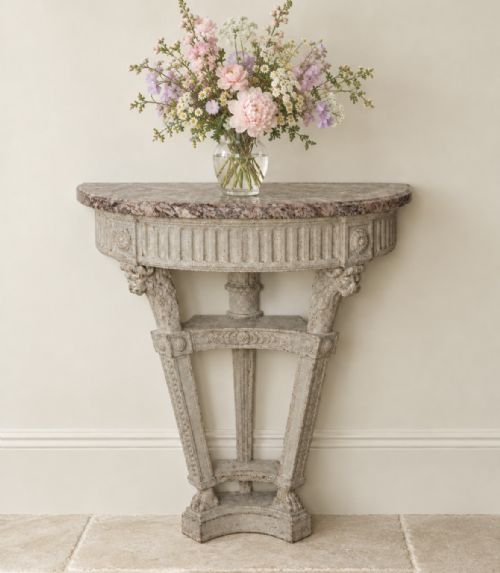
The selections on this page appear primarily as console and side tables, manifesting in forms such as demi-lune, bowfront, and serpentine shapes. Materials range from humble pine to luxurious marble tops supported by painted wood, gesso, and giltwood.
Stylistic influences vary widely, encompassing French Rococo, Neoclassical, Scandinavian country, and Georgian designs. These tables often feature original paint surfaces, displaying the patination accumulated over centuries of domestic use.
Materials and construction
Carpenters constructed these tables using timbers such as pine, oak, and satinwood, often shaping the wood into half-moon or rectangular formats. Structural support frequently relied on carved wooden frames, sometimes enhanced with wrought iron or brass elements.
Surfaces received decorative treatments involving layers of paint, gesso, and gold leaf or giltwood highlights. Many examples display original paint finishes, applied over organic priming layers that react to age and environment.
Tops frequently incorporate heavy slabs of marble, fitted directly onto the wooden or iron framework to provide a durable and cool surface. Carving by hand added intricate details to the aprons and legs of Georgian and French regional pieces.
Listings feature pieces spanning from the 18th century through the 1930s, incorporating materials such as marble, pine, gesso, and gold leaf.
Assessing quality and character
The integrity of the painted surface dictates much of the visual appeal, distinguishing tables with original, undisturbed historic paint from those subjected to later overpainting. Subtle craquelure and worn edges indicate genuine age and handling.
The harmonization of materials sets superior pieces apart, particularly where heavy marble tops integrate seamlessly with finely carved wooden or gilt bases. Structural joinery beneath the apron ensures stability, separating robust cabinetmaking from lesser assemblies.
The Painted Entryway Table Glossary
- Console table
- A table designed to be fixed against a wall, frequently supported by ornamental brackets or legs at the front only. These pieces provide a narrow surface suited for narrow hallways.
- Demi-lune
- A half-moon shape used for tabletops and commodes. This format allows the furniture to sit snugly against a wall while projecting less into the floor space of an entryway.
- Gesso
- A plaster-like mixture applied to wood surfaces as a base for painting or gilding. It allows craftsmen to create sharp, relief-molded decorative details.
- Giltwood
- Wood that has been coated with gold leaf or powder. It provides a reflective, ornate finish often associated with Neoclassical and Rococo aesthetics.
- Serpentine front
- A furniture front characterised by a concave central section flanked by two convex ends. This flowing line requires advanced woodworking skill.
Painted Entryway Table: Frequently Asked Questions
Where should I place a console table?
A console table fits naturally in a hallway, entryway, or narrow passage against a flat wall. Its shallow depth ensures it leaves walking space unobstructed while holding lamps or decorative objects.
Positioning one beneath a mirror creates a classic focal point upon entering a home. The surface provides a convenient drop zone for keys and correspondence.
How do I care for original paint?
Preserving historic painted surfaces requires gentle dusting with a soft, dry cloth. Avoid chemical cleaning agents and excessive moisture that might lift fragile pigment.
Keep the timber away from direct heat sources and strong sunlight to prevent warping and fading. Wax polishes should only be applied if the specific finish is known to benefit from them.
What is a marble top table used for?
Marble top tables offer a robust, cool surface that resists stains from water or flower vases. Historically, they served in halls for placing hats, gloves, and visiting cards.
In modern interiors, the stone provides a durable base for displaying heavy ceramics or bronze figures. The weight of the stone also helps anchor the table firmly against the wall.
How do I identify a Georgian style table?
Georgian furniture often displays classical proportions, symmetrical layouts, and refined carving inspired by Palladian architecture. Woods like satinwood and mahogany frequently appear in these pieces.
Details such as tapered legs, fluting, and subtle mouldings distinguish the aesthetic from ornate continental styles. The focus remains on structural balance and restrained ornamentation.