

Antique Cream Hall Table
An antique cream hall table brings immediate architectural grace to an entrance, offering a considered surface for daily arrivals.
Antique Cream Hall Table
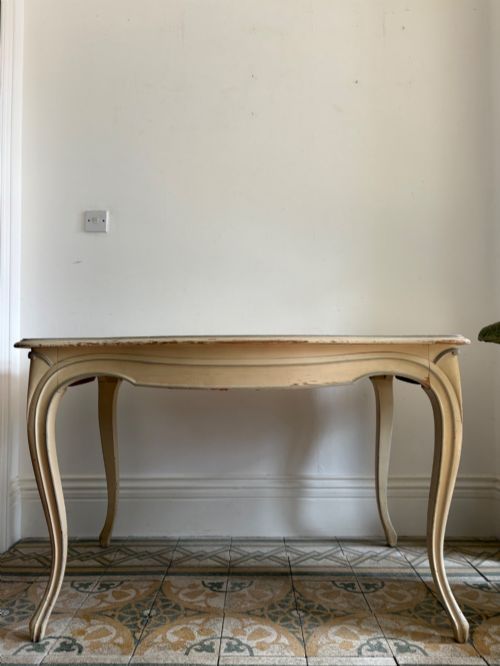
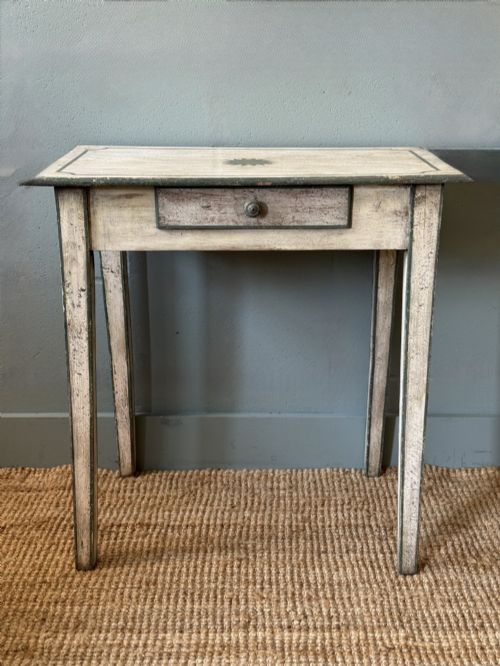
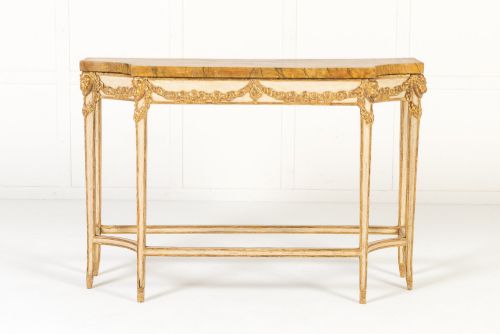
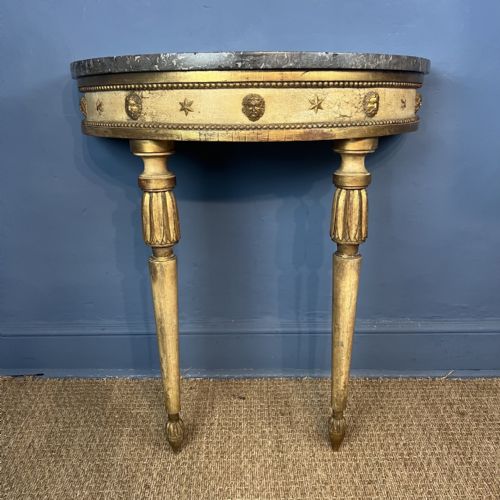
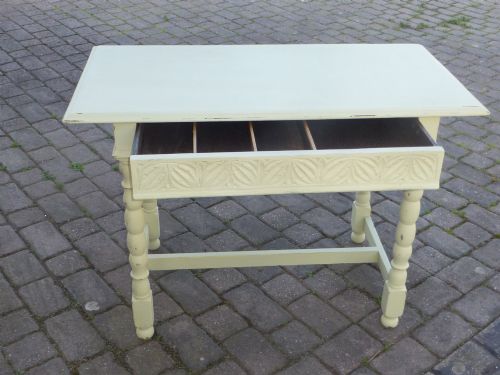
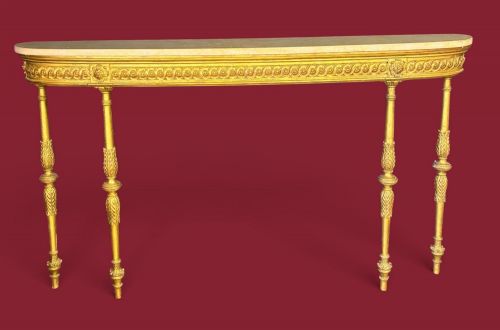
An antique cream hall table serves as a functional anchor in narrow spaces, drawing primarily on console and side table forms. These pieces often originate from French, Italian, and Swedish workshops, spanning the eighteenth, nineteenth, and early twentieth centuries.
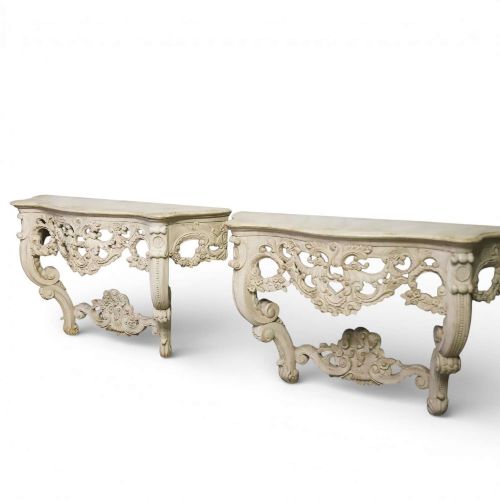
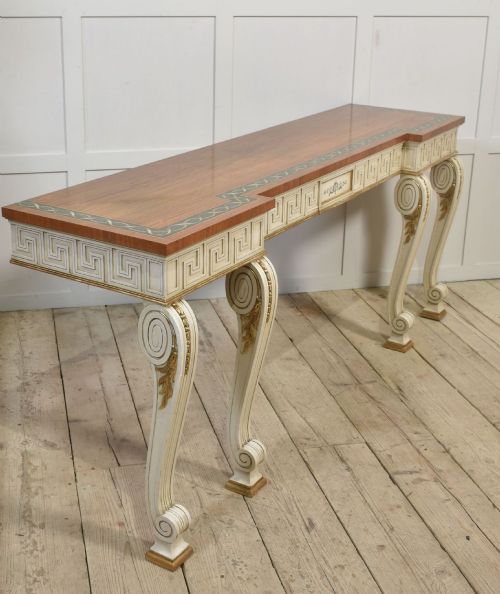
Makers utilised painted finishes in cream, antique white, and parcel gilt to highlight hand-carved details and cabriole legs. Such tables balance practical proportions with decorative presence in a hallway.
Materials and construction
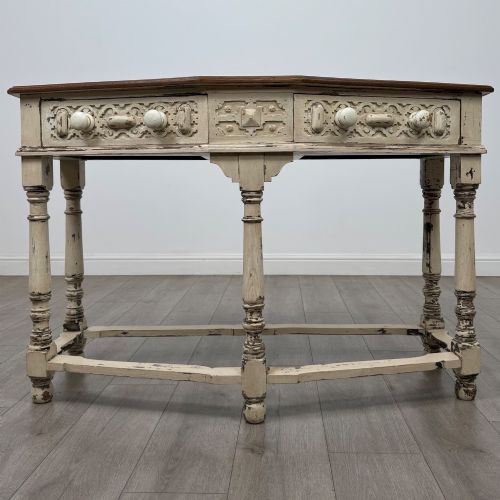
Carpenters constructed the structural frames of these tables using solid timber such as oak, fruitwood, and pine. Artisans applied layers of paint, gesso, and gold leaf to achieve aged cream and parcel gilt surfaces.
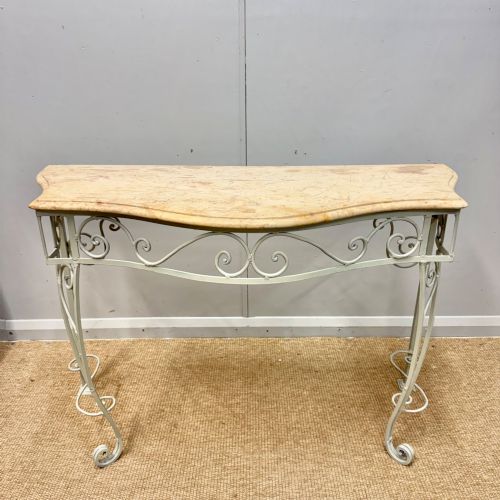
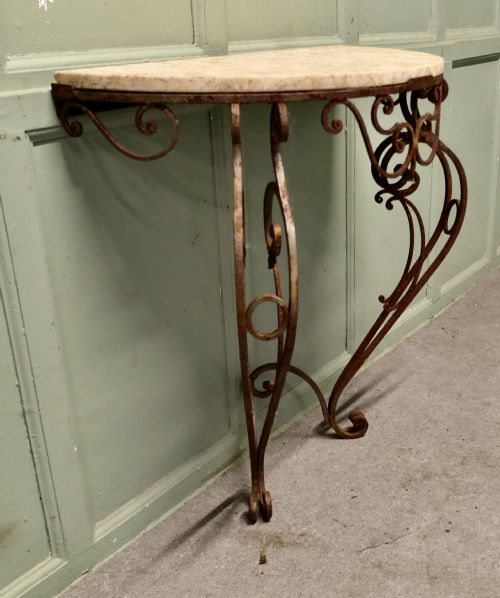
Many heavy tables incorporate thick marble slabs fitted directly onto carved wooden aprons or wrought iron bases. Hand-carved decorative motifs emerge from the wood directly, complemented by turned legs and wrought iron elements.
Several tables arrive with hidden depths, including an unexpected tilt-top dining conversion and an office desk masquerading as an armchair.
Assessing quality and craftsmanship
Quality rests in the depth of the hand-carved ornamentation and the crisp execution of Neoclassical or Rococo details. Tables featuring integrated marble tops or original hand-decorated painted surfaces represent higher levels of craftsmanship.
The integrity of the timber frame and the subtlety of the painted finish determine the visual weight of the piece. Subtle parcel gilding applied over cream paint requires considerable skill, separating provincial workshop output from finer urban commissions.
The Antique Cream Hall Table Glossary
- Console table
- A table designed to stand against a wall, frequently supported by wall brackets or two front legs. These items form a primary category within hall furniture.
- Demilune
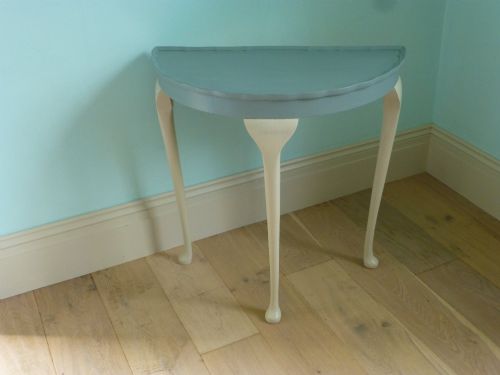
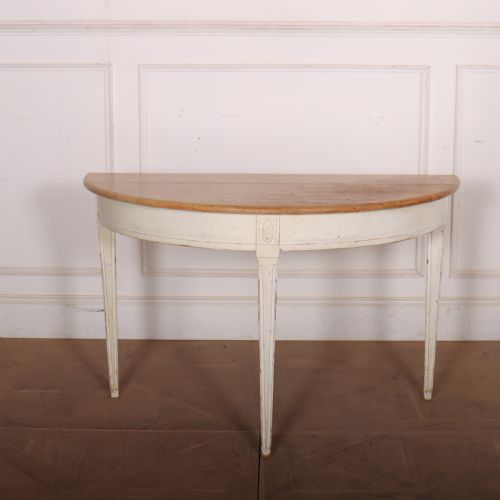
- A half-moon shape characteristic of side and console tables built to fit flush against narrow hallways. This curved silhouette softens linear traffic paths.
- Parcel gilt
- A decorative technique where small areas of a painted surface receive a thin layer of gold leaf. This method highlights carved mouldings and edges.
- Gesso
- A plaster-like mixture applied to wood surfaces as a base for painting or gilding. It allows artisans to carve fine details before finishing.
- Cabriole leg
- A furniture leg that curves outward in a convex arc and tapers inward in a concave arc, ending in a pad or foot. The design mimics animal limbs.
Antique Cream Hall Table: Frequently Asked Questions
Where should I place a cream hall table?
These tables suit narrow entranceways, corridors, and landings where floor space remains at a premium. Their shallow profiles allow them to sit flush against walls without obstructing movement.
Pairing a console with a matching mirror creates a functional focal point near an entryway. The surface holds everyday items like keys and correspondence while establishing the interior style.
How do I clean a painted wooden table?
Dust the surface regularly with a soft, dry cloth to prevent dirt accumulation on the painted finish. Avoid harsh chemical cleaners that can strip historic paint layers.
For marble inserts, use a damp cloth with mild soap and dry immediately. Protecting the wood from excess moisture preserves the integrity of the antique paint.
What periods do these tables come from?
The listings span from the seventeenth century through the Edwardian era and into the 1930s. Pieces from the eighteenth and nineteenth centuries frequently showcase regional European styles.
Later items from the early twentieth century often adopt classic French and Italian motifs. Each era brings distinct proportions and decorative treatments to the form.