



Dark Marble Console Table
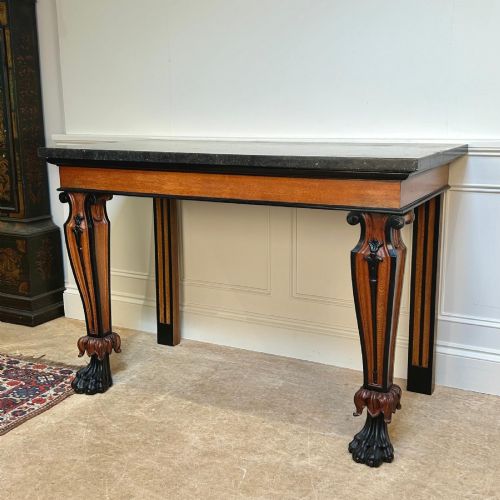
A dark marble console table brings weight and steady line to a hallway, resting firm against a wall.
Dark Marble Console Table
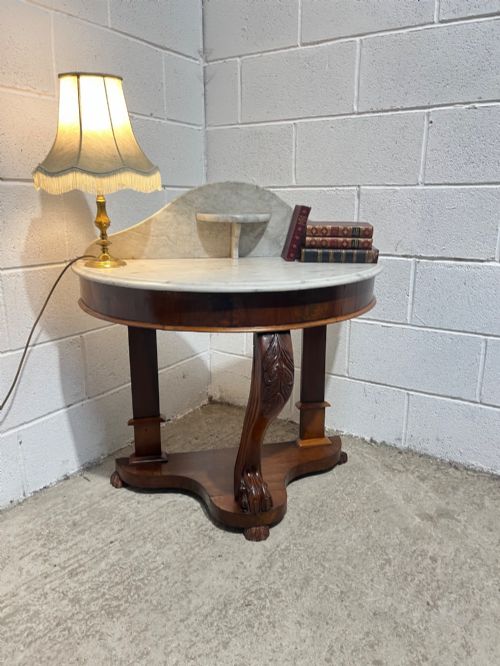
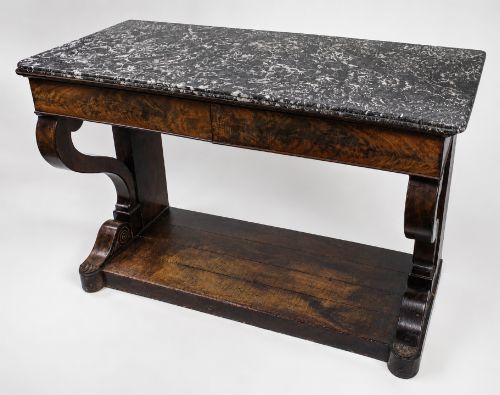
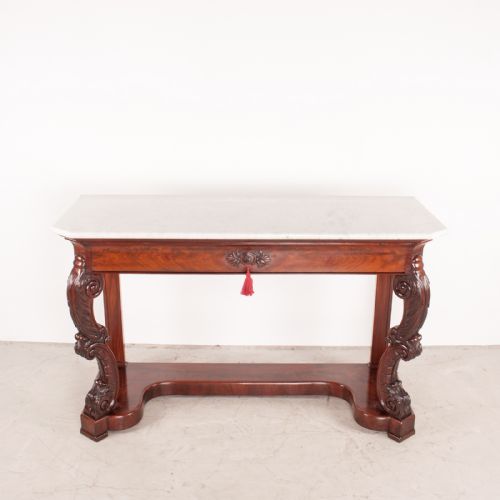
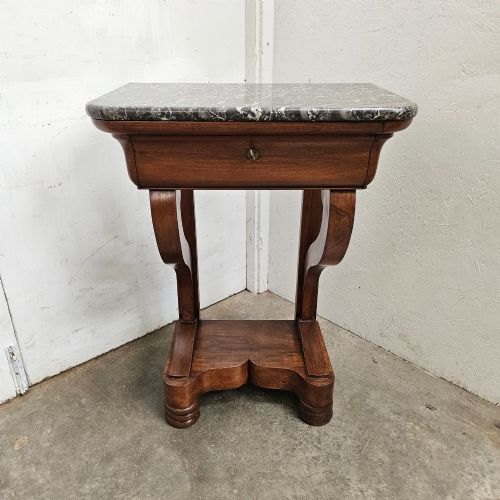
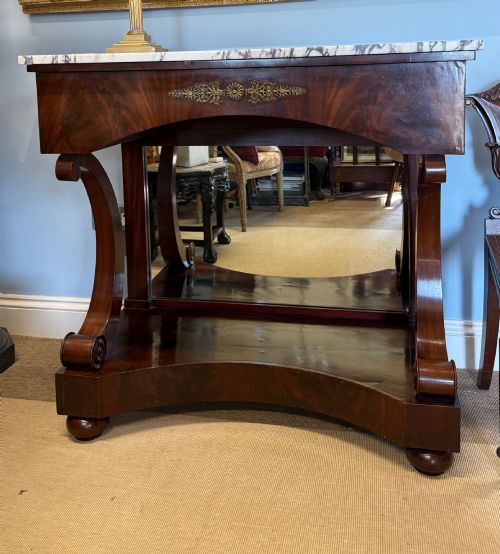
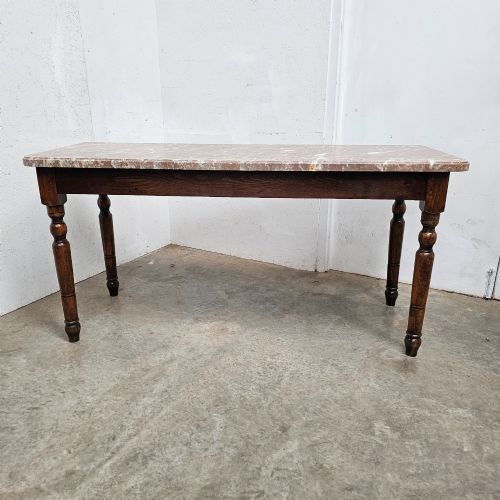
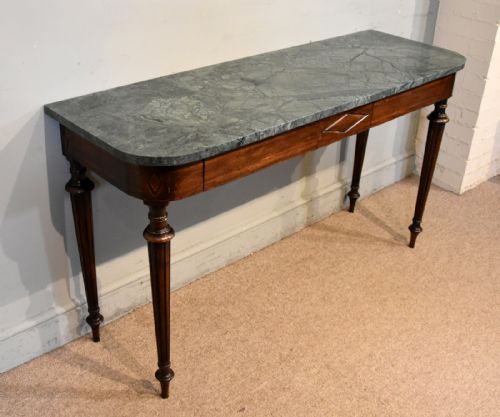
A dark marble console table is a heavy-topped piece designed to stand against a wall, frequently paired with a mirror or placed in an entrance hall. These tables combine a robust stone surface with timber framing, serving both decorative and practical roles in period interiors.
The versions met on this page span the 18th, 19th, and Victorian periods, with French, Italian, and English origins appearing regularly. Alongside standard console tables, the selection includes related forms such as pier tables, side tables, and chiffoniers fitted with stone tops.
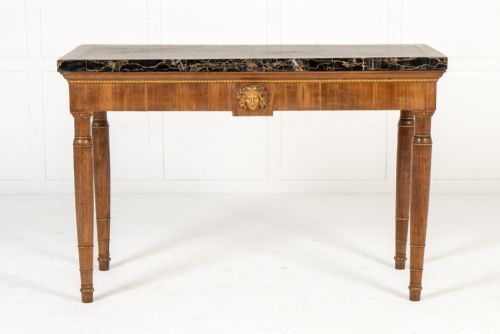
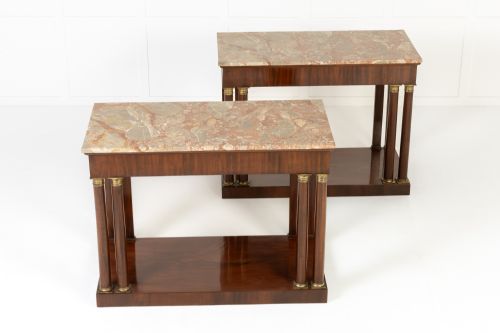
Timbers such as mahogany, walnut, and rosewood form the structural bases, supporting slabs of dark or fossil marble. Buyers select these items for their architectural presence and the contrast between polished stone and figured wood grain.
How they were made
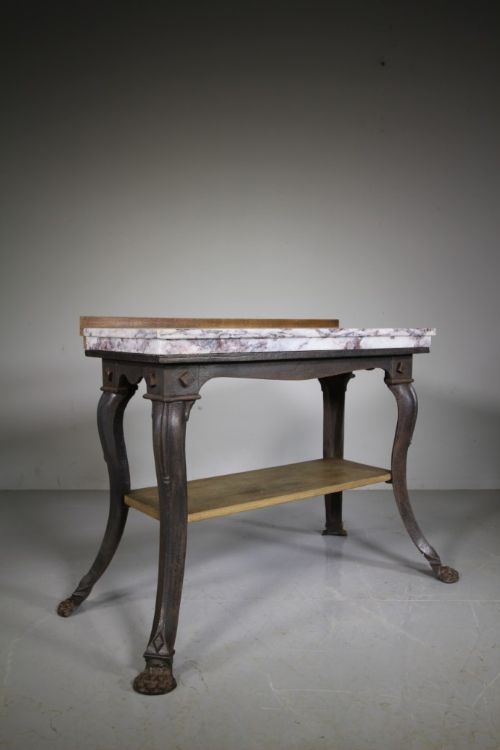
Cabinetmakers constructed the frames using dense hardwoods like mahogany, walnut, and rosewood, often employing carved details or classical veneers. Iron and oak also appear in specific regional examples.
The heavy stone slabs were shaped and polished by hand to fit the timber base precisely. Joinery techniques varied from pegged mortise and tenon joints in earlier pieces to secure frame fixings in later Victorian examples.
Several tables take the form of seated hounds or carved eagles, ensuring the furniture watches the room as intently as the guests.
What varies in quality
Quality rests in the depth of the timber carving and the selection of the marble slab. Finer examples display crisp hand-carved ornamentation, such as lion masks or foliage, rather than cast composition details.
The integration between the stone top and the wooden base indicates the standard of manufacture. Well-made tables distribute the considerable weight of the marble evenly through sound structural framing and solid timber legs.
Jean Joseph Chapuis·Gillows
The Dark Marble Console Table Glossary
- Console table
- A table designed to stand against a wall, frequently secured to it for stability. They often feature decorative legs at the front and simpler supports at the back.
- Pier table
- A table specifically built to sit against the wall space between two windows, usually positioned beneath a pier glass mirror. These share many forms with standard console tables.
- Chiffonier
- A low cabinet fitted with doors or shelves, sometimes topped with marble. They emerged in the Regency and Victorian periods for domestic storage.
- Fossil marble
- Limestone containing distinct organic fossils, polished to a smooth finish. It provides patterned dark surfaces favoured in French Empire and 19th-century furniture.
Dark Marble Console Table: Frequently Asked Questions
Where should I place a console table?
These tables suit entrance halls, drawing rooms, or dining spaces where floor space is limited. Their shallow depth allows them to sit flat against a wall without obstructing pathways.
Pacing them beneath a mirror or painting creates a traditional focal point in a room.
How do I care for the marble top?
Marble requires gentle cleaning with a damp cloth and mild soap to protect the polished surface. Acidic liquids like wine or lemon juice etch the stone if left unattended.
Applying a specialist stone wax helps maintain the lustre of darker marbles over time.
Are these tables heavy?
The combination of dense timber frames and thick stone slabs makes these pieces substantial in weight. Two people are usually required to lift and position them safely.
Some taller or heavier forms benefit from wall fixings for added security.
How do I identify a Regency console?
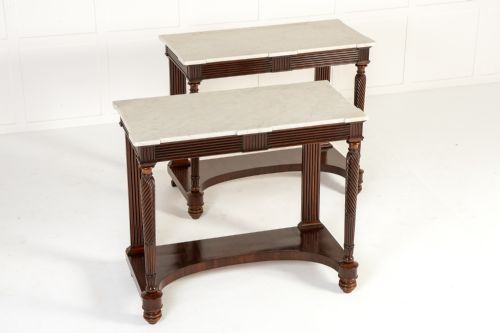
Regency pieces often display classical motifs, such as reeded legs, rosewood veneers, and restrained brass mounts. Their proportions reflect early 19th-century tastes inspired by classical antiquity.
Construction details like hand-cut joints help confirm the period.