
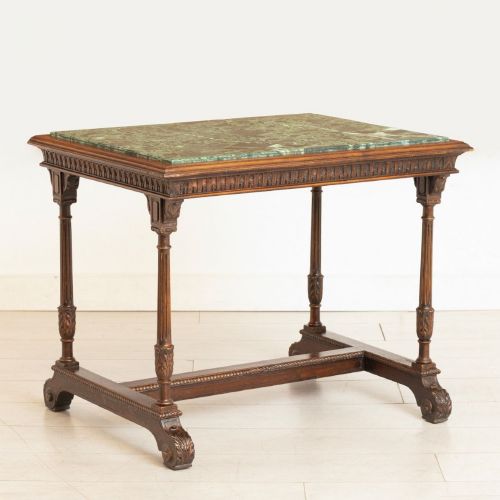


Victorian Marble Pier Table
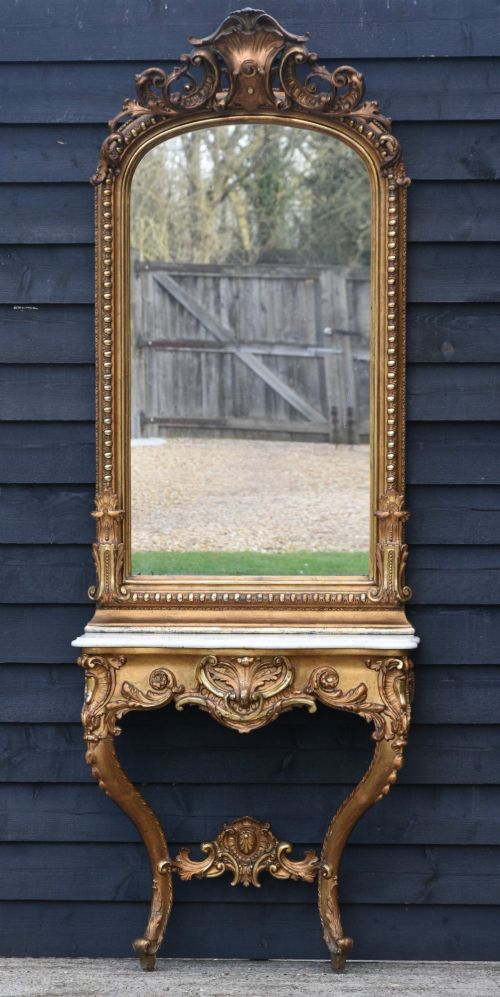
A victorian marble pier table is a foundational nineteenth-century drawing room console designed to stand against a wall, frequently beneath a matching mirror.
Victorian Marble Pier Table
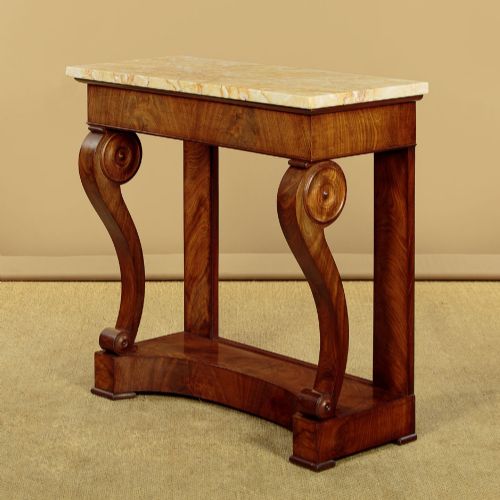
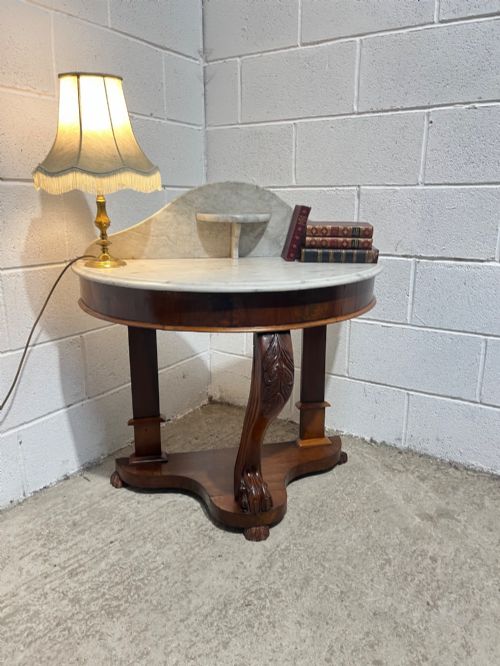
A victorian marble pier table occupies the flat wall space between architectural windows, serving as a formal display surface for lamps, clocks, and ornaments in nineteenth-century interiors. These pieces appear most frequently as console tables, side tables, and washstands featuring fitted stone surfaces.
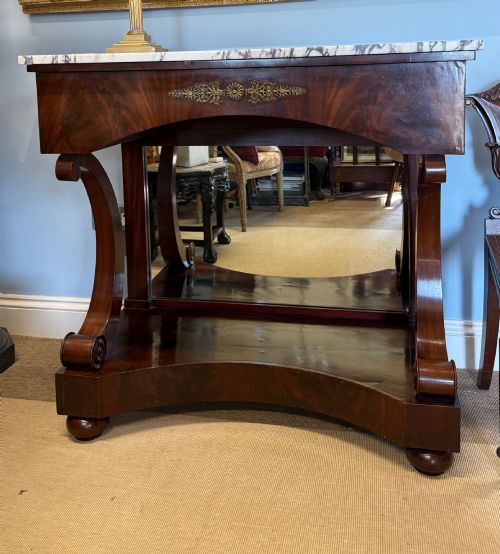
The selections span distinct regional interpretations and revival aesthetics, ranging from English mahogany and oak carcases to French giltwood creations and Anglo-Indian variants. Makers utilised rich cabinet timbers such as burr walnut, rosewood, and flame mahogany to support heavy Italian and domestic marble slabs.
How they were made
Cabinetmakers constructed the main framework from dense timbers like mahogany, walnut, and oak, often applying figured veneers such as burr walnut or flame mahogany to the primary surfaces. Giltwood and gesso frames received hand-carved ornamentation in rococo revival, neoclassical, and kentian styles before finishing.
Heavy marble slabs, frequently Italian in origin, were cut and polished to fit precisely over the wooden carcase, providing a durable and cool surface resistant to spills and heavy objects. Pier tables with mirror backs integrated large sheets of glass into the wooden framework, requiring specialist glazing techniques.
Several tables retain their original nineteenth-century mirror backs, built to bounce afternoon light across dark Victorian hallways.
What varies in quality
The standard of timber selection and veneer matching defines the visual weight of the piece, with continuous flame mahogany or figured burr walnut commanding greater presence than plain stock. Carving depth and crispness across giltwood and gesso mouldings separate standard workshop output from exceptional examples.
The thickness, figuring, and original matching of the marble top dictate the overall integrity of the furniture, alongside the integration of secondary elements like mirror backs and brass mounts. Superior examples maintain balanced proportions between the stone top and the supporting woodwork.
The Victorian Marble Pier Table Glossary
- Pier table
- A low table designed to stand against the wall between two windows, often paired with a tall mirror above. It provides a stable surface for decorative objects in a formal room.
- Console table
- A table supported by wall brackets or console legs rather than four independent vertical posts. These forms are engineered to sit flush against interior walls.
- Giltwood
- Timber that has been coated with a thin layer of gold leaf over a prepared gesso ground. This finish reflects candlelight and daylight in nineteenth-century reception rooms.
- Burr walnut
- Wood taken from the growth excrescences of walnut trees, yielding highly decorative swirling grain patterns. Cabinetmakers sliced these burls into veneers for luxury table tops.
- Serpentine front
- A furniture front characterised by a curving line that bulges outward in the centre and recesses at the sides. This contour requires skilled joinery to shape the timber and marble.
Victorian Marble Pier Table: Frequently Asked Questions
What is a pier table used for?
A pier table serves as a permanent display surface placed against the wall between architectural windows in a nineteenth-century parlour or drawing room.
Historically, homeowners used these tables to hold decorative candelabras, clocks, and ceramic vases beneath matching wall mirrors.
How do I identify a Victorian piece?
Victorian furniture is identified through specific timber choices, construction methods, and revival styles spanning the nineteenth century.
Evidence points toward the use of heavy marble tops, mahogany, walnut, and giltwood characteristic of nineteenth-century workshop production.
Are marble tops original to the tables?
Marble tops on nineteenth-century console tables were custom fitted to the wooden carcase during initial production.
Weight and edge profiles usually correspond directly to the supporting frame, confirming the stone slab belongs to the original manufacture.
How do I clean a marble top?
Marble surfaces require gentle cleaning with warm water and a soft cloth to avoid scratching the polished stone.
Harsh chemical cleaners and acidic substances must be avoided to preserve the historical finish of the nineteenth-century marble.