
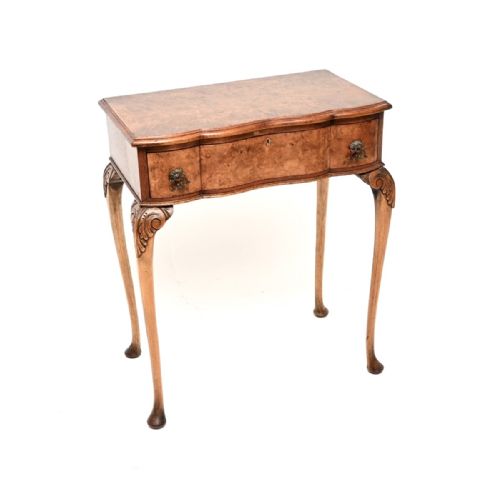
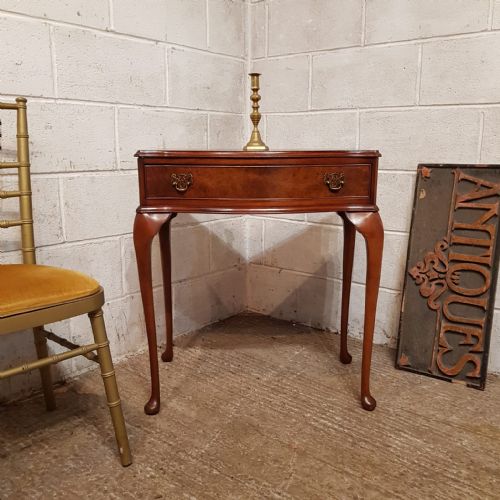


Serpentine Front Hall Table
A serpentine front hall table brings fluid, undulating movement to an entryway, combining practical surface space with sculptural presence.
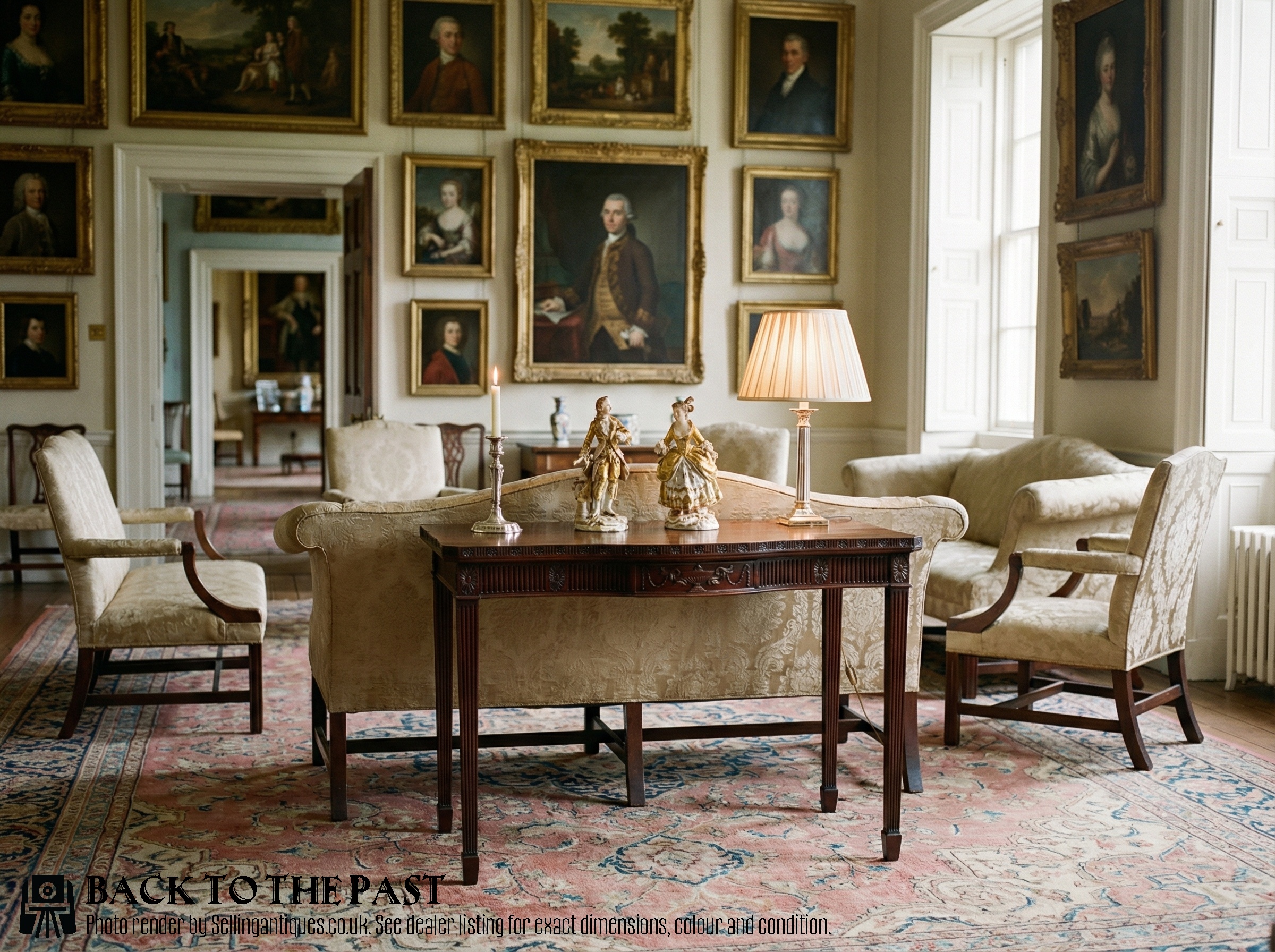
Serpentine Front Hall Table
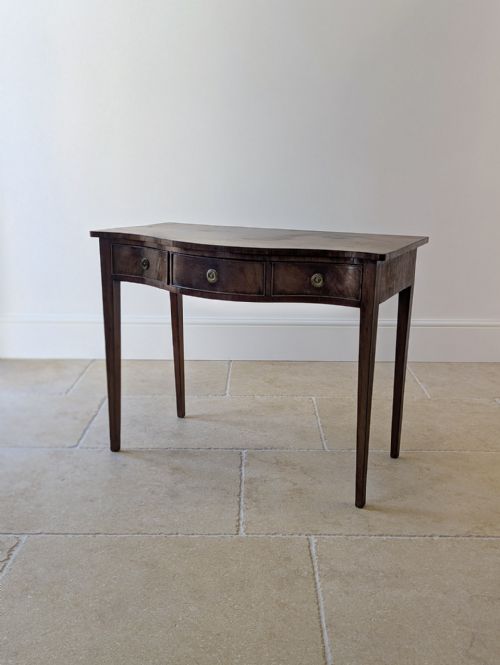
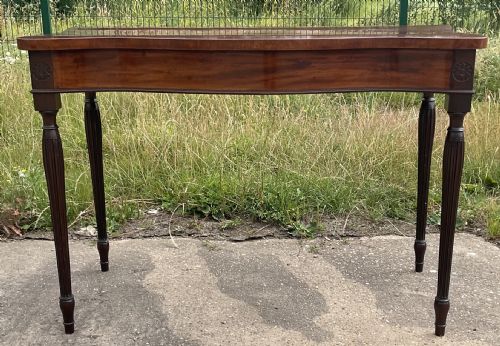
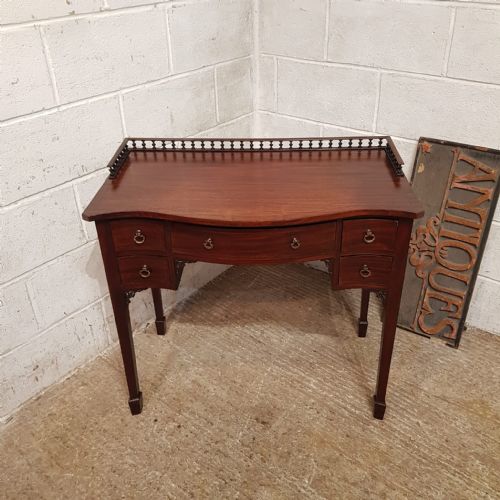
A serpentine front hall table presents a graceful, curving outline that sweeps inward and outward across the width of the piece. You will most frequently encounter mahogany examples dating from the Georgian period through to the early twentieth century, often taking the form of console tables, side tables, or serving tables.
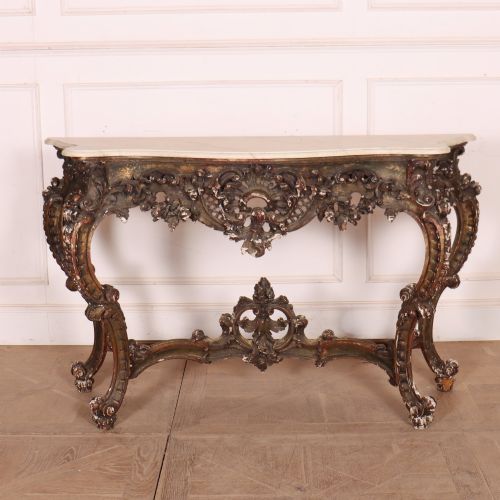
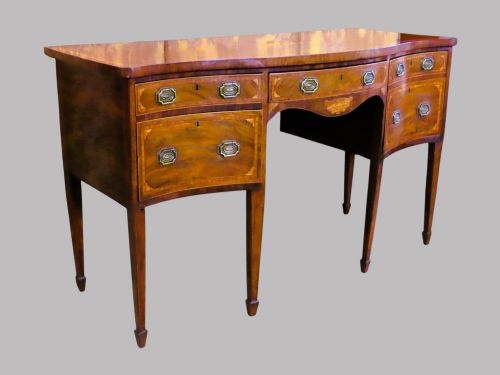
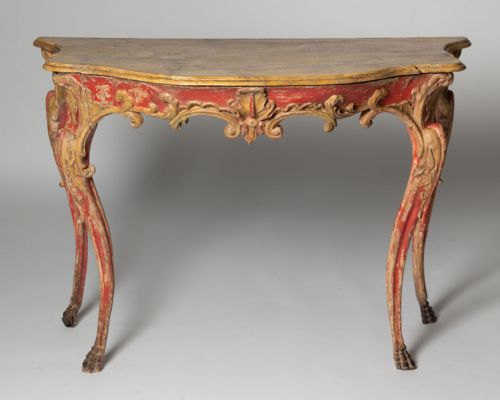
The selection spans formal nineteenth-century French and Italian designs alongside robust British craftsmanship. Makers adapted the sweeping contour for writing desks, tea tables, and compact servers, meaning the form serves diverse practical roles in a modern hallway or reception room.
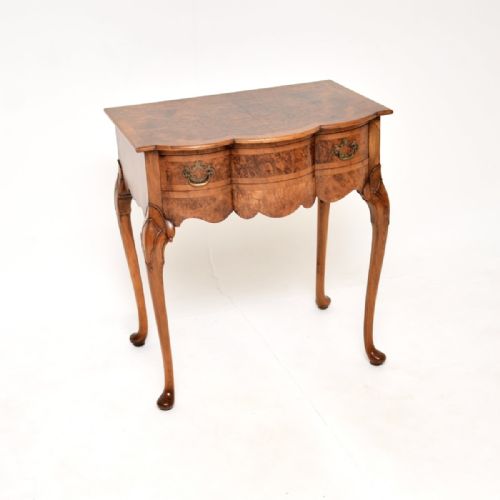
Earlier eighteenth-century pieces appear alongside Edwardian revivals and later interpretations in burr walnut and satinwood. This mix demonstrates how cabinetmakers repeatedly returned to the undulating line to introduce elegance into narrow spaces.
Materials and construction
Cabinetmakers constructed these tables primarily in mahogany and walnut, frequently selecting figured burr veneers or satinwood to accentuate the curving facade. Timber selection mattered profoundly because shaping a undulating front required thick, stable stock or skilful lamination to prevent warping along the curves.
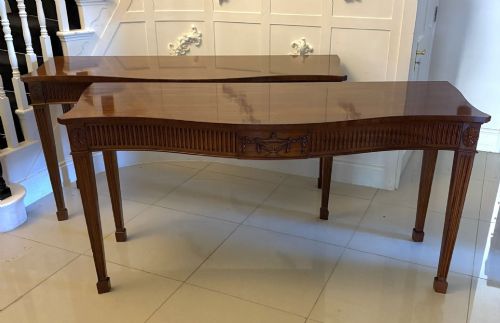
Carved wood elements, brass fittings, and marquetry inlay ornament the surfaces, particularly on Neoclassical and Rococo revival pieces. Joiners shaped the solid timber frames by hand to maintain structural integrity while following the complex geometry of the serpentine profile.
Some past pieces doubled as card tables, proving that ancestors loved a cheeky game of whist right by the front door.
Distinctions in craftsmanship
Quality rests in the fluidity of the curves and the precision of the timber matching across the front facade. Superior examples exhibit seamless transitions in the wood grain along the undulating line, whereas lesser pieces show abrupt joins or flat sections where the curve falters.
The sophistication of the carving and the depth of the inlay dictate the standing of a piece. Master cabinetmakers achieved crisp detail in Neoclassical motifs and smooth execution of complex veneering that lesser workshops could not replicate.
The Serpentine Front Hall Table Glossary
- Serpentine front
- A furniture facade shaped with a central convex curve flanked by concave sweeps, or vice versa. This undulating contour requires advanced woodworking skill to execute properly.
- Console table
- A table designed to stand against a wall, frequently supported by wall brackets or two front legs. These pieces provide a shallow surface ideal for narrow hallways.
- Marquetry
- Decorative veneer work formed by fitting pieces of various coloured woods into a master design. It appears on polished satinwood and walnut surfaces to create floral or geometric patterns.
- Serving table
- A large side table used in dining rooms or halls before dedicated sideboards became common. They often feature robust mahogany construction and restrained carving.
- Neoclassical
- A style drawing inspiration from classical antiquity, prominent in eighteenth and nineteenth-century furniture. It is characterised by symmetrical geometry and restrained ornamentation.
Serpentine Front Hall Table: Frequently Asked Questions
How do I style a serpentine table in a hallway?
Place the table flat against a primary wall where the curving front can catch the light and define the walkway. The shallow profile of these tables allows them to fit narrow corridors without obstructing movement.
Keep surface objects minimal to let the timber grain and the carved or inlaid details remain the visual focus. A simple mirror or artwork hung directly above complements the sweeping lines of the furniture.
Are these tables sturdy enough for daily use?
Solid mahogany and walnut construction provides substantial weight and durability for everyday placement in a busy entrance. The four-leg or console configurations distribute weight evenly across the floor.
Care should be taken with veneered surfaces to avoid excessive moisture or heavy impacts that could damage the outer layer of burr walnut or satinwood.
What is the difference between a console and a side table?
Console tables were traditionally designed to be fixed to a wall or supported by front legs with rear brackets, offering a very shallow depth. Side tables typically stand independently on four fully developed legs.
In modern usage, the terms often overlap, but examining the leg structure and rear support reveals the original intended placement of the piece.
How do I identify a Georgian piece?
Georgian tables rely on dense, rich mahogany timbers, understated proportions, and traditional joinery methods visible beneath the frame. Carving, when present, follows classical vocabulary such as acanthus leaves or restrained moulding rather than heavy revival flourishes.
Inspect the secondary woods inside the drawers or beneath the top to confirm period pine or oak framing consistent with eighteenth-century workshop practices.