
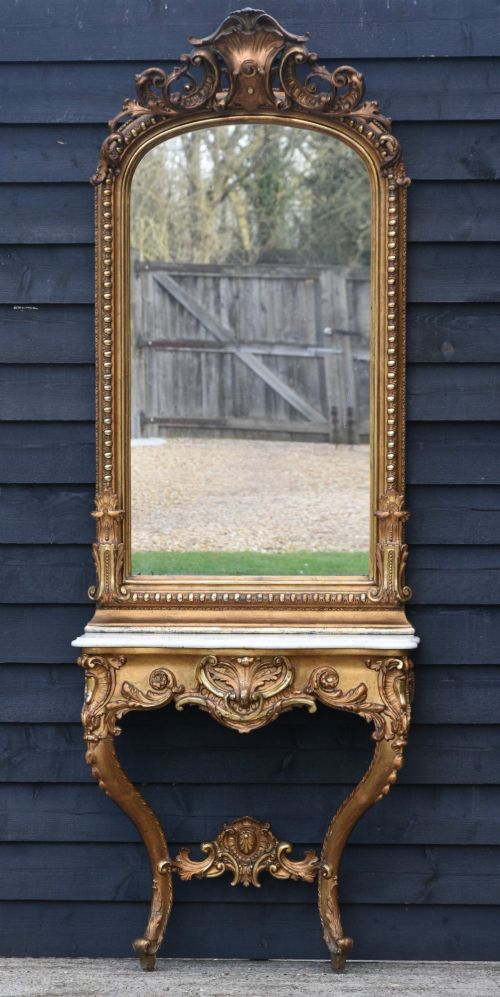
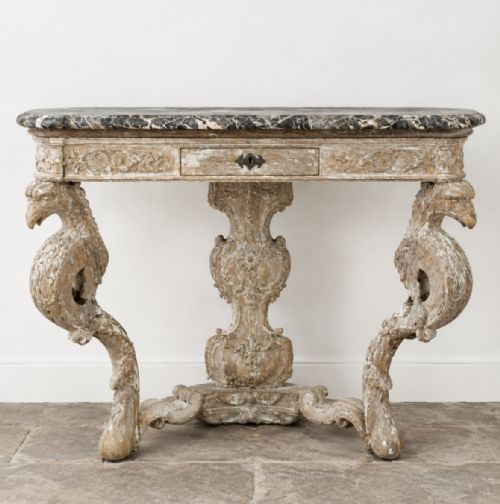
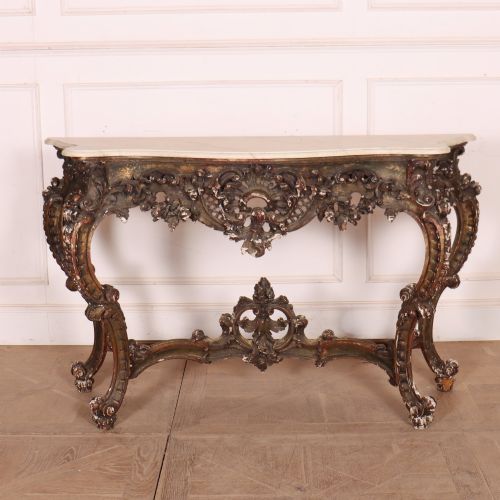
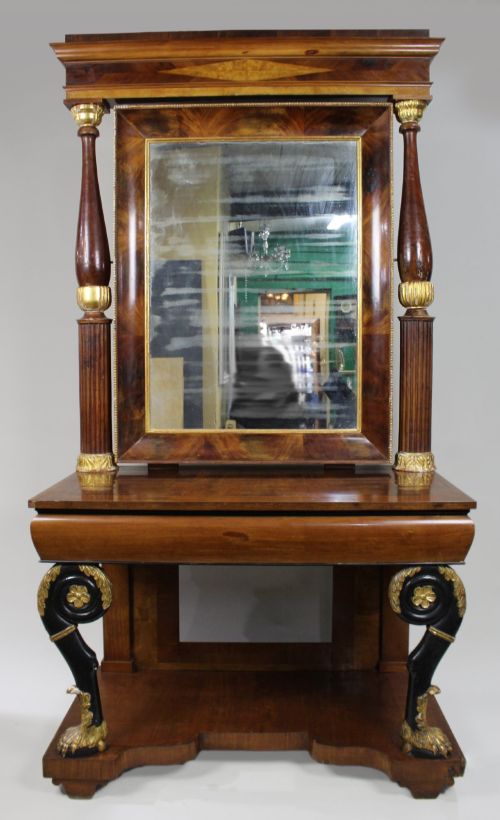
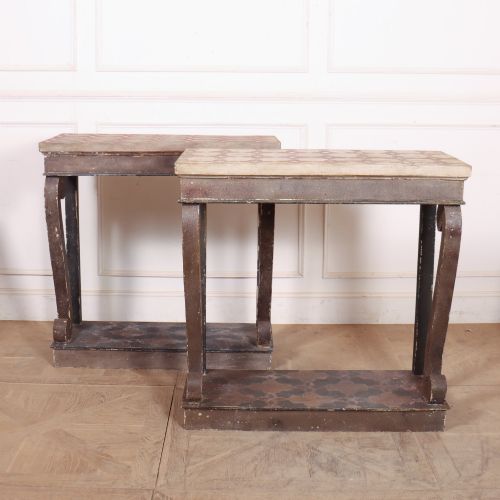
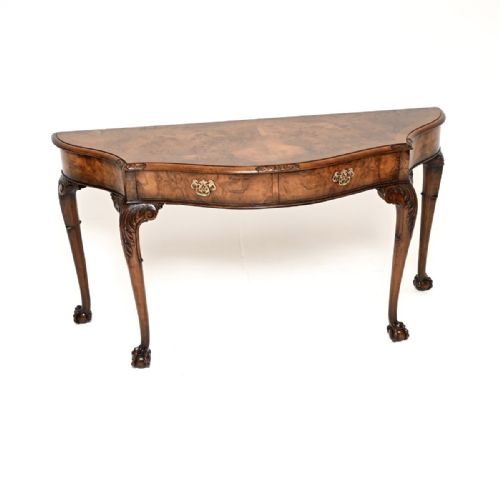
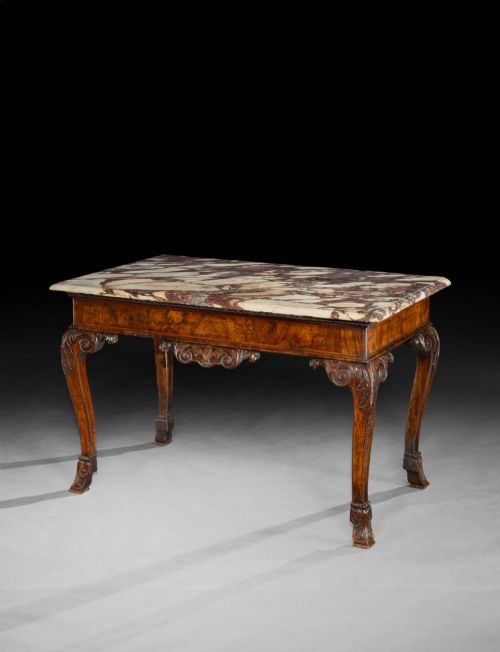
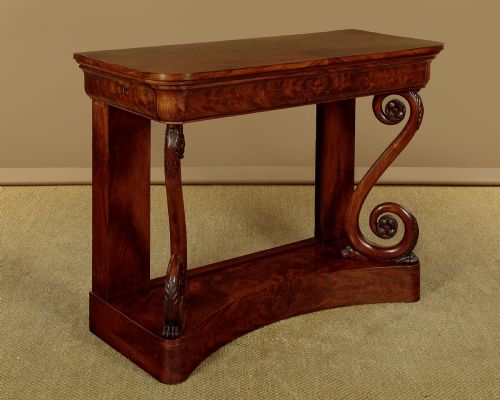
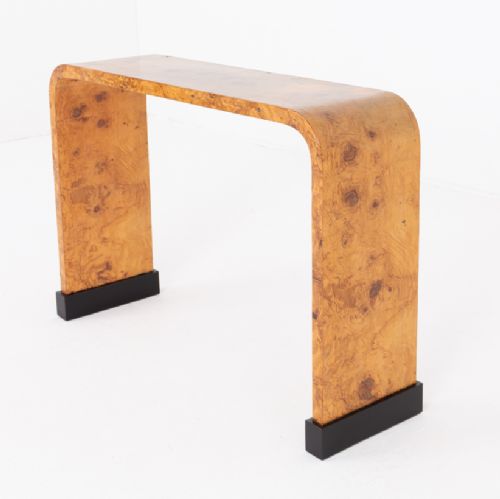
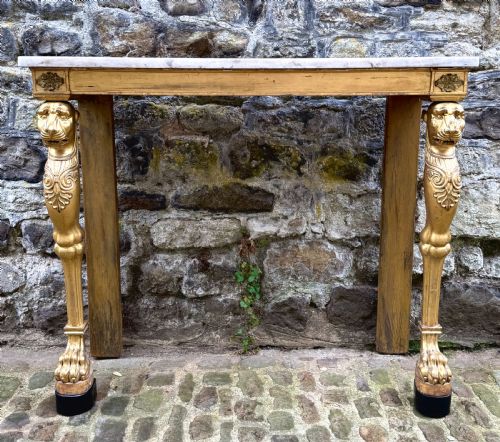
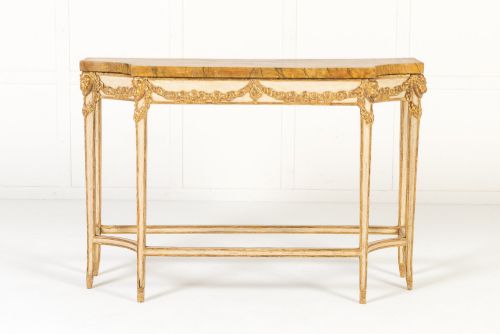

Hallway Pier Table
A hallway pier table anchors an entrance hall with architectural presence, offering a surface for correspondence and keys beneath a grand mirror.
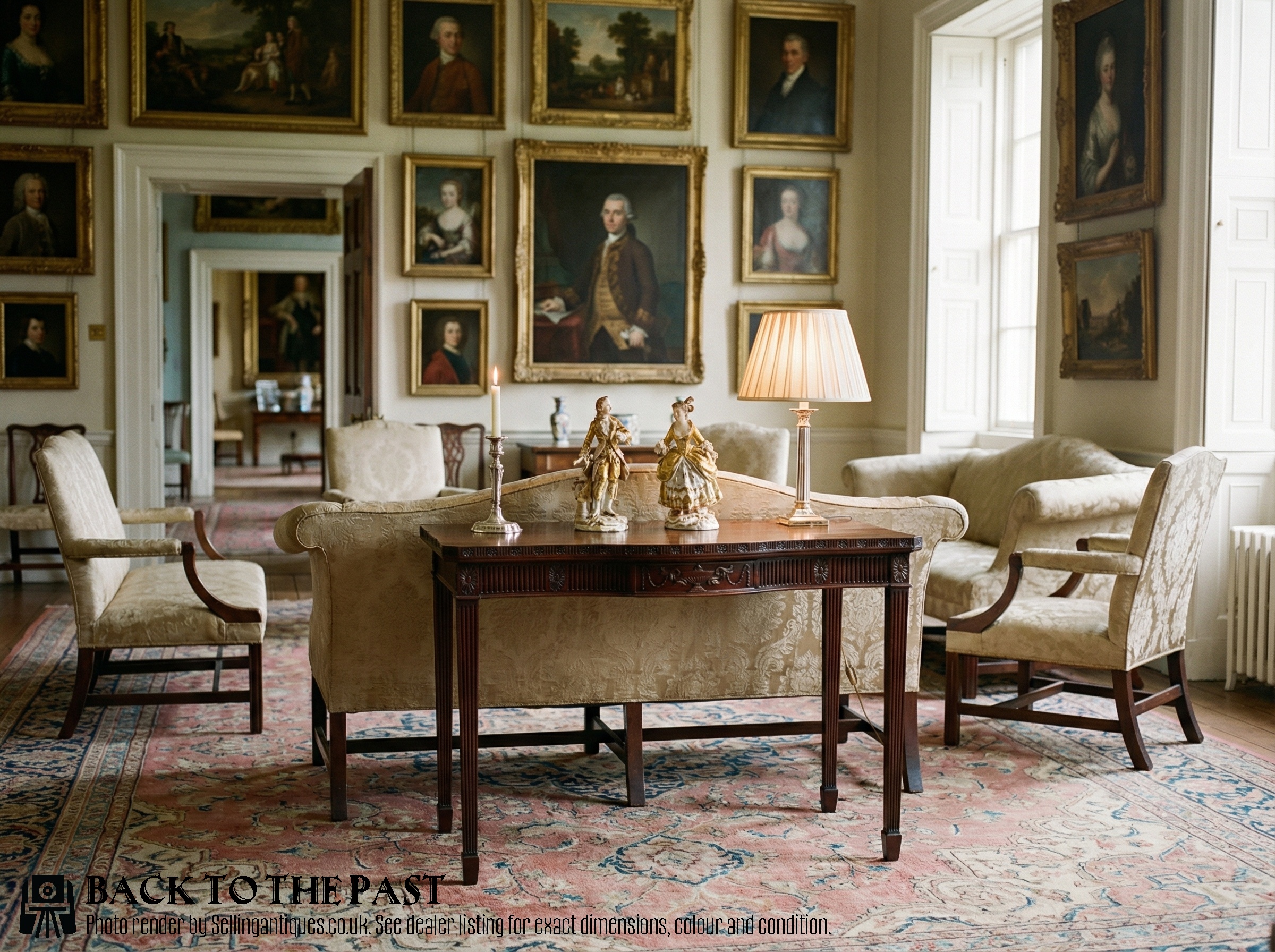
Hallway Pier Table
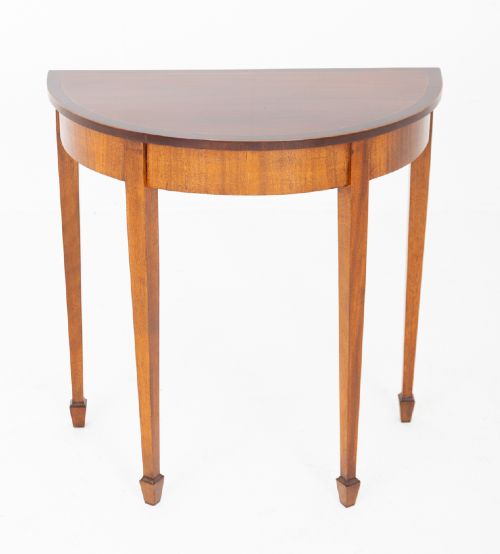
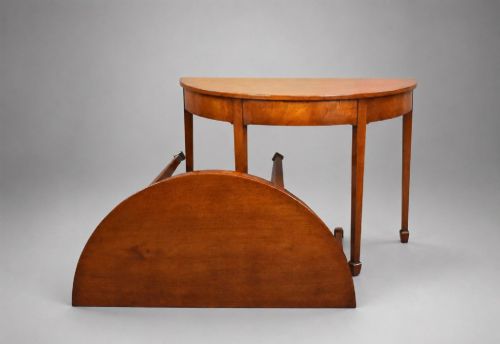
A hallway pier table stands flat against a wall, frequently positioned between architectural windows or beneath a dedicated looking glass to maximise reflected light in a narrow entrance space. These pieces appear in numerous forms across this selection, ranging from compact demi-lune shapes to grand console tables paired with original pier mirrors.
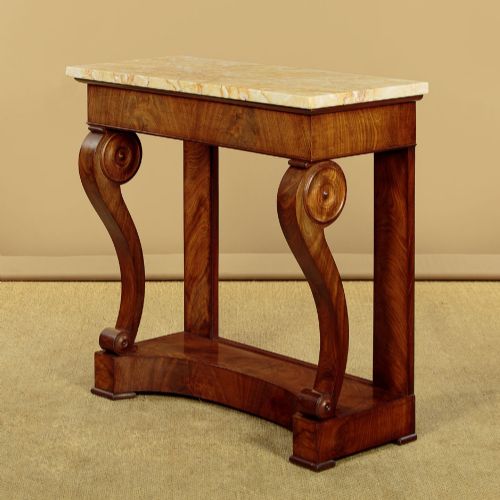
Makers designed these items during the Georgian, Regency, and Victorian periods using rich timbers and decorative finishes suited to formal reception rooms. The versions most commonly met on this page date from the nineteenth century, reflecting the prevailing styles of French Empire, Neoclassical, and William IV design.
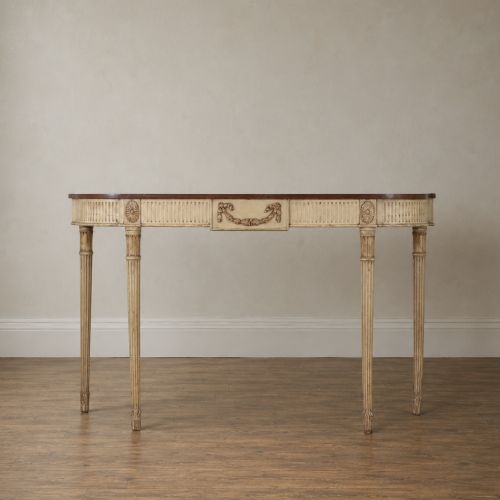
The practical function remains straightforward, providing a narrow profile that occupies minimal floor space while delivering considerable decorative impact. Whether finished in carved walnut, polished mahogany, or painted giltwood, each item serves as a focal point for an entrance interior.
Materials and construction
Cabinetmakers relied heavily on dense timbers such as mahogany and walnut, frequently selecting figured veneers to create striking surface patterns on the table tops. Brass mounts, parcel gilt details, and intricate carvings added decorative contrast to the timber structures.
Many examples incorporate heavy marble slabs inset into the wooden framework, providing a durable and cool surface that complemented the stone floors of traditional hallways. Giltwood frames and painted beech or pine constructions also appear regularly, reflecting the diverse aesthetic preferences of French and English workshops.
Listings feature mahogany, walnut, and rosewood alongside marble tops and giltwood frames spanning the Georgian to Victorian eras.
Factors determining quality
The refinement of the carving and the choice of primary timber establish the baseline of a piece, with figured walnut and dense, dark mahogany indicating superior workshop selection. Original marble tops, intact mercury glass within accompanying pier mirrors, and crisp gilding elevate the standing of an individual console.
Proportion and structural integrity separate standard production items from masterworks designed for prominent townhouses. Pieces retaining their original finish and structural harmony demonstrate the enduring skill of the period cabinetmaker.
Krieger Paris
The Hallway Pier Table Glossary
- Demi-lune
- A half-moon shape popular for side and console tables designed to fit snugly against a flat wall. This curved profile softens the geometry of narrow corridors.
- Pier mirror
- A tall looking glass specifically made to hang on the wall space between two windows, frequently positioned directly above a matching console table. It helps illuminate darker entrance halls.
- Parcel gilt
- A decorative technique where selected portions of a carved wooden surface are covered in gold leaf while the underlying timber remains visible. This highlights specific architectural details.
- Serpentine front
- A furniture front characterised by a wavy outline featuring a convex centre flanked by concave curves. It requires advanced woodworking skill to execute properly.
- Giltwood
- Timber that has been coated with a thin layer of gold leaf over a prepared gesso base. It provides a brilliant, reflective finish typical of neoclassical and empire pieces.
Hallway Pier Table: Frequently Asked Questions
What is a hallway pier table?
A hallway pier table is a narrow console designed to sit flat against a wall, often between architectural openings or beneath a tall mirror.
These pieces provide a functional surface in entrance spaces without obstructing movement through the corridor.
How were pier tables used historically?
Historically, households placed these tables in entrance halls and formal reception rooms to display decorative objects and receive visitors.
They often served as a drop-zone for calling cards and correspondence upon entering the home.
How do I style a pier table today?
Position the table flat against a prominent wall in your entrance hall, ideally beneath a complementary mirror or piece of artwork.
Keep the surface styling restrained with a single lamp, a small tray, or a seasonal arrangement to maintain the architectural lines.
How can I tell the period of a table?
Examine the primary timber, the style of the carving, and the overall construction methods used beneath the surface.
Georgian and Regency pieces display specific classical motifs and lighter proportions, whereas Victorian examples tend to be heavier and more ornate.