


Victorian Walnut Lamp Table
A victorian walnut lamp table brings nineteenth-century warmth into a modern room, offering a sturdy surface designed for lighting and quiet utility.
Victorian Walnut Lamp Table
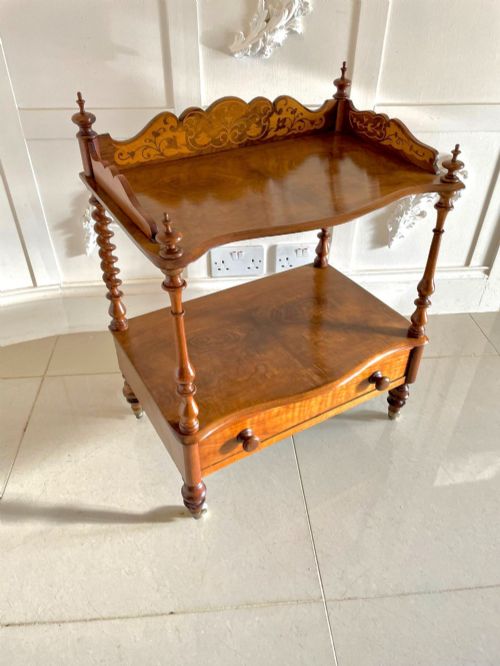
A victorian walnut lamp table serves as a compact, movable surface for lighting, sewing, or displaying small decorative objects. These pieces appear frequently as round or oval pedestal designs from the middle decades of the nineteenth century.
Makers shaped these tables to stand beside chairs or in corners, utilising rich timber veneers to catch the light. The form merges practical nineteenth-century room arrangement with decorative cabinet work.
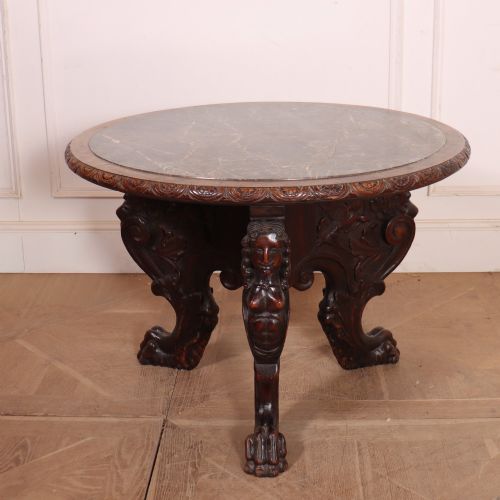
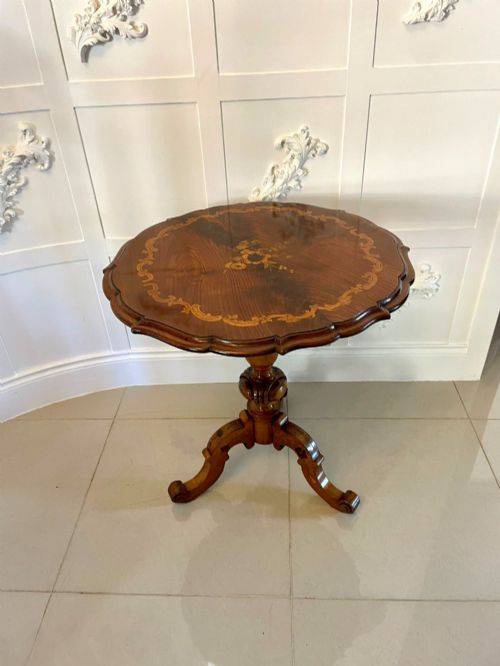
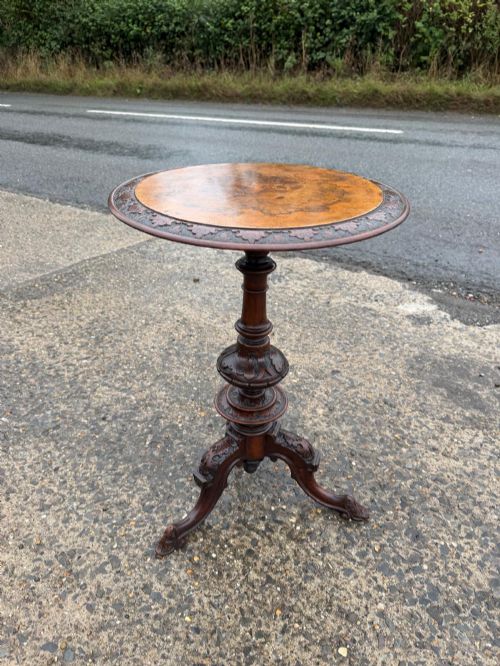
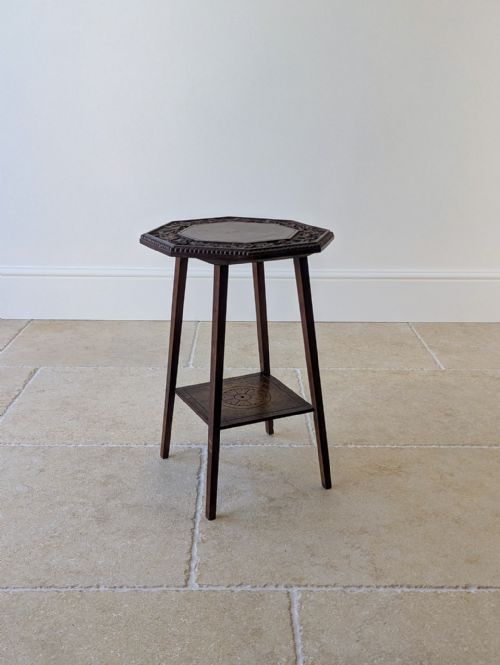
Most examples found in current and past records feature circular tops supported by carved pedestals or tripod legs. Variations include octagonal shapes and pieces fitted with drawers or hinged tops.
How They Were Made
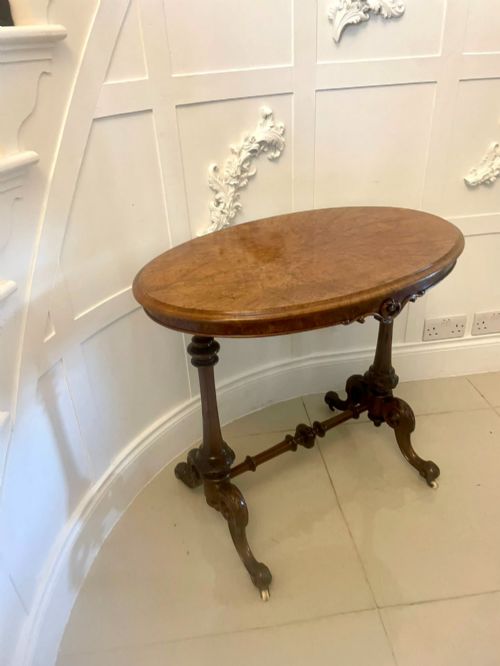
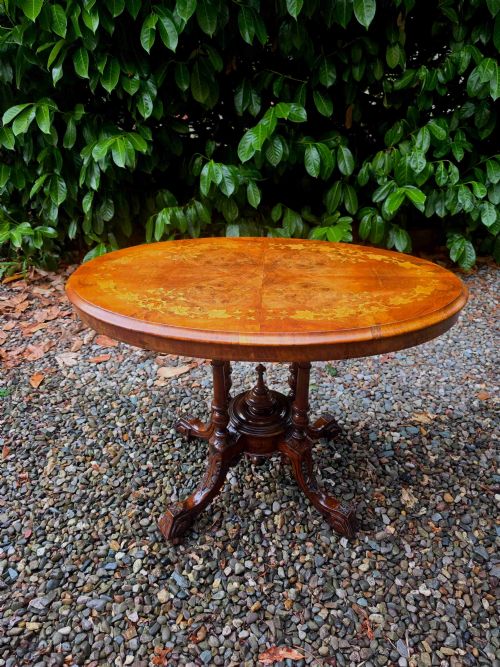
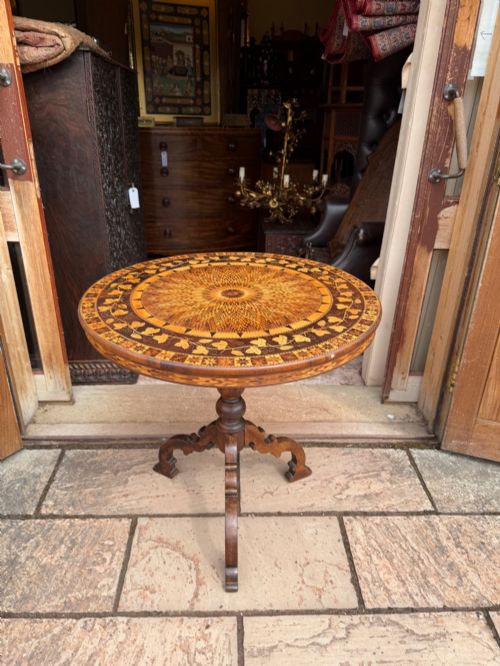
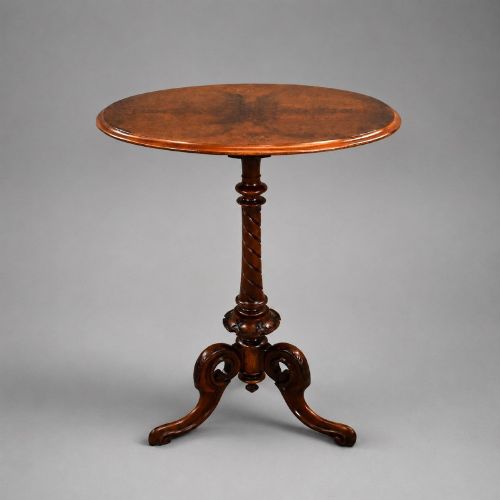
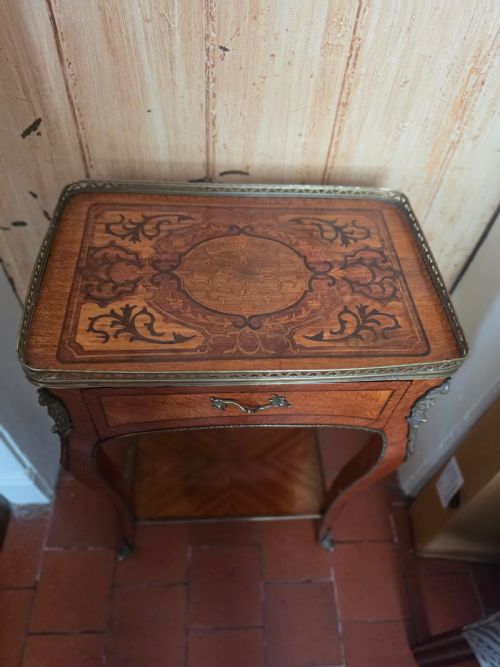
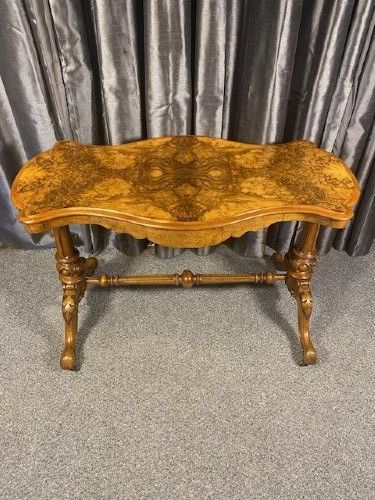
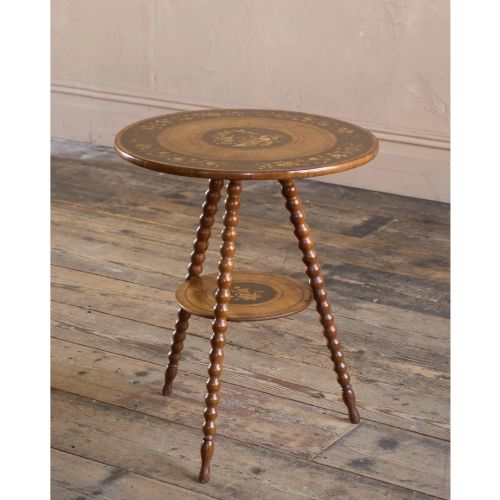
Cabinet makers selected dense, dark walnut and applied fine burr walnut veneers to table tops to display natural wood figures. They enhanced these surfaces with delicate marquetry and wood inlay detailing.
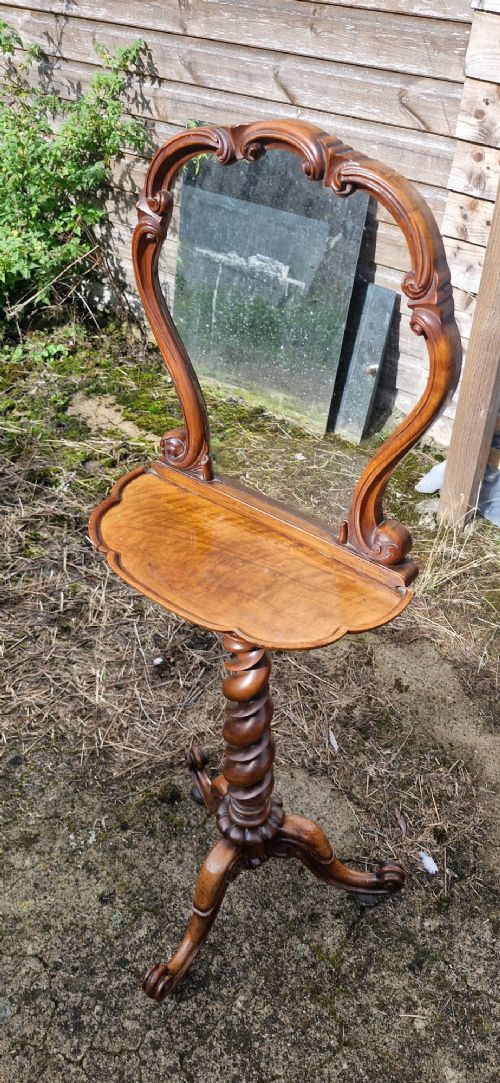
Structural strength relied on turned central pillars, barley twist stems, or slender bobbin legs secured to sturdy tripod bases. Joinery methods combined traditional framing with internal blocking to keep the pedestals rigid.
Listings demonstrate that round and oval tops dominate these selections, alongside occasional octagonal variants from the later nineteenth century.
What Varies in Quality
Superior examples distinguish themselves through the richness of the burr walnut veneer and the precision of the inlaid marquetry patterns. Plain timber tops lack the depth and visual movement found in select veneer selections.
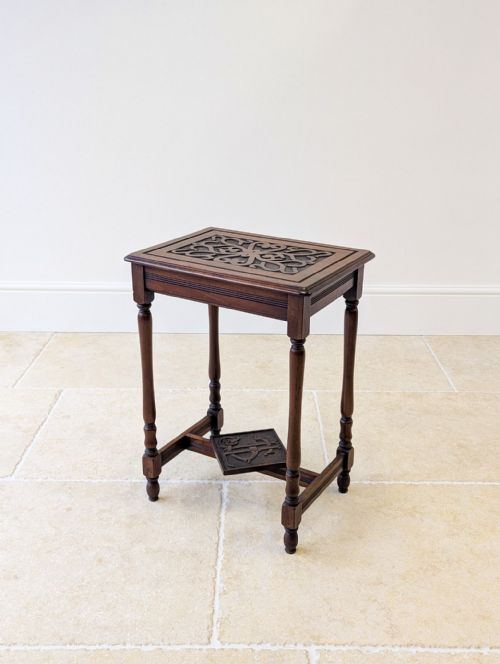
Carved details on pedestals and legs range from simple turned posts to elaborate, deeply carved pillars with scrolling feet. The weight and stability of the central column dictate how well the table bears daily use.
Liberty of London·William Birch·M. Woodburn
The Victorian Walnut Lamp Table Glossary
- Burr walnut
- A figured wood veneer taken from the knot growths of walnut trees, prized for its swirling grain patterns.
- Marquetry
- Decorative patterns formed by fitting together thin slices of various woods and veneers onto a structural surface.
- Pedestal table
- A freestanding table supported by a single central pillar rising from a branched or weighted base.
- Tripod base
- A three-legged support structure commonly found beneath nineteenth-century occasional and lamp tables.
- Bobbin leg
- A turned furniture leg shaped with a series of rounded spheres resembling wooden bobbins on a thread.
Victorian Walnut Lamp Table: Frequently Asked Questions
What is a victorian walnut lamp table used for?
These pieces functioned originally to hold oil lamps or candles beside seating areas in nineteenth-century homes. Today they serve equally well beside modern armchairs for holding drinks or small lamps.
Their compact size allows them to fit easily into corners or tight spaces where larger furniture proves impractical.
How do I care for a burr walnut top?
Polishing the surface occasionally with traditional beeswax preserves the rich grain and protects the vintage timber. Avoid placing the table in direct sunlight or near heat sources to prevent the veneer from drying out.
Using coasters prevents moisture rings from marking the polished wood finish.
Are these tables sturdy enough for daily use?
Pedestal designs rely on well-balanced tripod bases to maintain stability on carpeted or wooden floors. Most examples are built with solid framing that withstands normal household weight.
Lifting rather than dragging the table when moving it protects the leg joints from undue strain.
How do I date a nineteenth-century lamp table?
Examining the construction methods, timber choice, and decorative style provides clues to the manufacturing decade. Mid-nineteenth-century pieces often feature heavy burr walnut veneers, while later examples show influences from the Aesthetic movement or Arts and Crafts styles.
Secondary woods used in the interior framing also help determine the period of origin.