

Queen Anne Style Drawers
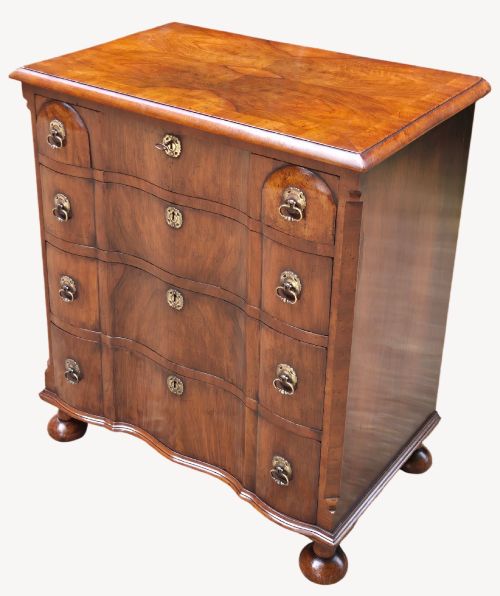
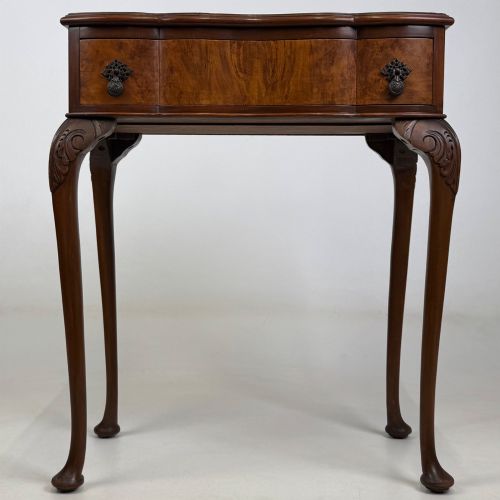
These pieces combine figured timber with traditional proportions, offering practical storage disguised as graceful antique furniture.
Queen Anne Style Drawers
When searching for queen anne style drawers, buyers encounter a specific vocabulary of form, from straightforward chest of drawers to tallboys and bedside tables. The pieces gathered here predominantly originate from the late nineteenth century and the early decades of the twentieth century, bridging Victorian heritage with later revivals.
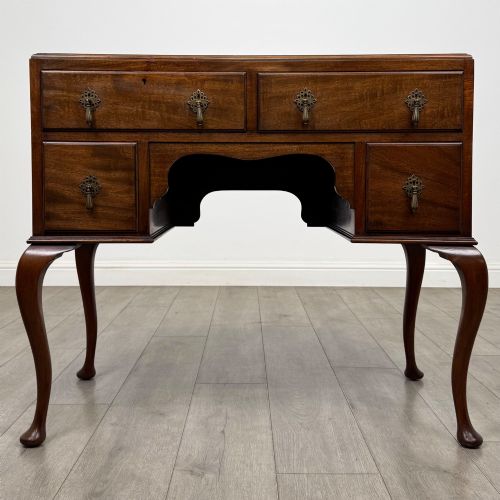
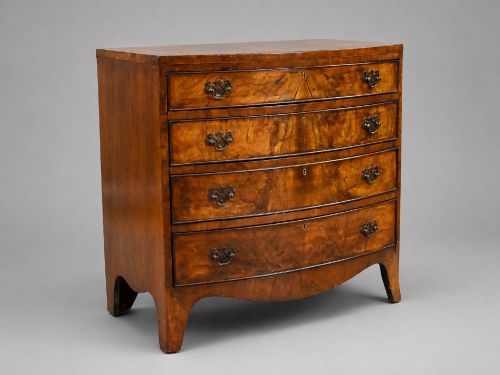
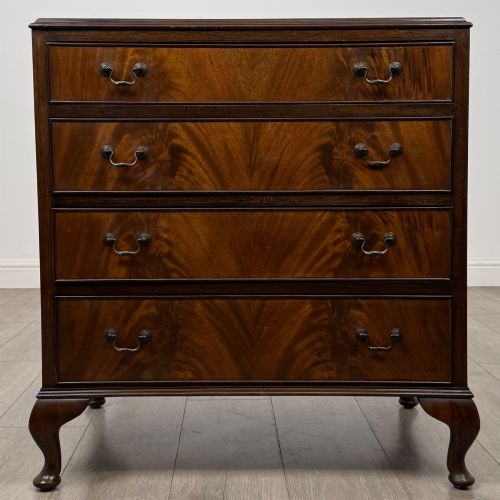
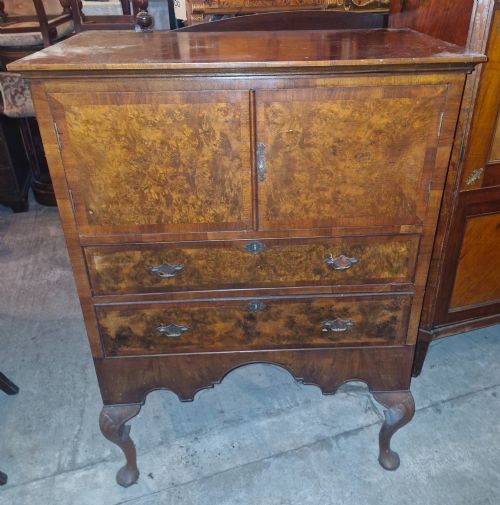
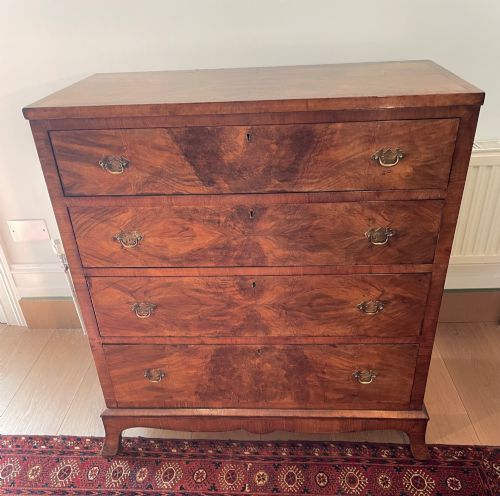
The most common formats on this page are upright chests, bow-fronted designs, and cabinets on stands that reflect the enduring popularity of early eighteenth-century silhouettes during the Edwardian period and the interwar years.
Materials and construction
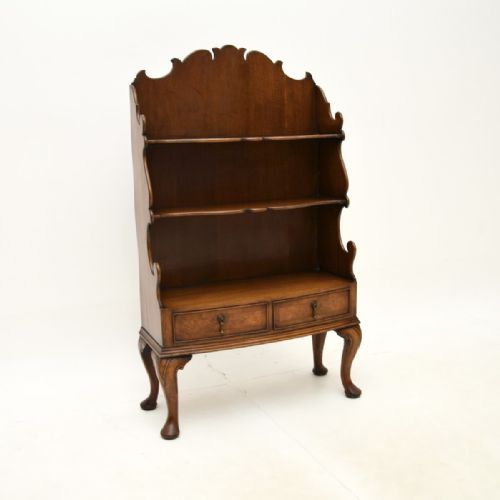
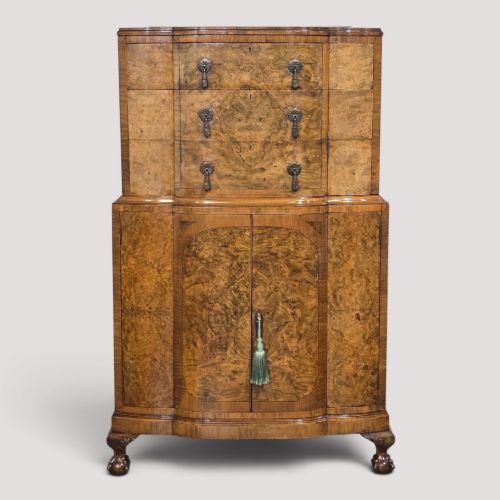
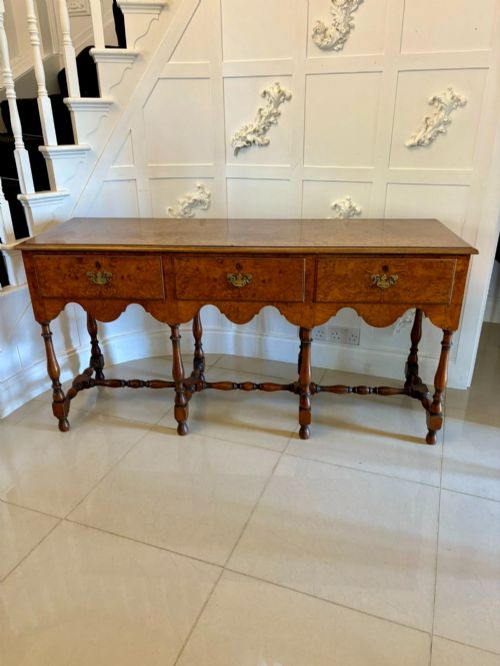
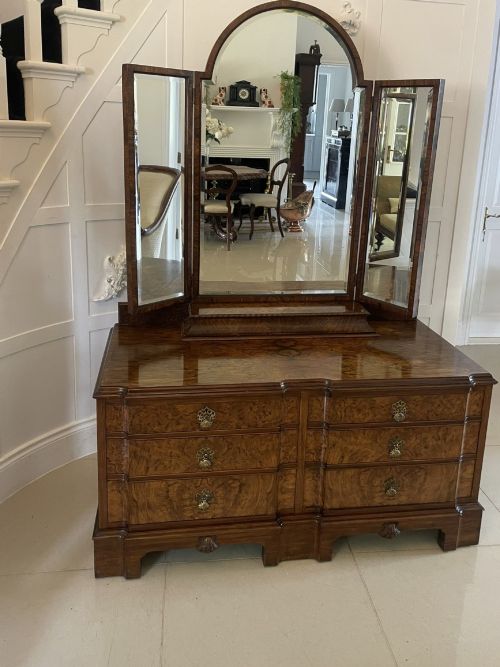
Cabinetmakers relied heavily on walnut as the primary timber, frequently selecting burr walnut veneer or figured walnut to create striking, highly patterned surfaces across drawer fronts and tops. Solid cuts of mahogany and oak also appear, particularly in pieces built around the turn of the twentieth century.
Brass handles, escutcheons, and occasional leather writing inserts complete the fabrication, anchoring the decorative wood grains with functional metalwork and tactile details.
Among the walnut chests and desks, a stray silver-plate and steel canteen of cutlery quietly waits for a very formal dinner party.
Assessing craftsmanship and finish
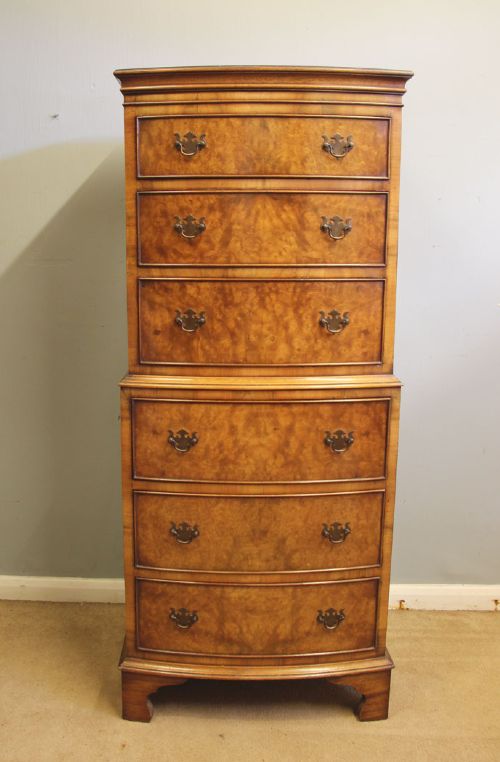
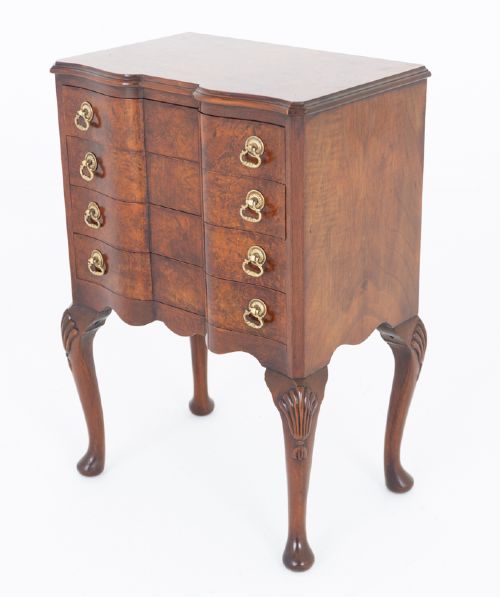
The division between standard examples and exceptional ones rests upon the selection of the veneer and the crispness of the shaping along serpentine or bow-front profiles. Finer items display meticulous book-matching in the burr walnut grain, ensuring patterns flow symmetrically across multiple drawers.
Structural integrity also dictates worth, visible in the precision of the drawer joints and the retention of original brass hardware rather than later replacements.
Shoolbred and Co·Waring and Gillow
The Queen Anne Style Drawers Glossary
- Tallboy
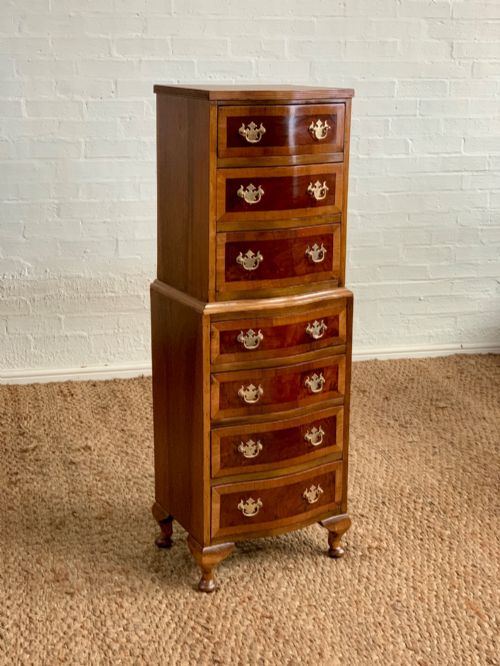
- A tall chest of drawers, often constructed in two distinct sections where a smaller upper cabinet sits upon a deeper base.
- Burr walnut
- A specialised timber cut from walnut tree growths, prized for its swirling, intricate grain patterns used extensively on decorative veneer.
- Bow front
- A convex, curved front elevation that softens the boxy geometry of a standard chest.
- Lowboy
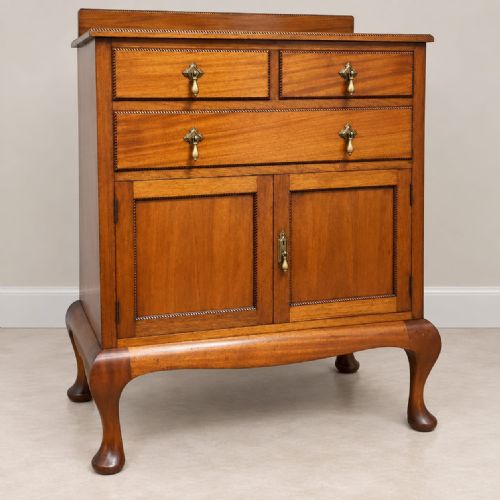
- A small dressing or side table featuring one or more rows of drawers raised on relatively tall legs.
- Stand
- A supporting frame with legs that elevates a main cabinet or chest above floor level.
Queen Anne Style Drawers: Frequently Asked Questions
What periods do these chests come from?
The pieces listed span from the late nineteenth century through the Edwardian era up to the nineteen-thirties. Most reflect revival movements rather than the original eighteenth-century reign of Queen Anne.
Craftsmen of the early twentieth century heavily reproduced these classical proportions using contemporary woodworking machinery and traditional hand-finishing.
How do I care for burr walnut veneer?
Keep these items away from direct sunlight and radiators to prevent the fine walnut veneers from drying out or lifting over time. Gentle dusting with a dry cloth is sufficient for daily upkeep.
Applying a quality wax polish occasionally helps nourish the wood and maintain a soft sheen without building up heavy residue.
Where should I place a tallboy?
A tallboy offers substantial vertical storage while occupying a relatively small floor footprint, making it ideal for bedrooms or dressing areas. Ensure the wall clearance accommodates the height, particularly if the design incorporates a separate upper section.
They also function well in hallways or living rooms where floor space is limited but storage capacity is necessary.