



Shaped Front Walnut Chest
A shaped front walnut chest brings immediate presence to a room, offering rich timber figure and confident curves that reward close inspection.
Shaped Front Walnut Chest
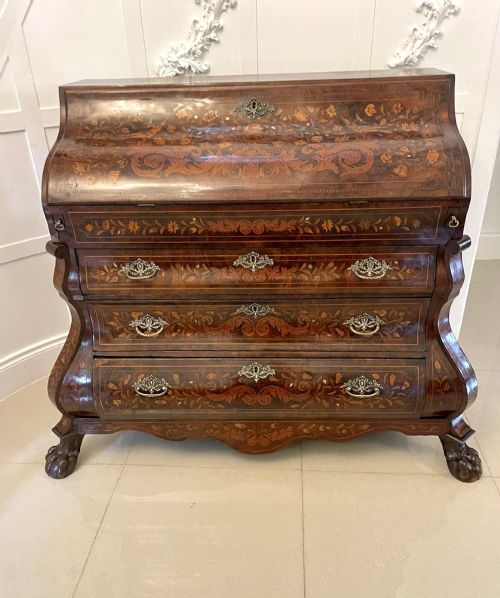
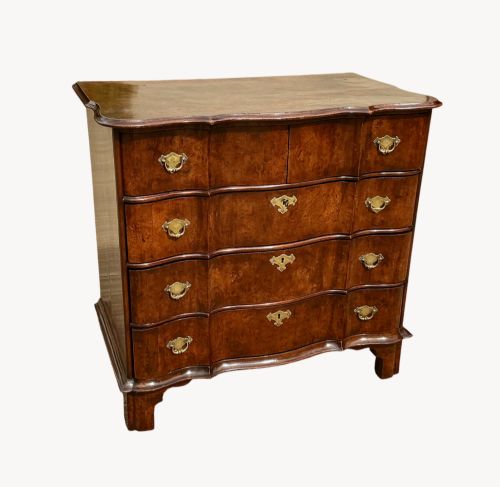
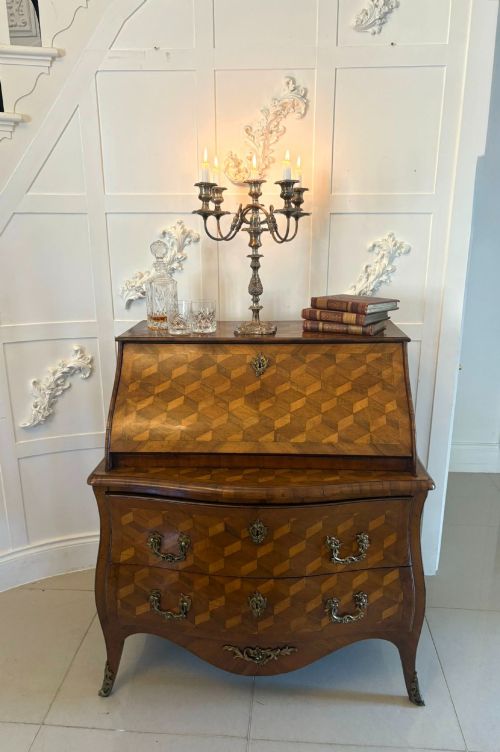
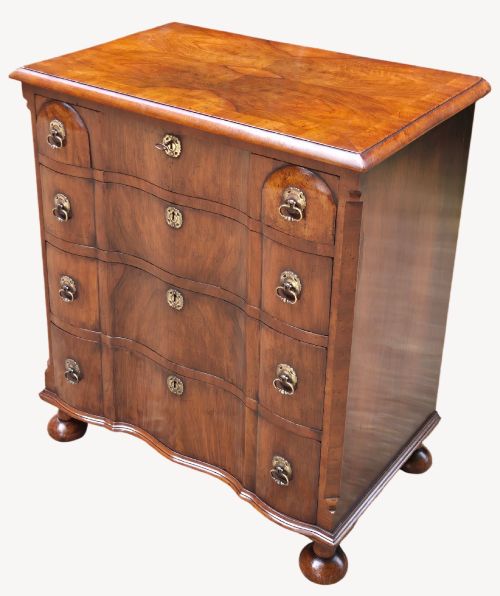
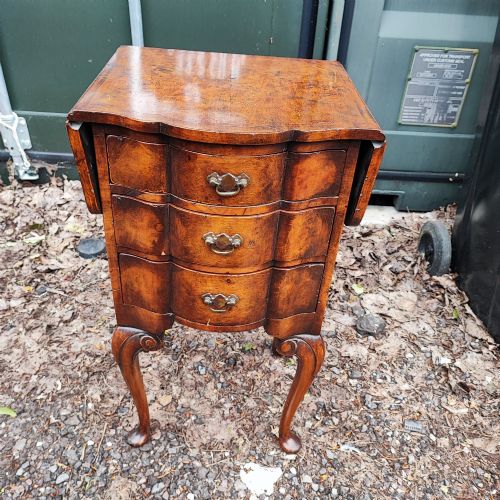
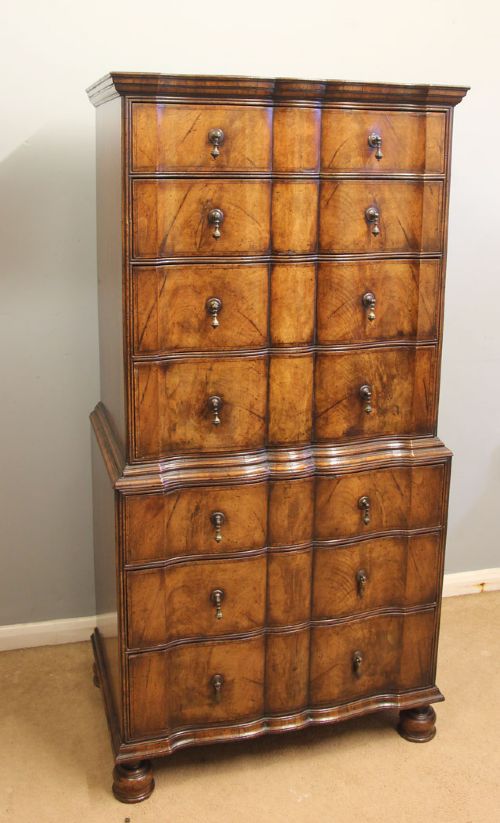
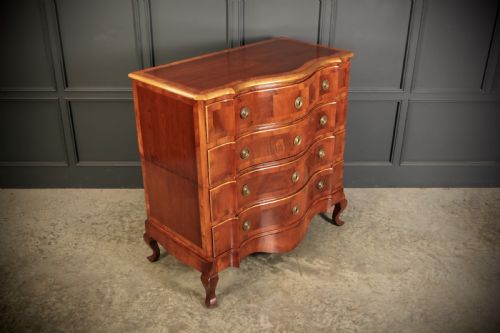
A shaped front walnut chest is a form defined by its undulating or curved drawer fronts, ranging from gentle serpentine profiles to dramatic bombe contours. These pieces span from the eighteenth century through later revival periods, bringing sculptural form to practical storage.
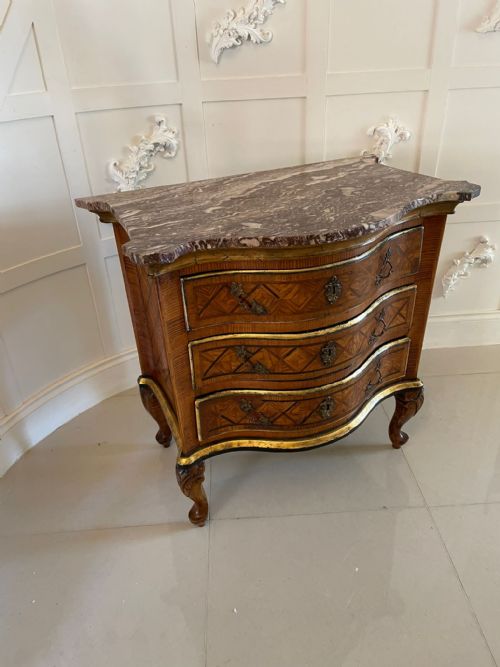
The versions you meet most often on this page include eighteenth-century Dutch and Italian examples alongside nineteenth-century Queen Anne style interpretations and later twentieth-century pieces. They appear as chests of drawers, tallboys, commodes, and bureau desks.
The timber varies from plain walnut to highly figured burr walnut and fruitwood marquetry inlay. Some incorporate marble tops or brass hardware, showing regional variations from British styles to continental Rococo and Baroque influences.
How they were made
Makers built these pieces using walnut veneers or solid timber applied to secondary woods like oak, framing the grain to create decorative patterns across curved surfaces. Burr walnut and figured walnut provide intricate movement, often enhanced by marquetry or parquetry inlays in fruitwood.
Constructing a curved or bombe silhouette required advanced joinery, shaping solid blocks or bending veneers over shaped carcases to achieve the characteristic swelling profiles. Brass handles and escutcheons completed the construction, fastened securely to the drawer fronts.
Listings feature walnut, burr walnut, and fruitwood marquetry across periods from the eighteenth century to nineteen twenty.
What varies in quality
Quality rests in the selection of the timber and the precision of the grain matching across the curved drawer fronts. Finer examples display carefully chosen burr or figured walnut that flows naturally around the contours of the piece.
The sophistication of the shaping defines the tier of craftsmanship, from subtle serpentine sweeps to complex bombe profiles requiring master-level veneering. Original brass hardware and intact marquetry or parquetry details elevate the standing of a piece.
Druce and Co
The Shaped Front Walnut Chest Glossary
- Bombe
- A bulging, outward-curving profile found on continental commodes and bureaux. This silhouette swells across the front and sides.
- Serpentine
- A front contour that curves outward in the centre and inward at the ends. It provides a more restrained movement than a bombe shape.
- Burr Walnut
- Timber taken from the wart-like growths on walnut trees, yielding highly ornamental swirling grain patterns. It is typically sliced into veneers for furniture faces.
- Parquetry
- Geometric wood inlay patterns arranged to form decorative motifs. It appears on drawer fronts and top surfaces.
- Tallboy
- A tall chest of drawers made in two sections, often taking the form of a chest on chest. It maximises vertical storage capacity.
Shaped Front Walnut Chest: Frequently Asked Questions
What is a shaped front walnut chest?
It is a storage piece featuring curved, serpentine, or bombe drawer fronts executed in walnut timber. These pieces range from eighteenth-century continental commodes to later British revival chests.
They serve as focal points in a room while providing deep drawer capacity for clothing or linens.
How do I care for walnut furniture?
Keep walnut pieces away from direct sunlight and heat sources to prevent the timber and veneers from drying out. Dust regularly with a soft cloth and apply quality wax sparingly.
Avoid using silicone-based polishes that can damage the antique finish over time.
How do I date a walnut chest?
Dating relies on examining the construction methods, drawer linings, timber thickness, and secondary woods like oak. Stylistic cues such as hardware types and regional shaping also provide chronological markers.
Eighteenth-century examples display hand-cut joints and distinct timber patination compared to later revival pieces.
Where should I place this chest?
These chests suit living rooms, hallways, or bedrooms where their curved profiles can be appreciated from multiple angles. Their rich timber tones complement both traditional and modern interiors.
Ensure the placement allows adequate clearance for opening drawers fully without obstruction.