
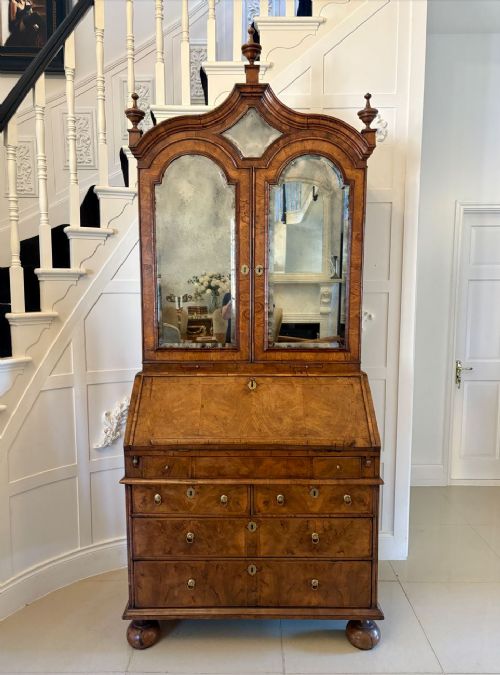
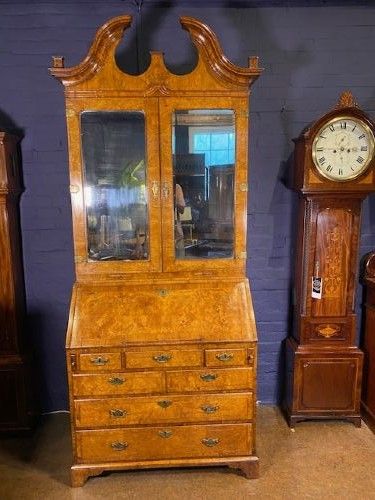
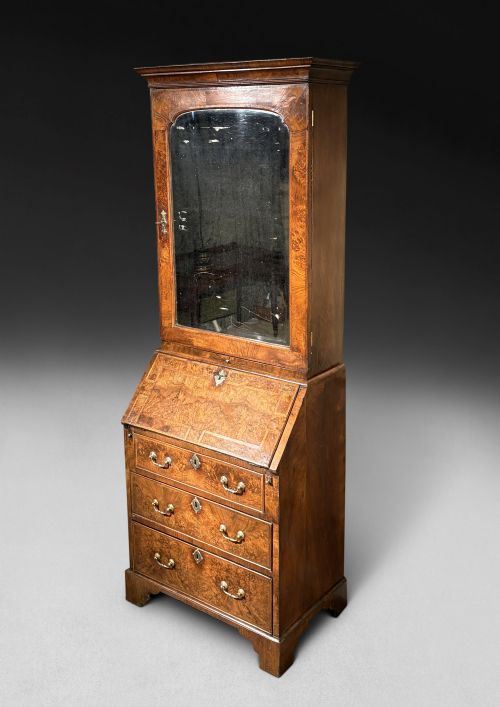
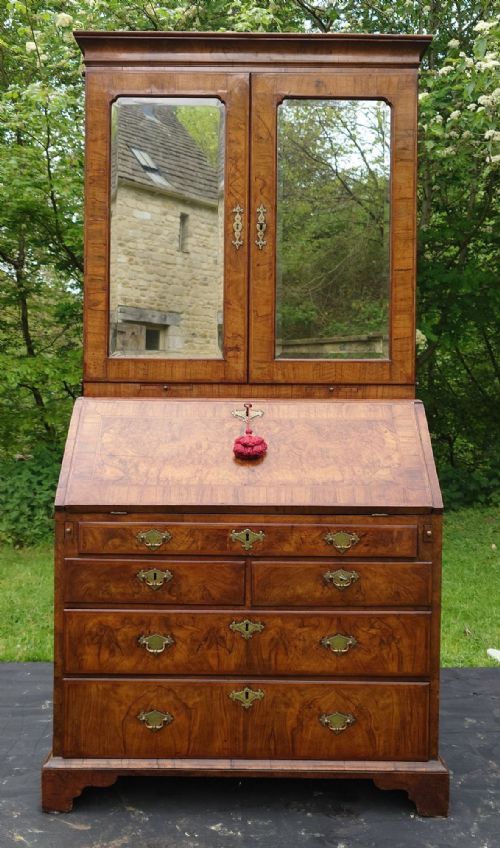


Queen Anne Bureau Mirror
A queen anne bureau mirror combines a compact writing desk with an integrated looking glass, offering practical elegance for the domestic interior.
Queen Anne Bureau Mirror
When you search for a queen anne bureau mirror, you encounter pieces that merge the slanted writing flap of a bureau with the upward gaze of a dressing glass.
The most common examples on this page are larger bureau bookcases alongside smaller toilet mirrors featuring miniature bureau bases from the eighteenth century.
These items originate primarily in the seventeenth and eighteenth centuries, with later nineteenth-century revival pieces also appearing in the selection.
How they were made
Cabinetmakers constructed these pieces using solid wood and veneers such as walnut and burr walnut, sometimes finishing surfaces with lacquer.
Reflecting elements relied on mirror glass framed within woodwork, while functional components incorporated brass hardware.
The listings span the seventeenth century, the eighteenth century, and nineteenth-century revival dates including 1860 and 1880.
What varies in quality
The distinction between tiers rests upon the selection of timbers like burr walnut and the execution of decorative details such as featherbanding.
Originality of components, including mirrored doors and glass plates, separates standard items from those retaining their initial form.
The Queen Anne Bureau Mirror Glossary
- Burr walnut
- A figured wood veneer taken from the excrescences of walnut trees, prized for its swirling patterns. It appears frequently on high-status furniture of the period.
- Featherbanding
- A type of inlay using matched veneers arranged in a herringbone or chevron pattern around drawer edges and panels. This technique frames the primary wood surface.
- Bureau bookcase
- A combination of a sloping writing desk below and a shelved cabinet above, enclosed by doors. The upper section often houses adjustable shelving for books.
- Toilet mirror
- A small adjustable looking glass mounted on a dressing stand or miniature chest base. These pieces sat atop larger tables for grooming purposes.
- Lacquered
- Finished with a resinous coating, sometimes incorporating oriental decorative motifs in the Chinese export tradition. This treatment provides a glossy coloured surface.
Queen Anne Bureau Mirror: Frequently Asked Questions
What is a bureau mirror?
A bureau mirror is a hybrid furniture form combining a writing surface and storage compartments with an attached dressing glass.
These pieces served as compact desks where individuals could write letters while retaining a mirror for personal grooming.
How do I date a piece?
Dating relies on examining the timber construction methods, cabinet proportions, and the specific materials used by makers.
Eighteenth-century examples typically show distinct walnut grains and traditional joinery not found in later nineteenth-century revivals.
Where were they placed?
These items belonged in private chambers, dressing rooms, or studies where personal correspondence and grooming took place.
Their relatively compact footprint allowed them to fit neatly against walls in domestic bedchambers.
Are lacquered finishes original?
Some pieces feature red or black lacquer finishes applied during the original manufacturing period or later Victorian revivals.
Chinese export examples and eighteenth-century items demonstrate early decorative painting traditions on wood surfaces.