




Wooden Desktop Vanity Mirror
A wooden desktop vanity mirror sits on the table to catch the morning light while holding small trinkets close at hand.
Wooden Desktop Vanity Mirror
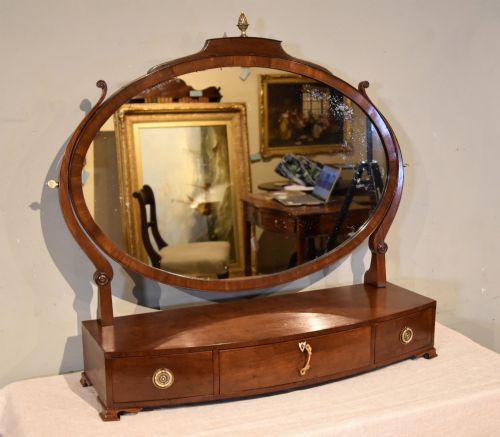
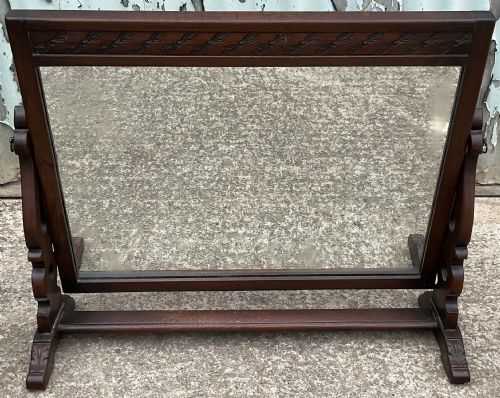
A wooden desktop vanity mirror is a dressing table or toilet glass designed to tilt for personal grooming. These pieces range from simple swing mirrors on upright supports to complex designs featuring small drawers beneath the frame.
The versions most likely to appear on this page span the Georgian, Victorian, and Edwardian periods. Examples include mahogany swing mirrors with serpentine bases, walnut bureau mirrors, and oak adjustable toilet mirrors.
Makers produced these mirrors in various regional tastes, including Dutch Neo-Classical, Queen Anne style, and Arts and Crafts. Alongside domestic dressing mirrors, buyers encounter specialised forms such as Italian reliquary mirrors.
How they were made
Joiners constructed these frames and stands primarily in mahogany, walnut, and oak, often incorporating boxwood inlay for decorative contrast. Artisans shaped the wood using traditional cabinetmaking techniques to build sturdy upright supports and box bases.
Makers integrated brass fittings, such as pivot screws and adjustment arms, to allow the glass frame to tilt securely. Reflective surfaces consist of traditional glass plates, while specific decorative pieces employ carved giltwood or polychrome finishes.
Wooden Desktop Vanity Mirror Retail Price Guide 2026
Typical asking prices for wooden desktop vanity mirror among the pieces listed under this phrase on Sellingantiques today, from the lower quarter to the upper quarter. They describe what is for sale here now, not the wider market.
Some mirrors double as tiny writing desks, proving that even your reflection occasionally needed to answer correspondence.
What varies in quality
The refinement of the timber and the crispness of the joinery separate standard examples from finer pieces. Superior construction shows in balanced proportions, clean serpentine curves, and well-executed boxwood inlay rather than plain surfaces.
Hardware and secondary details also dictate the tier of a piece. High-quality examples use substantial brass adjustment mechanisms and retain fitted interior compartments within the base drawers, whereas lesser pieces feature simpler, unadorned frames.
The Wooden Desktop Vanity Mirror Glossary
- Swing mirror
- A glass plate suspended within a frame that pivots between two upright posts. This mechanism allows the user to tilt the reflection at various angles.
- Toilet mirror
- A smaller dressing mirror designed to sit atop a chest of drawers, washstand, or dressing table. These items typically include a small box base with or without drawers.
- Bureau mirror
- A dressing mirror combined with a sloping desk compartment or small drawers at the base. This dual-purpose form provides storage for writing materials alongside the glass.
- Serpentine
- A curved line that undulates outward and inward in a gentle S-shape. Cabinetmakers applied this profile to the front drawers of dressing mirrors for visual movement.
Wooden Desktop Vanity Mirror: Frequently Asked Questions
How do I date a wooden desktop vanity mirror?
Examine the secondary woods, construction methods, and overall stylistic influences visible in the frame and base. Pieces from the eighteenth century often display hand-cut dovetails and distinct timber grains that differ from later industrial production.
Compare the hardware, such as brass screws and plates, against known period designs. Shifts in decorative tastes, from Georgian serpentine outlines to Edwardian inlay, help narrow the decade of manufacture.
Where were these mirrors placed?
These mirrors sat primarily upon dressing tables, sideboards, or chests of drawers in bedrooms and dressing rooms. Their portable nature allowed users to position them near windows for optimal natural light during grooming.
Certain specialised forms rested on writing desks or altar tables. Their compact footprints made them easy to move between rooms as daily routines required.
Can I adjust the angle of the glass?
Most antique versions utilise brass side screws or pivot pins fitted into the upright supports. Tightening or loosening these components allows the mirror frame to tilt forward or backward.
Users should support the glass with one hand while adjusting the fittings to prevent strain on the wooden frame. Original brass hardware moves smoothly when properly aligned.
What is the difference between a toilet mirror and a dressing table mirror?
Toilet mirrors historically refer to smaller glass frames equipped with a box base containing small drawers for cosmetics and pins. They were designed to sit on top of existing furniture surfaces.
Dressing table mirrors often form part of a larger suite or feature more substantial proportions integrated with elaborate stands. Both terms describe mirrors used for personal grooming on a tabletop.