

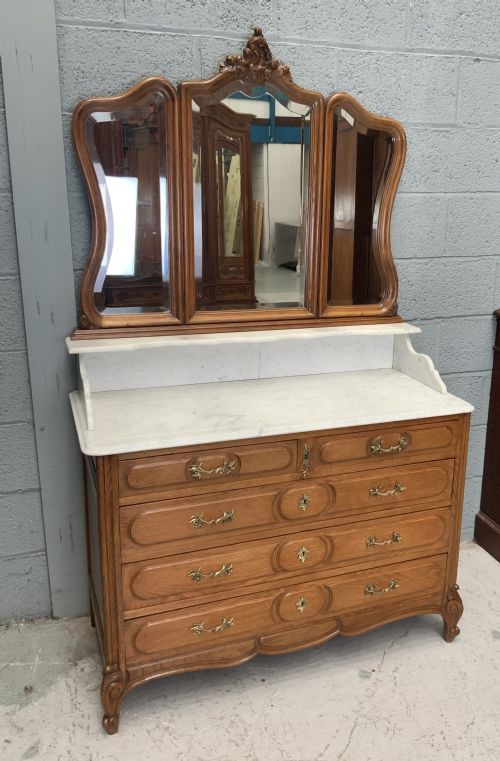


Desk Mirror with Drawers
A desk mirror with drawers combines a tilting looking glass with small storage compartments for daily essentials, offering both practicality and charm.
Desk Mirror with Drawers
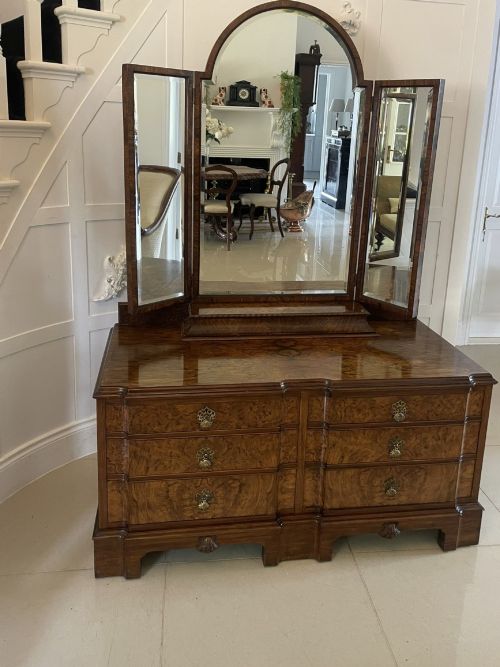
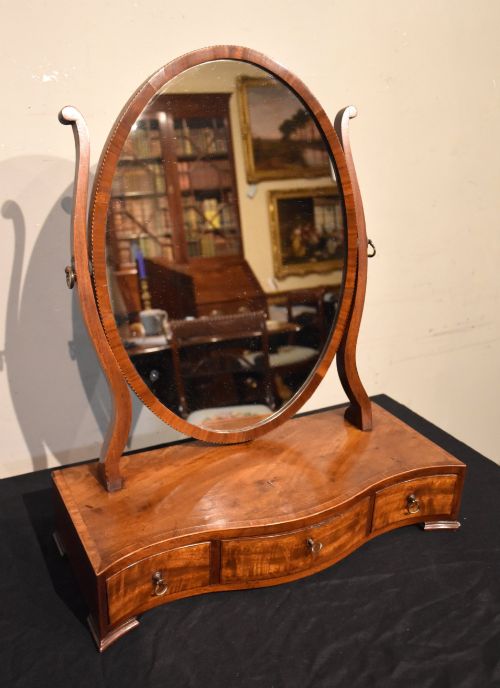
A desk mirror with drawers sits upon a surface, uniting a pivoting glass plate with a small compartmented base designed to hold letters, trinkets, or grooming items. These pieces span centuries of cabinetmaking, appearing in domestic spaces from the Georgian era through to the Edwardian period.
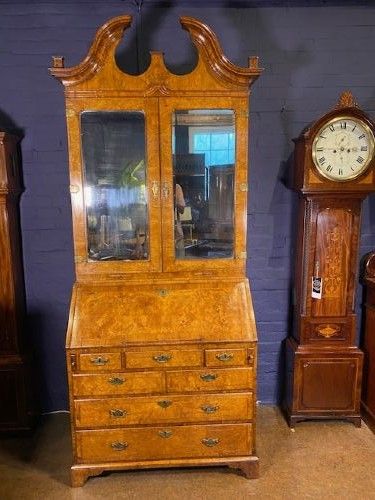
The versions most commonly met combine compact bureau sections or stepped drawer bases with upright glass frames. They bridge the gap between small storage furniture and vanity accessories, often taking influence from Queen Anne, Victorian, and Arts and Crafts tastes.
How they were made
Cabinetmakers constructed the frames and drawer boxes primarily in mahogany, walnut, oak, and satinwood, frequently selecting figured or burr veneers for the primary surfaces. Brass fittings such as screw knobs, hinges, and arm brackets secure the pivoting mirror plate to its upright supports.
Glass plates of the earlier periods utilise silvering techniques typical of their time, set within moulded wooden frames that tilt between shaped arms. The small drawers beneath employ traditional joinery like dovetailing to withstand regular handling.
Secret compartments hidden within the miniature drawers of a bureau mirror provided a safe haven for love letters and clandestine notes.
What varies in quality
The standard of timber selection and veneer matching defines the visual weight of the piece, with richly figured burr walnut or dense mahogany marking the higher tiers. Fine cabinet work shows in the precise fit of the small drawers and the grace of the shaped support arms.
Original brass hardware and clear, unaltered mirror glass contribute significantly to the integrity of the object. Simpler iterations in oak or satin walnut offer sturdy utility without the elaborate decorative carving or decorative stringing found on grander examples.
Wright and Hunter of Belfast
The Desk Mirror with Drawers Glossary
- Bureau fitment
- A small desk section featuring pigeonholes and miniature drawers built into the base of the mirror frame. This allows the piece to function as a compact writing slope.
- Burr walnut
- A specialised timber cut from the wart growths of walnut trees, yielding intricate, swirling grain patterns. It was favoured by cabinetmakers for high-status surfaces.
- Toilet mirror
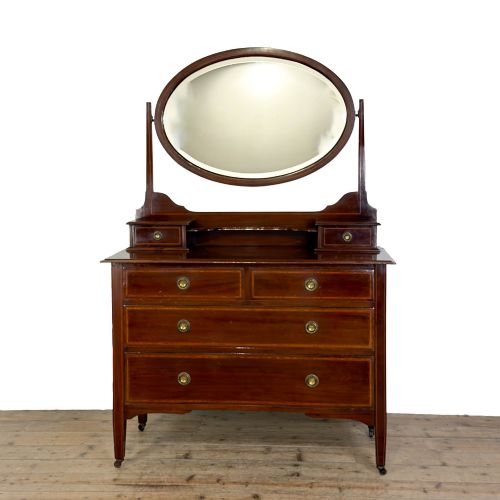
- An alternative period term for a dressing mirror designed to sit atop a chest of drawers or dressing table. They frequently incorporate small trinket drawers in the base.
- Serpentine
- A curved shape featuring a convex centre flanked by concave ends, commonly seen on the front edges of Georgian drawer units. It adds visual movement to the furniture.
- Arts and Crafts
- A design movement emphasising honest construction, simplified forms, and visible craftsmanship. Pieces from this tradition often feature plain oak and subtle inlaid details.
Desk Mirror with Drawers: Frequently Asked Questions
What is a desk mirror with drawers?
A desk mirror with drawers is a tabletop furnishing that combines an adjustable glass plate with a small set of drawers or a writing compartment at the base. It was designed to hold small valuables, letters, or cosmetics.
These pieces sit comfortably on top of chests, writing desks, or dressing tables, providing both a reflective surface and organised storage in a compact footprint.
How do I date a desk mirror?
Dating relies on observing the secondary woods, the style of the brass hardware, the method of glass silvering, and the overall cabinet proportions. Georgian examples often feature slender proportions and mahogany frames, while Victorian and Edwardian pieces incorporate heavier burr walnut or oak.
Construction details inside the drawers, such as hand-cut dovetails or machine-cut joints, offer further clues to the manufacturing period.
Where should I place it?
These mirrors suit dressing tables, chest tops, or writing desks where natural light helps the glass function effectively. They also work well on sideboards or console tables in living spaces.
Ensure the surface is stable and level, as the combination of a heavy mirror plate and a drawer base creates an elevated centre of gravity.
Are the mirrors usually original?
Many older pieces retain their original mirror glass, though some have been replaced over the centuries due to breakage or foxing of the silver backing. Original glass often shows minor blemishes, distortion, or waviness.
Replacement glass does not necessarily diminish the utility of the piece, but original plates are naturally preferred by collectors.