
Vanity Mirror Box
These pieces for vanity mirror box encompass compacts and dressing mirrors crafted from mahogany, walnut, silver, and glass across the Georgian, Victorian, and Art Deco periods.
Vanity Mirror Box
A vanity mirror box combines a reflective glass surface with a fitted container or base, serving personal grooming needs on a dressing table. The selection spans compacts, travelling sets, and table mirrors designed to hold cosmetics, jewellery, or personal items.
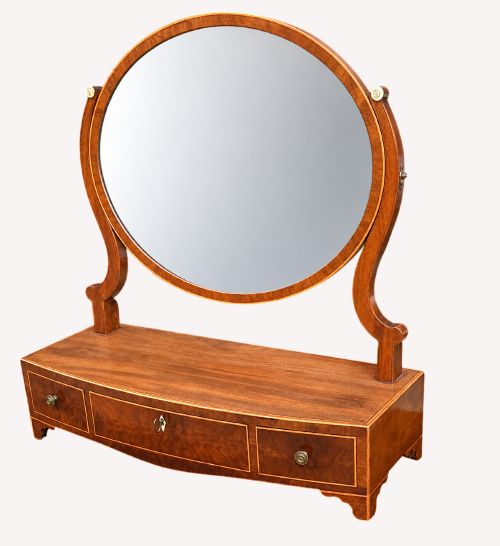
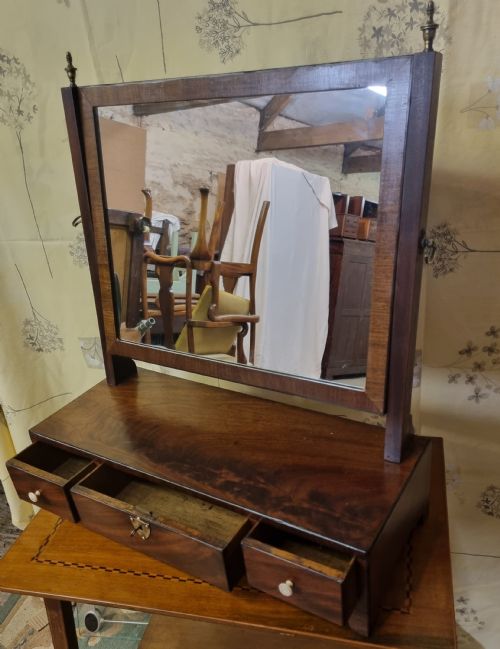
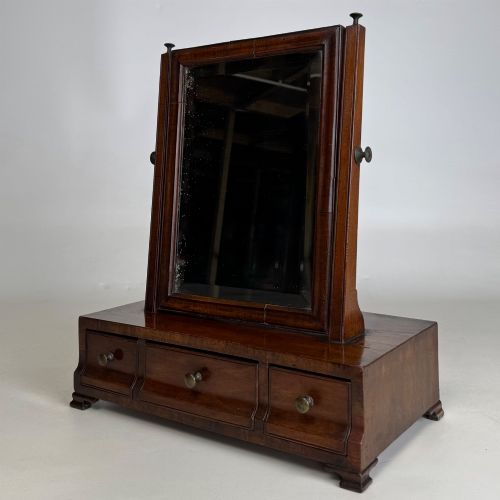
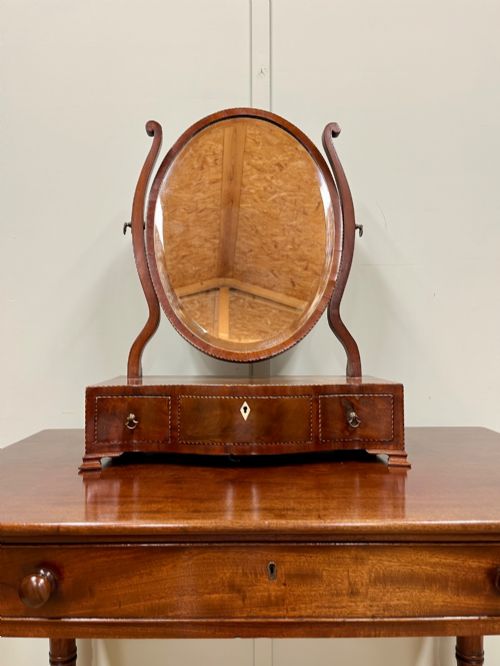
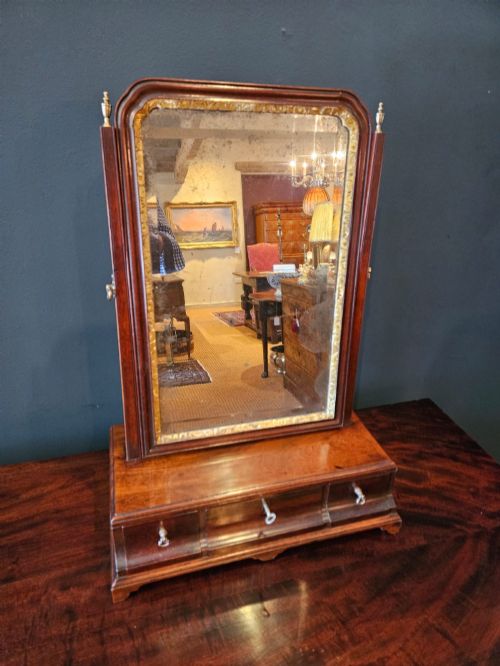
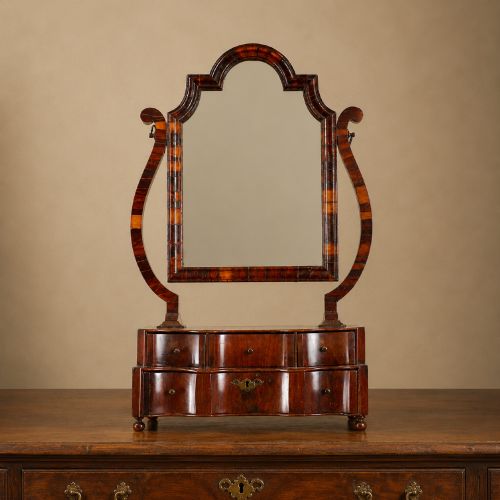
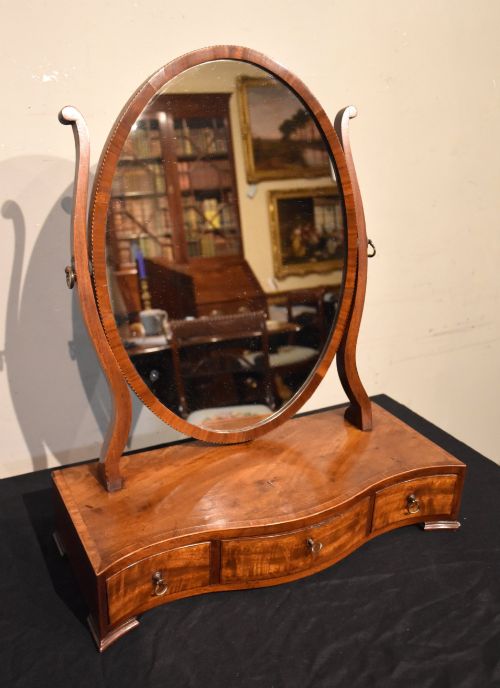
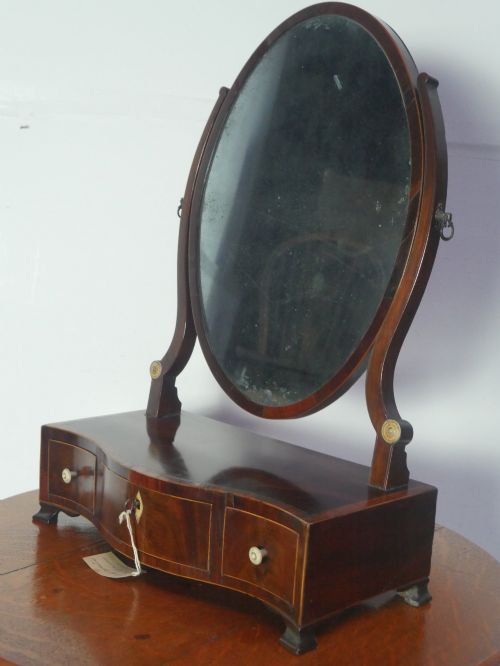
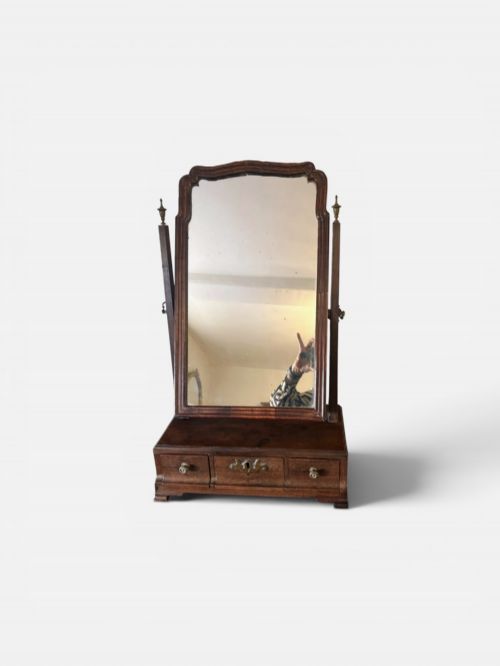
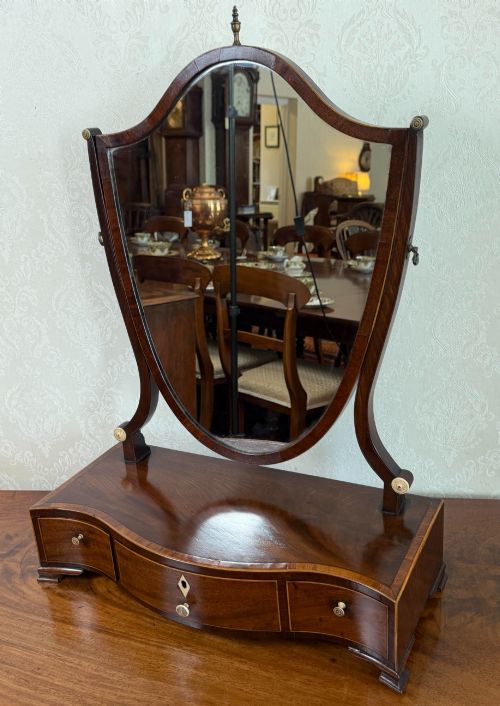
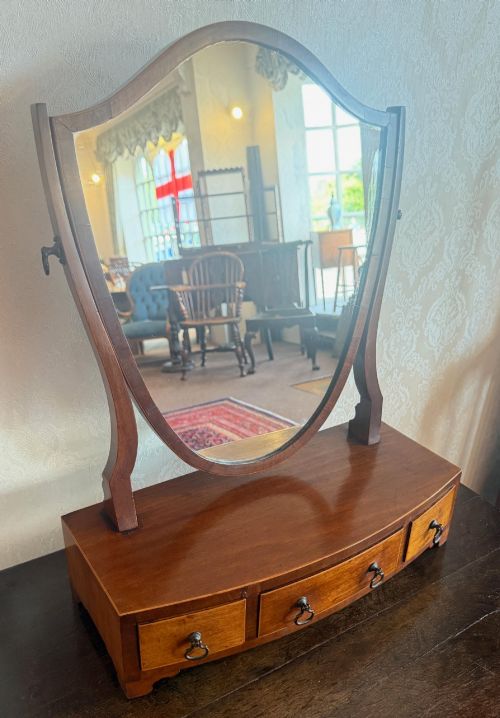
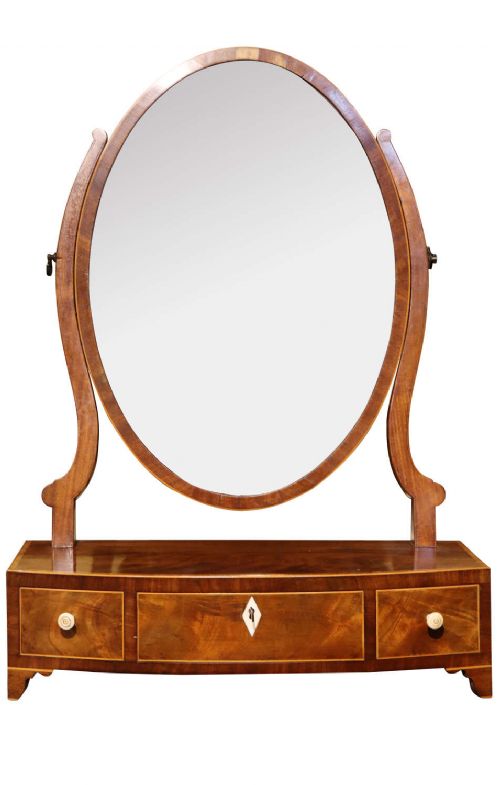
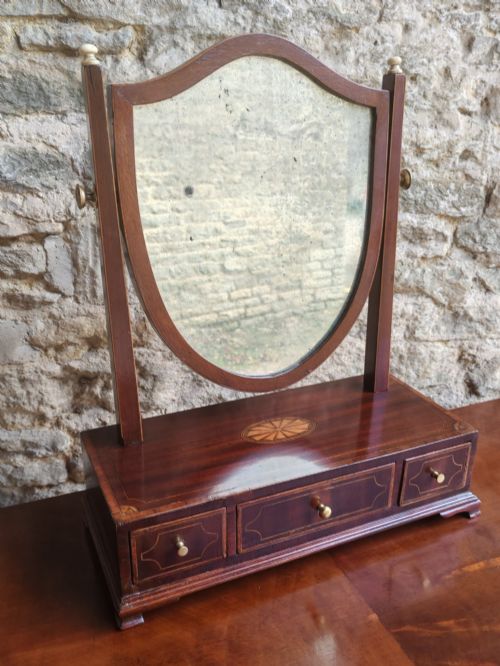
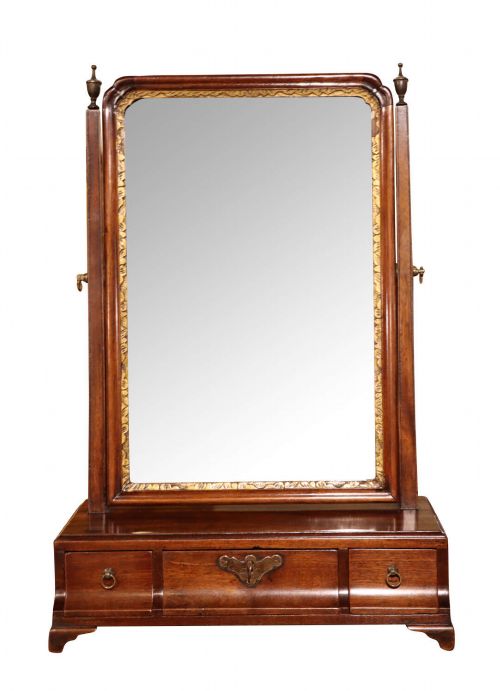
The dominant forms on this page are mahogany dressing mirrors and toilet mirrors from the 18th century and Georgian period, featuring swing plates mounted on box bases with small drawers. Alongside these sit Victorian walnut boxes and silver compacts from the 1920s and 1930s.
Makers and manufacturers utilised various woods and metals, producing pieces ranging from simple 1800 utility boxes to elaborate Queen Anne walnut examples and Art Deco guilloché enamel compacts.
How They Were Made
Cabinetmakers constructed the wooden vanity mirror box frames using timbers such as mahogany, walnut, satinwood, and laburnum, frequently incorporating crossbanding, inlay, or parcel-gilt details. The mirror plates hang on pivot screws between upright arms fixed to a plinth base containing one or more drawers.
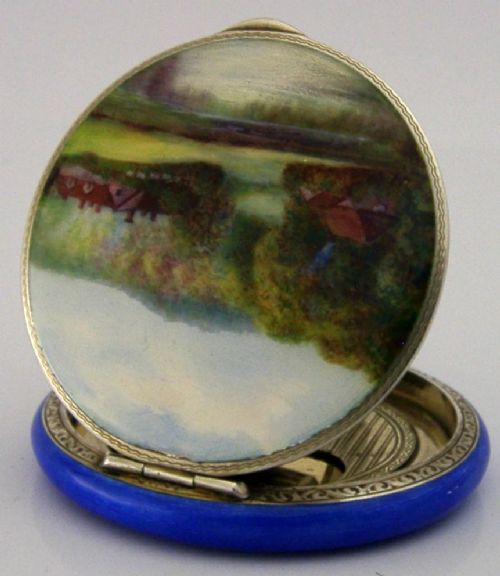
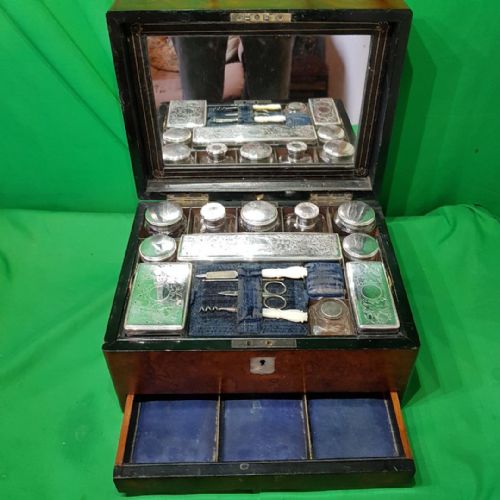
Silver and metal compacts employ techniques like hand painting, filigree work, and translucent enamel over engine-turned guilloché backgrounds. Interior linings utilise materials such as suede and silk to protect jewellery and cosmetic accessories.
Listings for vanity mirror box pieces span the 18th, 19th, and 20th centuries, uniting Georgian mahogany furniture with Art Deco silver compacts.
What Varies in Quality
Quality rests in the selection of figured timber veneers like burr walnut or mahogany, and the precision of cabinet joinery in the base drawers. Superior examples display refined proportions, original mirror glass, and subtle crossbanding or inlay rather than plain surfaces.
For metal compacts, the crispness of the silver hallmarks, the durability of the enamel work, and the structural integrity of the hinge mechanisms separate standard utility pieces from finer signed works.
Henry Matthews·Evans·Giuliano Spinelli
The Vanity Mirror Box Glossary
- Toilet mirror
- A small mirror designed to stand on a dressing table or chest of drawers, often fitted with a box base for storage.
- Swing mirror
- A mirror plate mounted on pivots allowing the glass to tilt at different angles within its supporting frame.
- Guilloché enamel
- Decorative metalwork covered with translucent enamel over an engine-turned geometric pattern, common on 20th-century compacts.
- Crossbanding
- A narrow strip of veneer laid around the border of a panel with the wood grain running perpendicular to the centre.
- Parcel-gilt
- Wood or metal partially decorated with applied gold leaf or gold paint to highlight specific carved details.
Vanity Mirror Box: Frequently Asked Questions
What is a vanity mirror box?
A vanity mirror box is a portable or table-standing accessory that combines a mirror with a storage compartment, box, or drawer base. They were used for daily grooming, holding cosmetics, and keeping small items secure.
Examples range from Georgian mahogany table mirrors with fitted drawers to small silver and enamel pocket compacts from the 20th century.
How do I date a wooden dressing mirror?
Dating relies on timber choices, construction methods, and cabinet styles associated with periods like the Georgian era or the 19th century. Earlier 18th-century pieces often feature walnut or figured mahogany with serpentine shapes and candle slides.
Later Victorian versions tend to use burr walnut and incorporate more complex internal compartments for jewellery and travelling sets.
What is the difference between a toilet mirror and a dressing mirror?
The terms are largely interchangeable in historical descriptions, both referring to table-standing mirrors used during personal preparation. Eighteenth-century pieces are frequently catalogued as toilet mirrors or dressing glasses.
Larger versions that sat on dedicated dressing tables often earned the label dressing table mirrors.
How were silver compacts decorated?
Silver compacts from the 1920s and 1930s frequently utilised coloured enamel applied over machine-engraved metal patterns known as guilloché. Other techniques included hand painting, filigree wirework, and geometric Art Deco stamping.
Makers stamped their initials and assay office marks directly into the silver frames.
How do I care for antique wood and silver?
Wooden surfaces require occasional polishing with traditional beeswax to nourish the timber and maintain the patina of the polish. Avoid placing them in direct sunlight or areas with extreme humidity changes.
Silver compacts need gentle cleaning with a soft cloth to preserve delicate enamel and avoid scratching the metal.