


Porcelain Mounted Furniture
Porcelain mounted furniture combines cabinet work with glazed plaques, bringing painted ceramic panels into functional household forms.
Porcelain Mounted Furniture
Porcelain mounted furniture brings together timber cabinet work and glazed ceramic plaques, mostly arriving from nineteenth century production and revival workshops. These pieces span utility and display, taking the shape of credenzas, side cabinets, card tables and writing desks.
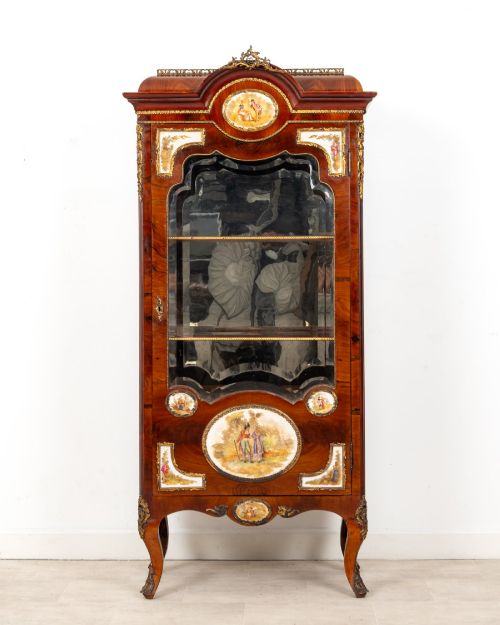
The version most commonly met on this page is the Victorian or nineteenth century French piece, often styled after Louis XV or Louis XVI revivals. Walnut, kingwood and ebonised wood form the primary carcasses, decorated with painted ceramic inserts.
Form follows function closely, dividing between storage pieces like pier cabinets and smaller occasional tables meant for display. Desks and bonheur du jours integrate plaques directly into writing flaps and superstructure drawers.
Materials and construction
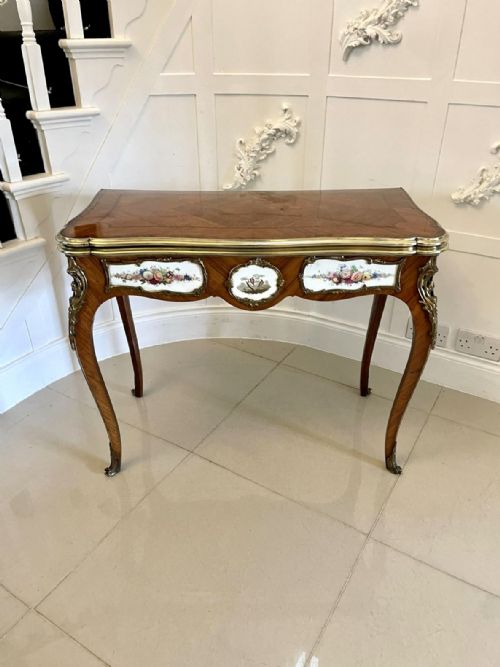
Makers built these pieces using hardwood foundations of walnut, kingwood, amboyna or satinwood, frequently laid over with marquetry or geometric veneers. Ormolu and gilt bronze mounts frame the painted porcelain plaques, securing them into the timber carcass.
Fired ceramic plaques, often attributed to Sevres or painted in that manner, sit flush within brass or ormolu bezels attached to the furniture fronts and sides. Ebonised wood and glass are also utilised alongside brass stringing to complete the structured decoration.
Card tables fold down to reveal hidden baize surfaces, ready for nineteenth century parlour games beneath inset porcelain plaques.
Assessing the work
Quality rests in the harmony between the cabinet work and the metal mounts, where heavier chasing in the ormolu distinguishes finer workshops from standard production. The crispness of the timber marquetry and the weight of the underlying carcasses dictate the stability of the piece.
The painting upon the porcelain plaques reveals the hand of the decorator, separating factory output from more considered artistic effort. Precision in the fitting of the ceramic panels into their bronze mounts marks the difference in manufacturing standards.
G T Morant·Lamb of Manchester
The Porcelain Mounted Furniture Glossary
- Ormolu
- Gilded bronze or brass applied as mounts and decorative framing on furniture carcasses. This technique provides metallic contrast against dark timbers like walnut and ebonised wood.
- Sevres
- A type of porcelain associated with French ceramic production, noted for painted panel decorations. Plaques from this origin appear frequently inset into nineteenth century cabinets and desks.
- Bonheur de jour
- A small lady's writing desk featuring a raised superstructure with drawers and compartments above the main writing surface. These desks often incorporate porcelain plaques along the main frieze or backing.
- Credenza
- A large sideboard or display cabinet used originally for dining rooms and formal reception spaces. These items rely on enclosed cupboards flanked by glass doors to showcase porcelain inserts.
- Marquetry
- Inlaid wood veneers arranged to form decorative patterns across the surface of a table or cabinet. This technique frames the porcelain plaques on top quality pieces.
Porcelain Mounted Furniture: Frequently Asked Questions
How do I clean porcelain plaques on furniture?
Use a soft, dry cloth to remove dust from the glazed surface without disturbing the surrounding ormolu mounts. Avoid liquid cleaners that might seep behind the plaque edges or damage the timber finish.
Keep these pieces away from direct sunlight and damp environments to protect both the wood veneers and the painted ceramic details over time.
Are these pieces English or French origin?
The selection includes both English cabinet work and nineteenth century French pieces influenced by Louis XV and Louis XVI styles. Makers in London and Manchester produced similar revival designs alongside continental workshops.
Distinguishing between them depends on timber choice and mount construction, with French pieces frequently favouring kingwood and elaborate ormolu.
Where were credenzas placed in Victorian homes?
Credenzas stood against principal reception room walls to display ornamental objects and store dining items. Their glazed central doors and porcelain mounts suited formal entertaining spaces.
Today, these cabinets function similarly in living areas, holding books or tableware while serving as decorative focal points.
What timber is most common?
Walnut and kingwood appear most frequently across these listings, alongside ebonised wood and satinwood. Burr walnut provides distinct grain patterns on credenzas and card tables.
Cabinet makers paired these rich timbers with gilt bronze mounts to highlight the inset ceramic plaques.