


Porcelain Figural Candle Holders
Porcelain figural candle holders combine sculptural charm with practical illumination, bringing centuries of European artistry onto your mantelpiece.
Porcelain Figural Candle Holders
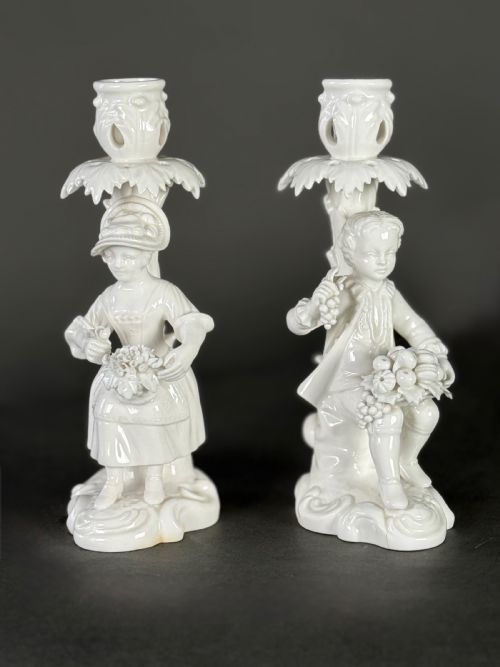
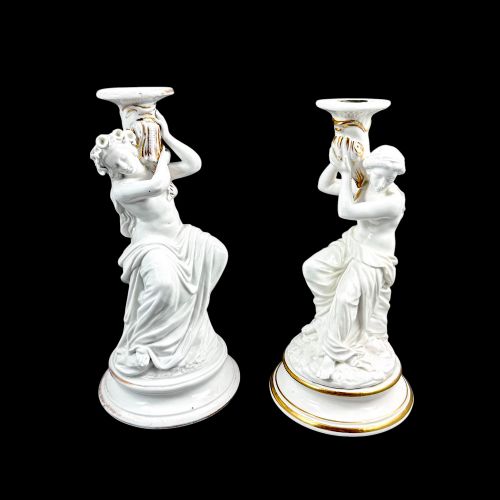
Porcelain figural candle holders take the form of human figures, allegorical characters, dancers or animals integrated into candlesticks and candelabra. When searching for porcelain figural candle holders, you encounter sculptural works that double as functional lighting fixtures.
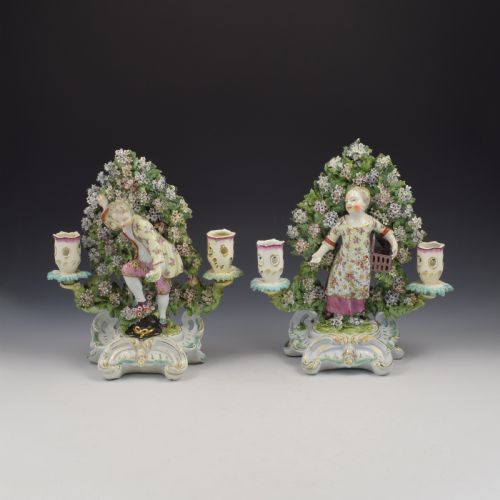
The pieces on this page span the 18th, 19th and early 20th centuries, originating from English potteries like Derby, Chelsea, Minton and Royal Worcester, as well as continental factories including Meissen, Sitzendorf, Volkstedt and Dresden. English examples from the Georgian period often depict children, dancers or allegorical figures amidst applied floral bocage.
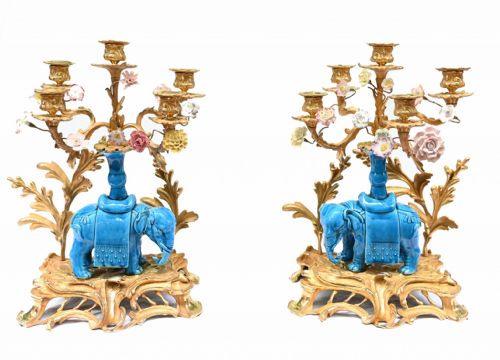
Continental output from German factories heavily populates the selection, frequently featuring elaborate Rococo Revival styling, pastoral scenes and multi-arm candelabra. You are most likely to meet pairs, which remain the standard format for mantel garnitures and table settings.
What varies in quality
Painting execution and gilding preservation dictate visual strength. Skilled artists employ delicate brushwork for facial expressions and costume patterns, while richer gold leaf applications endure more brightly over centuries of handling.
Gardeners, dancers, shepherds and children frozen in porcelain stand ready to illuminate your dinner table forever.
Derby·Sutherland and Sons·Volkstedt·Royal Worcester Hadley·Sitzendorf·Chelsea·Helena Wolfsohn·Triebner ENS and Eckert·Meissen·Minton·James Hadley
The Porcelain Figural Candle Holders Glossary
- Bocage
- An applied background of leaves, branches and flowers made of porcelain that surrounds figural groups. This decorative technique mimics natural foliage and appears frequently on 18th-century English pieces.
- Blanc de Chine
- A pure white porcelain originating from China and later emulated by European potteries. It relies entirely on form and glaze rather than painted enamels to display sculptural detail.
- Candelabra
- A branched candlestick holding multiple candles on a single base. These larger lighting pieces often incorporate central figures or allegorical groupings.
- Patch-mark
- An unglazed circular blemish on the base of early porcelain left by supports inside the kiln during firing. Collectors use these marks to date 18th-century English pieces.
- Hard-paste porcelain
- A durable ceramic composition containing kaolin and petuntse fired at high temperatures. It resists scratching and accepts bright enamel colours effectively.
Porcelain Figural Candle Holders: Frequently Asked Questions
How do I clean antique porcelain candle holders?
Dust the surfaces gently with a soft, dry brush to prevent the accumulation of dirt within the intricate floral bocage and crevices.
Avoid immersing the pieces in water or using harsh chemical cleaners, as this can damage delicate hand-painted enamels and historic gilding.
Were these figures meant for everyday lighting?
Wealthy households utilised figural candlesticks for dining tables, drawing rooms and mantel garnitures where candlelight added ambient illumination.
While functional, many elaborate pieces served primarily as decorative status objects rather than routine light sources.
How can I tell English pieces from German ones?
English factories like Derby and Chelsea often employ softer pastel palettes and naturalistic pastoral groupings with distinct kiln support marks on the bases.
German manufacturers such as Sitzendorf and Dresden favour bolder Rococo Revival styling, heavier gilding and vibrant polychrome enamels.
What does allegorical mean in these figures?
Allegorical figures represent abstract concepts such as the seasons, elements or virtues through human personifications.
Common examples include figures representing Summer and Autumn holding harvests, flowers or agricultural produce.