



German Porcelain Candle Holders
German porcelain candle holders bring figurative charm and intricate modelling to a room, offering sculpted forms from the nineteenth and early twentieth centuries.
German Porcelain Candle Holders
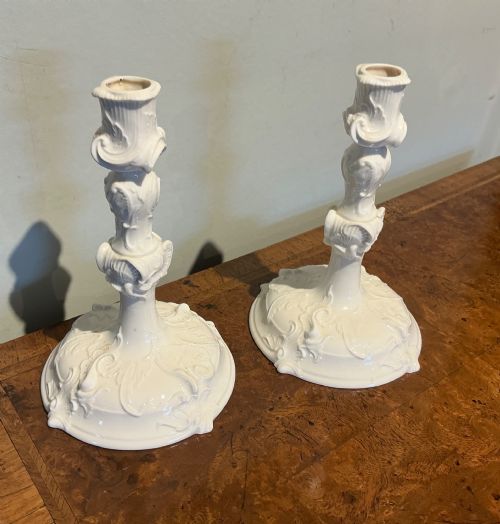
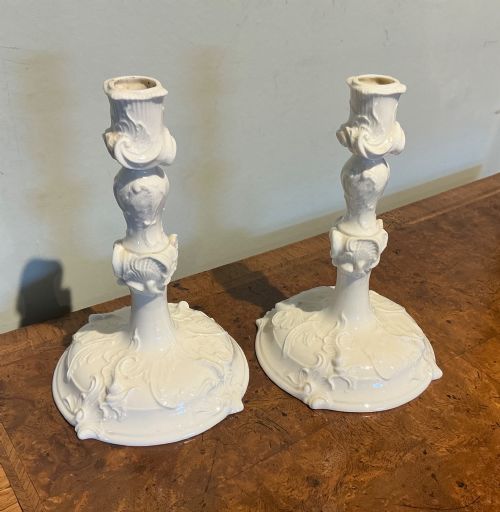
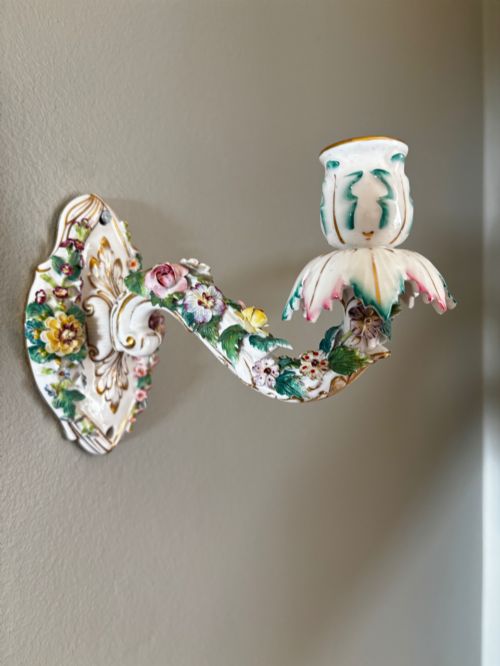
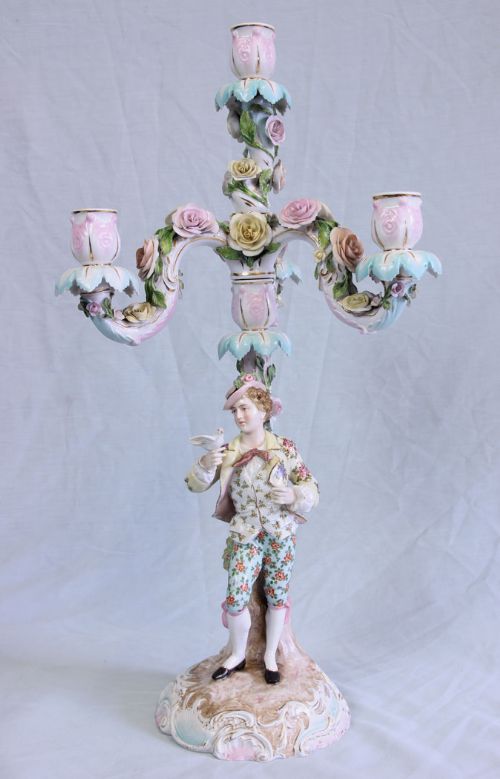
German porcelain candle holders encompass a range of decorative lighting fixtures, including single candlesticks, multi-arm candelabra, and wall sconces created across the nineteenth and early twentieth centuries. Buyers seeking these items will find figurative pairs depicting gardeners, shepherds, and allegorical figures alongside ornamental designs.
The objects stem from notable manufactories operating during periods such as the eighteen-eighties, eighteen-nineties, and nineteen-twenties. Forms vary from simple glazed columns to elaborate Rococo Revival compositions featuring floral bases and modelled characters.
Most examples originate from established German ceramic centres like Sitzendorf, Meissen, and Nymphenburg. These pieces serve both functional lighting roles and as decorative mantel or table centrepieces.
How they were made
The construction relies on hard-paste porcelain shaped through moulding and hand-modelling of intricate details such as foliage and garments. Artisans applied coloured glazes and enamel painting by hand before firing the ceramics at high temperatures.
Gilt and gold leaf accents were frequently added to highlights, rims, and bases to enhance the decorative impact. Final pieces received protective clear glazes to seal the enamel work and provide a polished surface.
Hunting foxes and attentive shepherds keep a silent watch from these porcelain bases.
What varies in quality
Quality differences depend on the crispness of the hand-modelling and the precision of the enamel painting. Finer examples display delicate facial expressions, sharply defined leaves, and carefully applied gilding.
The reputation of the producing factory and the complexity of the figural composition also influence the standing of an item. Multi-arm candelabra with numerous modelled figures demand greater technical skill than standard single candlesticks.
Nymphenburg·Meissen·Volkstedt·Sitzendorf·Triebner ENS and Eckert·Royal Bayreuth
The German Porcelain Candle Holders Glossary
- Hard-Paste Porcelain
- A durable ceramic composition fired at high temperatures, producing a dense body. It resists scratching and takes glossy glazes effectively.
- Candelabra
- A branched lighting fixture designed to hold multiple candles simultaneously. These pieces often feature two or more arms extending from a central stem.
- Blanc de Chine
- A French term denoting white porcelain without coloured glazes. In these pieces, the visual interest relies entirely on the modelled form and the bright white ceramic body.
- Enamel
- A fused glass powder applied to the porcelain surface as decoration. Firing bonds the colours permanently to the ceramic body.
German Porcelain Candle Holders: Frequently Asked Questions
How do I clean my candle holders?
Dust the porcelain gently using a soft brush to protect delicate painted details and applied flowers. Avoid harsh cleaning agents that might damage the enamel or gold leaf accents.
Keep the pieces away from direct heat sources to preserve the glaze integrity.
What periods do these pieces date from?
The available items date primarily from the nineteenth century through to the nineteen-thirties. Key periods represented include the eighteen-eighties, eighteen-nineties, and early twentieth-century decades.
Manufacture dates often align with revival styles popular during those eras.
How can I identify the maker?
Look for factory marks, ciphers, or impressed numbers on the underside of the porcelain base. Different German manufactories used distinct blue underglaze swords, crowns, or monogram stamps.
Matching these marks to historical records helps confirm the origin.