


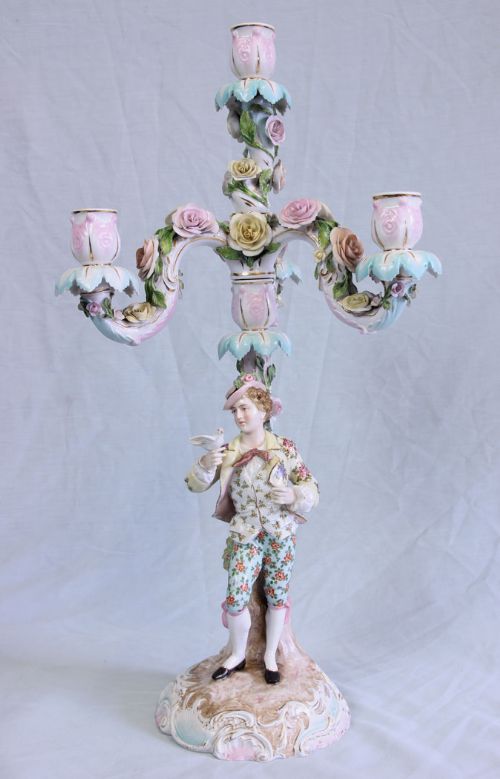


Dresden Style Porcelain Candlesticks
These dresden style porcelain candlesticks bring ornate continental charm to a mantelpiece, offering rich figural detail and gilded flourish.
Dresden Style Porcelain Candlesticks
When you search for dresden style porcelain candlesticks, you encounter decorative nineteenth-century German lighting pieces shaped by the Rococo Revival style. These items frequently incorporate figural elements such as allegorical characters, gardeners, shepherdesses, and musicians set upon floral bases.
The objects appearing on this page span from eighteen eighty to nineteen hundred, showcasing traditional craftsmanship originating from notable factories like Sitzendorf and Volkstedt. Pairs dominate the selection, functioning historically as decorative garnitures for formal rooms rather than purely utilitarian light sources.
How they were made
Dresden Style Porcelain Candlesticks Retail Price Guide 2026
Typical asking prices for dresden style porcelain candlesticks among the pieces listed under this phrase on Sellingantiques today, from the lower quarter to the upper quarter. They describe what is for sale here now, not the wider market.
Materials recorded across the selection include porcelain, enamel paint, gold leaf, and gilt.
What varies in quality
The complexity of the form also dictates the standard of execution, shifting from simple single-socket candlesticks to elaborate multi-arm figural candelabra. Intricate figural grouping and substantial scale require greater technical mastery during the kiln firing process.
Volkstedt Porcelain·Sitzendorf·Helena Wolfsohn
The Dresden Style Porcelain Candlesticks Glossary
- Rococo Revival
- A nineteenth-century design movement favouring asymmetrical scrolls, C-scrolls, shell motifs, and exuberant ornamentation. This aesthetic defines the curved bases and flamboyant stems of these lights.
- Candelabra
- A branched lighting fixture designed to hold multiple candles simultaneously. In this collection, examples feature up to four arms branching from a central figural stem.
- Gilt
- A thin layer of gold applied to the porcelain surface to highlight raised details and mouldings. It provides a metallic contrast to the painted enamel colours.
- Allegorical
- Representing abstract ideas through human figures or symbols, such as personifications of the seasons. These figures often form the primary structural support of the candleholders.
- Enamel Paint
- Vitreous coloured compounds fused to the porcelain body during firing. This technique produces the vibrant and lasting hues seen on the figures and floral decorations.
Dresden Style Porcelain Candlesticks: Frequently Asked Questions
What are dresden style porcelain candlesticks?
These pieces are ornate nineteenth-century German ceramic lighting items decorated with painted enamel and figural sculptures. They draw heavily on eighteenth-century design traditions.
Most examples incorporate botanical elements and classical figures, serving as decorative ornaments for parlours and dining rooms.
How were these candelabra used?
Historically, these items illuminated formal rooms when fitted with wax candles, placed upon sideboards, mantels, or tables. Their reflective gilt surfaces helped amplify candlelight.
Over time, their role shifted primarily toward ornamental display rather than practical illumination.
How should I care for antique porcelain?
Gentle dusting with a soft brush keeps the delicate applied flowers and painted surfaces clean. Avoid harsh cleaning solutions that can damage the enamel and gold gilt.
Keep them away from direct sunlight and areas prone to accidental knocks, protecting the fragile hand-modelled components.