

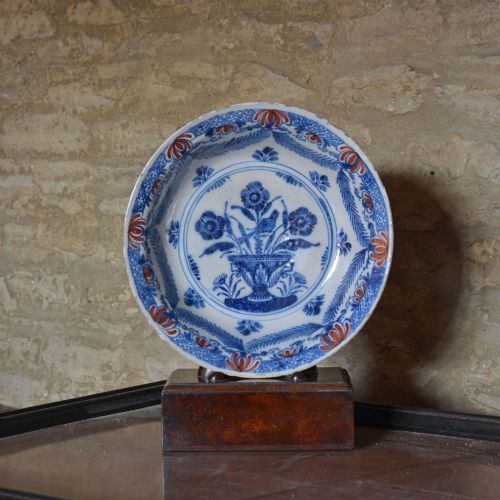
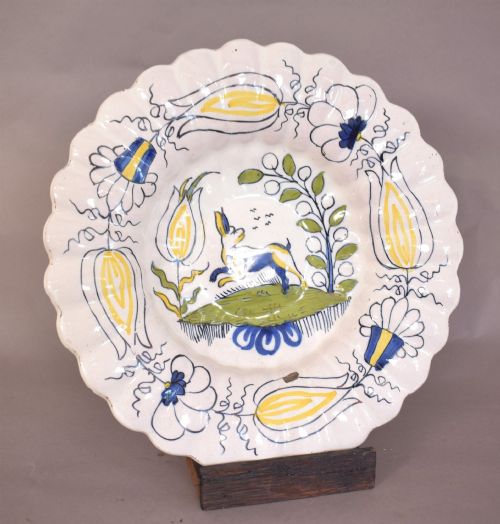
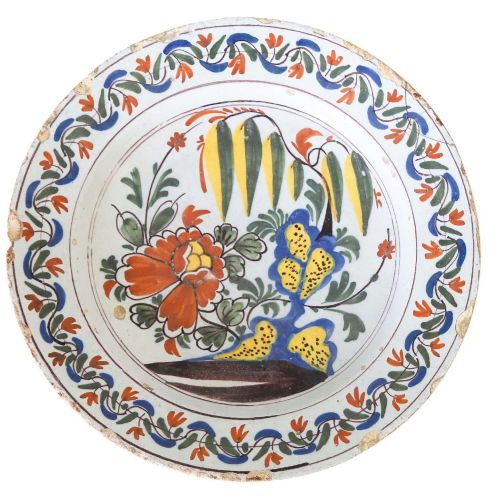
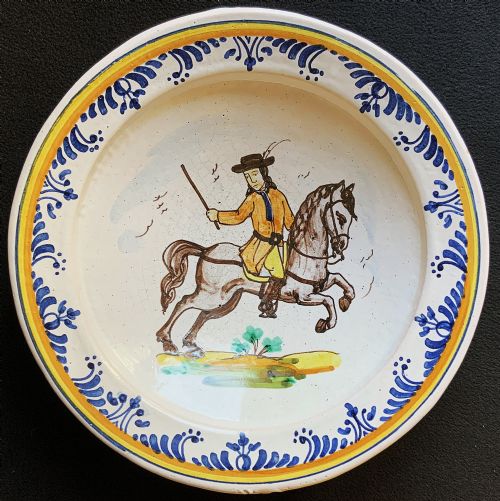
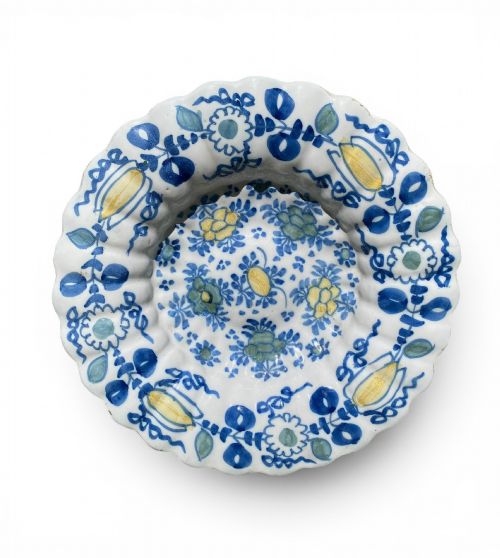


Polychrome Delftware Plate
A polychrome delftware plate brings vibrant tin-glazed earthenware into any room, offering hand-painted floral motifs and centuries of ceramic history.
Polychrome Delftware Plate
A polychrome delftware plate represents a tin-glazed earthenware dish decorated with multiple coloured pigments, spanning both English and continental European origins. These pieces range from modest domestic plates to large decorative chargers featuring geometric and floral designs.
Collectors frequently encounter 18th-century examples alongside earlier 17th-century pieces originating from English potteries or Dutch workshops. Forms vary from simple round plates to lobed dishes and expansive chargers designed for display.
How they were made
Potters shaped these objects from clay and earthenware, coating the fired body in a tin glaze that provided an opaque white surface for painting. Artisans then applied hand-painted pigments directly onto this absorbent ground before a final firing.
Workshops utilised grand feu techniques alongside overglaze methods to fix manganese, blue, and other polychrome colours into the glaze. This straightforward construction method left characteristic kiln marks and soft edges along the painted decoration.
Polychrome Delftware Plate Retail Price Guide 2026
Typical asking prices for polychrome delftware plate among the pieces listed under this phrase on Sellingantiques today, from the lower quarter to the upper quarter. They describe what is for sale here now, not the wider market.
Some eighteenth-century plates carry names like Ann Gomm inscribed directly into the clay, preserving ordinary lives inside the glaze.
What varies in quality
The sophistication of the hand-painted brushwork distinguishes standard domestic ware from more ambitious commissions. Crisp floral or Chinoiserie detailing executed with a steady hand elevates a piece above simpler geometric output.
The clarity and coverage of the tin glaze also determine visual success, alongside the balance of the ceramic body itself. Well-potted dishes with harmonious colour palettes show superior craftsmanship from the kiln.
The Polychrome Delftware Plate Glossary
- Polychrome
- Decorated in multiple colours rather than a single pigment. This multi-coloured approach defines the palette of these tin-glazed wares.
- Charger
- A large decorative plate intended for display on a wall or sideboard rather than everyday dining. These sizeable dishes often showcase the most elaborate painting.
- Tin glaze
- An opaque white glaze produced by adding tin oxide to a lead glaze base. It creates the smooth canvas required for hand-painted ceramic decoration.
- Grand feu
- A firing technique where colours are applied to the raw glaze and fired at high temperatures. This method fuses the pigments deeply into the surface.
- Chinoiserie
- European decorative motifs inspired by Chinese art and porcelain design. Artisans adapted these orientalist themes onto local earthenware shapes.
Polychrome Delftware Plate: Frequently Asked Questions
How should I hang a heavy charger?
Large chargers require robust, correctly sized wire spring hangers that distribute the weight evenly across the rim. Ensure the wall fixing engages securely with brick or a stud rather than plaster alone.
Avoid thin clips or adhesives which fail under the weight of earthenware. Check the mount periodically to keep the piece secure.
Can I use these plates for food?
Historic tin-glazed earthenware is unsuited to modern dining due to the porous clay body and potential lead content in the glaze. Use these plates strictly for decorative display.
Subjecting antique pottery to cutlery and washing causes irreversible damage to the soft surface. Enjoy them visually on walls or plate stands instead.
Were English and Dutch plates different?
English potteries in places like Lambeth and Bristol often produced wares with distinct local palettes and clay bodies. Dutch workshops, particularly around Delft, developed specific blue and polychrome traditions influenced by imported porcelain.
Stylistic overlaps remain common because makers frequently exchanged patterns and techniques. Examining the glaze and body characteristics helps distinguish between the two regional outputs.