

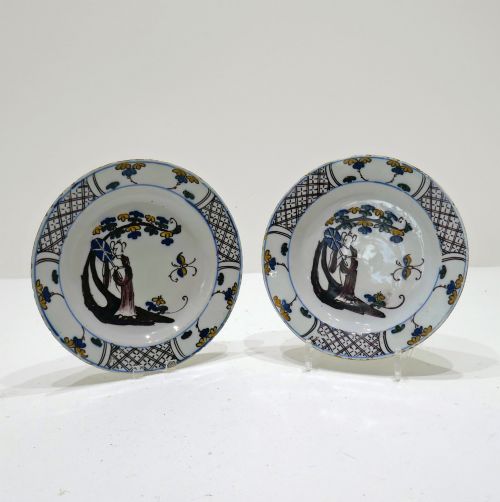
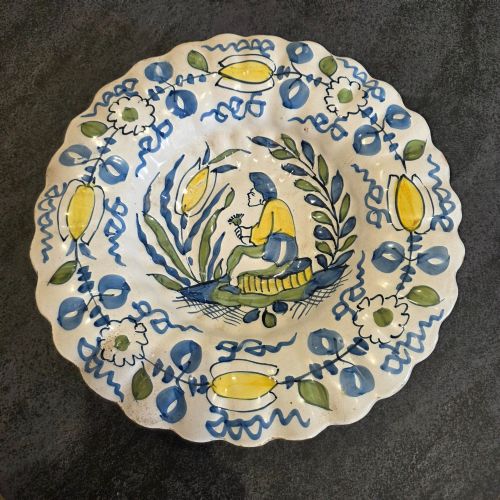
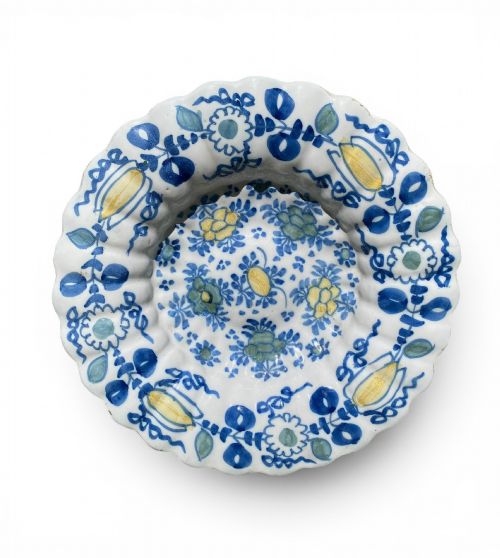
Antique Delft Dish
An antique delft dish is a tin-glazed earthenware vessel offering hand-painted blue and white or polychrome decoration from earlier centuries.
Antique Delft Dish
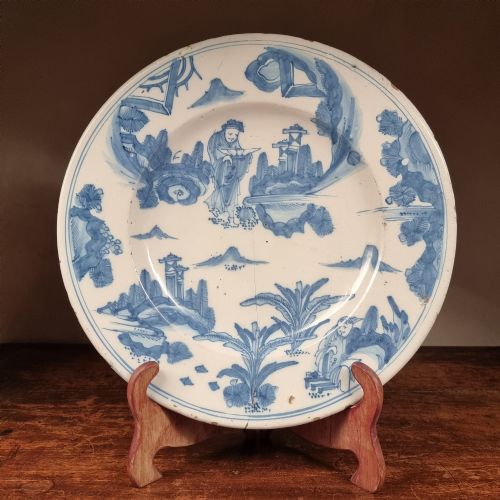
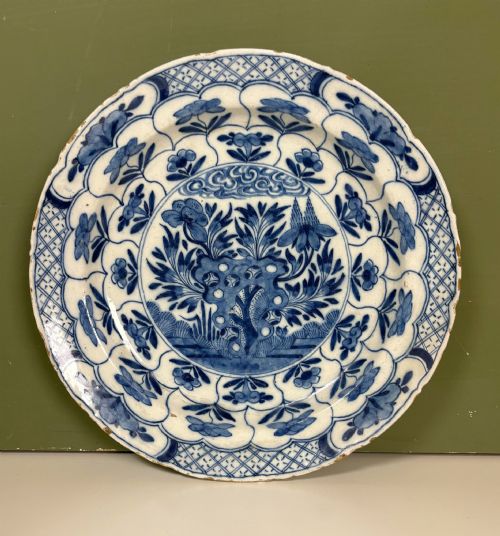
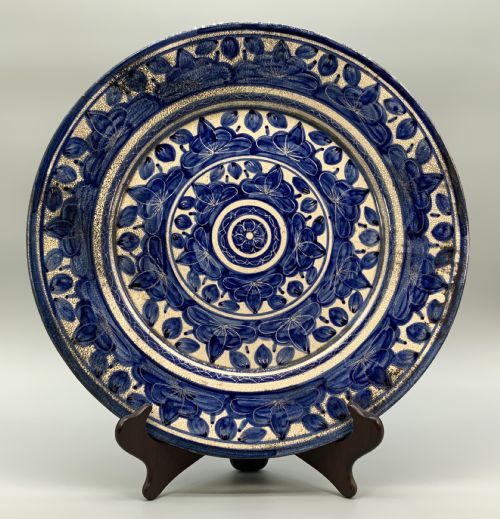
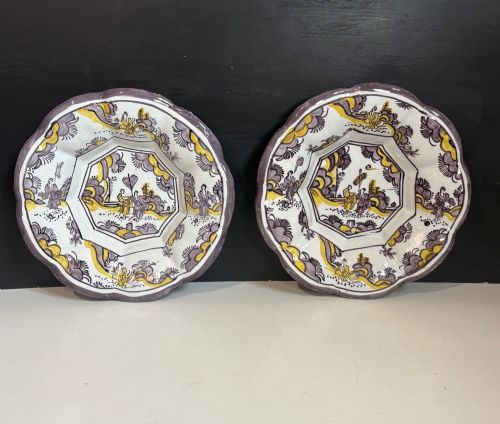
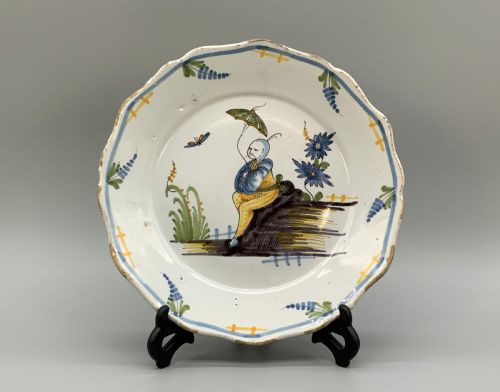
An antique delft dish encompasses chargers, shallow bowls, plates, and specialised forms like barber's bowls originating from European kilns. The pieces on this page span the seventeenth, eighteenth, and nineteenth centuries, featuring Dutch, English, and French origins alongside Moorish and Spanish faience examples.
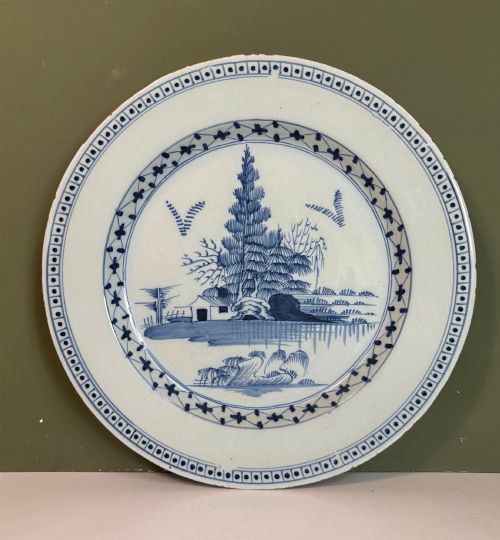
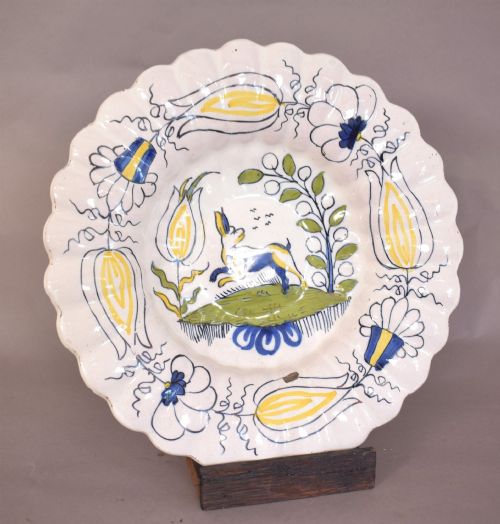
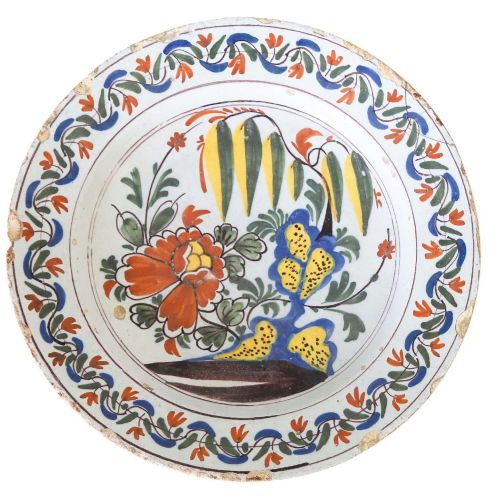
A buyer seeking an antique delft dish will most frequently encounter eighteenth-century chargers and plates adorned with blue and white or polychrome floral and geometric motifs. These round earthenware vessels served both decorative display and practical table use in period interiors.
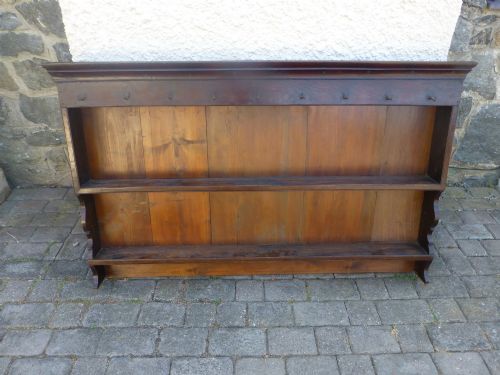
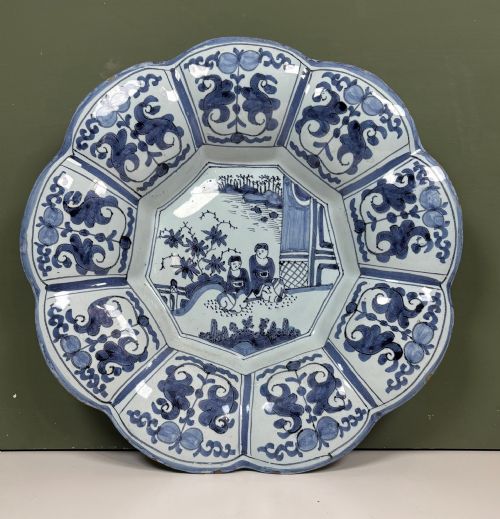
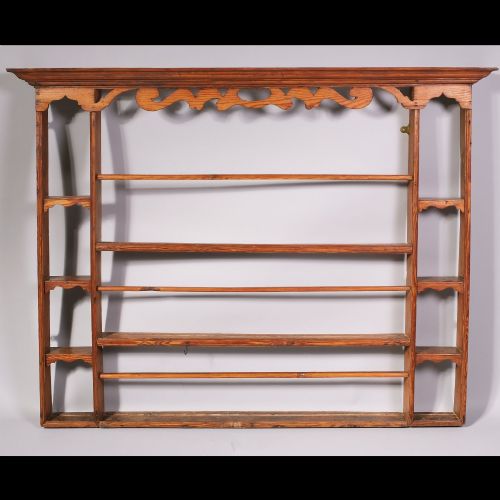
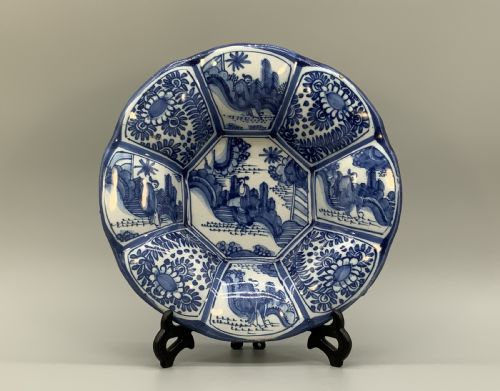
The category also includes specialised functional forms such as sweetmeat presentiers, lobed dishes in Kraak styles, and oak or pine plate racks designed to display them. Collectors find earthenware bodies carrying tin-glaze surfaces shaped into chargers, plates, and bowls.
How they were made
Potters formed these pieces from earthenware clay, shaping chargers, plates, and bowls on the wheel or pressing them into moulds. The shaped body received an opaque tin-glaze that provided a smooth, white surface for subsequent painting.
Painters applied cobalt pigment, manganese, and yellow oxides directly onto the porous unfired glaze by hand. The minerals absorbed into the glaze during firing, creating the characteristic blue and white or polychrome Chinoiserie and floral patterns.
Listings feature earthenware materials finished with tin-glaze and painted in cobalt pigment across seventeenth and eighteenth-century periods.
What varies in quality
The precision and detail of the hand-painted decoration distinguish superior examples from simpler utilitarian output. Skilled painters achieved crisp botanical forms, complex Chinoiserie scenes, and balanced polychrome palettes.
The smoothness and opacity of the tin-glaze coat affect the visual result, alongside the crispness of moulded lobing or shaping on chargers and dishes.
Bristol·Lambeth
The Antique Delft Dish Glossary
- Tin-Glaze
- Earthenware coated with a glaze containing tin oxide to produce an opaque white surface. This layer served as the canvas for painted cobalt and metallic oxide decoration.
- Charger
- A large decorative plate or dish intended for ceremonial table use or wall display. These sizeable earthenware vessels often feature broad rims decorated with floral or geometric designs.
- Polychrome
- Decoration employing multiple colours rather than a single pigment. Tin-glazed earthenware utilised manganese, yellow, and other pigments alongside blue.
- Chinoiserie
- European interpretations of Chinese artistic motifs and styles. Potters painted stylized landscapes, figures, and floral arrangements inspired by imported porcelain.
- Kraak Style
- A Dutch and English interpretation of Chinese Kraak porcelain characterised by panelled borders and central motifs. Dishes featuring this layout display radial compartments around a main subject.
- Sweetmeat Presentier
- A specialised shallow earthenware vessel used for serving small confections or delicacies. These footed or shaped dishes featured tin-glazed surfaces.
Antique Delft Dish: Frequently Asked Questions
How were antique delft dishes used?
These vessels functioned as tableware for serving food or as decorative chargers displayed on walls and dresser plate racks.
Larger chargers decorated with floral or Chinoiserie scenes served primarily for display in wealthy households.
How do I tell English delft from Dutch delft?
Distinguishing origins involves examining the clay body, glaze characteristics, and painting style typical of specific regional potteries.
English centres like Lambeth and Bristol often displayed distinct colour palettes and body compositions compared to Dutch workshops.
How should I display an antique delft charger?
Chargers can be mounted securely on walls using specialist hangers or supported safely within period oak and pine plate racks.
Display locations should avoid direct sunlight and rapid temperature fluctuations to protect the earthenware body and tin-glaze surface.