



Pine Credenza Cabinet
A pine credenza cabinet brings solid utility and honest character to a room, spanning rustic country styles and practical storage forms.
Pine Credenza Cabinet
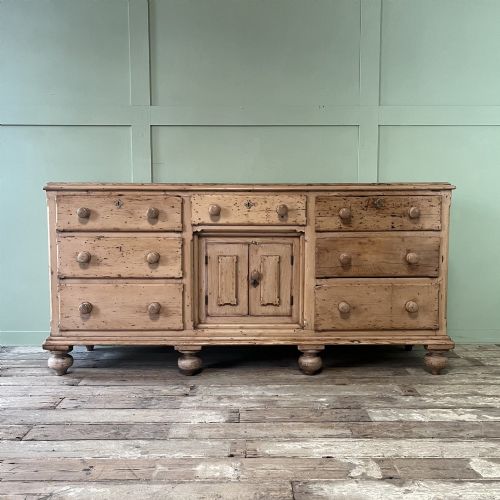
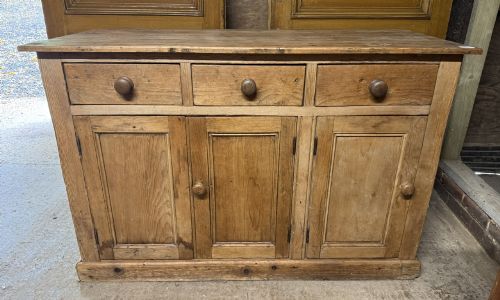
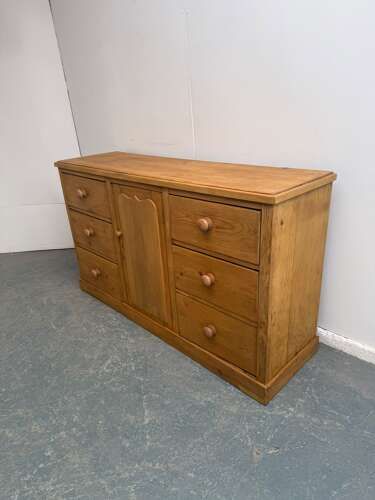
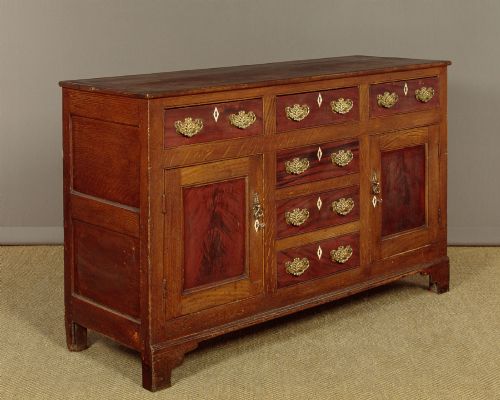
When you search for a pine credenza cabinet, you encounter a variety of storage furniture including dresser bases, kitchen cupboards, sideboards, and chiffoniers. These pieces originate from the Georgian, Regency, and Victorian periods, reflecting domestic and country traditions across England, Scotland, Wales, and Scandinavia.
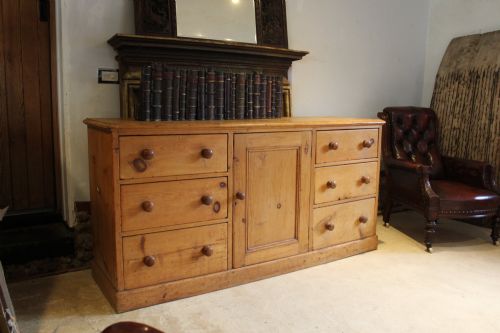
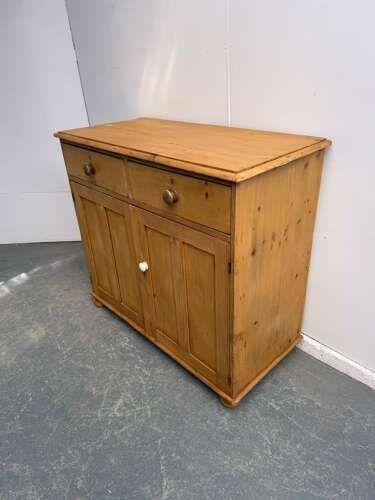
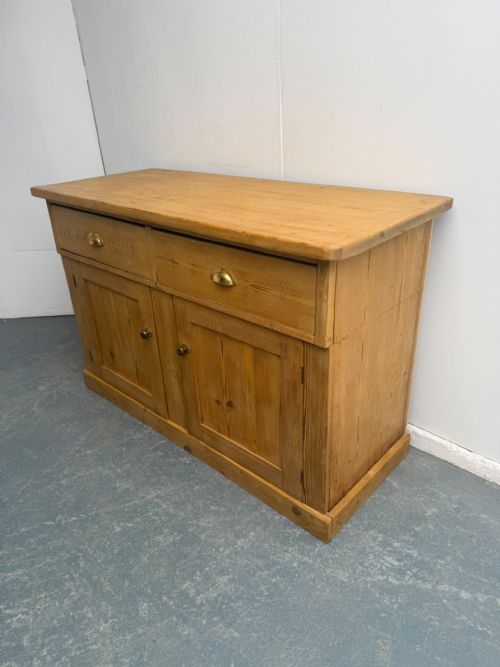
The version you are most likely to meet on this page is the Victorian pine dresser base or two-door kitchen cupboard. These utilitarian forms offer generous surface tops alongside internal shelving or drawer space, designed for practical storage in kitchens, hallways, and living spaces.
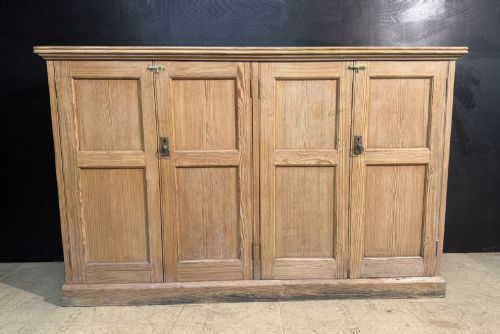
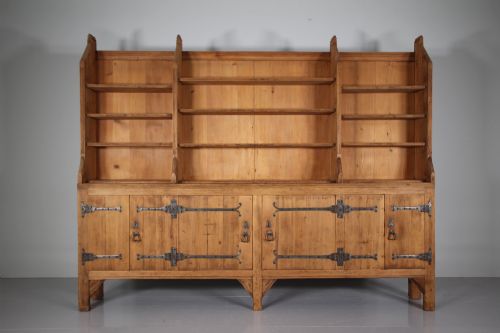
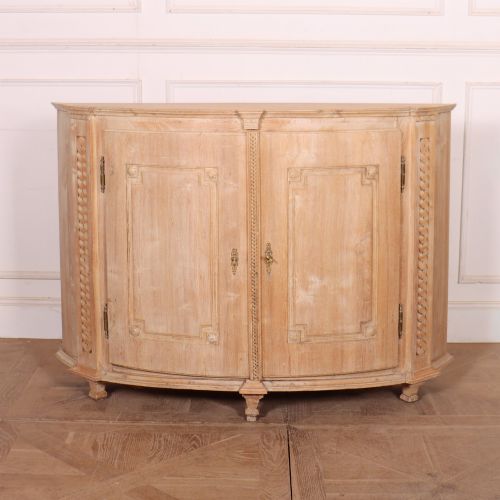
Beyond standard kitchen and dining pieces, the selection includes specialised formats such as linen cupboards, narrow bowfront sideboards, and shallow storage units. Each variant employs sturdy softwood construction built to handle everyday household demands over centuries of use.
How they were made
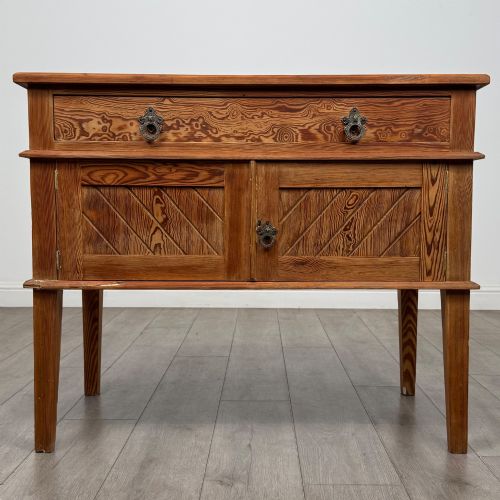
Carpenters relied primarily on solid pine and pitch pine for the primary framework and panelling of these cabinets. Joinery techniques involved robust dovetail joints for drawers and panelled construction for doors to accommodate the natural movement of softwood timber over time.
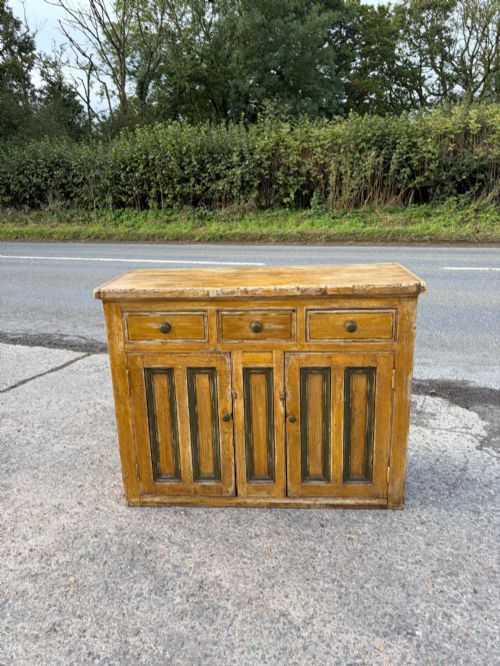
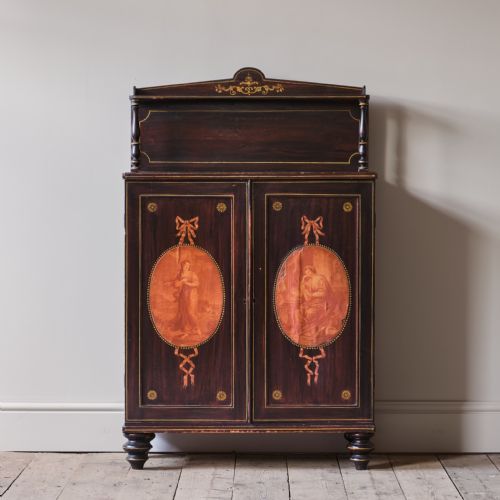
Surface finishes vary between natural waxed pine that highlights the grain and historic applied coatings. Many examples retain original paint, scraped finishes, or simulated rosewood graining, applied to mimic more expensive hardwoods or to brighten utilitarian workshop and domestic interiors.
Pine Credenza Cabinet Retail Price Guide 2026
Typical asking prices for pine credenza cabinet among the pieces listed under this phrase on Sellingantiques today, from the lower quarter to the upper quarter. They describe what is for sale here now, not the wider market.
The listings span Georgian and Victorian periods, utilising pine, pitch pine, paint, and brass across sideboards and cupboards.
What varies in quality
Quality in these pieces rests upon the integrity of the original timber and the restraint of subsequent restoration. Cabinets retaining untouched original paint or honest, period-appropriate waxed surfaces command greater interest than those stripped down to bare raw wood without regard for historical depth.
Construction details such as the thickness of the pine top, the depth of drawer linings, and the survival of original brass or iron hardware distinguish utilitarian workshop output from finer domestic furniture. The presence of secondary timbers, tight dovetailing, and balanced proportions signal superior regional craftsmanship.
The Pine Credenza Cabinet Glossary
- Dresser base
- A low sideboard or cabinet featuring cupboards and drawers beneath a flat top surface, traditionally used in kitchens for food preparation and storage.
- Chiffonier
- A compact sideboard equipped with enclosed lower cupboards and sometimes a small raised shelf or drawer, popular during the Regency and Victorian eras.
- Pitch pine
- A dense, resinous variety of pine timber known for its prominent grain pattern and durability, frequently utilised in nineteenth-century cabinetry.
- Bread slide
- A pull-out wooden shelf integrated into the upper section of a dresser base, historically used for cooling baked goods or expanding workspace.
- Bowfront
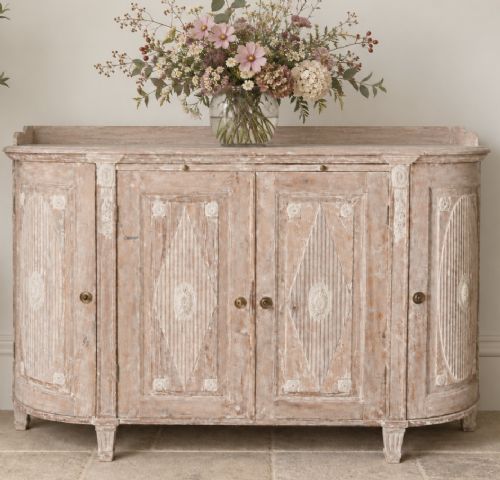
- A convex, curved front profile applied to sideboards and cabinets, designed to soften room angles and add visual depth.
Pine Credenza Cabinet: Frequently Asked Questions
How do I clean a waxed pine cabinet?
Dust the surface regularly with a soft, dry cloth to prevent dirt accumulation on the timber.
Apply a traditional beeswax polish sparingly once or twice a year, buffing gently to maintain the soft sheen without building up sticky residue.
Can I paint a waxed pine sideboard?
Wax acts as a barrier that prevents modern paints from adhering properly to the wood surface.
To paint a waxed cabinet, you must thoroughly remove the old wax using appropriate solvents and light sanding before applying primer and topcoats.
Where should I place a pine cupboard?
Pine furniture responds to changes in humidity, so avoid positioning cabinets directly against radiators or in damp areas.
Place them against interior walls in kitchens, dining rooms, or hallways where stable temperatures preserve the timber and joints.
What is the difference between pitch pine and standard pine?
Pitch pine contains a higher resin content, making the wood noticeably heavier, harder, and darker in tone.
Standard pine offers a lighter colour and softer grain, whereas pitch pine exhibits striking, dense growth rings and increased resistance to wear.