

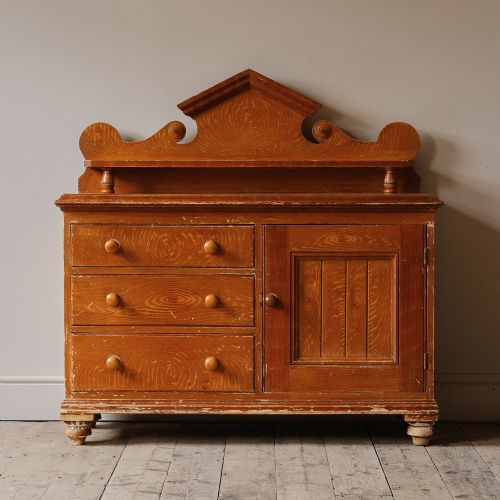
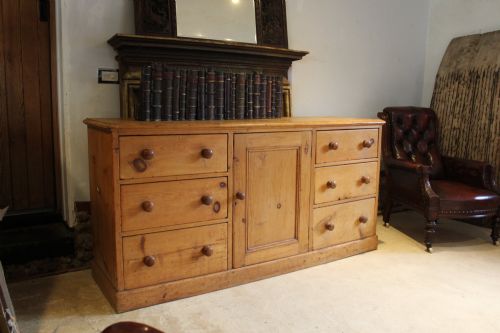
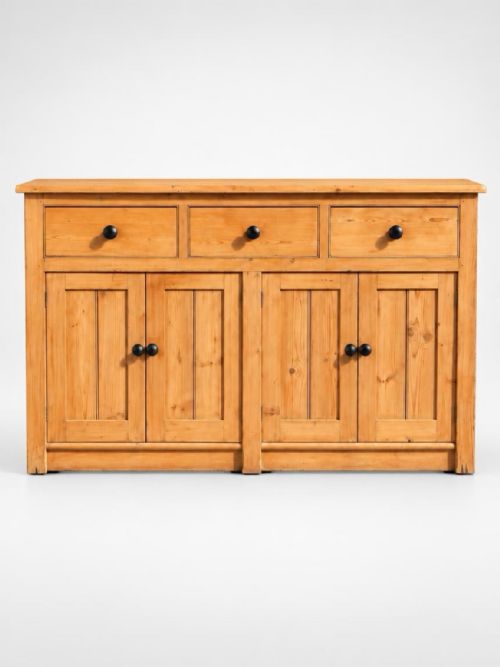
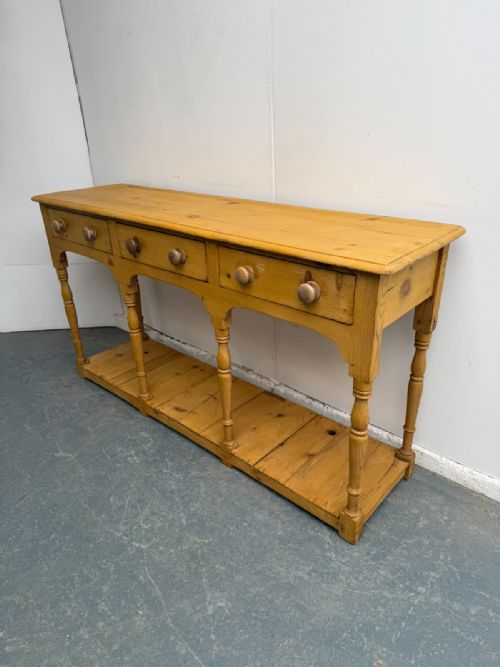
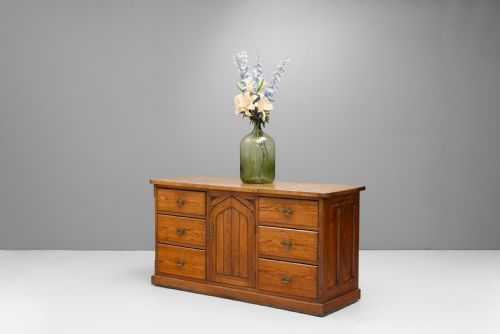
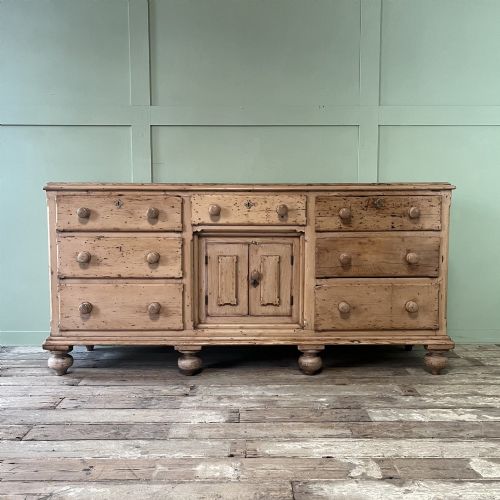
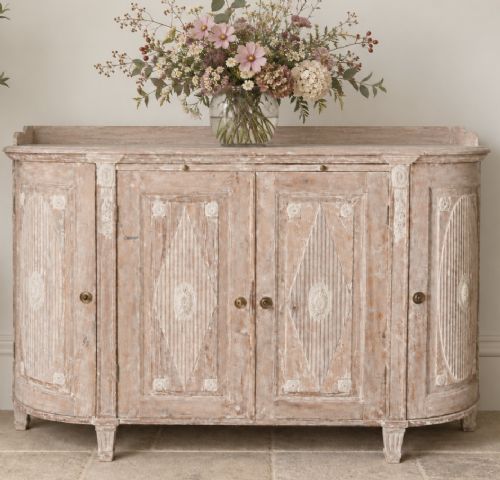
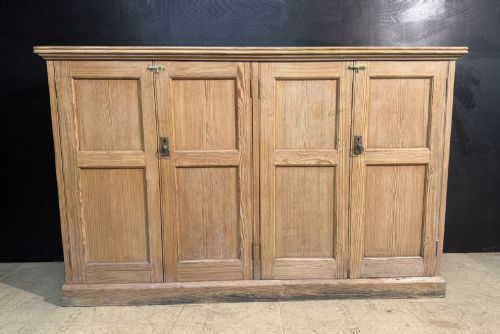
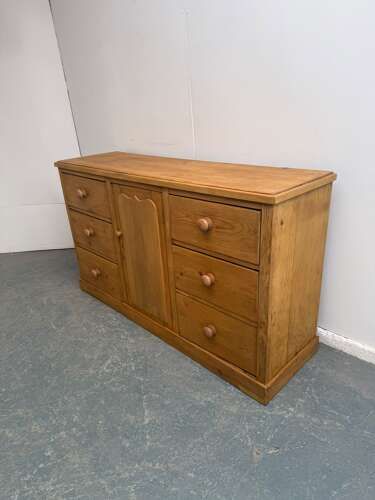
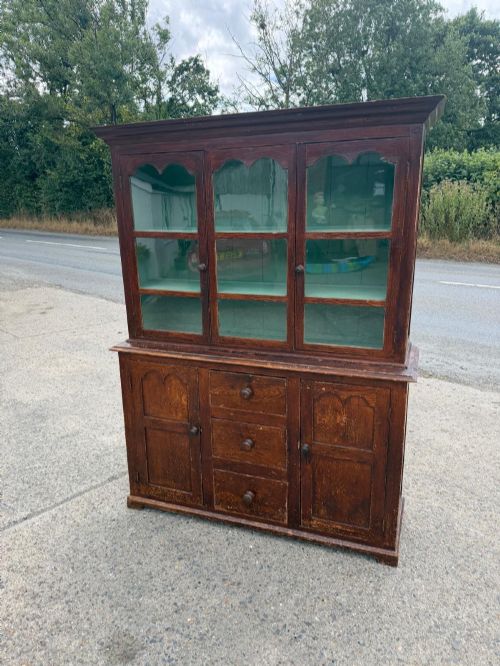

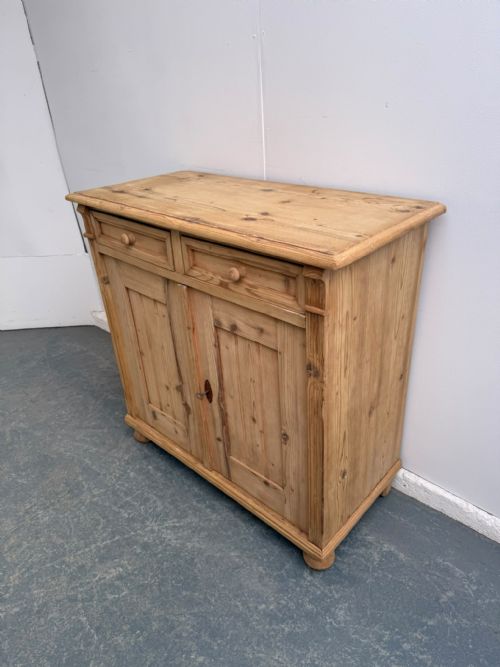
Pine Buffet Sideboard
A pine buffet sideboard brings sturdy utility and practical storage to a room, drawing on centuries of country craftsmanship.
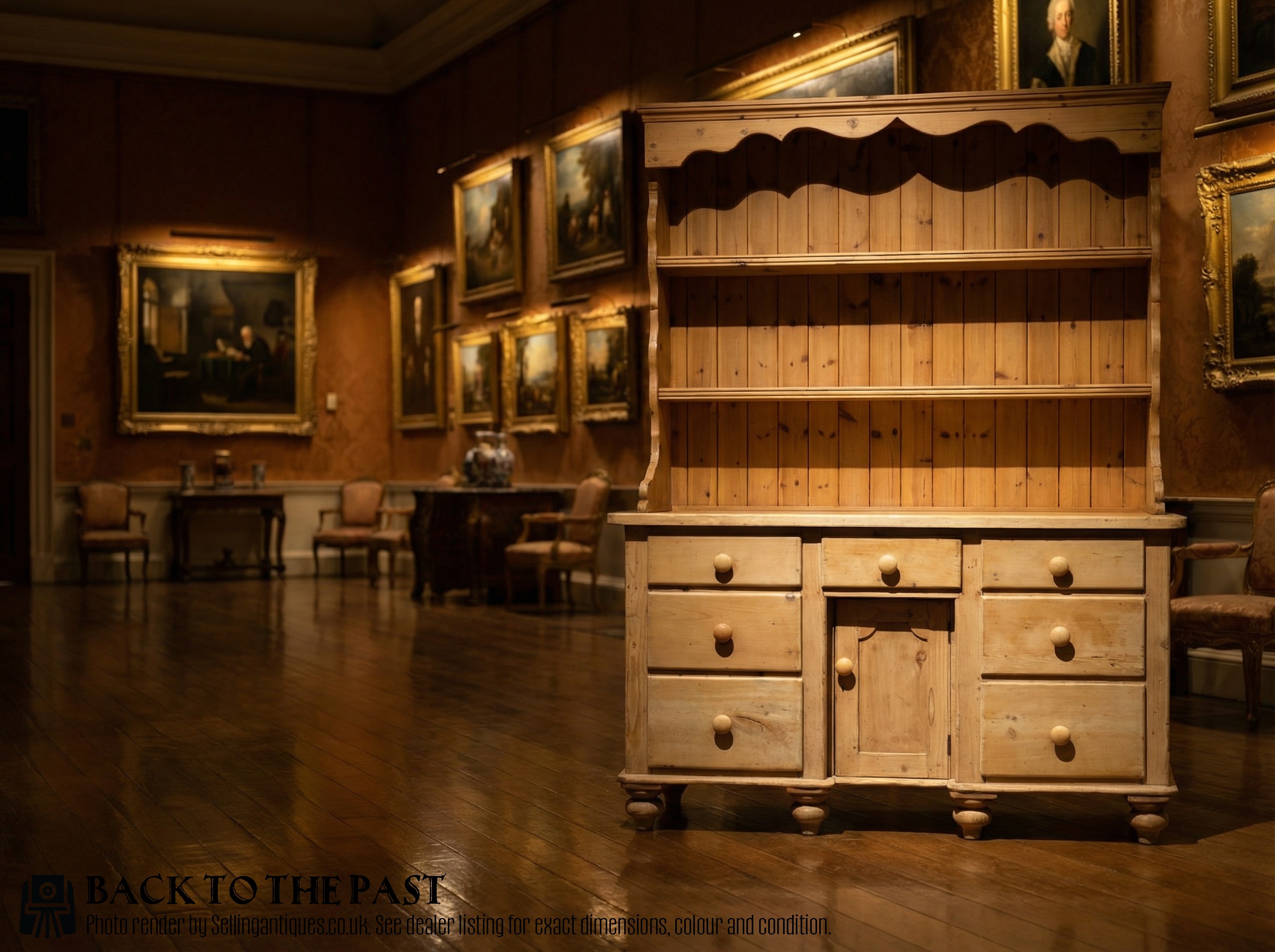
Pine Buffet Sideboard
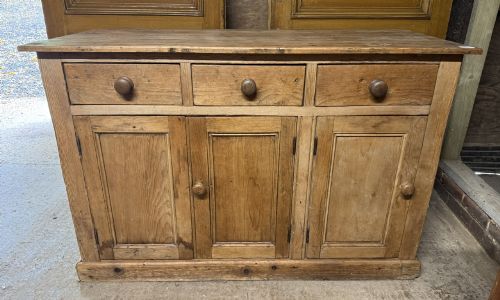
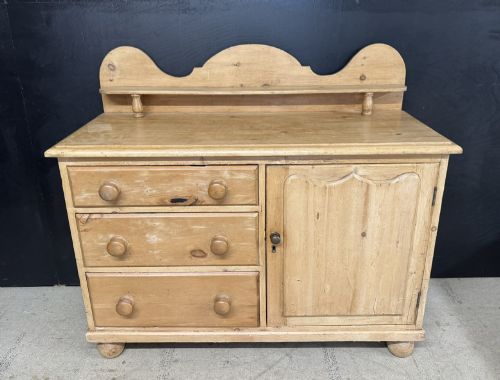
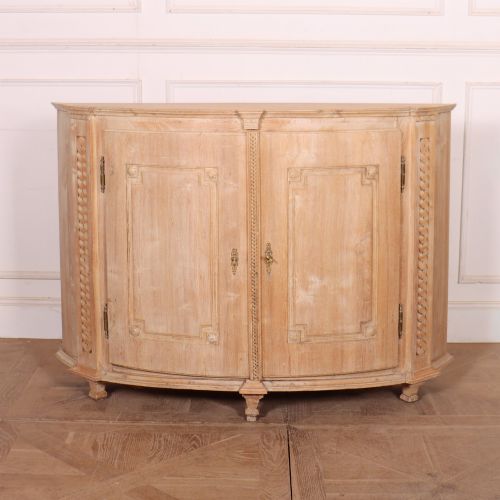
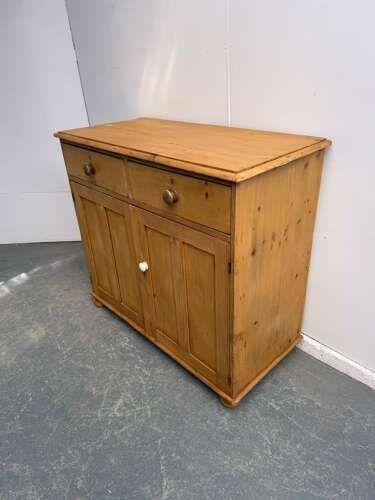
When you search for a pine buffet sideboard, you enter a category dominated by functional kitchen furniture designed for storage and preparation. The pieces range from dresser bases and potboard dressers to large cupboards and buffets, originating from English, Scottish, Welsh, French, Swedish, and Hungarian traditions. Victorian examples dominate the selection, alongside Georgian and nineteenth-century pieces that reflect rural domestic life.
Buyers encounter formats that vary from low wide storage cupboards and two-door two-drawer dresser bases to monumental country house pieces. Many items feature practical additions like bread slides, pot shelves, and glazed tops, serving as heavy-duty storage for kitchens, dining rooms, and hallways.
Materials and construction
These items are constructed primarily from pine, often accompanied by secondary woods, iron hardware, and brass fittings. Surfaces frequently display original paint, scraped paint finishes, or plain wood prepared for waxing.
Makers utilised traditional joinery to build pieces meant to withstand daily domestic use in farmhouse kitchens, dairies, and schools. Details such as carved floral motifs appear on specific regional examples, while other surfaces remain unadorned to highlight the grain of the wood.
Pine Buffet Sideboard Retail Price Guide 2026
Typical asking prices for pine buffet sideboard among the pieces listed under this phrase on Sellingantiques today, from the lower quarter to the upper quarter. They describe what is for sale here now, not the wider market.
Keep an eye out for the elusive bread slide, built so past bakers could pull out a shelf and tend to the dough right by the drawers.
Evaluating standard and finish
Quality in these pieces rests upon the integrity of the original construction and the survival of early finishes like scraped paint or historic wax. Items retaining their original painted surfaces carry greater historical weight than those stripped down for modern treatment.
Proportion and scale also separate standard utility items from monumental country house examples. Thoughtful details, such as integrated pot boards, bread slides, and clean drawer operation, mark out superior regional workshop production.
The Pine Buffet Sideboard Glossary
- Dresser base
- The lower section of a kitchen dresser, featuring cupboards and drawers without the upper plate rack. These function well as independent sideboards.
- Potboard
- An open lower shelf built into a dresser base, traditionally used for storing heavy pots and pans. This feature is particularly associated with English country furniture.
- Scraped paint
- A conservation technique where later coats of paint are carefully removed to reveal fragments of older, original layers beneath. This treatment preserves the historic character of the piece.
- Bread slide
- A pull-out wooden shelf integrated into the framework of a dresser base. Bakers historically used this surface to cool loaves or prepare dough.
- Gustavian
- A Swedish neoclassical style characterised by restrained decoration and light painted finishes. Pieces from this tradition often feature simplified classical lines.
Pine Buffet Sideboard: Frequently Asked Questions
How do I use a buffet sideboard at home?
These pieces provide substantial storage for tableware, linens, and kitchen provisions while serving as a functional surface for serving food. Their deep drawers and enclosed cupboards help organise dining rooms and large kitchens.
In living areas or hallways, a low cupboard or dresser base acts as a display surface for lamps and objects while keeping clutter out of sight. Their robust construction allows them to handle heavy daily use.
What is the difference between a dresser base and a sideboard?
A dresser base originally formed the lower half of a kitchen dresser, designed specifically for heavy domestic tasks with deep drawers and cupboards. They often include pot shelves or potboards at floor level.
Sideboards and buffets generally originated in dining spaces rather than working kitchens, focusing on storage for serving dishes and cutlery. In practice, both forms now serve similar roles as substantial storage furniture.
Should I wax or paint my pine sideboard?
Many nineteenth-century pieces come prepared for waxing or painting, allowing you to match the finish to your interior scheme. Traditional wax nourishes the pine and develops a warm patina over time.
If a piece retains its original or early scraped paint finish, preservation is generally recommended to maintain its historical integrity. Unfinished or stripped pine offers the flexibility to apply traditional milk paint or clear wax.
How do I identify a Victorian pine piece?
Victorian pine furniture often displays utilitarian construction methods suited to nineteenth-century domestic expansion and rural workshops. Look for hand-cut dovetails in the drawers and board construction typical of the period.
Regional variations, such as Scottish dairy dressers or English country house pieces, incorporate local design habits while sharing the sturdy pine materials characteristic of the era.