
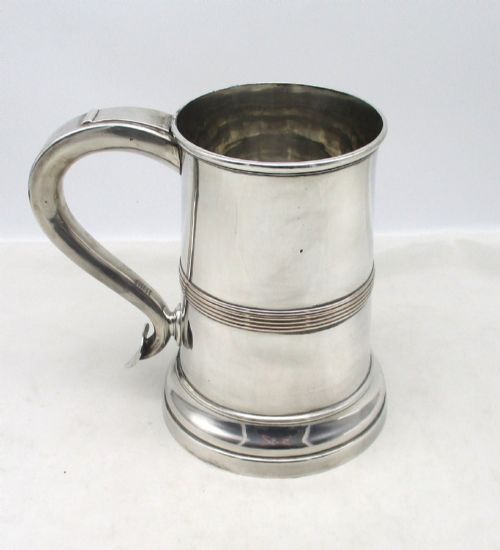
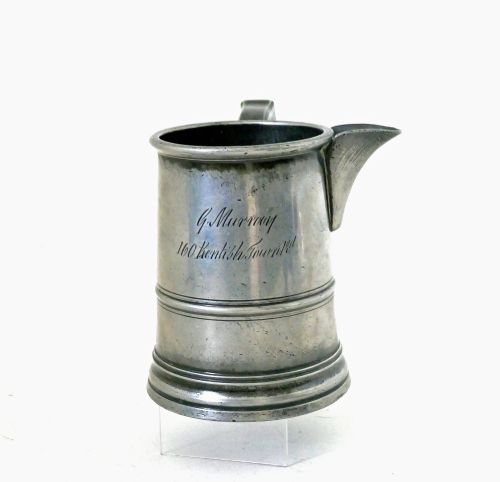
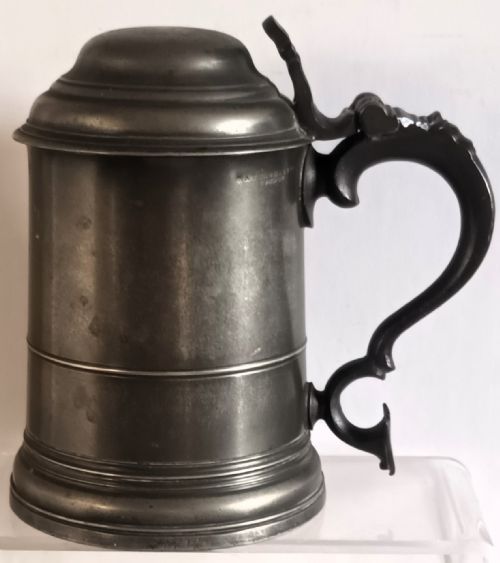
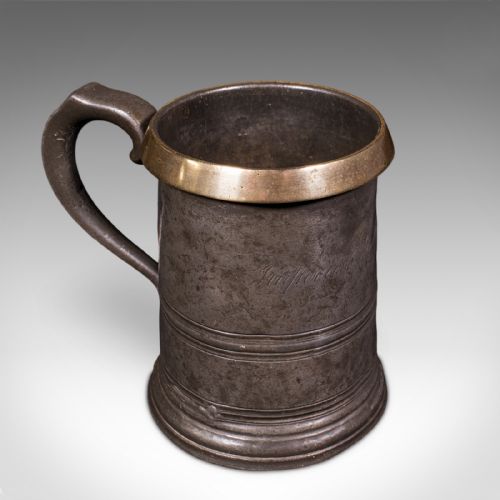


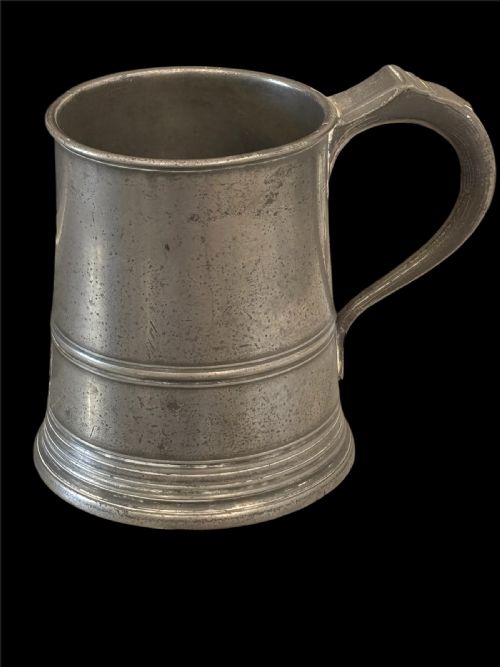
Pewter Beer Tankard
A pewter beer tankard is a robust drinking vessel designed for ale, and collectors prize these pieces for their tactile metal and pub history.
Pewter Beer Tankard
A pewter beer tankard is a drinking vessel designed for serving and consuming ale in domestic and public houses. When you search for this phrase, you encounter forms ranging from simple pint measures to large quart vessels and lidded flagons.
The pieces on this page span the eighteenth, nineteenth and early twentieth centuries, with Victorian and Georgian examples appearing frequently alongside Arts and Crafts designs. English makers predominate, though continental European ceramic and metal vessels also emerge.
Most items serve as functional barware or tavern measures, occasionally featuring glass bottoms or engraved ownership inscriptions. Their survival reflects robust manufacturing traditions that outlasted generations of tavern use.
Materials and construction
Pewter forms the primary material, consisting of an alloy shaped by casting and soldering. Makers also utilised Old Sheffield plate, silver plate, copper, brass, and stoneware to create similar drinking vessels.
Handles, lids, and thumbpieces are attached securely to the main body to withstand daily lifting and toasts. Engraving and repoussé decoration occasionally adorn the exterior surface, particularly on German and Arts and Crafts examples.
Design styles span eighteenth-century domestic forms, Victorian public house measures, and Arts and Crafts movements.
Judging quality and craftsmanship
Quality rests in the weight of the metal and the crispness of touchmarks or maker stamps impressed into the base or rim. Thicker gauge metal maintains its shape better over centuries of handling.
Proportion and balance distinguish superior vessels, where handles integrate harmoniously with cylindrical or tapered bodies. Distinctive decorative details, such as Celtic motifs or organic plant forms, elevate the artistic merit of individual pieces.
Watts and Harton·Richard Morton·Archibald Knox for Liberty·Frederic Sanders·Burgum and Catcott
The Pewter Beer Tankard Glossary
- Pewter
- A malleable metal alloy composed principally of tin, often mixed with copper, antimony, or bismuth. It provides a dull grey lustre that darkens gracefully with age.
- Quart
- An English unit of liquid capacity equivalent to two pints. Quart tankards provide substantial drinking volume for tavern use.
- Old Sheffield Plate
- A composite material made by fusing a thin sheet of silver to a thicker copper base. It creates durable vessels with the appearance of solid silver.
- Flagon
- A large drinking vessel with a handle and lid, frequently used for serving ale or wine. Flagons often hold greater quantities than standard drinking mugs.
- Touchmark
- An official stamp or maker mark impressed into pewter to indicate the maker and standard of the alloy. These marks assist greatly in dating and attribution.
Pewter Beer Tankard: Frequently Asked Questions
What is a pewter beer tankard?
A pewter beer tankard is a traditional drinking vessel cast from a tin-based alloy, featuring a sturdy handle and often a hinged lid.
These vessels were standard drinking equipment in homes and public houses across Britain and Europe for centuries.
How do I date a pewter tankard?
Dating relies on identifying maker touchmarks, verifying capacity stamps, and observing the shape of the handle and lid.
Georgian and Victorian examples show distinct shifts in body proportions and touchmark regulations that help narrow their production era.
Can I drink from an antique tankard?
Many historical pewter vessels contain lead in the alloy mix, which can leach into acidic beverages over extended periods.
Modern testing strips can confirm safety, but many collectors prefer to display these items as historical barware rather than use them daily.
What does a glass bottom mean?
Glass bottom tankards allowed drinkers to monitor the room and watch for approaching company while finishing their ale.
This feature became common in British public houses during the nineteenth century.