
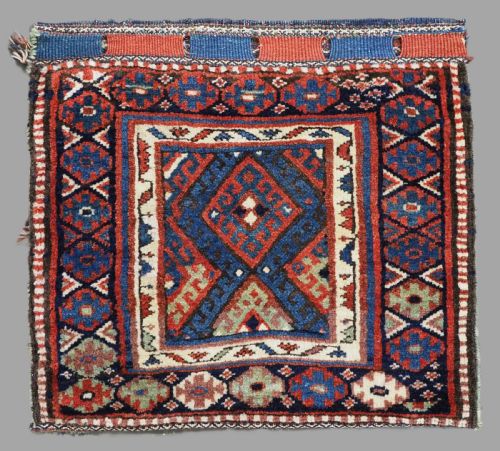


Persian Khorjin Bag Face
When you handle a persian khorjin bag face, you hold a piece of nomadic weaving split from its paired saddle storage by time and utility.
Persian Khorjin Bag Face
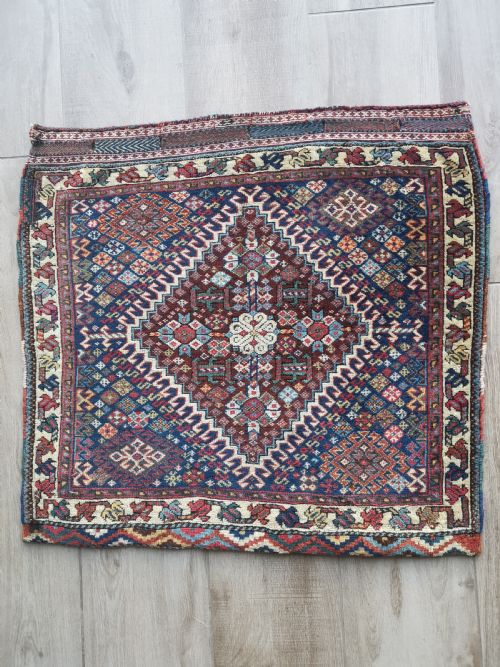
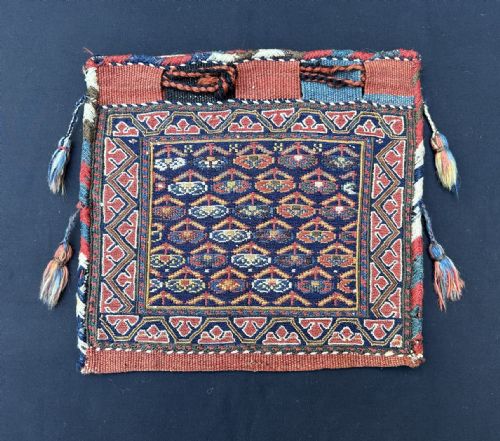
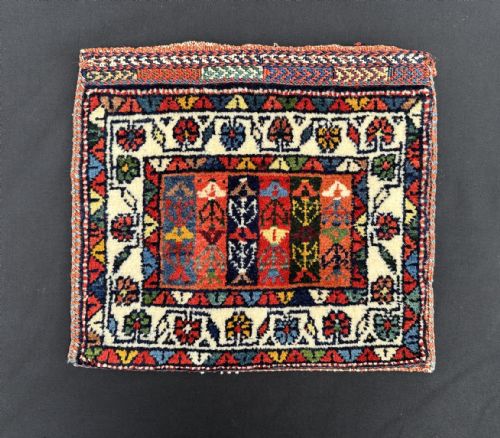
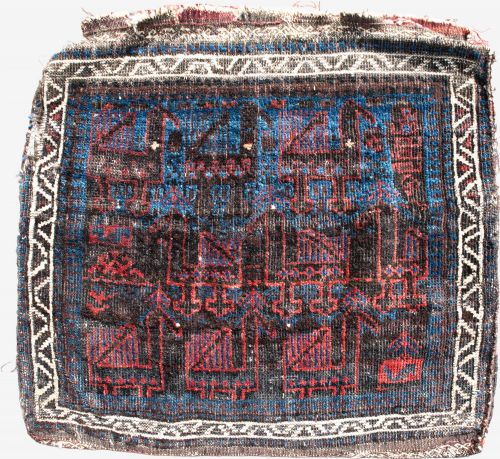
A persian khorjin bag face represents the front panel of a traditional nomadic double saddlebag, separated from its rear web and companion pocket through decades of wear or intentional division. These woven panels originate from various tribal confederations across western and southern Persia, including Qashqai, Afshar, Luri, Kurdish, and Shahsavan groups who produced them for transport and household utility.
The selections encountered here span the nineteenth and early twentieth centuries, appearing either as isolated rectangular faces or complete halves retaining portions of their original plain weave backs. Collectors frequently meet these items converted into decorative cushions or preserved flat as textile art, demonstrating symmetrical medallions, repeating boteh motifs, or pictorial creature designs.
Makers produced these utilitarian objects within pastoral settings, utilising wool and cotton foundations to withstand the rigours of seasonal migration. Each surviving fragment serves as a primary record of tribal iconography, translating regional aesthetics into dense, pile-woven or flat-woven surfaces.
How they were made
Weavers constructed these pieces using hand-spun wool for the pile and foundation yarns, sometimes incorporating cotton for structural warps to achieve crisper geometric lines. Natural dyes derived from local plants and minerals provided the deep indigo, madder red, and earthy yellows that define the palette of these textiles.
Techniques varied between dense pile knotting for central iconography and flat-woven soumak or plain weave structures for backs and transition bands. This combination ensured the dual requirements of flexible durability for pack animals and a decorative exterior face were met.
Persian Khorjin Bag Face Retail Price Guide 2026
Typical asking prices for persian khorjin bag face among the pieces listed under this phrase on Sellingantiques today, from the lower quarter to the upper quarter. They describe what is for sale here now, not the wider market.
Tribal attributions on this page span Qashqai, Afshar, Jaf Kurd, Luri, Shahsavan, and Baluch nomadic groups.
What varies in quality
Quality rests upon the handled handle of the wool and the depth of the palette, where lustrous, light-catching fleece signals superior preparation and animal husbandry. Fineness of knotting and precision in drawing separate standard utilitarian weaving from exceptional examples produced by master tribal artisans.
The Persian Khorjin Bag Face Glossary
- Khorjin
- The traditional Persian term for a double-sided saddlebag used by nomadic tribes for transport and storage. These storage units hung across the backs of pack animals before being separated over time.
- Chanteh
- A small personal or vanity bag woven by tribal groups for carrying small items. These pieces often display the most concentrated design work of a weaver's repertoire.
- Soumak
- A flat-weave technique where coloured weft threads wrap around the warp threads in a continuous brocading motion. This method creates a textured, durable surface without pile knots.
- Boteh
- An ancient motif resembling a stylized almond, pear, or bent floral spray. It appears frequently in tribal weaving as a symbol of life and eternity.
- Medallion
- A central ornamental design element anchoring the composition of the bag face. Tribal weavers oriented these geometric or floral shapes to command the visual centre of the textile.
Persian Khorjin Bag Face: Frequently Asked Questions
What is a khorjin bag face?
A khorjin bag face is the decorative front panel of a traditional Persian nomadic saddlebag. These sections survived after the plain weave backs and joining strips wore away or were cut.
Nomads originally used these paired bags on pack animals during seasonal migrations. Today, collectors preserve the remaining faces as flat textile art or small display rugs.
How were tribal bags used?
Nomadic families loaded these double bags onto horses, donkeys, and camels to transport household possessions, grain, and personal belongings. Their sturdy construction protected contents from weather and constant movement.
When a bag wore out on one side, owners often cut the halves apart to salvage the intact face. Many survivors eventually transitioned from pack utility to tent decoration and floor padding.
How do I care for antique wool?
Protect antique wool textiles from direct sunlight to prevent natural dyes from fading over time. Gentle vacuuming through a mesh screen removes surface dust without catching on old foundation threads.
Avoid hanging heavy pieces by single points to prevent distortion of the hand-spun warp yarns. Professional textile cleaning is necessary if deep washing becomes required.
How do I identify tribal origins?
Tribal attribution relies on specific combinations of knotting structure, palette choices, and characteristic border motifs. Weavers from regions like Fars, Luristan, and Kerman embedded distinct stylistic markers into their work.
Examining the structure of the wool and the secondary weft colours reveals the specific confederation responsible for the piece. Reference literature helps match these technical signatures to known nomadic groups.