

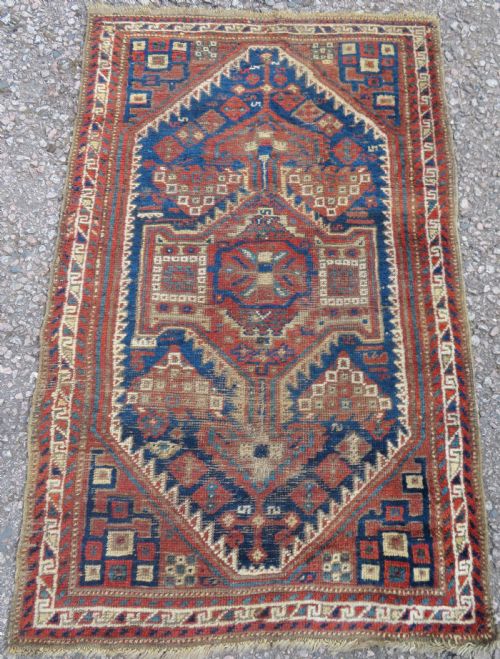
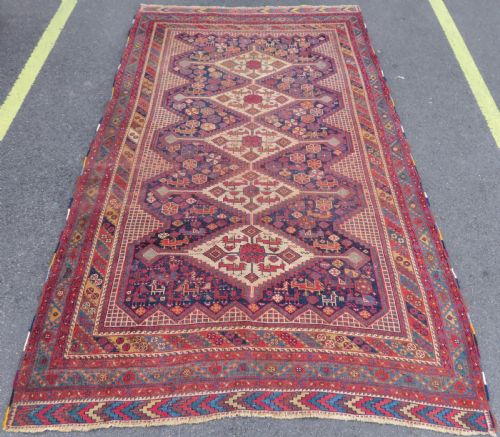


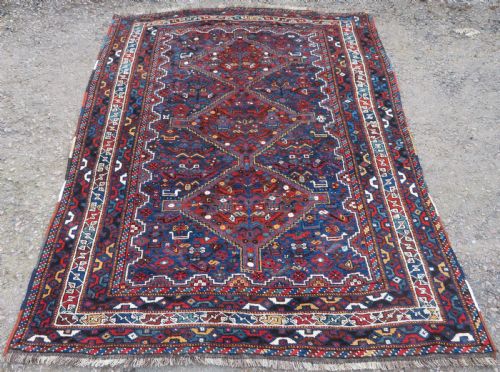


Persian Khamseh Carpet
When you search for a persian khamseh carpet, you step into the world of South-West Persian nomadic weaving made by confederated tribes.
Persian Khamseh Carpet
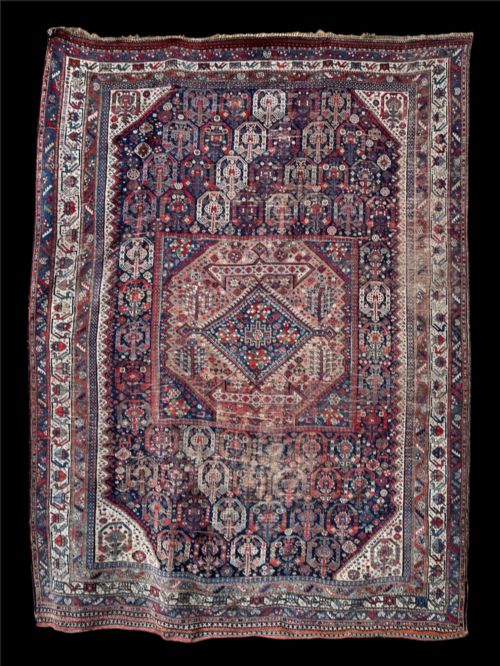
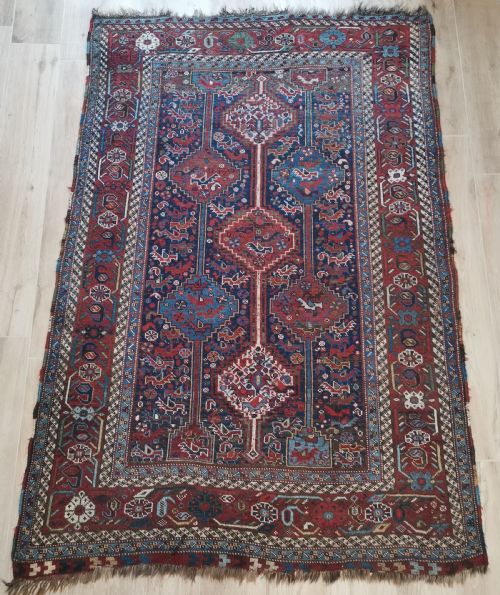
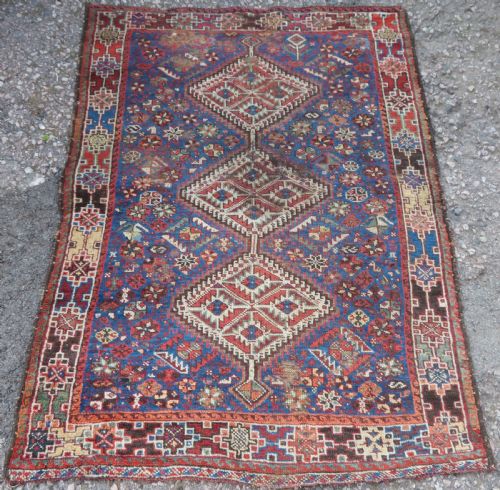
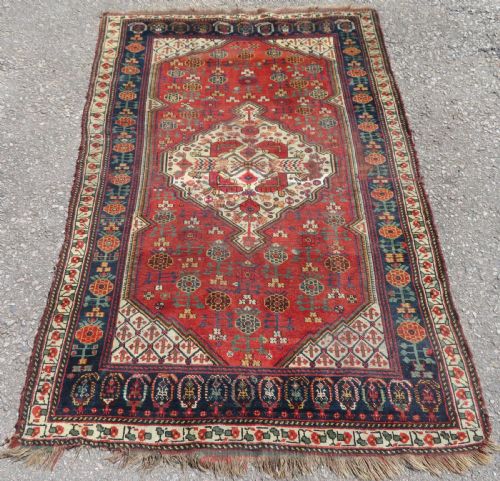
A persian khamseh carpet brings together tribal motifs and motifs from the Arab, Basseri, Baharlu, Shekarlu, and Arab-Jabbareh sub-tribes of the Khamseh confederation in Fars Province. Buyers encounter formats ranging from smaller nomadic rugs to large main carpets and kelleh formats.
How They Were Made
Weavers constructed these pieces using wool and hand-spun wool for the pile, set against cotton foundations. Artisans relied upon natural dyes to achieve the palette recorded across nineteenth-century and early twentieth-century examples.
Hand-weaving techniques executed by nomadic and village makers produced durable structures suited to daily tent or floor use. The combination of hand-spun materials and natural colourants gives the surfaces their characteristic handle and visual depth.
Several carpets feature spirited rows of pecking chickens, ensuring your floor comes alive with poultry.
What Varies in Quality
The finesse of the knotting and the complexity of the tribal iconography distinguish individual examples. Execution of specific motifs, such as intricate bird, animal, or khan audience figures, marks the distinction between standard output and more ambitious works.
Condition and integrity relative to age play a role, as does the clarity and preservation of the natural dye palette. The precision of the border work, including distinct variants like the Shekarlu border, contributes to the overall coherence of a piece.
Baharlu Tribe·Arab Jabbareh Tribe·Basseri Tribe·Arab Ghani Tribe
The Persian Khamseh Carpet Glossary
- Khamseh confederation
- A coalition of five distinct nomadic and settled tribes in South-West Persia. This alliance united Arab, Basseri, Baharlu, and other groups under a single administrative umbrella, influencing shared textile traditions.
- Kelleh
- A long, narrow format of carpet traditionally suited to specific room proportions in Persian interiors. These elongated rugs often display serial medallions or continuous field designs.
- Herati design
- A classic Persian repeating pattern composed of a central rosette enclosed by a rectangle of leaves, flanked by curved palmettes. This motif appears frequently in regional weaving traditions.
- Morghi
- A pictorial carpet design featuring stylised birds, commonly referred to as chicken patterns by collectors. These motifs add a playful, narrative element to tribal compositions.
Persian Khamseh Carpet: Frequently Asked Questions
How do I identify a Khamseh carpet?
Look for dense tribal motifs, distinctive bird or pomegranate patterns, and a palette characteristic of South-West Persia. The inclusion of specific sub-tribe attributions helps confirm the weaving origin.
Examine the wool quality and the handling of traditional borders, which often point directly to nomadic workshops of the nineteenth century.
Where were these carpets made?
These pieces originate from the Fars Province in South-West Persia, produced by the confederated tribes moving through the region. Nomadic and village encampments served as the primary production sites.
The interaction between Arab, Basseri, and Turkic groups in the region shaped the distinct geographical identity of these textiles.
How should I care for an antique rug?
Protect the piece by placing it in a low-traffic area away from direct, harsh sunlight to preserve the natural dyes. Regular gentle vacuuming without a rotating brush bar keeps dust from settling into the wool pile.
Rotate the rug periodically to ensure even wear across the surface from foot traffic and furniture placement.
What are tribal motifs?
Tribal motifs are traditional geometric, floral, and zoological symbols passed down through generations of nomadic weavers. They represent cultural stories, local fauna, and protective talismans.
In these carpets, figures like pecking chickens, trees of life, and peacock motifs provide a direct link to the daily environment of the maker.