
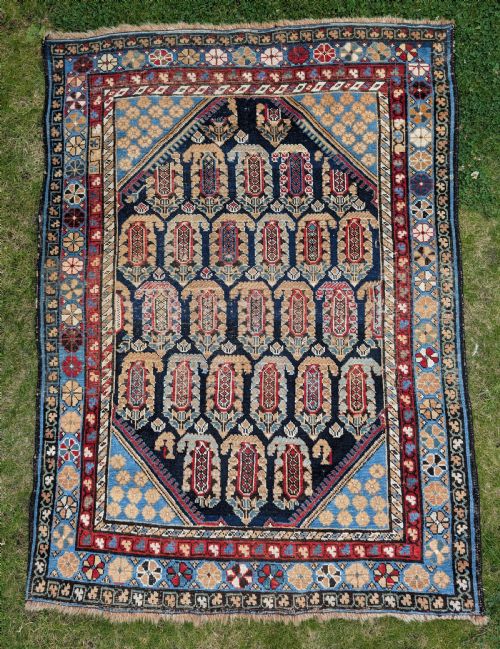
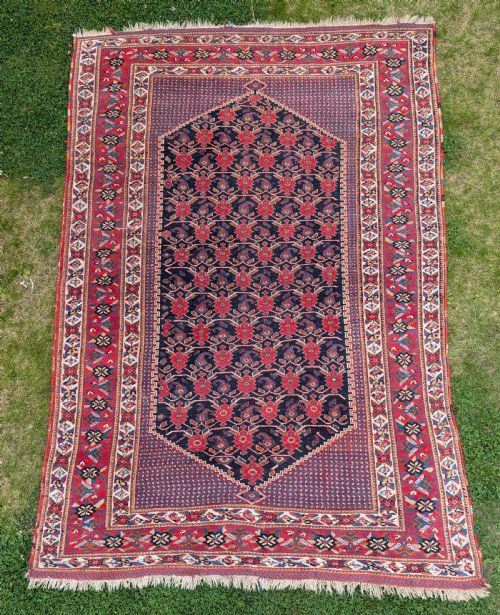
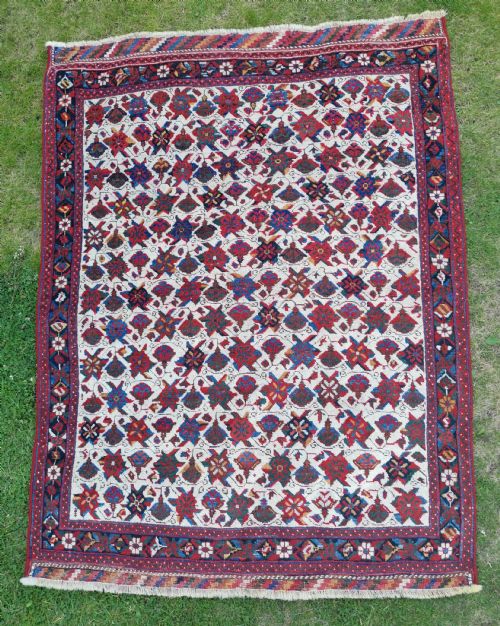
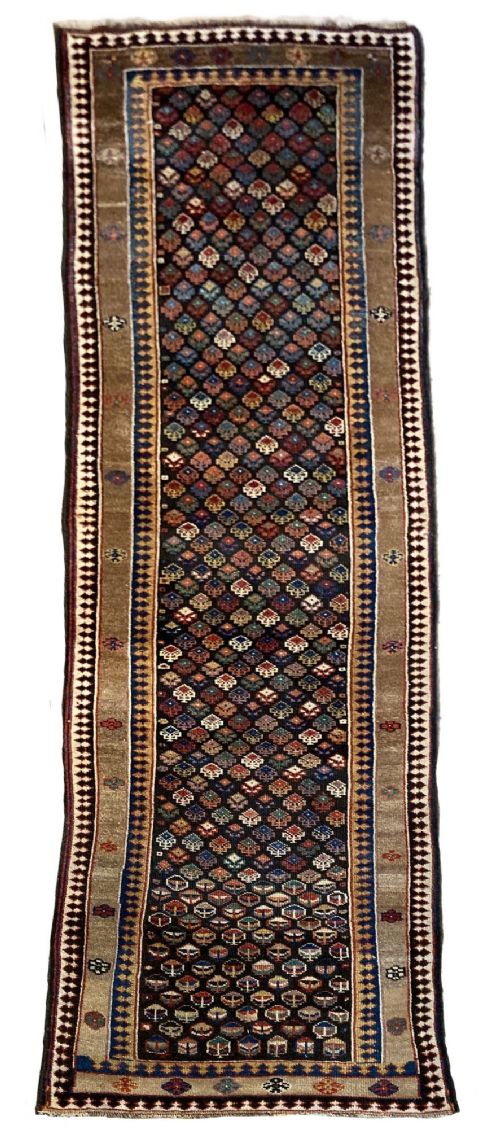


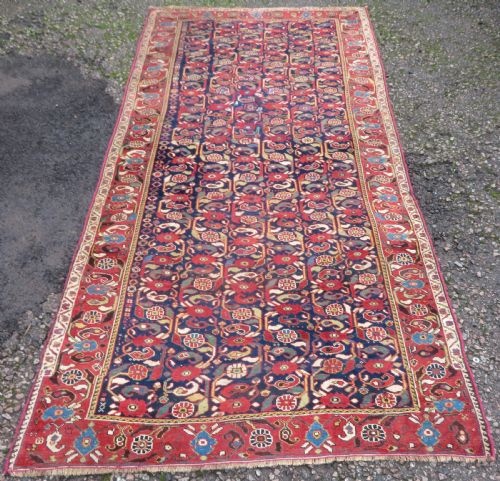


Geometric Boteh Rug
A geometric boteh rug brings the rhythmic, flame-like motif of Persian and Caucasian weaving directly to your floor.
Geometric Boteh Rug
You are most likely to encounter pieces bearing the names of traditional weaving groups such as Afshar, Khamseh, Kazak, and Shirvan. Their designs range from all-over patterns of repeated boteh to striking examples with large central motifs.
The format varies from square area rugs to long runners suited for hallways. Each piece reflects the specific regional geometry and palette of its weaving origin.
How they were made
These weavings rely on hand-spun wool for the pile and cotton for the structural foundations. Artisans utilised natural dyes to achieve deep colour palettes that hold their character over decades of use.
The construction involves hand-knotting wool onto warp and weft threads on traditional vertical or horizontal looms. This dense technique produces durable rugs designed for practical daily wear.
Geometric Boteh Rug Retail Price Guide 2026
Typical asking prices for geometric boteh rug among the pieces listed under this phrase on Sellingantiques today, from the lower quarter to the upper quarter. They describe what is for sale here now, not the wider market.
Some weavers packed flaming boteh motifs so tightly together they appear to dance across the wool.
What varies in quality
Quality rests upon the crispness of the drawing and the saturation of the natural dyes. A superior piece displays sharp geometric rendering of the boteh motif against a balanced field.
The handling of the wool and the evenness of the knotting dictate the structural integrity. Finer examples combine robust materials with precise regional styling.
The Geometric Boteh Rug Glossary
- Boteh
- An ancient motif resembling a twisted almond, pine cone, or flame. It appears repeatedly across regional tribal weaving.
- Kazak
- A style of rug originating from the Caucasus known for bold geometric designs and bright, contrasting colour palettes.
- Afshar
- Weavings produced by the Afshar nomadic and village tribes of southern Persia, often featuring distinctive indigo and red fields.
- Runner
- A long, narrow carpet format traditionally used in hallways and corridors. These pieces accommodate linear spaces.
- Natural dye
- Colourants derived from plants, insects, and minerals rather than synthetic chemicals. They create rich, harmonious tones.
Geometric Boteh Rug: Frequently Asked Questions
What is a geometric boteh rug?
A geometric boteh rug is a tribal or village weaving featuring the almond-shaped boteh motif rendered in straight lines and sharp angles.
These pieces originate mainly from nineteenth-century Persian and Caucasian workshops.
How do I use a runner rug?
Runner rugs suit narrow spaces such as hallways, corridors, and gallery landings.
They protect high-traffic wooden floors while adding pattern and warmth to utilitarian areas.
How do I identify an Afshar rug?
Afshar rugs often display deep indigo grounds, crisp boteh motifs, and structured geometric borders.
They reflect the traditional weaving heritage of southern Persia.
Are these rugs made with natural dyes?
Many nineteenth-century pieces utilise natural dyes sourced from plants and minerals.
These colourants age gracefully, developing a soft patina over generations.
How do I care for an antique rug?
Protect the wool pile by vacuuming gently without a rotating brush and keeping the rug out of direct sunlight.
Rotate the piece periodically to ensure even wear across the surface.