
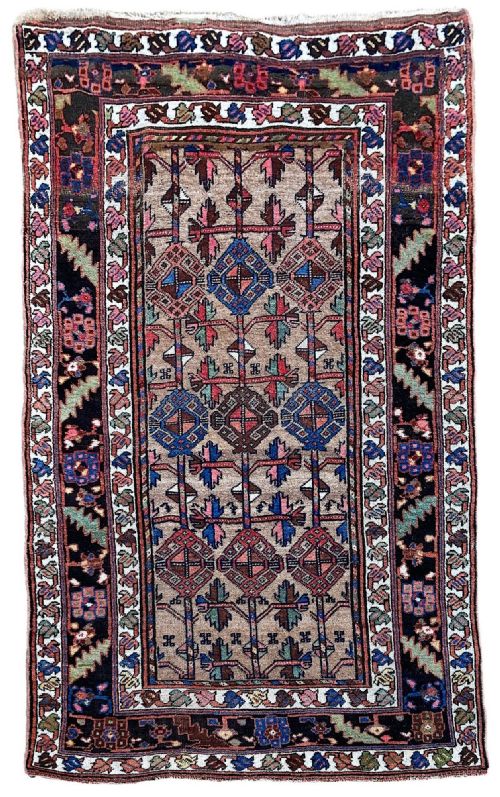


Navy Caucasian Rug
A navy caucasian rug delivers deep indigo fields and geometric tribal motifs that anchor traditional and modern rooms alike.
Navy Caucasian Rug
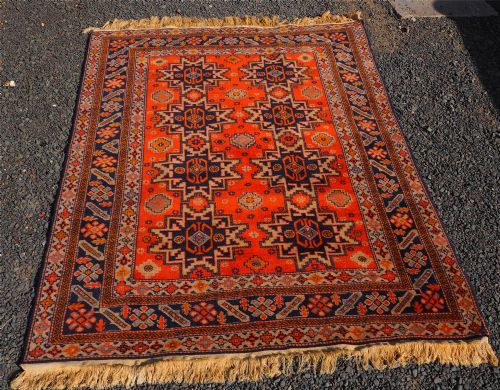
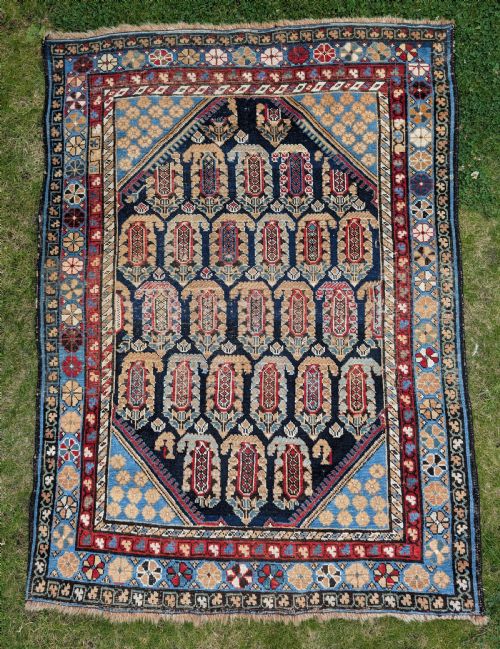
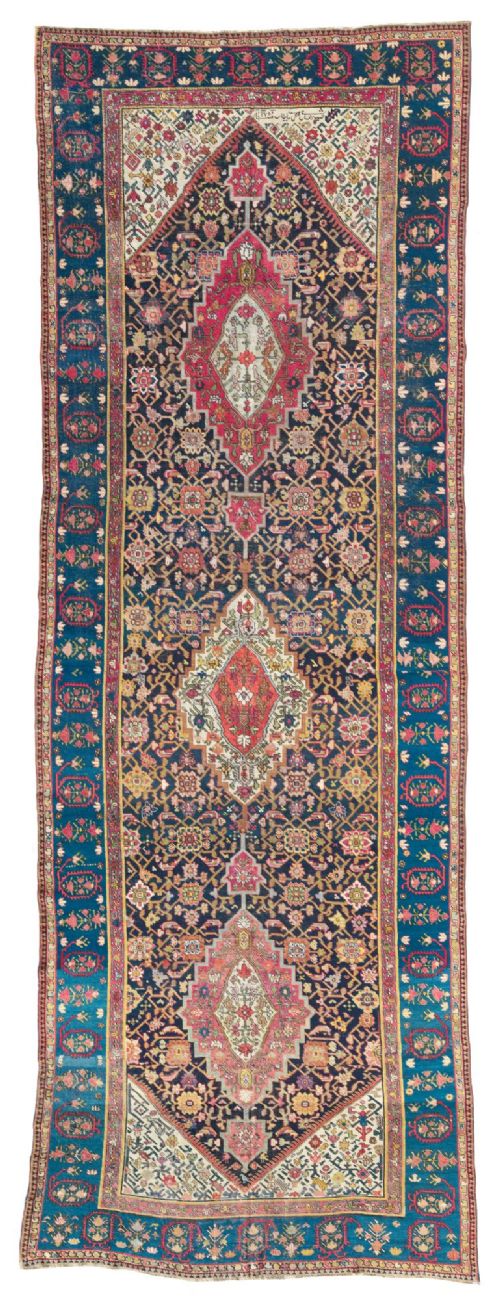
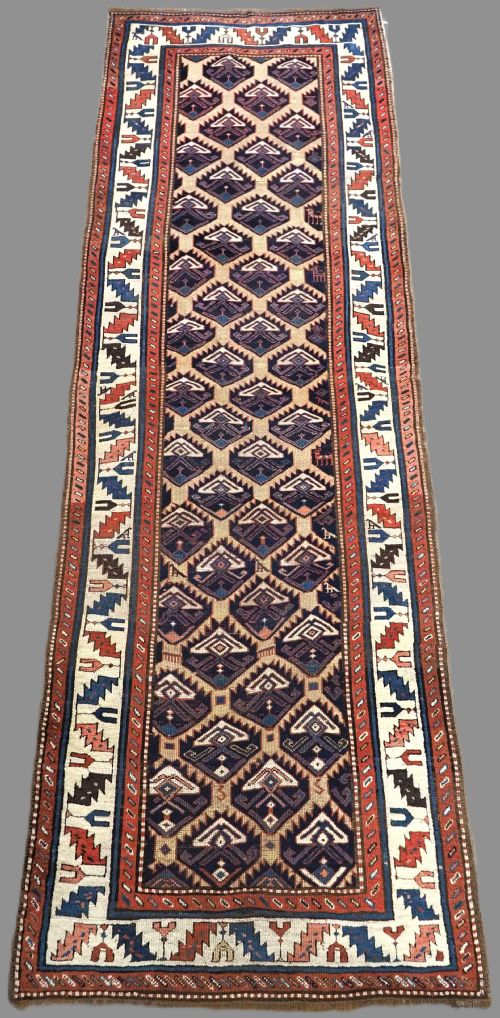
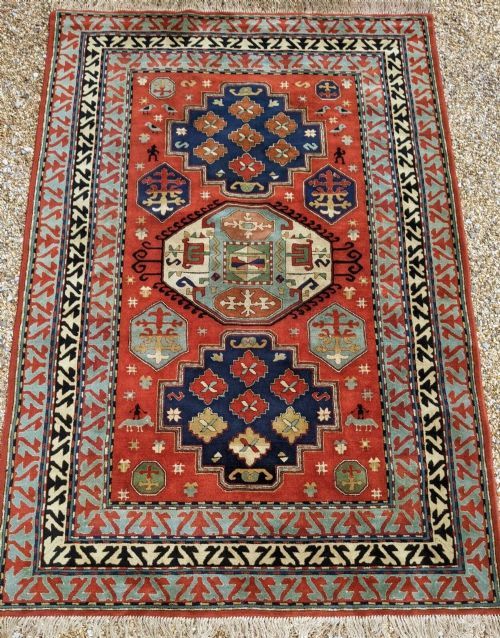
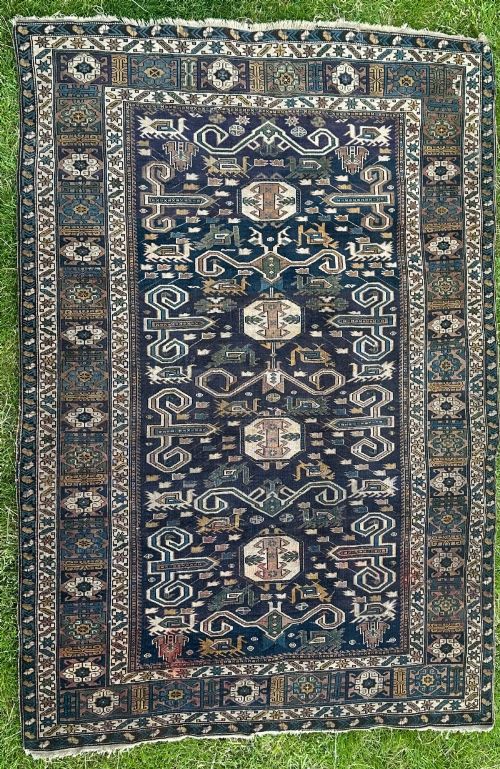
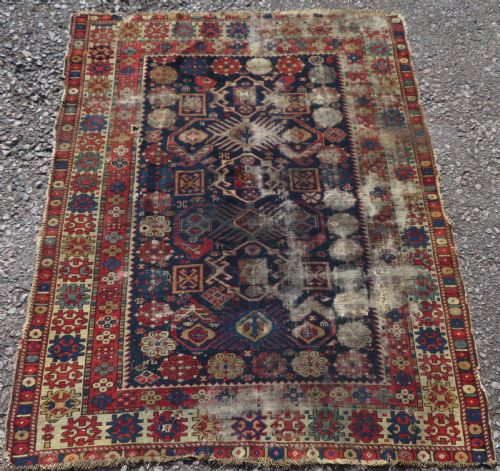
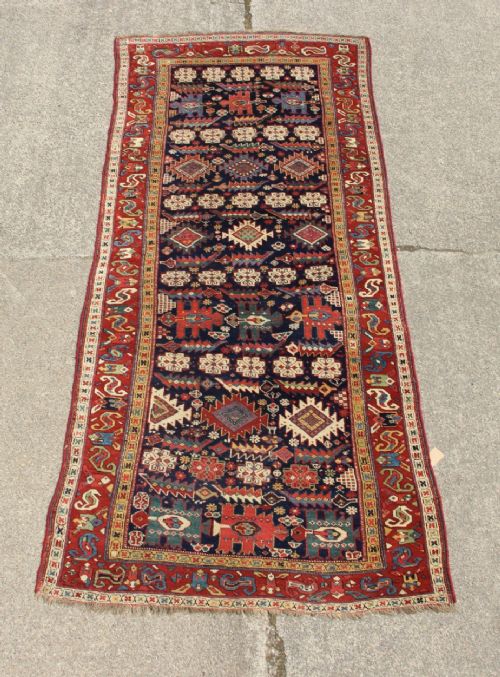
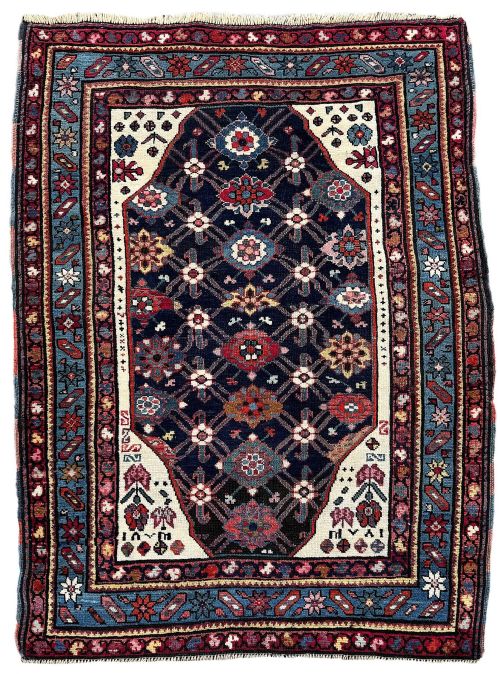
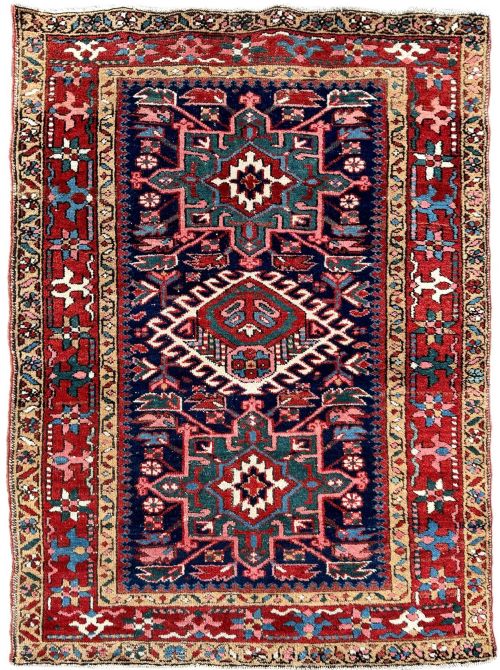
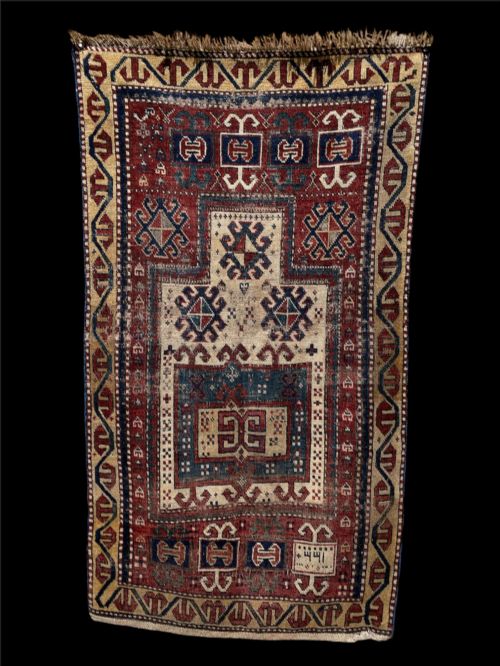
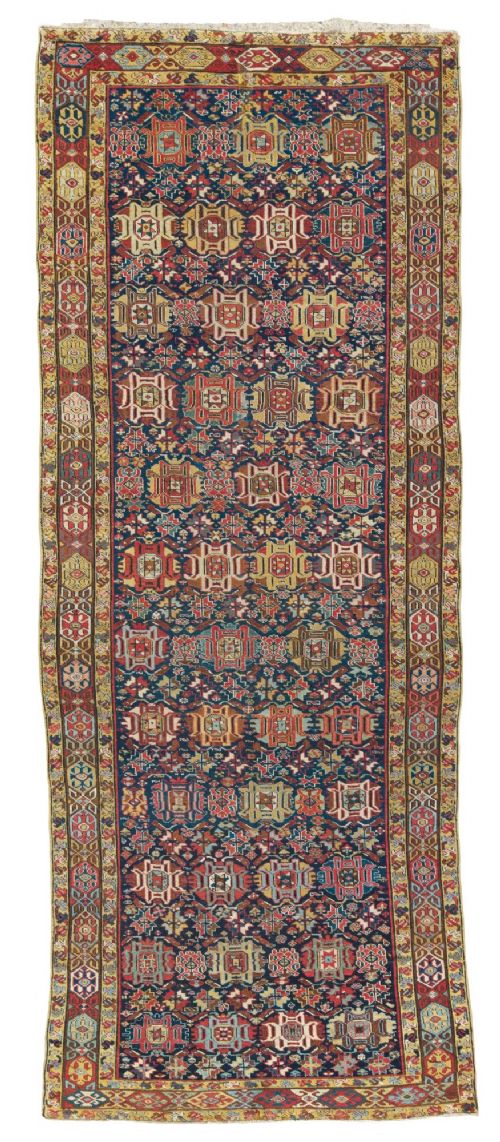
A navy caucasian rug brings together deep blue dye grounds and geometric tribal patterns originating from the Caucasus region and surrounding areas. When searching for this phrase, buyers encounter various formats ranging from small prayer rugs and saddle rugs to long hallway runners and large carpets.
The pieces appearing on this page span the mid-nineteenth century through the early twentieth century, encompassing periods from eighteen-fifty to nineteen-thirty. Common forms include village and tribal productions bearing regional designations such as Shirvan, Karabagh, Gendje, Kazak, and Daghestan.
Makers working across these districts utilised distinct design idioms including lattice patterns, repeat medallions, boteh motifs, and Memlinc guls. Regional weaving traditions determine whether a piece takes the shape of a compact square rug or an elongated runner.
Materials and construction methods
Construction relies primarily on wool and cotton foundations combined with hand-knotted wool pile. Artisans employed hand-spun wool fibres that accepted traditional natural dyes, resulting in rich navy grounds that age with subtle tonal variations.
Weavers utilised hand-knotting techniques specific to Caucasian and Persian tribal workshops to secure the dense wool pile. Flatweave methods also appear in specialised items like Soumak carpets from the Daghestan and Kuba regions.
Navy Caucasian Rug Retail Price Guide 2026
Typical asking prices for navy caucasian rug among the pieces listed under this phrase on Sellingantiques today, from the lower quarter to the upper quarter. They describe what is for sale here now, not the wider market.
Current listings span production dates from eighteen-fifty to nineteen-thirty, utilising wool, cotton, and natural dyes across various tribal styles.
Factors determining the grade of a piece
Quality rests upon the fineness of the weave, the clarity of the geometric drawing, and the depth of the natural dyestuffs. Tightly knotted examples display sharper motif contours and greater structural resilience.
The integrity of the wool and the preservation of original borders and selvedges dictate the standing of an antique rug. Consistent pile height across the field indicates careful use and skilled execution during production.
The Navy Caucasian Rug Glossary
- Runner
- A long, narrow carpet format traditionally utilised in hallways, corridors, and narrow spaces. These pieces frequently display repeating geometric medallions or continuous lattice designs.
- Prayer rug
- A small format textile featuring a distinct mihrab or niche design at one end, traditionally oriented toward Mecca during daily prayers. These rugs often incorporate specialised iconography and symbolic motifs.
- Soumak
- A flatweave technique utilising a wrapping method that leaves supplementary threads trailing on the reverse side. This structure provides durability without employing a traditional cut pile.
- Gul
- A medallion motif repeated across the field of tribal rugs, particularly characteristic of Turkmen and related weaving traditions. These octagonal or gabled forms often identify specific tribal groups.
Navy Caucasian Rug: Frequently Asked Questions
Where were these rugs made?
Production centres span the Caucasus region, encompassing districts such as Shirvan, Karabagh, Gendje, Kazak, and Daghestan. Neighbouring areas in northwest Persia also contributed similar tribal rug styles.
Weavers in these mountainous and village communities utilised local materials and distinct regional patterns passed down through generations.
How do I care for an antique rug?
Protect the textile by placing a quality underlay beneath it to prevent slipping and reduce friction against the floor. Vacuum gently using suction attachments without rotating brush bars.
Rotate the rug periodically to ensure even exposure to light and foot traffic. Professional cleaning by specialists in antique textiles is recommended when washing becomes necessary.
What is a Kelleh?
A kelleh is a specific format of antique carpet that is longer than a standard room-size rug but broader than a narrow runner. These rectangular pieces traditionally occupied a central position in larger reception rooms.
They share the dense knotting and geometric design vocabulary found in smaller tribal rugs from the same regions.
How are different regional types distinguished?
Distinctions rely upon specific combinations of knotting structure, colour palettes, border configurations, and characteristic geometric motifs. For instance, Kazak rugs generally feature bolder, larger-scale polygons while Shirvan pieces favor finer, more intricate lattice work.
Examining the treatment of the wool and the secondary weft threads helps attribute pieces to particular Caucasian or Persian tribal groups.