




Persian Bakshaish Carpet
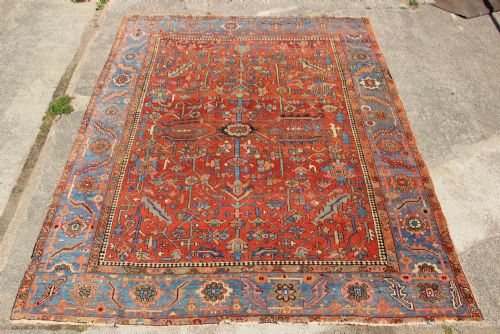
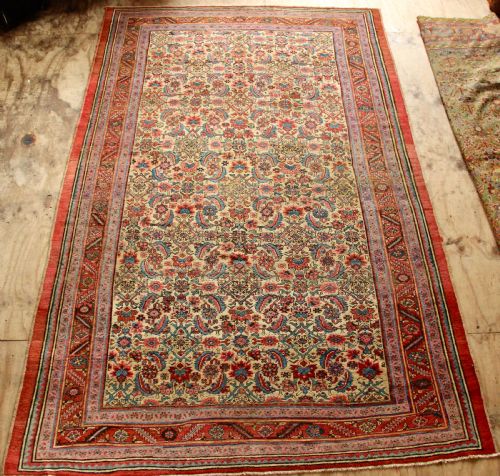
A persian bakshaish carpet brings tribal geometry and botanical abstraction together on the floor.
Persian Bakshaish Carpet
When you search for a persian bakshaish carpet, you are looking at hand-knotted wool floor coverings originating from north-west Persia. These pieces date across the nineteenth and early twentieth centuries, spanning periods from the mid-nineteenth century up to nineteen-ten.
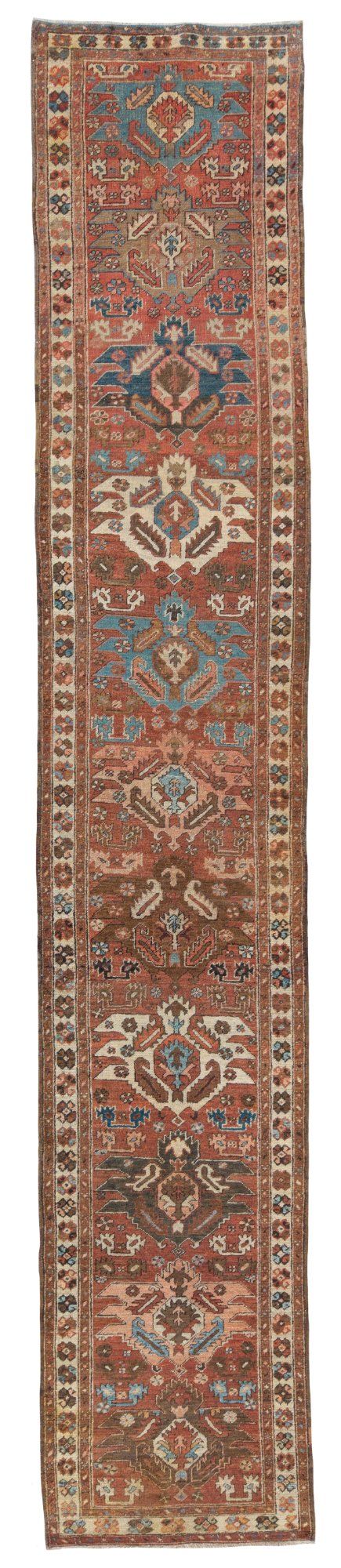
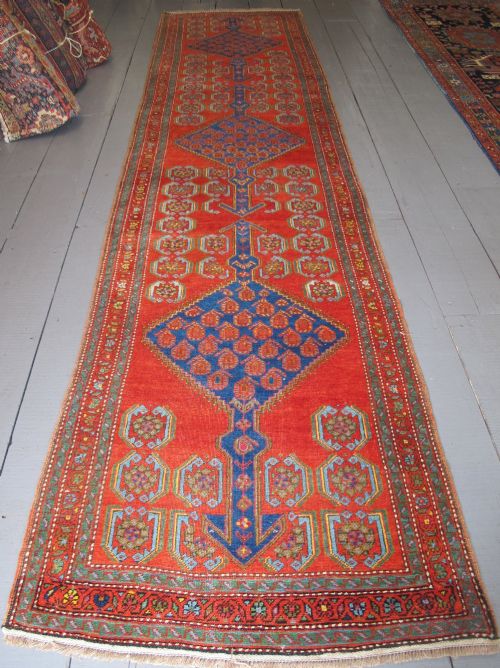
The selection here includes full-scale carpets alongside long runners and village rugs. Large format carpets measure over three metres in length, while runner rugs offer narrow formats suited to hallways.
Most examples align with Persian tribal or Serapi traditions, reflecting the specific weaving vocabulary of the region. These carpets bridge formal town designs and spontaneous tribal artistry.
How they were made
These carpets employ hand-knotted wool pile secured onto sturdy cotton foundations. The natural resilience of wool provides the surface durability characteristic of these nineteenth-century floor coverings.
Weavers in north-west Persian workshops and villages utilised local materials to construct heavy floor rugs built for practical use. The combination of wool and cotton supports both large room-size formats and narrower runner proportions.
Every runner hides minor geometric quirks where the weaver ran out of space and squeezed an extra blossom into the border.
What varies in quality
The primary distinction lies in the crispness of the drawing and the handling of geometric motifs. Finer examples display deliberate proportions and balanced integration of medallion and field patterns.
Scale and format also govern the character of each piece, with expansive carpets requiring greater compositional control than smaller village rugs. The execution of the border systems relative to the central field indicates the weaver's command of the tradition.
The Persian Bakshaish Carpet Glossary
- Pile
- The upright yarn loops that form the soft surface of the carpet. This layer takes the wear of foot traffic over decades of use.
- Foundation
- The underlying structure of warp and weft threads that supports the knotted wool. Cotton is standard for these north-west Persian rugs.
- Runner
- A long, narrow carpet format designed for hallways or corridors. These pieces measure significantly longer than they are wide.
- Medallion
- A large central ornamental design motif placed in the middle of the carpet field. It anchors the geometry of the surrounding composition.
Persian Bakshaish Carpet: Frequently Asked Questions
How do I clean a antique carpet?
Professional specialist cleaning is essential for nineteenth-century wool pile carpets. Regular gentle suction without a rotating brush removes surface dust safely.
Water saturation and household detergents damage the natural fibres and historical dyes. Consult a specialist familiar with antique Persian textiles before undertaking any treatment.
Where were these carpets made?
These pieces originate from north-west Persia, specifically the Bakshaish region and surrounding villages. Weavers in this area produced distinctive geometric rugs that share affinities with Serapi and Heriz styles.
The local weaving culture blended tribal motifs with large-scale architectural designs. This created the characteristic look found across nineteenth-century examples from the district.
Can I place furniture on these rugs?
These floor coverings were made for domestic use and handle standard furniture weight well. Distribute heavy loads evenly using protective caster cups to prevent localized pile crushing.
Rotate the carpet periodically to ensure even exposure to light and foot traffic. This practice preserves the balance of the wool surface over time.
How do I date an old carpet?
Dating relies on examining the wool quality, structural materials, dye palette, and stylistic conventions. Nineteenth-century pieces often exhibit specific variations in knot density and border construction.
Comparing the design layout to documented examples from periods like eighteen-fifty or eighteen-ninety helps establish the era of origin.