




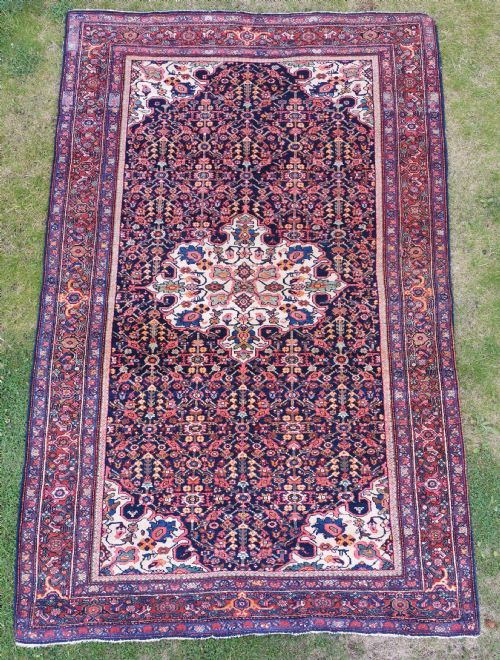
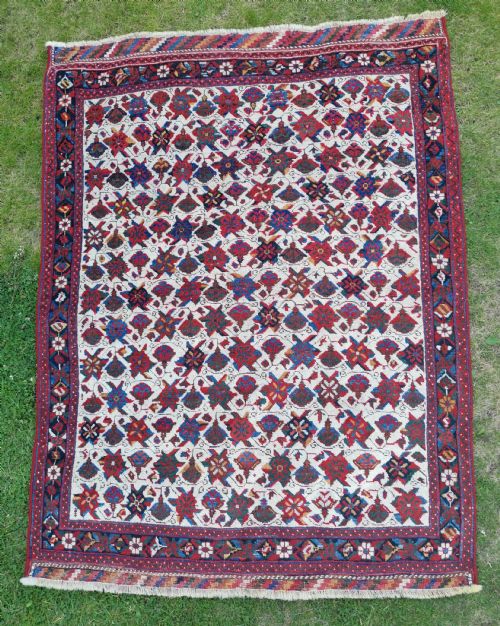
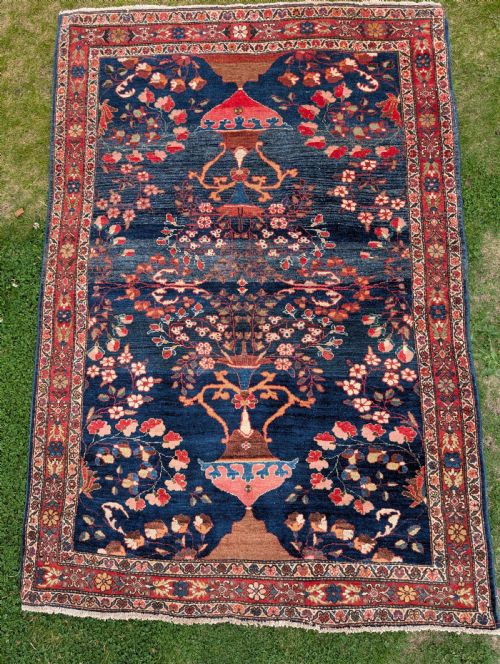
Blue Wool Persian Carpet
A blue wool persian carpet brings rich indigo depth and nomadic geometry to a floor, offering durable warmth woven by hand.
Blue Wool Persian Carpet
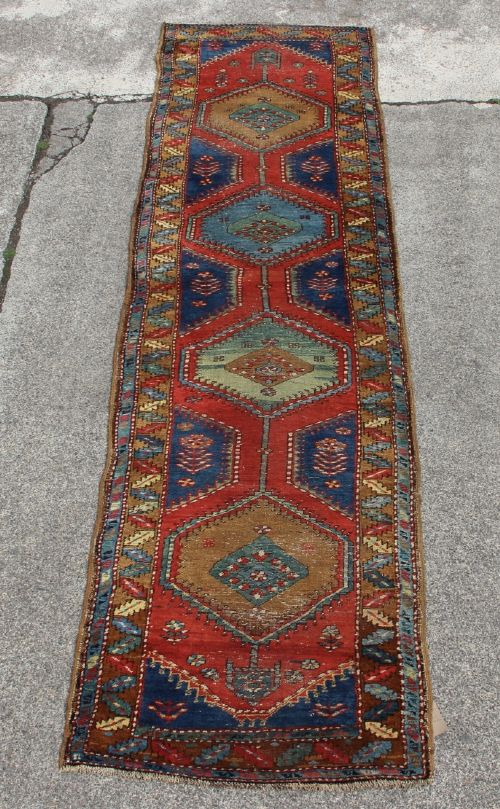
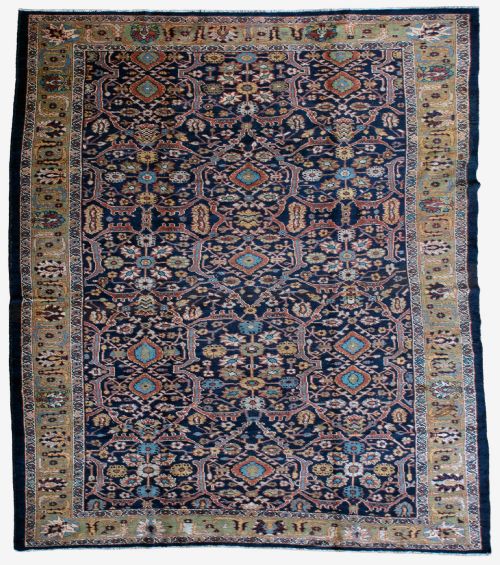
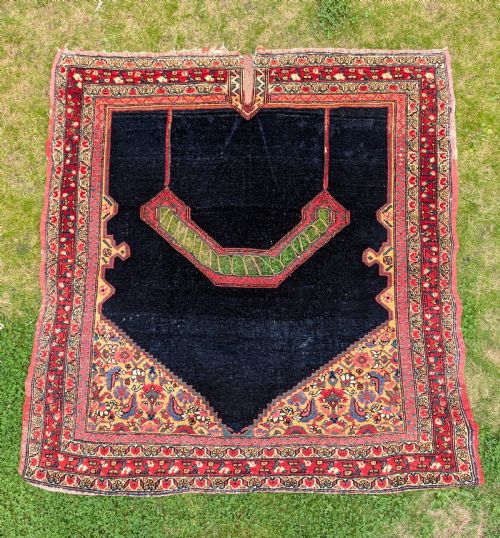
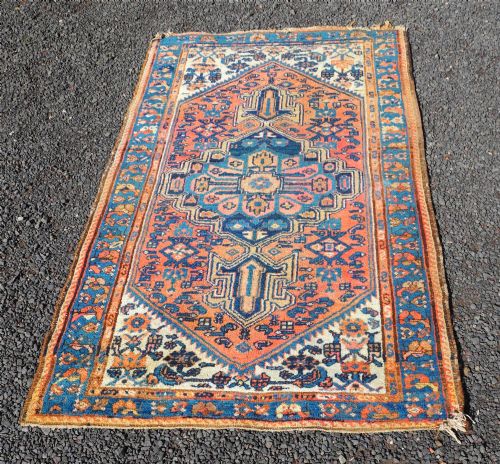
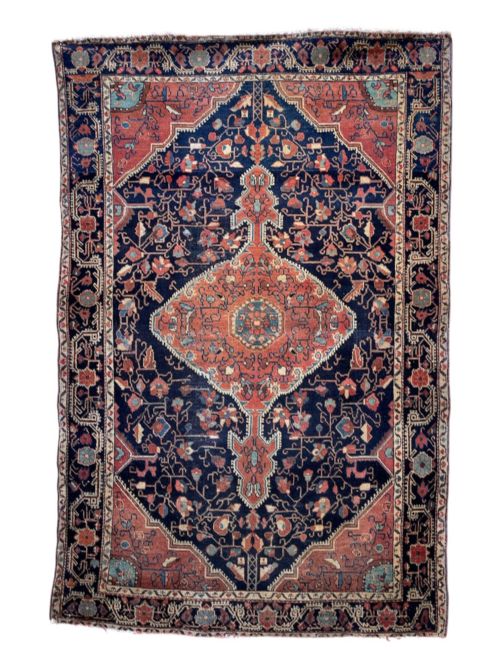
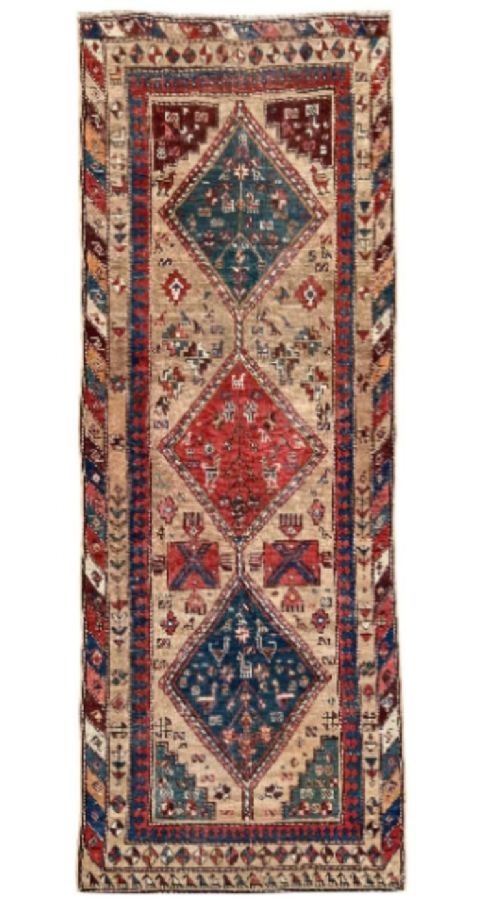
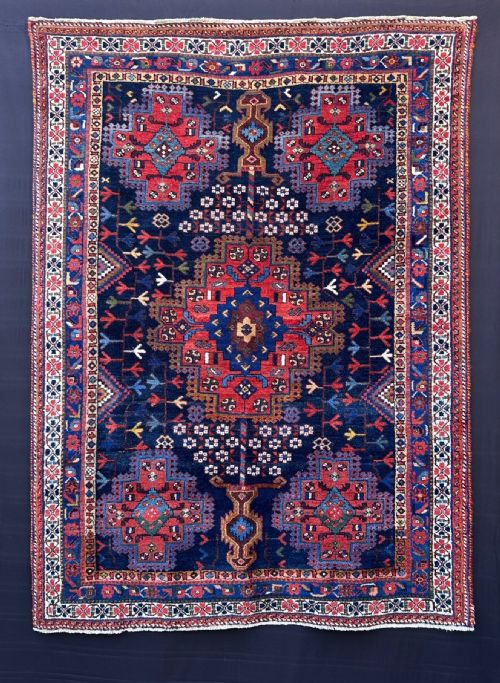
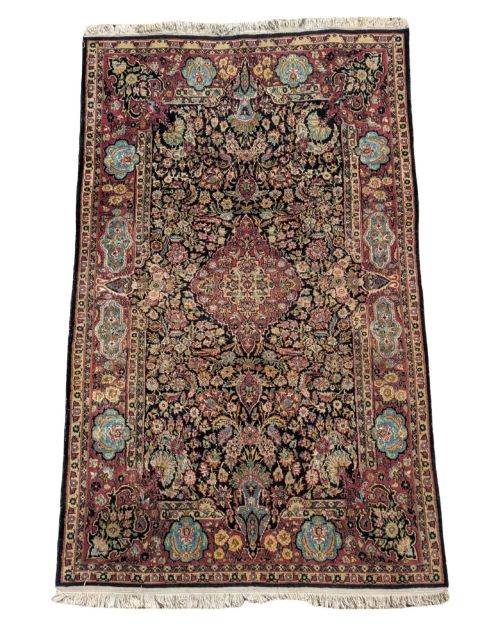
A blue wool persian carpet encompasses room-size floor coverings and long gallery formats originating from traditional weaving centres and tribal workshops across Iran. When you examine the pieces gathered here, you encounter regional classifications such as Heriz, Veramin, Mahal, Bakshaish, Khamseh, and Lori.
The dominant version on this page is the large-scale antique village or tribal carpet woven in wool on a cotton foundation. These examples date from the mid-nineteenth century through the early decades of the twentieth century, displaying distinct geometric medallions, boteh motifs, and all-over Herati patterns.
Buyers seeking a blue wool persian carpet frequently encounter formats ranging from manageable area rugs to substantial gallery runners exceeding five metres in length. Each attribution reflects the specific palette, knotting density, and tribal iconography recorded in the nineteenth and early twentieth-century evidence.
Materials and construction
The foundation structures rely on sturdy cotton warps and wefts, providing structural stability for the dense pile above. Weavers utilised hand-spun wool for the surface pile, ensuring high lanolin content and resilience under foot.
Colour comes from natural dyes applied to the wool fibres, yielding rich indigo blues alongside contrasting earth tones. Skilled artisans knotted the pile by hand onto the vertical looms, following traditional tribal patterns passed down through generations.
Blue Wool Persian Carpet Retail Price Guide 2026
Typical asking prices for blue wool persian carpet among the pieces listed under this phrase on Sellingantiques today, from the lower quarter to the upper quarter. They describe what is for sale here now, not the wider market.
Every indigo dye batch tells the weather's mood.
Judging the range
The distinction between ordinary and exceptional examples rests upon the precision of the knotting and the depth of the natural dyework. Finer carpets exhibit greater complexity in tribal motifs and more harmonious transitions of the indigo palette across the field.
Structural integrity and the retention of original borders dictate the standing of a piece within the tradition. Tribal rugs with hand-spun wool and intact wool pile demonstrate superior material authenticity compared to later commercial adaptations.
The Blue Wool Persian Carpet Glossary
- Warp
- The vertical foundation threads stretched tightly on the loom before weaving begins. All knots are tied around these stationary parallel strands.
- Weft
- The horizontal threads passed alternately over and under the warp threads to secure the rows of knots. They tighten the structure of the carpet row by row.
- Natural Dyes
- Colourants derived from plant, insect, and mineral sources rather than synthetic chemicals. They produce subtle tonal variations known as abrash.
- Pile
- The upright cut ends of the yarn that form the usable surface of the carpet. Its density and height determine the tactile feel underfoot.
Blue Wool Persian Carpet: Frequently Asked Questions
How do I care for my carpet?
Vacuum gently without a rotating brush roll to protect the hand-spun wool pile and delicate cotton foundations.
Keep the textile out of direct sunlight to preserve the natural indigo dyes and prevent premature fading of the field colours.
Where were these woven?
These carpets originate from traditional weaving towns and tribal regions across Persia, including Heriz, Veramin, Mahal, and Khamseh.
Nomadic groups and village workshops produced these pieces using regional motifs passed down through generations of weavers.
How do I date a carpet?
Dating relies on stylistic analysis of the tribal geometry, natural dye palettes, and structural materials recorded in the specific evidence.
Mid-nineteenth and early twentieth-century pieces display characteristic wear patterns and organic colour variations distinct from modern reproductions.