




Nineteenth Century Persia Rug
A nineteenth century persia rug brings profound pattern and history into a room through hand-knotted wool and cotton.
Nineteenth Century Persia Rug
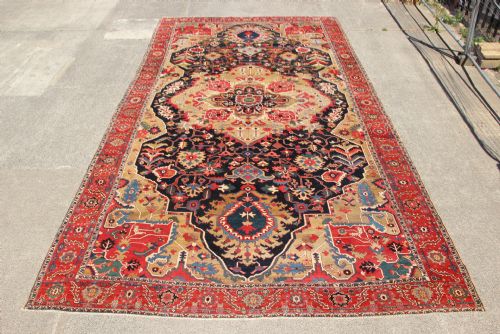
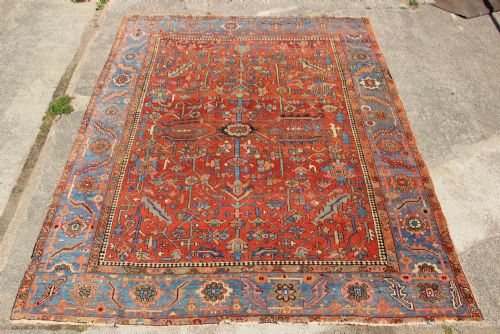
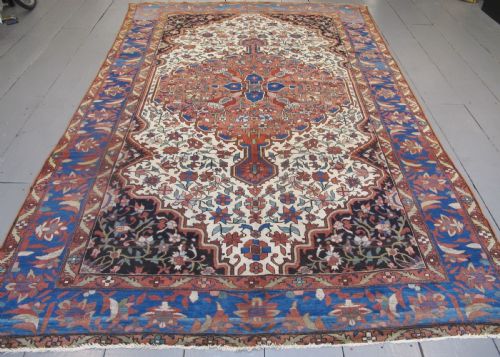
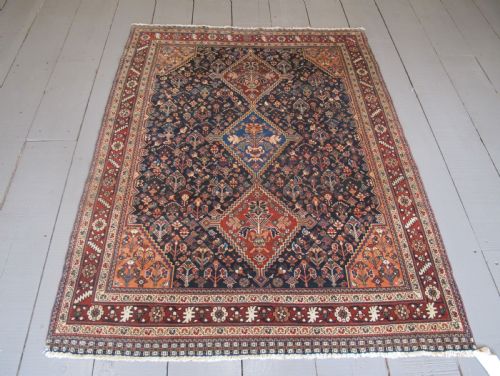
A nineteenth century persia rug encompasses woven floor coverings originating from various regions of Persia during the late nineteenth and early twentieth centuries. Buyers seeking these pieces encounter an array of styles including Serapi, Bakshiash, Fereghan, Tabriz, and Ziegler carpets.
Most examples date from the 1880s to the early 1900s, showcasing traditional Persian motifs executed in durable wool pile upon cotton or wool foundations. Each rug demonstrates the hand-knotted techniques characteristic of its specific place of origin.
What varies in quality
Quality in these carpets rests upon the density of the knotting and the fineness of the materials selected. Tighter knots allow for sharper definition within complex floral or geometric patterns.
The nuance and depth of the wool dyes further distinguish finer examples. Master weavers achieved harmonious palettes through careful preparation of natural colour sources.
Listings feature pieces dated across the 1880s, 1890s, 1900s, 1910s, and 1920s.
The Nineteenth Century Persia Rug Glossary
- Pile
- The surface of the rug formed by the upright ends of knotted yarn. This layer absorbs daily wear and defines the texture underfoot.
- Foundation
- The underlying structure of warp and weft threads that supports the knotted wool pile. Cotton is frequently utilised for this framework.
- Warp
- The vertical threads stretched tightly on the loom before knotting begins. These strings often form the visible fringe at either end of the rug.
- Weft
- The horizontal threads passed through the warp threads after each row of knots. They bind the knots firmly in place across the width of the weave.
- Herati
- A recurring traditional Persian lattice pattern composed of a central flower surrounded by four leaves. This motif appears frequently in village and town carpets.
Nineteenth Century Persia Rug: Frequently Asked Questions
How do I clean an antique Persian rug?
Professional specialist cleaning is essential to preserve the delicate wool pile and traditional natural dyes. Regular gentle vacuuming without a rotating brush helps remove embedded dust.
Avoid household detergents and excess moisture, which can weaken the cotton foundations and cause colours to bleed.
Where should I place these rugs at home?
These pieces suit low-traffic living spaces or bedrooms where the wool pile receives minimal abrasion. Placing a suitable underlay beneath the carpet prevents slipping and reduces wear.
Keep them away from direct, harsh sunlight to protect the rich tones of the natural dyes over time.
How do I identify different regional styles?
Regional attribution relies on examining the specific border designs, medallion structures, and overall palette. Town workshops often produce formal symmetrical patterns, whereas tribal pieces display geometric motifs.
Comparing the fineness of the knotting and the materials in the foundation also points toward a specific weaving origin.
What indicates the age of a Persian carpet?
Indicators of age include the composition of the dyes, the handling of the wool, and the structural characteristics of the foundation. Natural variations in colour depth often point to nineteenth-century production methods.
Wear patterns and the specific style of drawing within the motifs help narrow down the decade of manufacture.