


Period Oak Joint Stool
A period oak joint stool brings sturdy seventeenth-century craft and honest timber straight into a modern room.

Period Oak Joint Stool
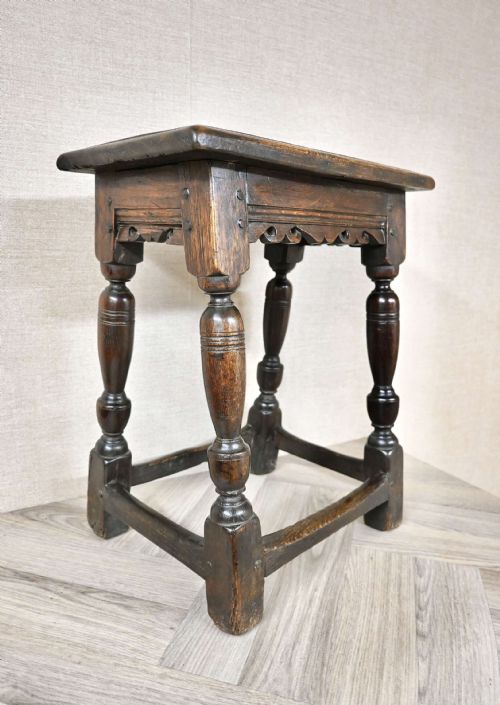
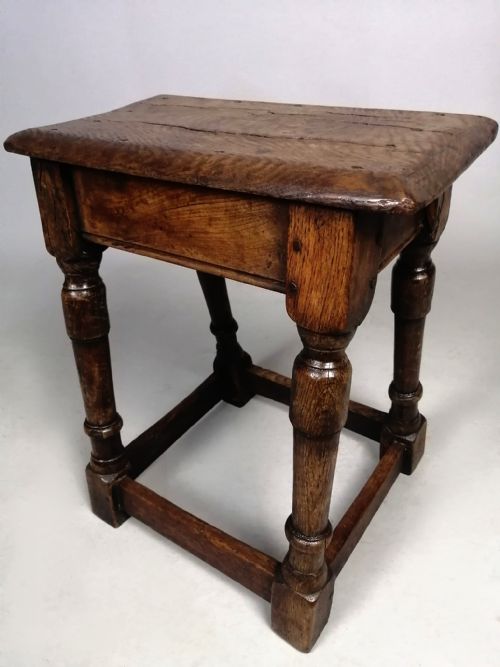
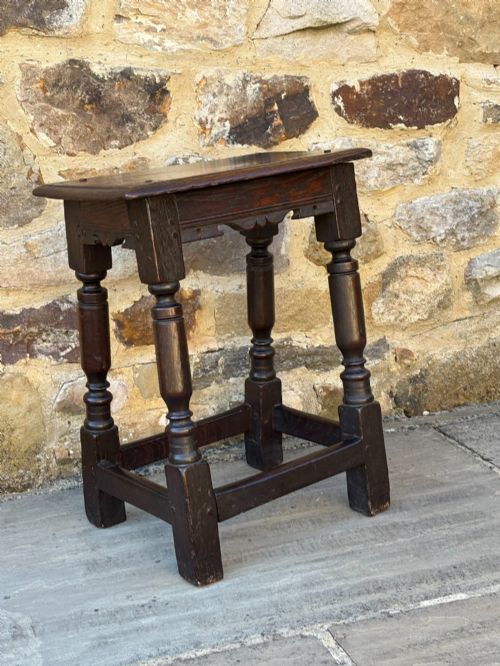
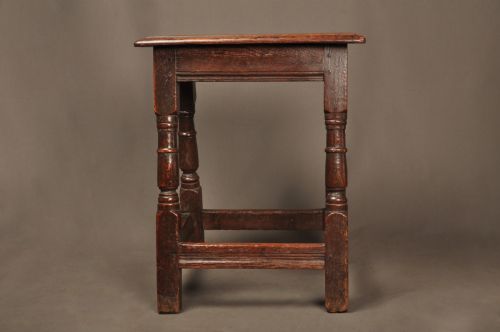
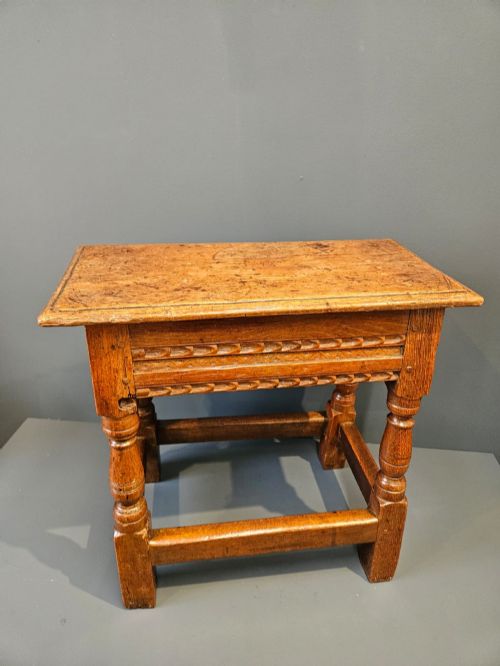
A period oak joint stool is a rigid, pegged wooden seat constructed by joiners rather than carpenters, utilising tightly fitted mortise and tenon joints. These pieces served versatile household roles in early domestic life, functioning as casual seating, portable platforms, or small serving surfaces.
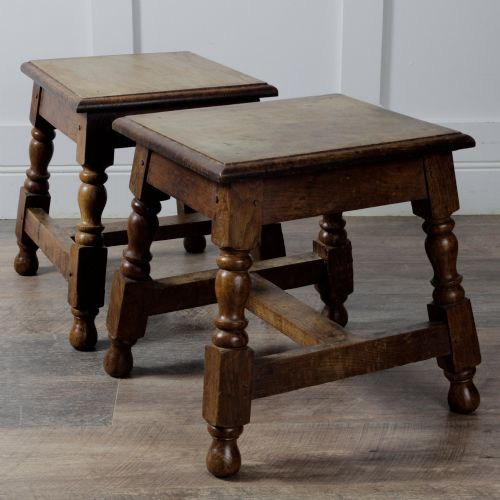
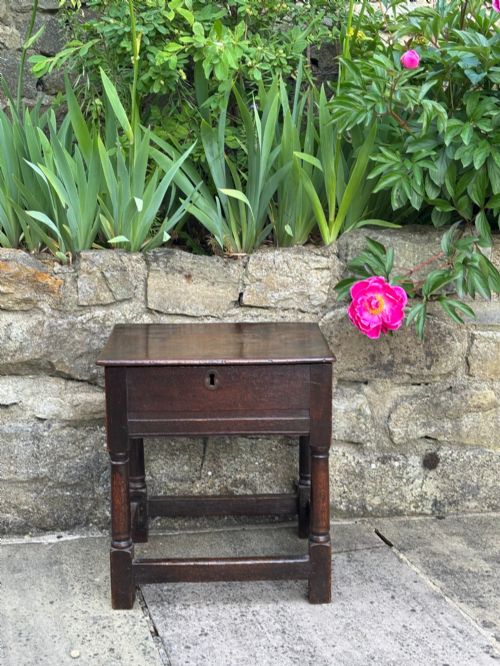
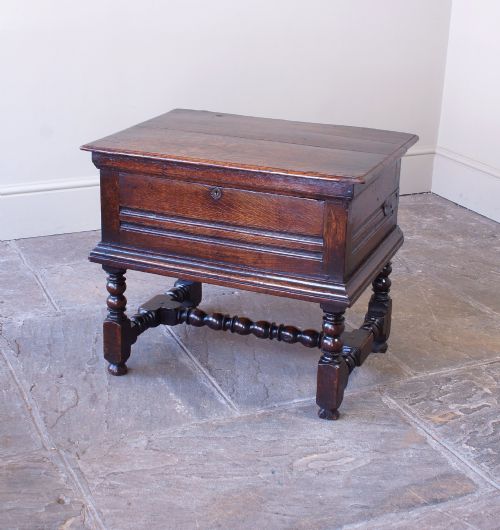
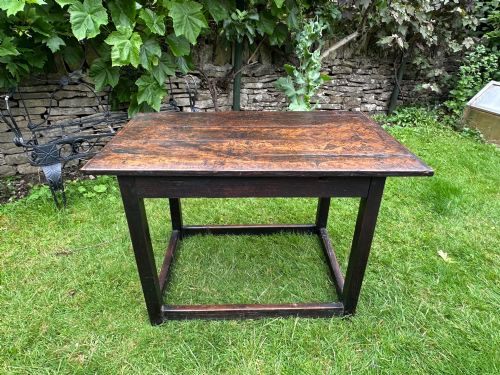
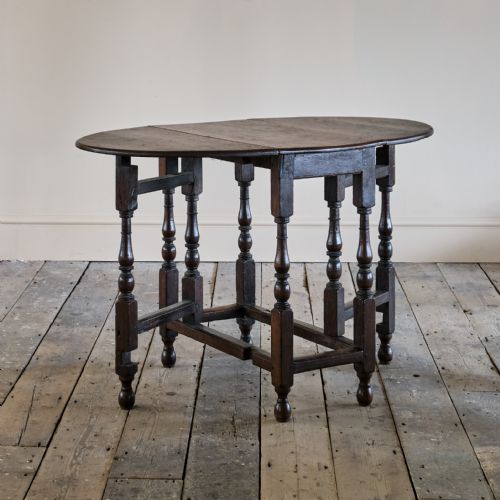
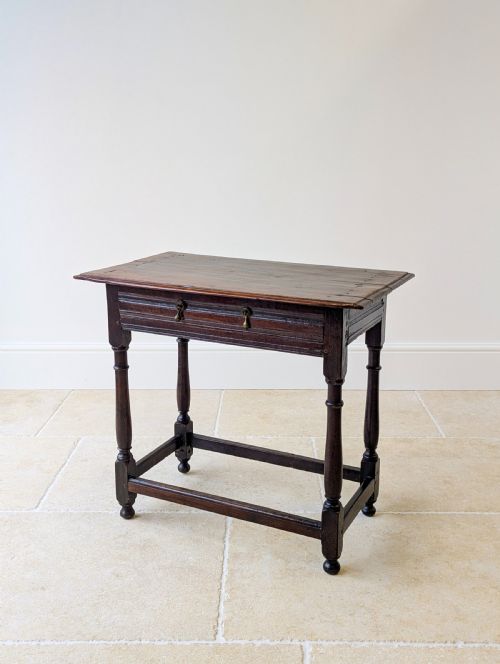
The versions met on this page span several centuries, led by authentic seventeenth-century examples alongside eighteenth-century interpretations and later revival pieces from the Victorian and Edwardian eras. Forms range from standard four-legged stools to boarded variants, box stools, and occasional side tables.
Buyers encounter standard plank-top designs alongside rarer box stools featuring integrated storage compartments or hinged lids. Regional English makers produced these sturdy domestic items using locally felled timber, resulting in slight variations in height, leg turning, and stretcher placement.
Materials and construction methods
Makers relied primarily on native oak for the structural frames, legs, and tops of these stools, occasionally combining elm for secondary components or seat boards. Timber was cleft and hewn using traditional axes and saws before being planed and shaped by hand.
Joints were secured using wooden pegs or dowels rather than metal nails, allowing the timber to expand and contract naturally with seasonal changes in humidity. Turning lathes shaped the legs with straightforward columnar, bobbin, or baluster profiles linked by low stretcher rails for lateral stability.
Available forms range from standard four-legged joint stools and occasional tables to boarded stools and box stools.
Assessing quality and preservation
Quality rests heavily on the degree of original material surviving in the frame, including untouched wooden pegs, primary plank tops, and unaltered height. Excessive timber shrinkage, replaced feet, or heavily scrubbed surfaces alter the tactile balance and historical integrity of the piece.
Proportion and execution of the leg turnings distinguish finer workshops from simpler provincial joinery, while the depth of colour and patination developed through centuries of handling indicates genuine age and surface continuity.
The Period Oak Joint Stool Glossary
- Joint stool
- A wooden seat constructed with joined and pegged framing rather than simple nailed carpentry. The term derives from the joined woodwork technique popularised before the widespread adoption of upholstered chairs.
- Box stool
- A variant form featuring enclosed sides and a lidded compartment beneath the seat for storage. These pieces often doubled as close stools in domestic bedchambers.
- Stretcher
- A horizontal wooden rail connecting the lower legs of a stool to provide structural rigidity. On early oak seating, these stretchers also functioned as footrests to keep feet off cold stone floors.
- Mortise and tenon
- A traditional joint where a projecting tongue fits snugly into a corresponding cavity to lock two pieces of timber at a right angle. This method forms the skeleton of sturdy seventeenth-century furniture.
- Patina
- The surface sheen and colour built up on old timber through decades of oxidation, wax application, and human touch. Untouched surfaces display a deep, warm hue distinct from modern chemical finishes.
Period Oak Joint Stool: Frequently Asked Questions
What did people use joint stools for?
In early households, joint stools provided portable seating around the dining table for family members and guests of standing. Their flat timber tops also allowed them to serve as temporary side tables for holding candles, food, or household goods.
Because chairs were costly and scarce, these versatile stools formed the backbone of domestic seating arrangements. Their sturdy build meant they could also double as small steps when reaching higher shelves.
How do I spot a seventeenth-century piece?
Seventeenth-century pieces typically display hand- cleft oak construction, pegged mortise and tenon joints, and heavy patination developed over hundreds of years. The timber often shows tool marks and peg ends that sit slightly proud of the surface.
Revival pieces from later centuries usually feature machine-sawn components, tighter modern glue lines, and a lighter or more uniform surface colour. Examining the underside and the wear patterns on the feet helps confirm genuine age.
Are these stools sturdy enough to sit on?
Most period oak joint stools remain remarkably robust due to their rigid pegged frames and dense hardwood construction. They easily handle daily use as occasional seats or low side tables in a modern home.
It remains wise to check that the pegged joints are secure and that the timber has not been compromised by historic damp or wood-boring insects. Gentle handling and occasional wax application keep the old joints stable.