





Gothic Oak Side Stool
These gothic oak side stool pieces bring heavy timber, carved tracery, and centuries of revival craftsmanship straight into a modern room.

Gothic Oak Side Stool
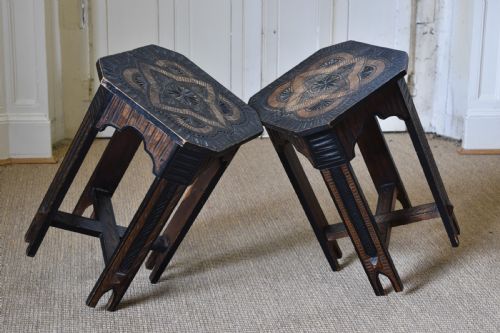
A gothic oak side stool is a compact wooden seat shaped by historic revival styles, most frequently appearing in nineteenth century Victorian forms and later Arts and Crafts interpretations. These low seats and occasional pieces draw directly from medieval architecture, showing pointed arches, chip carving, and boarded trestle construction. Buyers search for them to anchor a corner or serve as a low perch beside a fireside.
The selections recorded here span from nineteenth century antique specimens up through nineteen-forty workshop pieces, including related side tables, occasional tables, and boarded stools. Oak dominates the grouping, though occasional variants in walnut, ebonised wood, and mixed hardwoods appear across the periods. They function primarily as decorative small furniture rather than everyday lounging seats.
How they were made
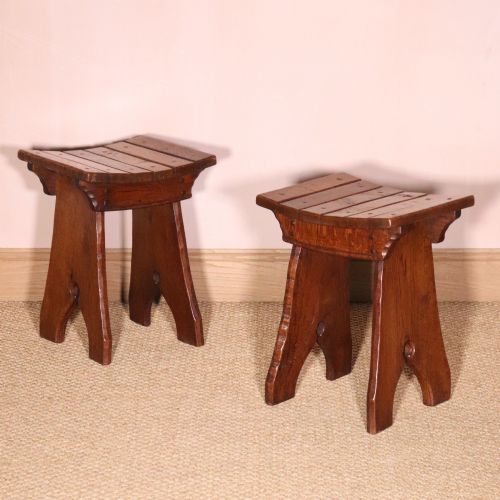
Solid oak and regional hardwoods form the structural backbone of these pieces, shaped through traditional joinery like pegged mortise and tenon joints and boarded construction. Makers relied on hand tools to carve panels, chip-carve borders, and fashion trestle supports without modern metal fasteners. The timber was often left in its natural state or finished simply to highlight the grain and heavy figuring.
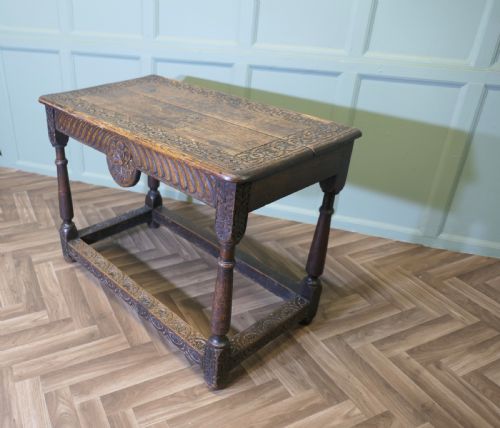
Surface ornamentation relies heavily on manual woodworking techniques such as chip carving, linenfold panels, and deep relief work characteristic of Gothic and Jacobean revivals. Later Arts and Crafts examples show simpler, more honest construction methods where tool marks remain visible on the wood. Walnut and ebonised variants introduce darker, more formal tones to the same structural traditions.
Apprentice pieces occasionally appear, built by learners demonstrating their mastery of mortise and tenon joints on a miniature scale.
What varies in quality
The integrity of the timber and the depth of the hand-carved detail mark the distinction between standard production and superior craftsmanship. Pieces featuring solid oak with crisp, deeply incised architectural motifs command greater appreciation than later, softer interpretations. The tightness of the joinery and the preservation of the original wooden surfaces also dictate the overall character.
Proportion and execution distinguish individual workshop output from mass-produced revival furniture of the later periods. An apprentice piece or a designated maker's output demonstrates greater attentiveness in the balancing of legs, seats, and stretcher rails. Surface patina developed through age adds a layer of visual depth that newer or heavily stripped timber lacks.
Jack Grimble
The Gothic Oak Side Stool Glossary
- Boarded construction
- A method of building furniture using thick planks joined simply at the edges or ends rather than framed panels. This technique gives early stools and small chests their rustic, solid appearance.
- Chip carving
- A style of ornamentation where small chips are removed from a flat wooden surface with a knife or chisel to create geometric patterns. It appears frequently on revival tables and stools from the nineteenth and twentieth centuries.
- Trestle form
- A structural arrangement where the top sits on two or more vertical supports connected by a horizontal stretcher. It provides sturdy support for heavy oak seating.
- Arts and Crafts
- A design movement valuing handcraft, traditional materials, and simple forms over industrial manufacturing. Pieces from this tradition show visible joinery and honest construction.
Gothic Oak Side Stool: Frequently Asked Questions
What is a gothic oak side stool?
A gothic oak side stool is a small, heavy wooden seat decorated with medieval architectural motifs like pointed arches and tracery. These pieces draw from nineteenth-century revival movements and early traditions.
They function well as occasional seating, small plant stands, or decorative accents in rooms with traditional or eclectic interiors.
How do I date an antique oak stool?
Dating relies on examining the tool marks, joinery methods, timber species, and overall style. Nineteenth-century Victorian examples often show machine assistance alongside hand carving, while earlier pieces rely entirely on manual shaping.
Comparing the construction style to documented periods like the Arts and Crafts movement or Jacobean revivals helps narrow down the decade of creation.
Were these stools used for sitting?
Many were built as sturdy secondary seating, window seats, or specialised work stools for spinning and household tasks. Their compact sizes made them easy to move around medieval and Victorian homes.
Today, collectors use them both as occasional seats and as decorative side tables to display objects.
What wood was used for these pieces?
Solid oak is the primary material found across these listings, valued for its strength, weight, and characteristic grain patterns. Walnut, ebonised wood, and general hardwoods also appear in specific revival pieces.
The choice of timber directly affects the weight, colour depth, and carving crispness of each individual item.
How do I care for antique oak furniture?
Keep wooden furniture away from direct heat sources and sudden humidity changes to prevent the oak from splitting or warping. Dusting with a dry, soft cloth is usually sufficient for regular maintenance.
Avoid modern silicone polishes that can build up on the historic surface and alter the natural patina of the wood.