



Craftsman Oak Seat
These craftsman oak seat pieces are solid timber forms designed for utility and comfort, bringing honest construction and enduring character straight into a room.
Craftsman Oak Seat
When you search for craftsman oak seat examples, you encounter sturdy seating forms spanning from the late nineteenth century through to the mid twentieth century. These pieces predominantly embody the Arts and Crafts and English Craftsman styles, prioritising honest construction and functional design above superfluous ornamentation.
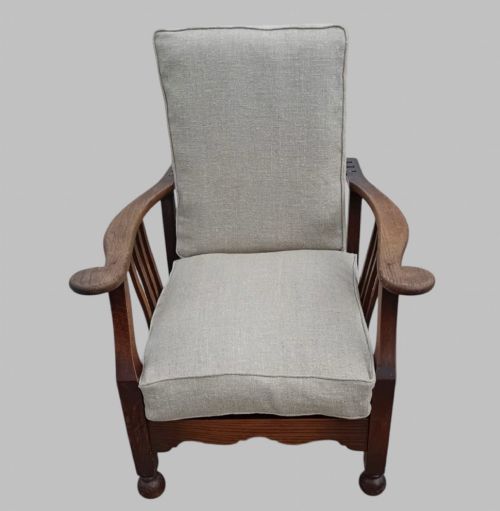
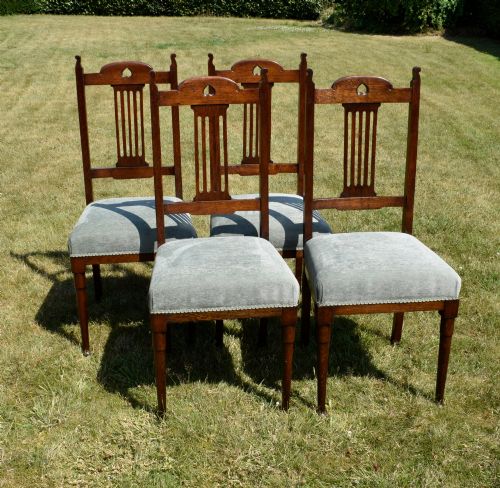
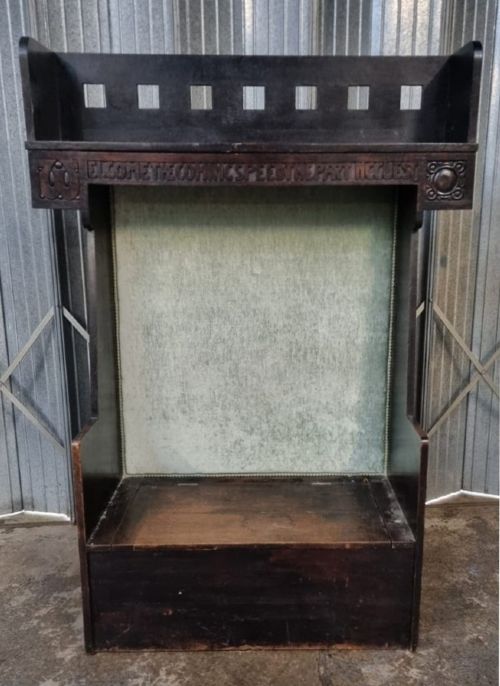
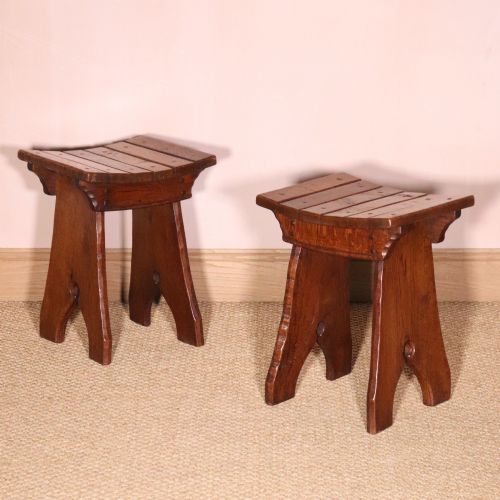
The selection here encompasses various practical forms, most frequently stools, armchairs, dining chairs, side chairs, and hall seats. Pieces typically date across the 1890s, 1900s, 1910s, 1920s, 1930s, 1940s, and 1950s, reflecting a sustained tradition of vernacular woodwork.
You are most likely to meet straightforward oak stools and robust armchairs on this page, often featuring seats woven from rush or upholstered in simple fabrics like linen and textile. These domestic items range from modest apprentice pieces and piano stools to sets of dining chairs and reclining armchairs.
How they were made
The construction relies heavily on solid oak, chosen for its strength and rich grain, shaped through traditional joinery techniques. Woodworkers often incorporated carved details or exposed structural joints that highlight the integrity of the handmade process.
Seats are frequently finished with woven rush or upholstered using tactile materials such as fabric, linen, needlepoint fabric, and metal hardware. This combination of robust timber frames and textural seating surfaces defines the tactile quality of the group.
Some miniature apprentice pieces were created simply to prove a joiner was ready to join the guild.
What varies in quality
The standard of a piece is determined by the crispness of the timber carving, the tightness of the joinery, and the integrity of the framing. Superior examples display thoughtful proportions and harmonious integration between the solid oak structure and the seating material.
Another differentiator lies in the provenance and the skill evident in the secondary materials, such as expertly woven rush or hand-selected upholstery fabrics. Pieces associated with notable makers or specific design movements demonstrate a higher degree of refined craftsmanship.
Shapland & Petter·Liberty·Jack Grimble·Lawrence Neal·David Oakleafman Langstaff
The Craftsman Oak Seat Glossary
- Arts and Crafts
- A design movement that championed traditional craftsmanship, simple forms, and the use of natural materials. This aesthetic rejected mass production in favour of hand-built integrity.
- Rush
- A traditional seating material woven from marsh plants to create a durable, textured surface. It is commonly found on stools and ladder back chairs.
- Apprentice piece
- A miniature or smaller scale item created by a trainee artisan to demonstrate skill to master craftsmen. These pieces show high attention to detail.
- Ladder back
- A chair design featuring horizontal slats across the backrest, often paired with a woven rush seat. This form has deep roots in English vernacular furniture.
- Recliner
- A chair engineered with an adjustable mechanism or frame to alter the angle of the backrest. Early versions utilised mechanical framing to achieve different seating positions.
Craftsman Oak Seat: Frequently Asked Questions
What defines a craftsman oak seat?
These pieces are characterised by their solid oak construction, visible joinery, and functional designs rooted in the Arts and Crafts movement.
They emphasise material honesty and utility over excessive decoration.
How do I care for rush seats?
Rush seating requires gentle maintenance and should be kept away from excessive moisture and direct heat sources.
Regular light dusting helps preserve the natural fibres of the woven material.
Were these chairs made by hand?
Many examples reflect traditional workshop production methods where artisans shaped the solid timber and assembled the joints manually.
Hand-carved details and individual variations highlight the non-industrial origins of these items.
How do I date an oak chair?
Dating relies on observing construction methods, material choices, and stylistic cues associated with periods from the late nineteenth century onward.
Makers' marks or specific regional building traditions also provide clear chronological indicators.