




Small Carved Wooden Bench
These small carved wooden bench selections bring compact utility and historic character to narrow hallways, alcoves and living spaces.

Small Carved Wooden Bench
A small carved wooden bench provides compact seating and functional storage within limited spatial footprints. Buyers searching this phrase encounter domestic forms ranging from rustic vernacular stools to refined revival settees.
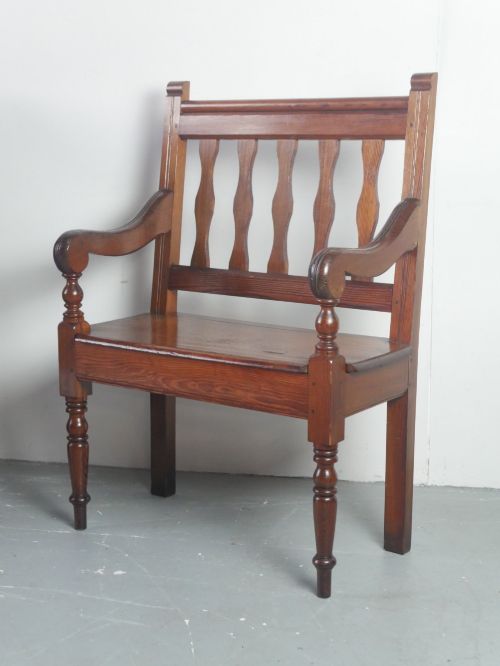
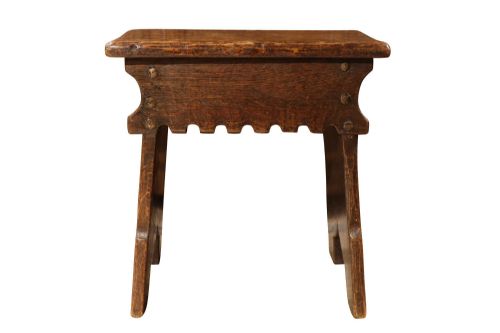
The pieces appearing on this page span several centuries, including Victorian country items, Edwardian oak examples and pieces from the broader nineteenth and early twentieth centuries. Forms stretch from simple boarded stools and church pews to miniature apprentice pieces and French style giltwood canapes.
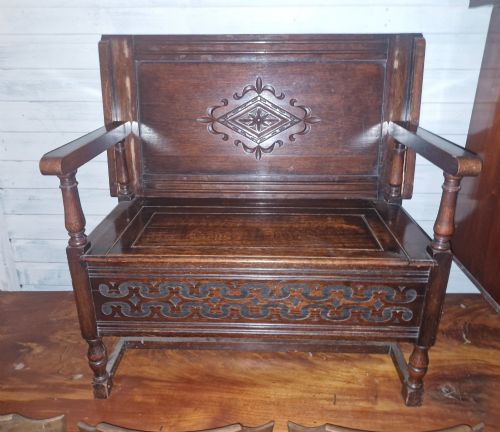
Origin and regional style shape each piece, juxtaposing English oak joinery against French Louis style seating and Chinese hardwood tables. Buyers often meet lift-up seats, fold-over tops and narrow hall seats designed specifically for transitional spaces.
How they were made
Carpenters and joiners built these items using solid timbers such as oak, pine, pitch pine, walnut and hardwood, often employing pegged construction for structural stability. Joinery methods varied from traditional five-plank assemblies to trestle forms and inlaid satinwood surfaces.
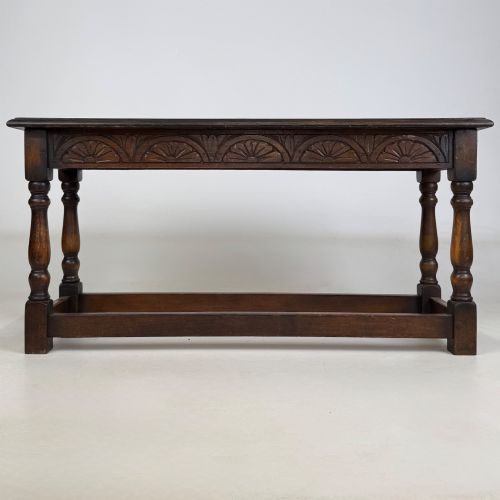
Decorative detailing relied on manual carving applied directly to timber frames, alongside painted finishes, giltwood applications and textile or fabric upholstery. Makers adapted methods to suit diverse stylistic revivals, from Gothic and Jacobean motifs to Louis XV and XVI framing.
Styles span Jacobean Revival, Gothic Revival, Louis XV and rustic vernacular forms.
What varies in quality
Quality rests on the integrity of the timber selection and the precision of the joinery, distinguishing sturdy pegged construction from looser assemblies. The crispness of the hand carving and the fidelity of the period style, whether Gothic Revival or Louis XV, dictate the refinement of the piece.
Proportion and scale also define standard, as demonstrated by diminutive vernacular stools and small settlement pieces designed for specific domestic niches. The preservation of original surfaces, paint and upholstery finishes directly influences the integrity of each item.
The Small Carved Wooden Bench Glossary
- Pegged construction
- A traditional joinery method using wooden pins to secure structural joints without metal nails. This technique indicates older craftsmanship.
- Trestle form
- A structural support style where horizontal beams rest on vertical feet or frames. It appears frequently in early boarded stools.
- Giltwood
- Timber treated with a thin layer of gold leaf or gilt finish. This material characterises ornate French style pieces.
- Settle
- A wooden bench featuring a high back and solid arms to block drafts. Smaller versions offer compact hallway seating.
- Apprentice piece
- A miniature scale item created by a trainee artisan to demonstrate mastery. These display refined detailing on a small format.
Small Carved Wooden Bench: Frequently Asked Questions
Where should I put a small carved wooden bench?
These compact seats fit well in narrow hallways, entryways, bedrooms and small alcoves where larger furniture overwhelms the floor plan.
Many examples incorporate lift-up seats or folding tops that offer discreet storage for everyday items while maintaining a minimal footprint.
How do I care for antique wooden benches?
Keep wooden surfaces away from direct heat sources and dramatic humidity shifts to prevent timber splitting or warping over time.
Apply a traditional beeswax polish occasionally to nourish the wood and preserve the natural patina without building up heavy chemical residues.
What is the difference between an oak hall seat and a settle?
Hall seats generally feature lower backs and open designs suited for temporary seating and hat or shoe storage beneath.
Settles typically include high panelled backs and enclosed sides originally designed to keep out cold draughts in older domestic interiors.
How can I tell a revival piece from an earlier period?
Revival items often combine stylistic motifs from earlier eras, such as Gothic or Jacobean carving, with timber preparation and hardware characteristic of later centuries.
Examine the tool marks, joint construction and underside surfaces to understand the actual manufacturing period rather than relying solely on decorative carving styles.