

Rustic Country Oak Bench
A rustic country oak bench brings honest utility and vernacular character to an interior.

Rustic Country Oak Bench
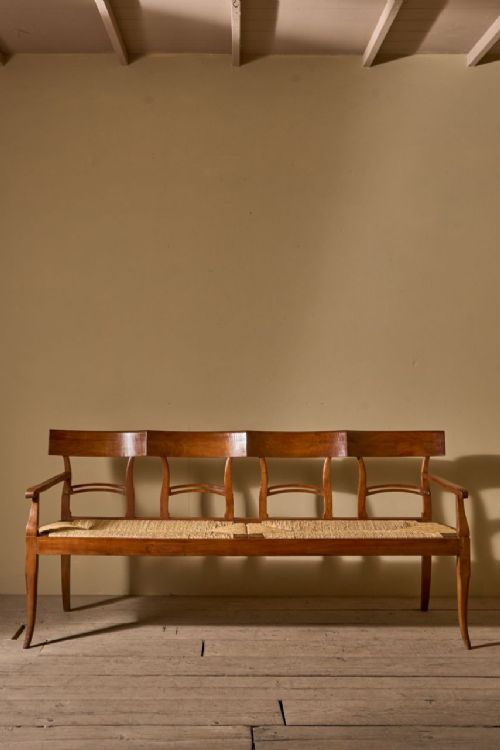
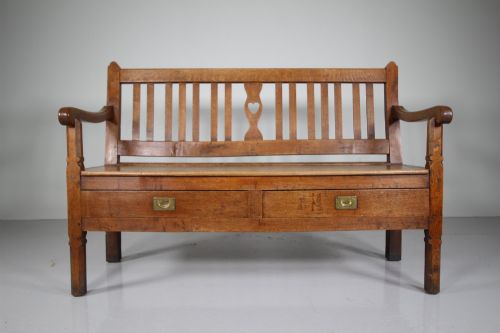
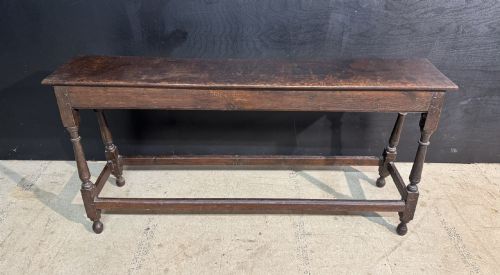
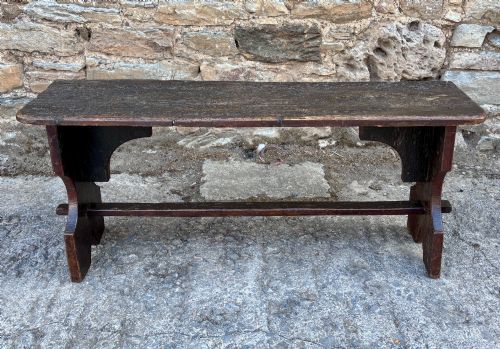
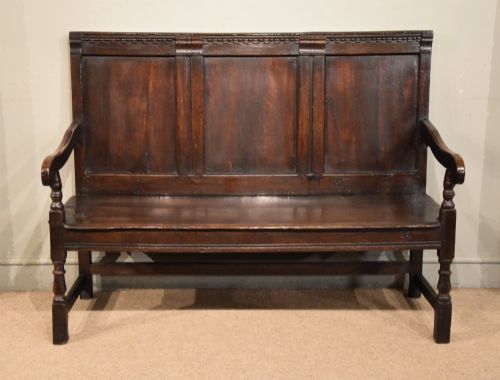
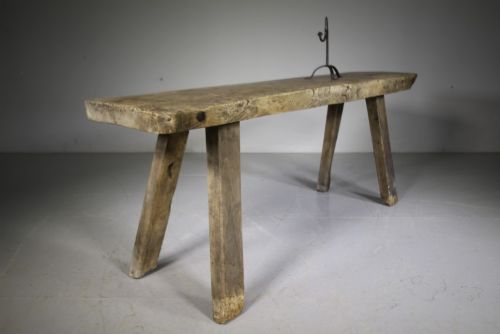
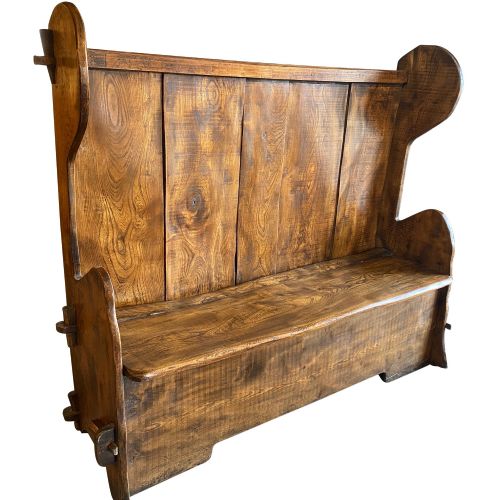
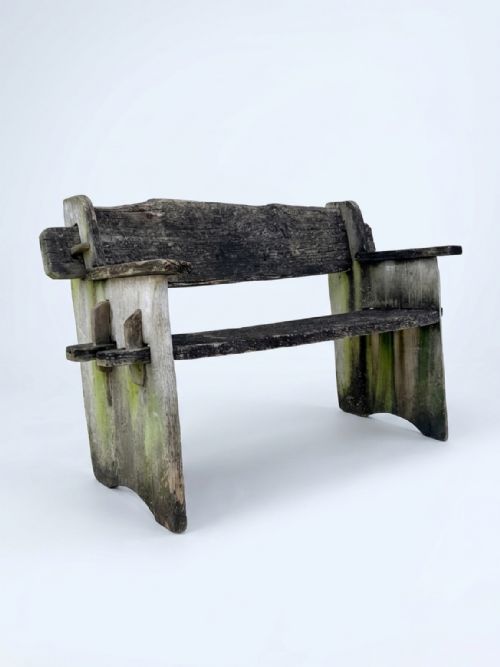
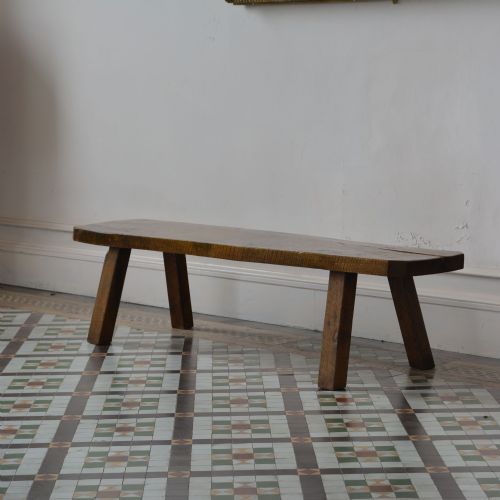
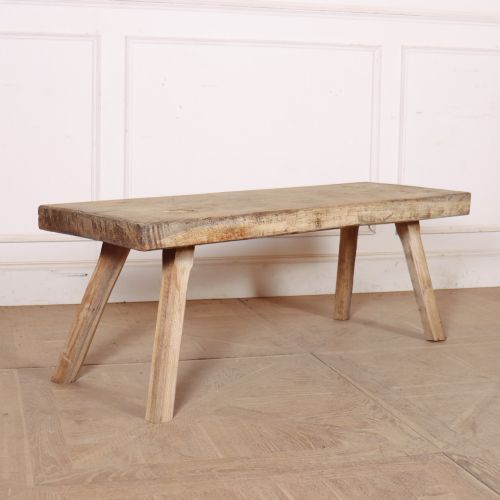
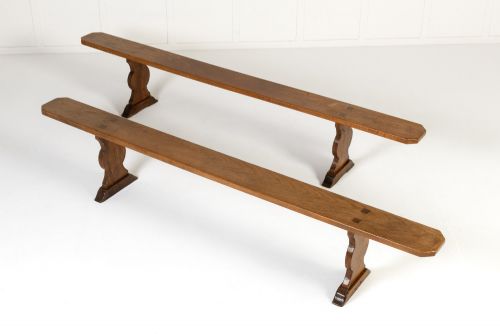
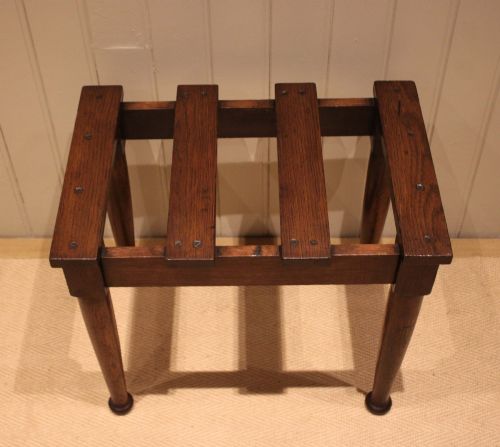
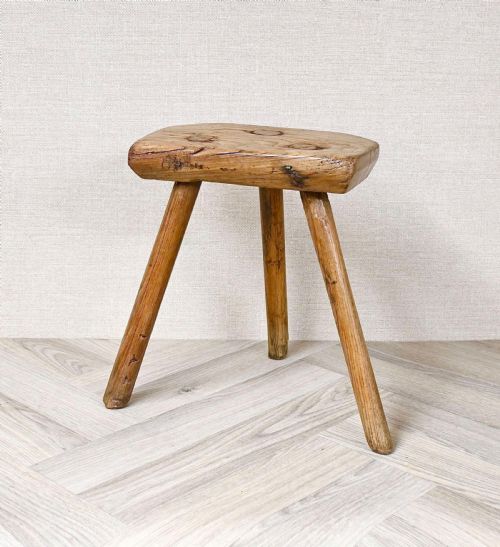
A rustic country oak bench is a utilitarian seating form shaped by provincial makers to serve domestic or agricultural life. These pieces include settles with high panelled backs, long hall seats, and low pig benches repurposed for modern coffee tables.
The examples gathered here span from the eighteenth century through to the early twentieth century, taking in English, Welsh, French, and Hungarian vernacular traditions. Oak predominates as the primary timber, often supplemented by elm, cherrywood, or pine.
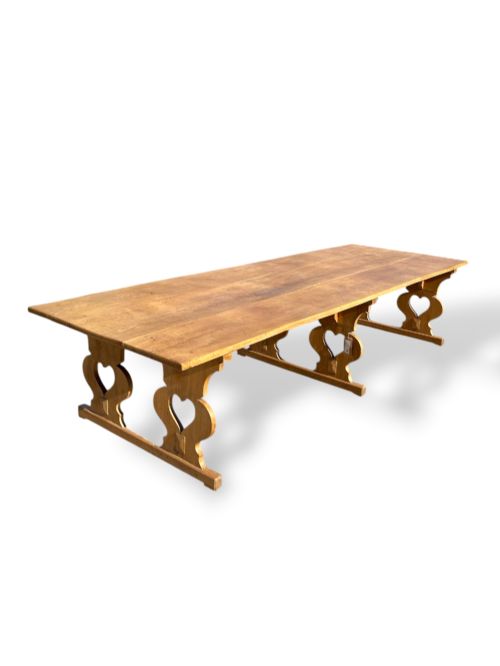
Buyers encounter everything from narrow box settles with enclosed storage to long farmhouse forms built for communal dining. The construction reflects straightforward regional carpentry designed for endurance rather than courtly fashion.
Evaluating quality and proportion
Quality rests in the integrity of the timber conversion, the honesty of the construction, and the preservation of original surfaces. Pieces retaining genuine patination and undisturbed pegged framing command greater interest than those heavily restored.
Proportion and utility also separate the ordinary from the exceptional, as seen in well-balanced settles and benches with pleasing length and comfortable seat heights. Subtle details such as heart cut-outs or sculpted seats elevate vernacular items.
Several pieces preserve small heart-shaped cut-outs in their high wooden backs, offering a touch of whimsy from the vernacular carpenter.
The Rustic Country Oak Bench Glossary
- Settle
- A wooden bench with a high back, solid arms, and often a box seat for storage. This form kept draughts away from the occupant in historic kitchens.
- Pig bench
- A low, narrow wooden bench traditionally used in agricultural tasks. These sturdy items now frequently function as coffee tables.
- Joint stool
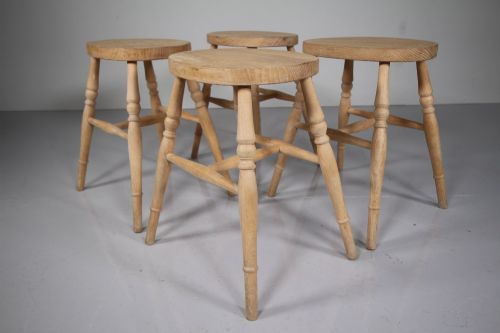
- A low wooden stool constructed with pegged mortise and tenon joints. They predate chairs as common household seating.
- Vernacular
- Everyday objects made by local tradesmen following regional traditions rather than high architectural styles. These pieces prioritise practical function.
- Pegged construction
- A method of joining wooden elements using wooden pins or dowels instead of metal nails. This technique allows timber to expand and contract naturally.
Rustic Country Oak Bench: Frequently Asked Questions
How were rustic benches used historically?
These benches served primary seating roles in farmhouse kitchens, halls, and cottages, often positioned near hearths to block cold draughts. Box versions doubled as secure storage chests for household blankets or dry goods.
Agricultural variants supported daily tasks in dairies, workshops, and farmyards before finding new life in domestic interiors.
How do I care for an antique oak bench?
Protect the timber by keeping the bench away from direct heat sources and sudden humidity changes that cause wood to split. Regular dusting with a dry cloth and occasional application of appropriate wax preserves the historic surface.
Avoid modern liquid polishes that build up artificial residues and dull the natural patination of the oak.
Are these benches suitable for daily seating?
Most surviving examples remain structurally sound for regular use thanks to their robust pegged framing and dense hardwood construction. Seat heights and depths vary according to their original vernacular purpose, so checking dimensions ensures comfort.
Adding simple cushions can make lower or deeper historic forms more comfortable for modern living spaces.
How can I tell the age of a country bench?
Dating relies on examining tool marks, timber shrinkage, and the method of joint construction visible beneath the seat or frame. Hand-sawn boards, early iron fixings, and seventeenth or eighteenth-century panel styles provide clear chronological indicators.
Subsequent alterations or replaced boards often reveal themselves through mismatched patination and newer fastening techniques.