


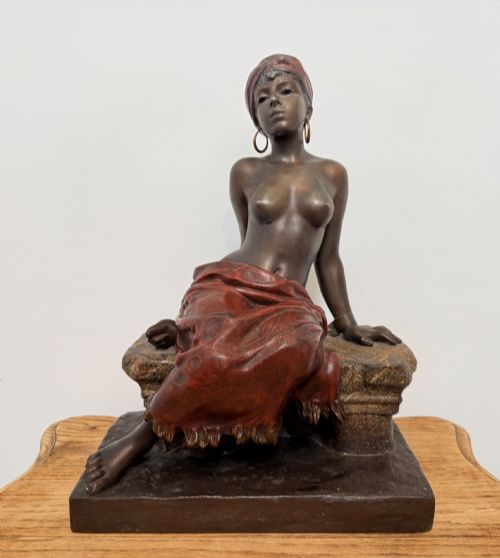
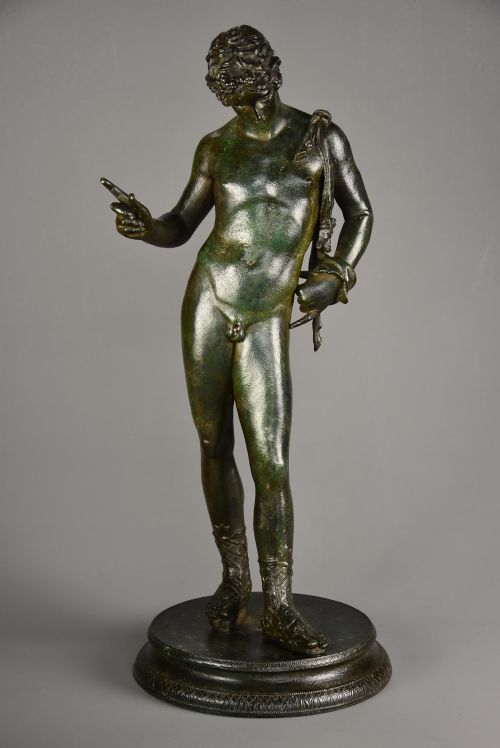
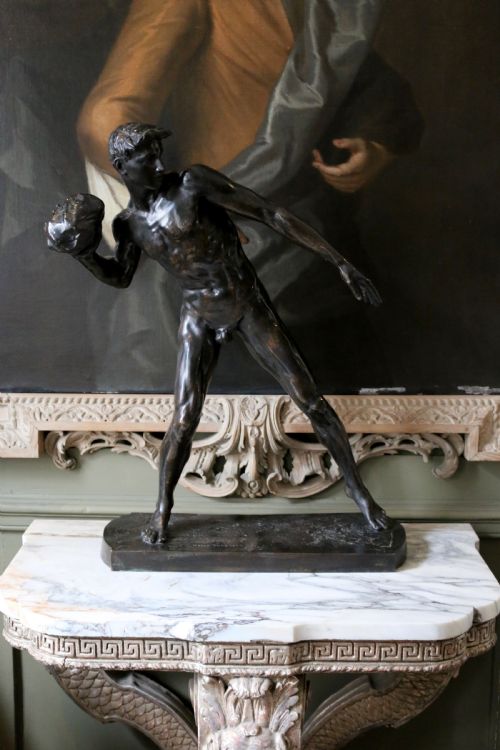
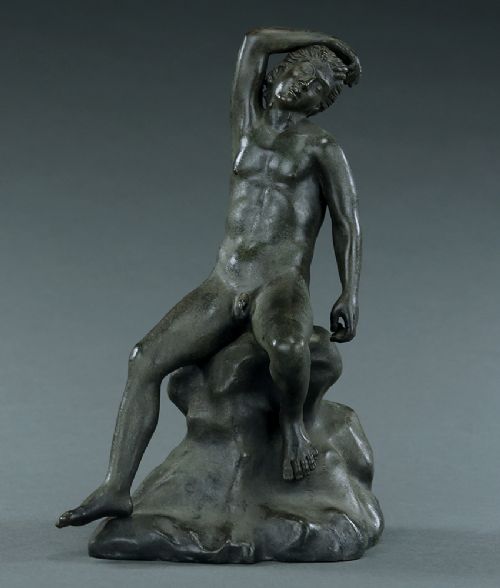



Patinated Bronze Nude
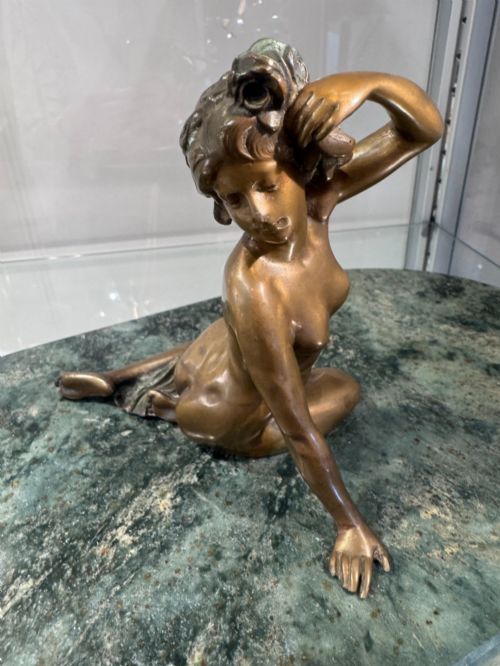
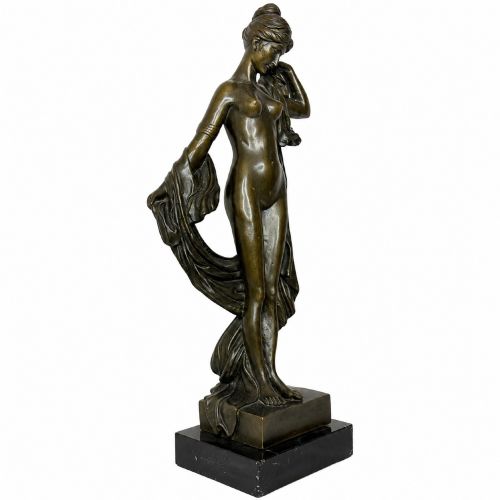
When you search for a patinated bronze nude, you are looking at figurative metalwork shaped by classical ideals, Art Nouveau fluidity and Art Deco geometry.
Patinated Bronze Nude
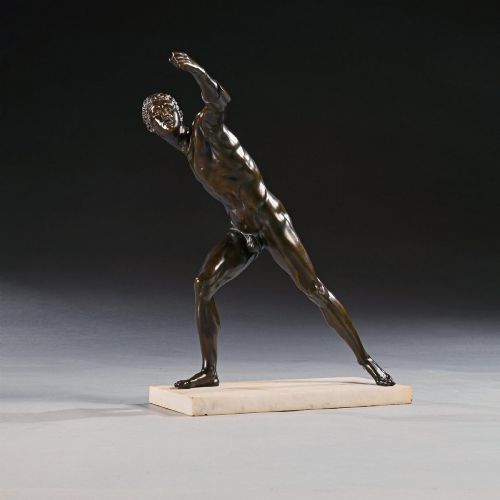
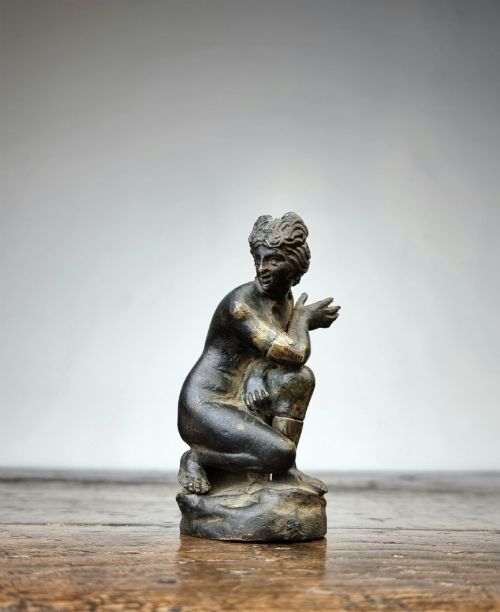
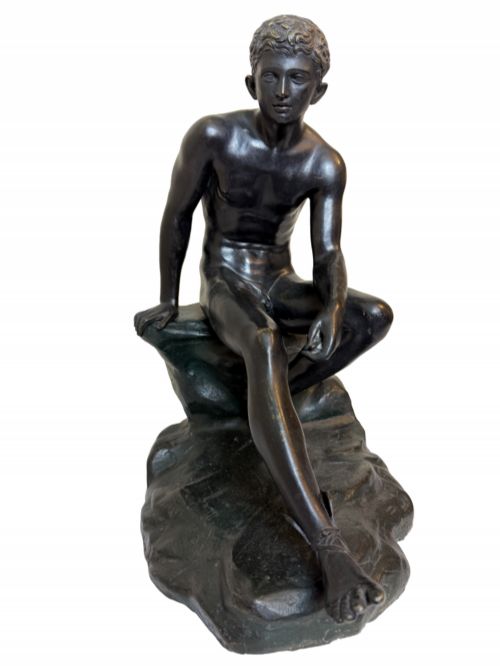
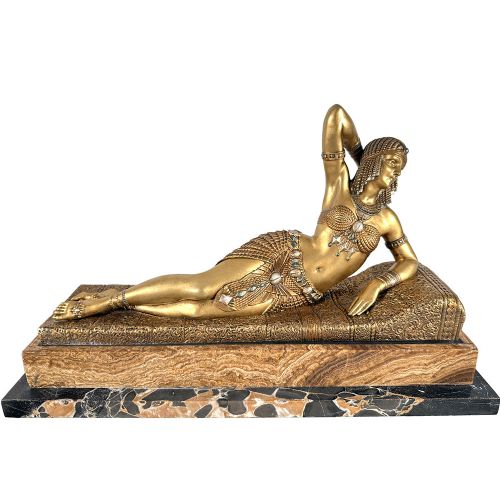
A patinated bronze nude takes many forms across this selection, ranging from nineteenth-century Grand Tour souvenirs of classical deities to sleek twentieth-century dancers. You will encounter small statuettes, larger cabinet figures and integrated table lamps featuring marble or onyx bases.
The aesthetic shifts discernibly from the romanticism of the Victorian era through the sinuous plant forms of Art Nouveau towards the stylised angles of Art Deco. Figures of mythological subjects, athletes and reclining maidens dominate the inventory across these periods.
How They Were Made
Foundries utilised the lost-wax casting method to capture intricate details in molten metal, allowing sculptors to render musculature and drapery with precision. Once cooled, artisans applied chemical treatments to the bronze surface to produce varied patinations, ranging from deep dark browns to verdigris greens.
Many sculptures incorporate mixed media bases, mounting the heavy metal figures onto shaped plinths of carved marble, onyx or stone. Certain lighting pieces also integrate frosted glass elements to diffuse illumination from within the composition.
Listings feature works spanning the nineteenth century through to the nineteen thirties, encompassing both Victorian classicism and Art Deco modernism.
What Varies in Quality
The depth and application of the patination significantly influence the character of the sculpture. Master founders achieved subtle tonal gradations that enhance the three-dimensional form, whereas inferior treatments appear flat and uniform.
Rudolf Küchler·Ferdinand Barbedienne·E Villanis·Hamo Thornycroft·Sibylle May·Demetre Chiparus·Hector Lemaire·S. Kinsburger·Aristide Maillol·Maurice Guiraud Riviere·Anders Zorn·Hebrard·Paul de Boulogne·Franz Bergman·James Pradier·Susse Freres·Eugène Désiré Piron·Raoul Francois Larche·Albert Hussmann·Delafontaine·Devaulx·C Neuhaus·Olof Ahlberg·Paul Aichele·Prof O. Poertzel
The Patinated Bronze Nude Glossary
- Patination
- The chemical or natural surface coloration applied to bronze. It protects the metal and defines the visual mood of the sculpture.
- Grand Tour
- Nineteenth-century travel souvenirs reproducing classical antiquities. These bronze reductions were collected by educated travellers in Italy.
- Lost-wax casting
- A traditional technique where a wax model is melted from a mould and replaced with molten bronze. This method permits complex undercuts and fine detail.
- Verdigris
- A green patina resulting from the corrosion of copper alloys. It frequently emulates the aged appearance of excavated ancient statuary.
Patinated Bronze Nude: Frequently Asked Questions
What is a Grand Tour bronze?
A Grand Tour bronze is a nineteenth-century reduction of a famous classical sculpture, created for travellers touring cultural sites in Italy. These pieces served as scholarly ornaments in European homes.
They replicate ancient Greek and Roman works such as dancing fauns and gladiators. Their distinct patination often mimics the appearance of archaeological discoveries.
How do I distinguish Art Nouveau from Art Deco pieces?
Art Nouveau figures, dating around nineteen hundred, feature asymmetrical lines inspired by organic plant growth and flowing hair. The posture of the nude is often languid or sinuous.
Art Deco works from the nineteen thirties favour geometric discipline, stylised symmetry and sharp architectural angles. The female forms in these pieces appear more athletic and linear.
Why are some figures mounted on marble?
Foundries mounted bronze nudes on heavy stone bases to provide physical stability for figures with slender ankles or dynamic, cantilevered poses. Onyx and marble also added a contrasting tactile element to the composition.
In functional pieces like table lamps, the stone base housed electrical wiring while anchoring the heavy metal sculpture securely. The colour and grain of the marble were chosen to complement the bronze patina.