55,320  PAGES BROWSED TODAY PAGES TODAY • 180 ANTIQUES UPLOADED TODAYNEW ARRIVALS
GIFTS
180 ITEMS ADDED TODAY
Sort Order
Items Per Page
Browse Categories
Sort order
Relevant Links
Items per page
ID #SA1241863
FOR SALE
£30,000
Email Phone
Save
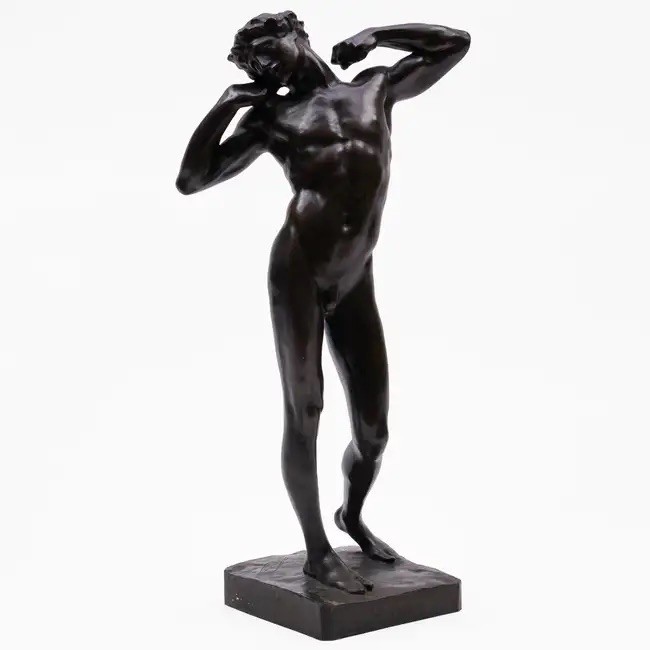
Frederic Leighton the Sluggard Bronze Sculpture
For sale by Darnley Fine Art
for sale €35,100     $38,100
£30,000

Darnley Fine Art

Sellingantiques Verified Since Jul 2026
Browse dealers 73 items
Id #SA1241863
PDF SHARE
SAVE

Frederic Leighton the Sluggard Bronze Sculpture

19th century
For Sale by Darnley Fine Art
Description

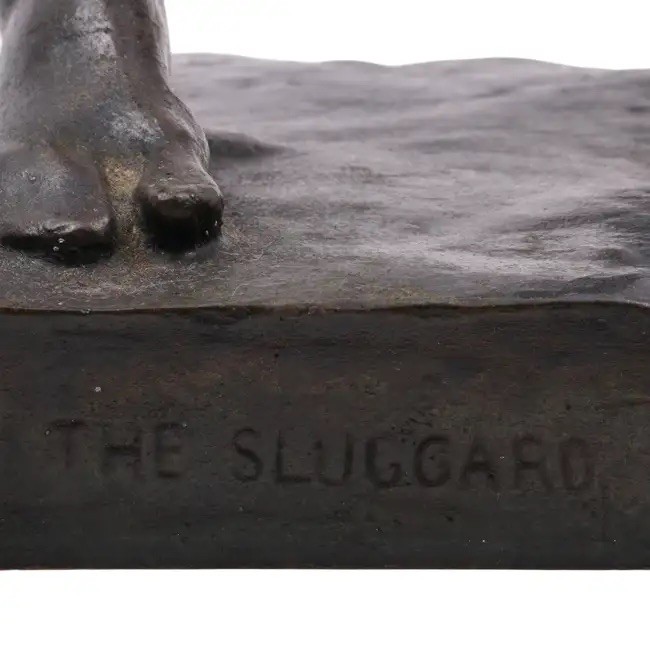
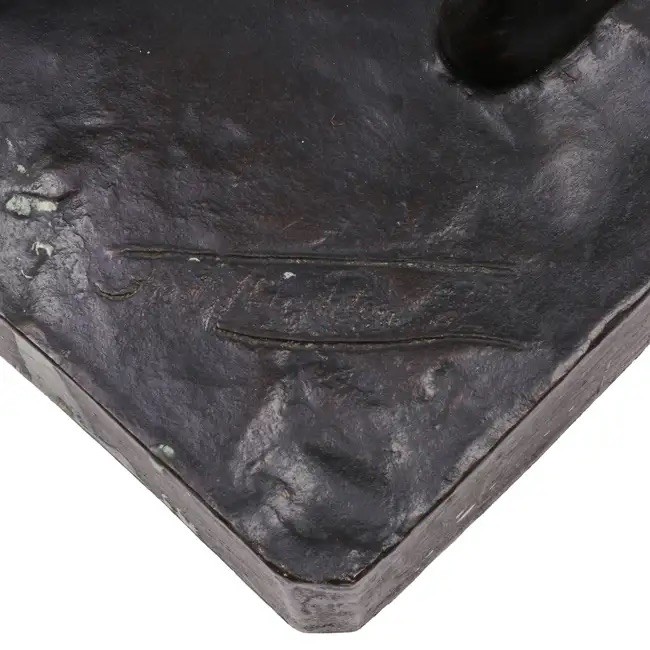
Bronze, signed 'Fred Leighton' back corner, titled on base

Dimensions: 20 1/2 inches in height

Provenance:

By repute, The John Schaeffer Collection, Sydney, Australia

Nevill Keating Tollemache Ltd, London
The Collection of Roger S. Wieck and Jean-Francois Vilain: Sold to Benefit The Morgan Library & Museum

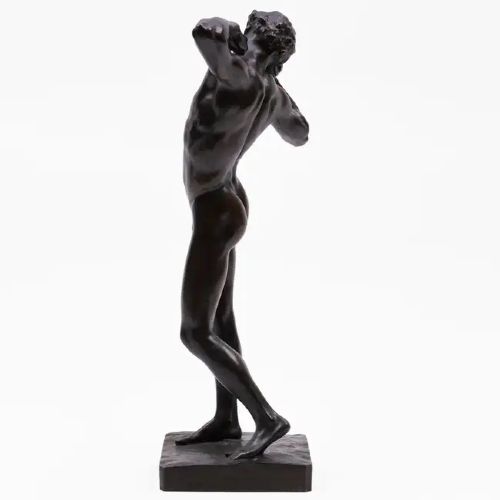
In 1886, Leighton exhibited the original casting for The Sluggard at the Royal Academy to great acclaim. The bronze was originally executed in 1882 under the title ‘Athlete Awakening from Sleeping’, with the stretching pose being based off of model Gaetano Valona’s stretched posture after a day of sitting for Leighton. The languid contrapposto stance contrasts with the tense muscles of the model, hinting simultaneously at grace and restrained power in a representation of the ideal athletic male nude. The work was noted for taking its inspiration from sculpture of antiquity and the Renaissance, but the subject matter and overall style was pioneering. As a result, Leighton’s new sculpture was perceived as harkening in a new era of British sculpture, known aptly as ‘New Sculpture’.In 1889, Leighton exhibited The Sluggard at the Exposition Universelle in Paris and earned a medal of honour, beginning an era of critical acclaim and commercial success for the bronze. In 1890, Arthur Leslie Collie bought the rights to market the model and created smaller-scale bronze editions in collaboration with the Singer & Sons foundry. Although Collie left the collaboration in 1906, Singer & Sons continued to produce such editions until at least 1914. Editions without the foundry mark do exist, but debate remains as to whether they were produced before or after the involvement of Singer & Sons, with Nicholas Penny noting that many other editions were produced in the 1890s, 1920s and 1930s.
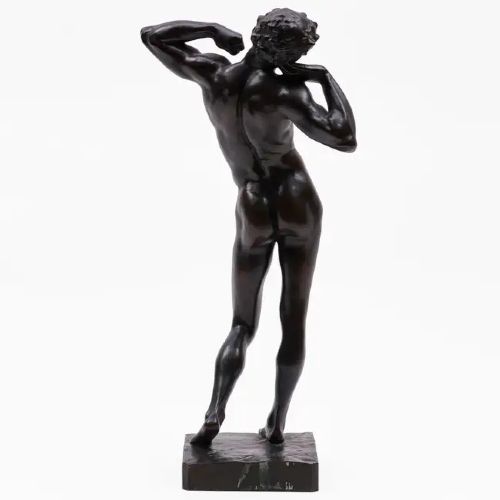
These small-scale casts ensured that The Sluggard became one of the most popular British sculptures of the 19th century, with many private collections and notable museums (such as The Metropolitan Museum of Art and the Ashmolean) all holding a cast within their collection. A full-size bronze cast is in the Tate Gallery collection, whilst a full-size plaster version is held by the Royal Academy. As if to solidify the importance of The Sluggard to Leighton’s legacy, a cast of it is also featured on Leighton’s tomb in St Paul’s, held by the allegorical figure of Sculpture who flanks an effigy of Leighton.

Declaration

Darnley Fine Art has dated this Bronze Male Nude Sculpture to the Victorian era.

Reference Numbers
Sellingantiques Reference
SA1241863
Description
Bronze, signed 'Fred Leighton' back corner, titled on base

Dimensions: 20 1/2 inches in height

Provenance:

By repute, The John Schaeffer Collection, Sydney, Australia

Nevill Keating Tollemache Ltd, London

fig 1. A dark patinated bronze sculpture depicting a standing male nude figure stretching upwards with bent arms on a rectangular bronze base.
fig 1. Frederic Leighton the Sluggard Bronze Sculpture

The Collection of Roger S. Wieck and Jean-Francois Vilain: Sold to Benefit The Morgan Library & Museum

“
In 1886, Leighton exhibited the original casting for The Sluggard at the Royal Academy to great acclaim.
Darnley Fine Art

The bronze was originally executed in 1882 under the title ‘Athlete Awakening from Sleeping’, with the stretching pose being based off of model Gaetano Valona’s stretched posture after a day of sitting for Leighton. The languid contrapposto stance contrasts with the tense muscles of the model, hinting simultaneously at grace and restrained power in a representation of the ideal athletic male nude. The work was noted for taking its inspiration from sculpture of antiquity and the Renaissance, but the subject matter and overall style was pioneering. As a result, Leighton’s new sculpture was perceived as harkening in a new era of British sculpture, known aptly as ‘New Sculpture’.In 1889, Leighton exhibited The Sluggard at the Exposition Universelle in Paris and earned a medal of honour, beginning an era of critical acclaim and commercial success for the bronze. In 1890, Arthur Leslie Collie bought the rights to market the model and created smaller-scale bronze editions in collaboration with the Singer & Sons foundry. Although Collie left the collaboration in 1906, Singer & Sons continued to produce such editions until at least 1914. Editions without the foundry mark do exist, but debate remains as to whether they were produced before or after the involvement of Singer & Sons, with Nicholas Penny noting that many other editions were produced in the 1890s, 1920s and 1930s.

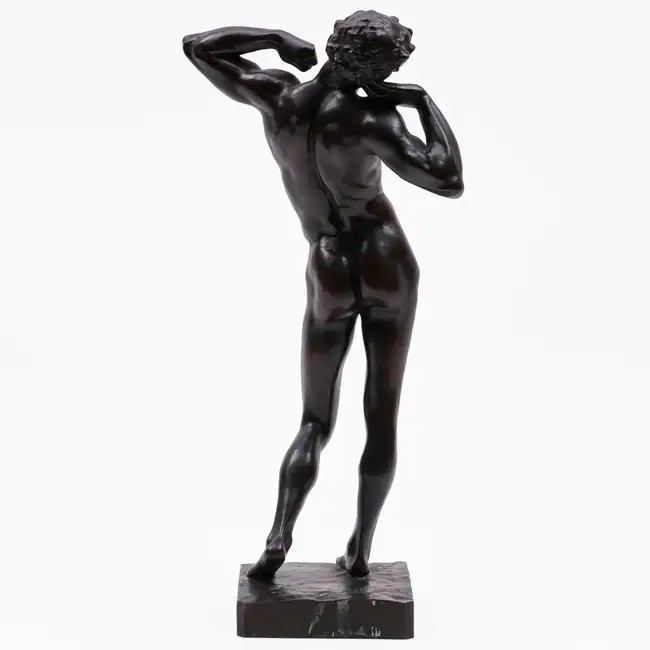
fig 2. A dark patinated bronze sculpture depicting a standing male nude figure stretching upwards with bent arms on a rectangular bronze base.
fig 2. Frederic Leighton the Sluggard Bronze Sculpture

These small-scale casts ensured that The Sluggard became one of the most popular British sculptures of the 19th century, with many private collections and notable museums (such as The Metropolitan Museum of Art and the Ashmolean) all holding a cast within their collection. A full-size bronze cast is in the Tate Gallery collection, whilst a full-size plaster version is held by the Royal Academy. As if to solidify the importance of The Sluggard to Leighton’s legacy, a cast of it is also featured on Leighton’s tomb in St Paul’s, held by the allegorical figure of Sculpture who flanks an effigy of Leighton.

Date of Manufacture

Darnley Fine Art has dated this Bronze Male Nude Sculpture to the Victorian era.

Reference Numbers
Sellingantiques Ref
SA1241863
Darnley Fine Art
Sellingantiques verified Since Jul 2026
Dealer Profile

You can view the stock and full dealer information on the Darnley Fine Art Profile Page
PDF SHARE
SAVE
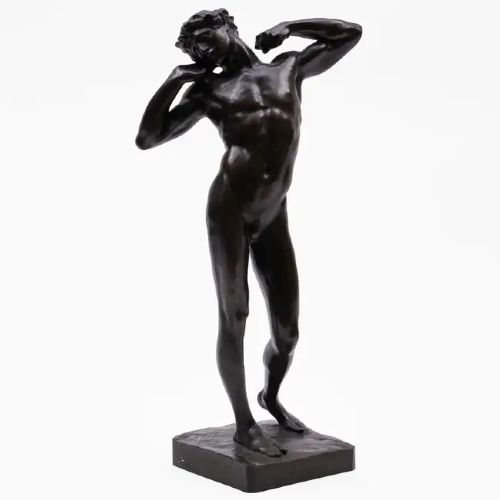
A dark patinated bronze sculpture depicting a standing male nude figure stretching upwards with bent arms on a rectangular bronze base.
1 / 5
Archive I A dark patinated bronze sculpture depicting a standing male nude figure stretching upwards with bent arms on a rectangular bronze base.

Frederic Leighton the Sluggard Bronze Sculpture
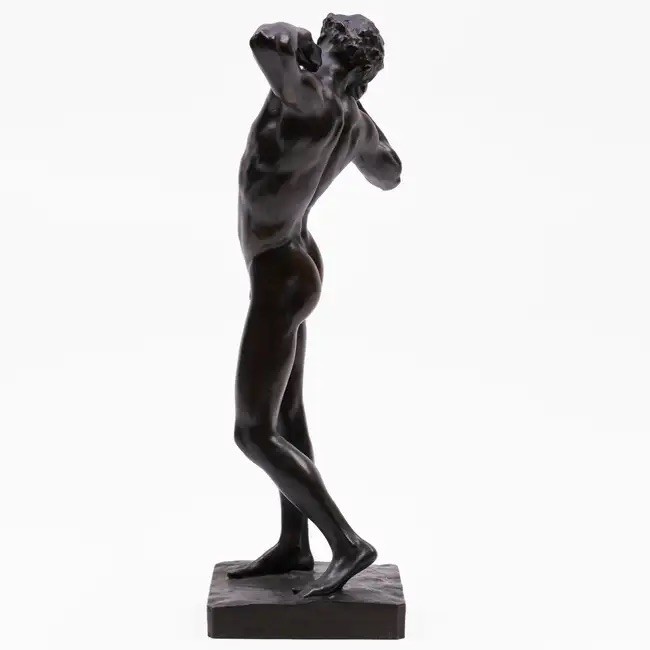
Archive II A dark patinated bronze sculpture depicting a standing male nude figure stretching upwards with bent arms on a rectangular bronze base. View II
Archive III A dark patinated bronze sculpture depicting a standing male nude figure stretching upwards with bent arms on a rectangular bronze base. View III
Archive IV A dark patinated bronze sculpture depicting a standing male nude figure stretching upwards with bent arms on a rectangular bronze base. View IV
Archive V A dark patinated bronze sculpture depicting a standing male nude figure stretching upwards with bent arms on a rectangular bronze base. View V
Enlarged Archival View
Telephone 0207 379 0499
Location
2-4 Cecil Court
London
WC2N 4HE
United Kingdom

Opening Times
Monday to Saturday: 10:30 - 5:30
(excluding Bank Holidays)
Dealer Profile Page sellingantiques.co.uk/dfa
Verified Since Jul 2026
Items For Sale 73
Items Sold 7
Darnley Fine Art
Verified Since Jul 2026
View Dealer Info
Location: 2-4 Cecil Court, London, WC2N 4HE, United Kingdom, , Opening Times, Monday to Saturday: 10:30 - 5:30, (excluding Bank Holidays)
Verified
Jul 2026
For Sale
73
Sold
7
A dark patinated bronze sculpture depicting a standing male nude figure stretching upwards with bent arms on a rectangular bronze base.
Frederic Leighton The Sluggard Bronze Sculpture
Ref: SA1241863
A dark patinated bronze sculpture depicting a standing male nude figure stretching upwards with bent arms on a rectangular bronze base.
Detail View 1
Detail View 2
Detail View 3
Detail View 4
Archival Detail
Every single antique dealer on our platform is individually approved by our internal team. We verify their professional trade history, ethical standards, and photographic quality to ensure a secure, high-standard buying environment. Upon joining, every dealer agrees to a strict 9-point code of conduct. While issues can occasionally arise, our dealers typically resolve them swiftly and directly with the buyer. In fact, since our founding in 2002, Sellingantiques has only had to step in to help resolve an issue on roughly five occasions—a true testament to the quality of our dealers and their dedication to your happiness.
Our dealers are highly experienced in packing and shipping fragile, high-value antiques. Because you are in direct contact with the dealer, you will be able to easily go through all available shipping and insurance options together to ensure your item arrives safely.
Antiques are the ultimate green purchase. By choosing historical pieces over newly manufactured goods, you completely eliminate the carbon footprint of modern mass production while preserving exceptional, timeless craftsmanship.
Written by Sellingantiques from the dealer’s photographs and listing
  • ObjectSculptures
  • Period19th century
  • StyleVictorian
  • MaterialBronze
  • ColourDark Brown
  • MotifsAnatomical detailing, Contrapposto pose, Rectangular plinth base, Patinated bronze finish

This Victorian bronze sculpture, titled The Sluggard, portrays a standing male nude figure in a contrapposto pose with a patinated dark brown finish. The male figure is depicted stretching upwards with bent arms, displaying visible anatomical detailing on the torso and limbs, and the sculpture is mounted on a rectangular plinth base. Measuring 52 cm in height, the piece bears a signature on the back corner and a title inscribed on the base. The sculptural work suits display within a gentleman's library or on a mantelpiece. It fits traditional and classic interior settings, where the dark patinated surface complements wooden furniture and period decor. The sculpture stands alone on a flat horizontal surface without requiring hanging hardware or mounting fixtures.

Originating in late 19th-century Britain, the New Sculpture movement shifted towards greater naturalism, dynamic human poses, and detailed anatomical accuracy, departing from rigid classical idealisation.

Most late Victorian bronze sculptures were produced using the lost-wax (cire perdue) or sand-casting process, followed by hand-chasing and chemical patination to achieve deep brown or dark green surface tones.

Authentic bronze castings feature foundry marks or artist inscriptions, crisp surface detailing, correct weight density, and natural patination showing honest wear on high-relief areas.

A bronze figurative sculpture serves as a focal point on a dark wood mantelpiece, a marble-topped sideboard, or within a structured bookshelf alcove to provide historical contrast.

Dust the sculpture regularly with a soft, lint-free cloth or camel-hair brush, avoiding water and harsh chemical solvents; apply a thin coat of microcrystalline wax annually to protect the patina.
items
Add keywords to the filter
Price
£100
£250000
Era
Period
Style
Material
Origin
Stock Location
Recently Added
Online Payments
Categories