



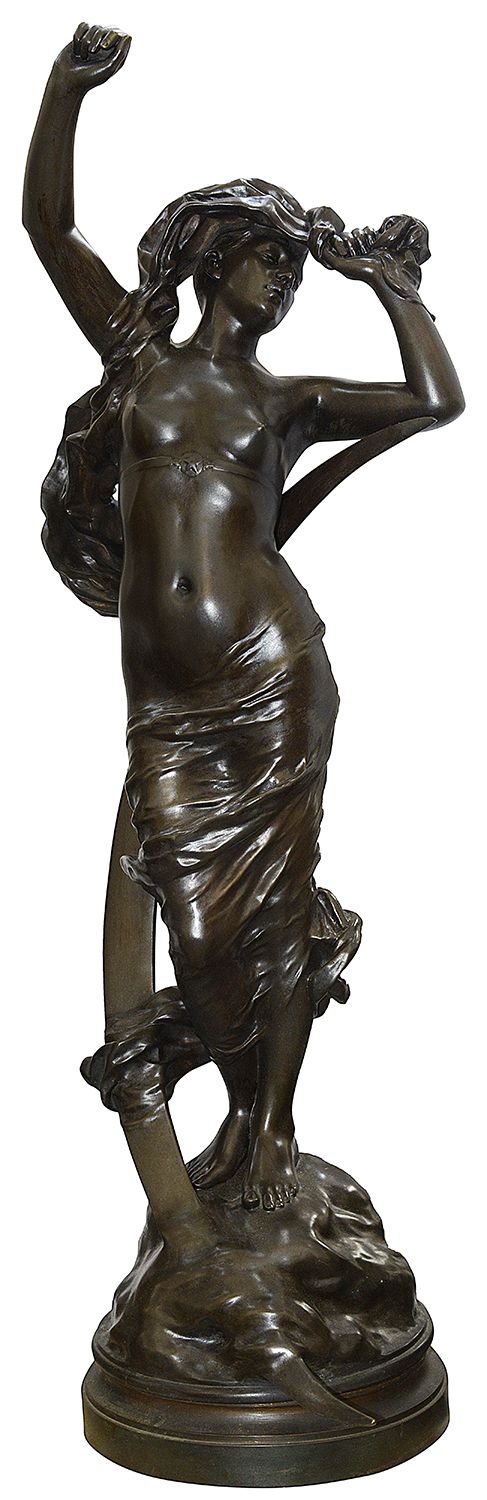


French Art Nouveau Statuette
A French art nouveau statuette captures the flowing lines and natural forms of the turn of the twentieth century in miniature sculpture.
French Art Nouveau Statuette
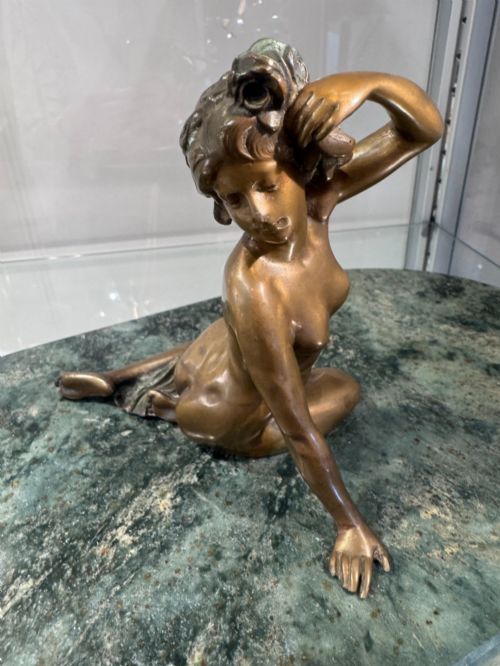
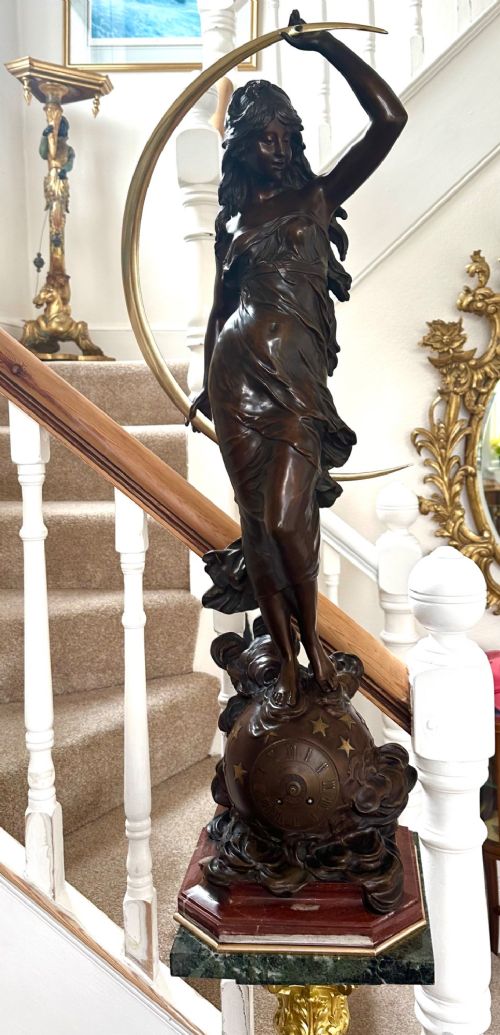
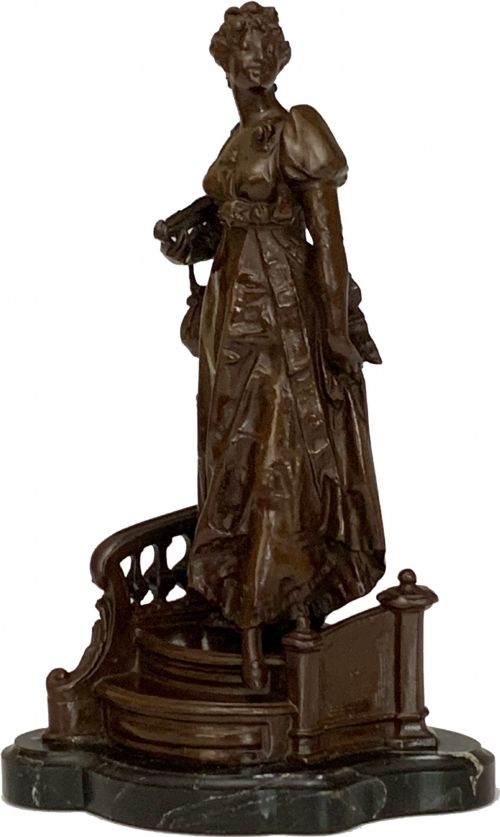
A french art nouveau statuette brings fluid naturalism and classical mythology into domestic interiors through figures of maidens, dancers, and allegorical subjects. These small-scale sculptures draw on the graceful curves typical of the turn of the twentieth century, often depicting female figures with long hair and draped garments.
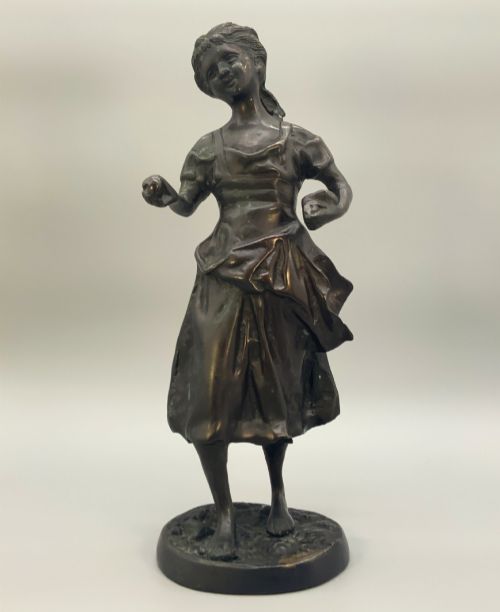
The selections available here span from the late nineteenth century into the 1920s, encompassing both original casts and sculptural objects from the belle epoque. Forms range from standing nudes and harvest dancers to portrait busts and seated figures created by prominent French ateliers.
Makers represented in these listings include established sculptors such as Auguste Moreau, Georges Van Der Straeten, Emmanuel Villanis, and Sylvain Kinsburger. Their works demonstrate the predominant sculptural concerns of the period, balancing idealised beauty with meticulous surface detail.
How they were made
Foundries produced these pieces primarily through traditional metal casting, utilising bronze and cast metal alongside carved stone materials like alabaster and marble. Many bronze statuettes received a patinated or gilt finish to accentuate the subtle textures of hair, drapery, and surrounding natural elements.
Artisans also worked in terracotta and earthenware, modelling figurative busts and statues that captured the organic fluidity central to the movement. Each medium required careful hand-finishing, from the chiselling of metal details to the polishing of stone bases.
Several figures capture young maidens caught mid-dance or gathering wheat, freezing a fleeting moment of turn-of-the-century grace in solid metal.
What varies in quality
The distinction between tiers of work rests on the crispness of the cast and the sensitivity of the finishing hand. Finer statuettes display sharply rendered facial expressions, cleanly defined fingers and drapery folds, and careful chasing of the metal surface after it leaves the sand or lost-wax mould.
The choice of base materials and patination also indicates quality, with heavy multi-coloured marble plinths and rich, nuanced patinas elevating the presence of the piece. Superior examples bear the clear signatures of noted sculptors or recognised foundry marks, reflecting the high standards of Parisian workshops.
Moreau Family·Georges Van Der Straeten·Sylvain Kinsburger·Emmanuel Villanis·Georges Morin·Houdebine Paris·Charlotte Monginot
The French Art Nouveau Statuette Glossary
- Patinated bronze
- A bronze sculpture treated with chemical solutions to produce a specific surface colour, ranging from deep brown to greenish tones. This process protects the metal and highlights sculptural contours.
- Lost-wax casting
- A method of metal casting where a molten metal is poured into a mould that has been created by means of a wax model. This technique allows for intricate detail in figurative works.
- Alabaster
- A fine-grained, translucent stone used for carved sculptures and bases. Its softness permits delicate detail work, though it requires careful handling.
- Terracotta
- Fired clay used for modelled figures and busts, often left unglazed to show the warm earth tones. It offers a direct record of the sculptor's hand.
- Belle Epoque
- A period of French history spanning the late nineteenth century to the First World War, characterised by optimism and flourishing arts. Statuettes from this era often celebrate elegance and grace.
French Art Nouveau Statuette: Frequently Asked Questions
What subjects are most common?
Figurative representations of women dominate these works, frequently embodying natural elements, seasons, or mythological figures. Dancers, nymphs, and idealized maidens reflect the stylistic priorities of the period.
Portrait busts and allegorical studies also appear regularly, capturing expressive poses and contemporary costume of the turn of the century.
Are these pieces signed by the artist?
Many statuettes feature cast or incised signatures of the sculptor directly on the base or integral to the composition. Foundry marks may also appear alongside the artist's name to indicate where the casting took place.
Unsigned works often reflect the output of larger commercial workshops or cast-metal manufacturers producing pieces after known models.
How do I display alabaster safely?
Place alabaster sculptures away from direct sunlight and damp environments to preserve their translucent quality and prevent surface degradation. The stone is relatively soft and susceptible to scratching.
Ensure the piece rests on a stable, level surface that can support its weight, as stone and marble components can be brittle if dropped.