



Art Nouveau Nude Statue
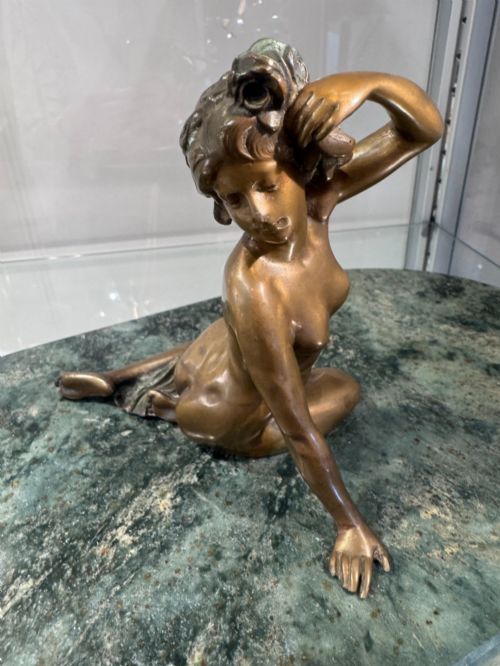
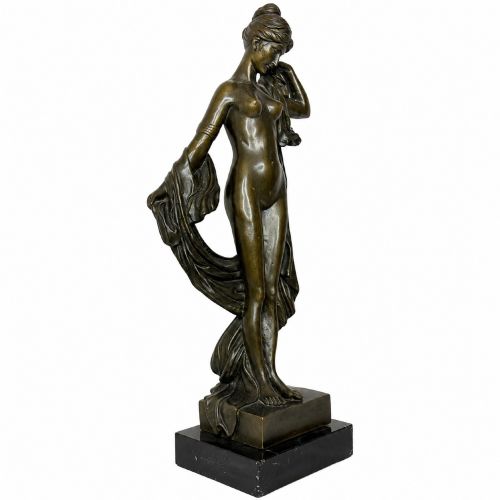
An art nouveau nude statue captures the flowing organic curves and sensuous grace characteristic of turn of the twentieth century design.
Art Nouveau Nude Statue
An art nouveau nude statue embodies the aesthetic of the early twentieth century, drawing on natural forms and expressive human figures. These pieces primarily take the form of freestanding sculptures representing female figures in various poses.
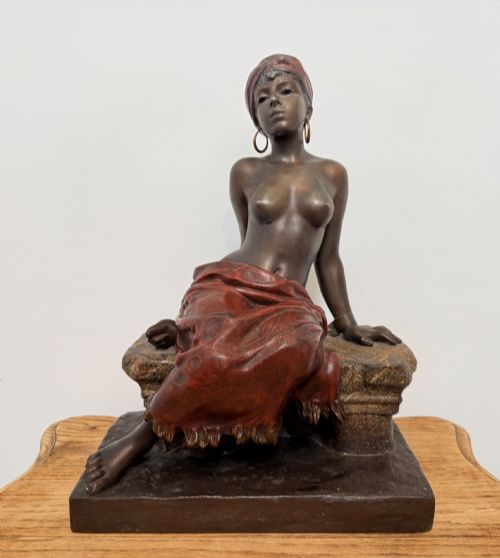
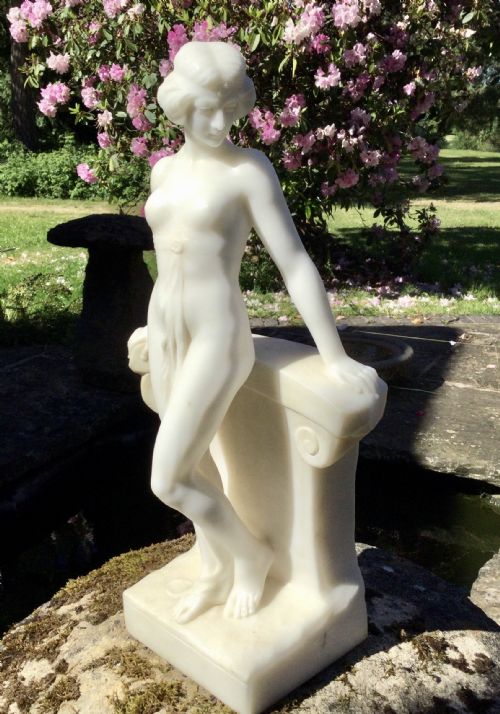
Most examples originate from French and Austrian workshops active around nineteen hundred, capturing the distinct belle époque sensibility. Common formats include figures seated on marble bases, reclining alabaster forms, or cold-painted bronze studies.
Makers of the period utilised the human form to express movement and fluidity, aligning the female figure with floral and natural motifs. Collectors encounter everything from small cabinet bronzes to substantial carved limewood and marble works.
Materials and methods
Foundries and studios relied heavily on cast bronze, often applying patination or cold-painting techniques to achieve tonal depth and colour variation. Bronze figures were frequently mounted onto contrasting carved marble or alabaster plinths.
Carvers worked directly in natural media such as white marble, alabaster, and limewood to produce statues defined by smooth surfaces and tactile grains. Artisans combined these materials to contrast the warmth of stone or wood with the metallic finish of cast metal.
Listings feature works created across several decades, spanning the nineteenth century through to the nineteen twenties.
What separates the finest examples
The choice and integration of secondary materials, such as the grain of the marble base or the clarity of the alabaster carving, influence the overall presence of the piece. Master sculptors achieved a naturalistic weight and balance within the pose that lesser studio reductions miss.
Rudolf Küchler·E Villanis·Fritz Kochendorfer·Hector Lemaire·Anders Zorn·Hans Müller·Franz Bergman·Eugène Désiré Piron
The Art Nouveau Nude Statue Glossary
- Patinated bronze
- A cast copper alloy treated with chemical solutions to produce a specific surface colour or weathered finish. This layer protects the metal while enhancing the sculptural contours.
- Cold-painted bronze
- Metal figures decorated with oil or enamel paints that are applied without high-temperature firing after casting. This technique was favoured by Viennese foundries for vibrant surface detail.
- Alabaster
- A fine-grained, translucent stone used by sculptors for carving soft, rounded figures. Its natural translucency allows light to penetrate the surface of the statue.
- Belle Epoque
- A period of French artistic flourishing lasting from the late nineteenth century until the First World War. It provides the cultural context for many elegant figural bronzes.
Art Nouveau Nude Statue: Frequently Asked Questions
How do I identify an art nouveau nude statue?
Look for characteristic stylistic markers such as whiplash curves, naturalistic floral influences, and flowing hair that integrate with the composition. The proportions and treatment of the subject reflect the design ethos active around nineteen hundred.
Examine the base for signature incisions, foundry stamps, or material combinations like bronze mounted on marble. These secondary clues often confirm the period of origin and the workshop responsible for the casting.
Where were these statues made?
The primary centres of production were France and Austria, where skilled bronze founders and independent sculptors operated prolific studios. Paris and Vienna served as hubs for both large-scale exhibitions and commercial foundry editions.
Many pieces bear the marks of French foundries or Austrian workshops specialising in decorative metalwork and carved stone. Regional tastes influenced whether a studio favoured patinated bronze, cold-painted details, or carved alabaster.
How should I display a marble or bronze statue?
Place the sculpture on a stable, level surface away from direct sunlight and sudden temperature fluctuations to protect sensitive materials like alabaster and wood. Adequate lighting from the side helps reveal the subtle contours and patination of the figure.
Ensure the mounting surface can support the weight, particularly for pieces incorporating heavy marble bases or dense metal castings. Avoid placing soft stones near moisture or heat sources.
What is the difference between bronze and alabaster figures?
Bronze statues are produced through metal casting using moulds, allowing for dynamic, slender poses and detailed surface patination. Alabaster and marble statues are carved directly from stone, resulting in a solid, luminous form with unique mineral veining.
Bronze offers metallic durability and deep colouration through patination, whereas stone provides a softer, translucent quality that diffuses light across the carved surface.