








Classical Female Bronze
These classical female bronze sculptures bring mythological figures, dancers and allegories into domestic spaces with lasting metalwork.
Classical Female Bronze
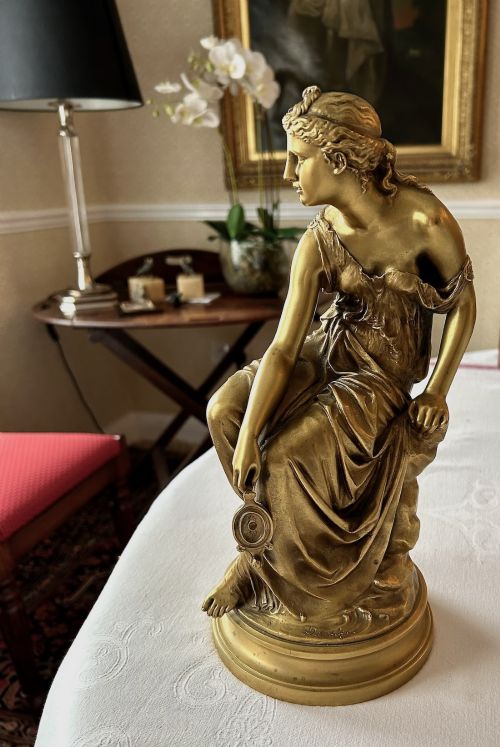
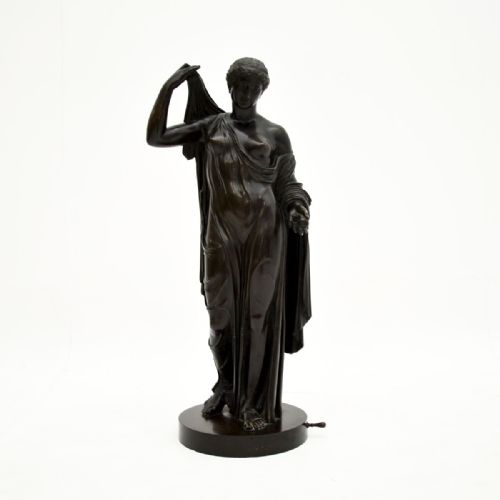
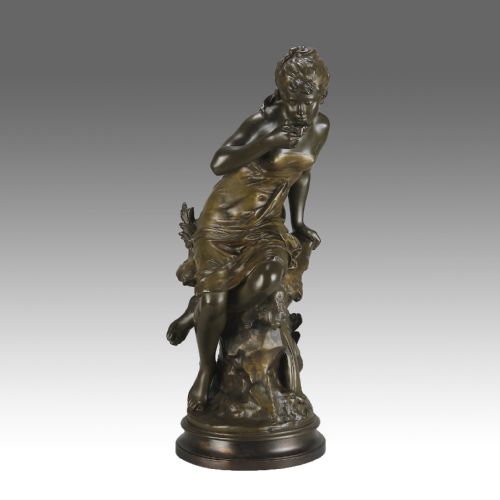
A classical female bronze portrays mythological deities, historical heroines or allegorical maidens rendered in cast metal. These sculptures range from small mantel figures and portrait busts to monumental torcheres and lamp bases.
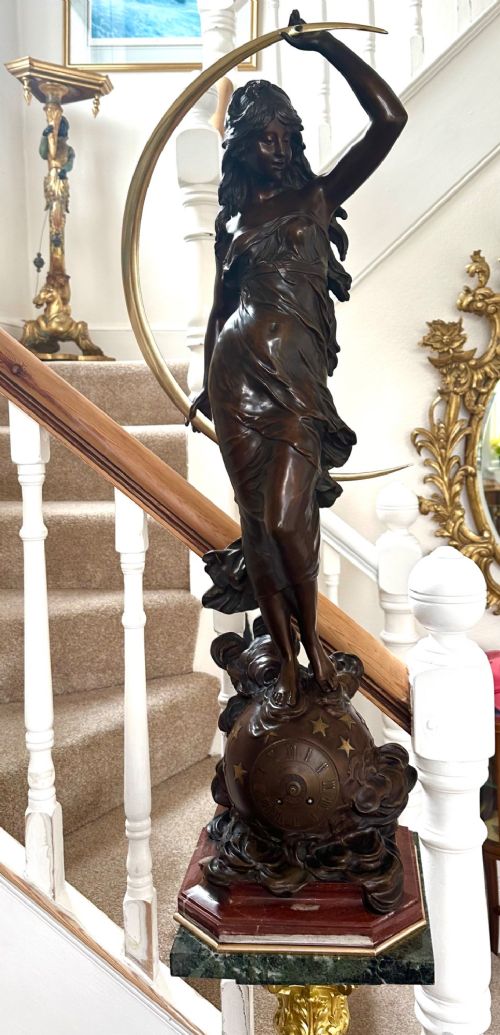
The selections here span the nineteenth century into the twentieth, moving from strict neoclassical subjects through art nouveau curves and art deco dancers. French foundries dominate the output, translating classical themes into refined domestic ornaments.
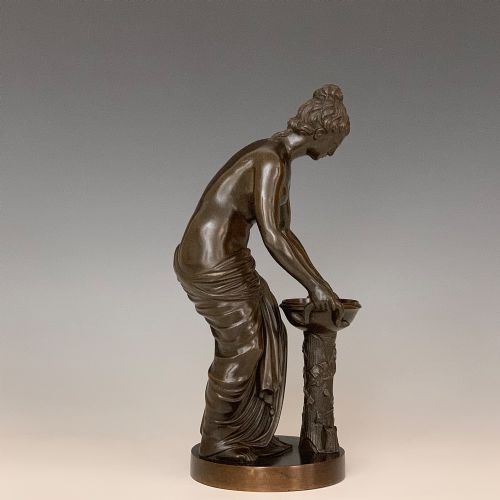
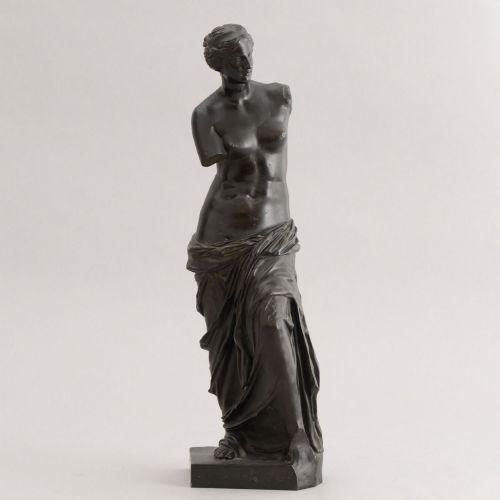
Figures such as Venus, Diana, Selene and various nymphs appear repeatedly in robes or unclothed studies. Collectors encounter these subjects mounted on marble plinths, stone bases or integrated into functional lighting.
Materials and casting methods
Patination followed the metalwork, applying chemical solutions to create dark brown, green or golden surfaces that aged the bronze. Cold painted variants received polychrome pigments directly onto the metal, while some pieces combined bronze bodies with carved marble bases or glass elements.
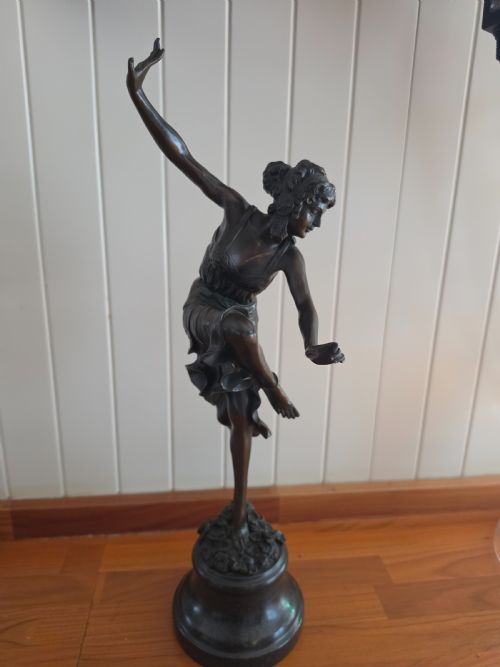
Several ladies dance across these listings with harps, hoops, cymbals and peacocks.
Distinctions in craftsmanship
Quality rests in the crispness of the chasing and the fidelity of the cast to the original model. Superior examples retain fine anatomical definition and delicate details in fingers, hair and fabrics without blurring.
Foundry marks and signatures provide evidence of skilled production by established bronze makers. The depth of the patination and the integration of marble plinths further separate standard commercial casts from exceptional works.
Etienne-Henri Dumaige·Ferdinand Barbedienne·Pierre le Faguays·August Moreau·Mathurin Moreau·E.Villanis·Edouard Drouot·Carrier-Belleuse·Georges-Charles Coudray·Hans Müller·Ernst Barrias·Jean-Paul Aube
The Classical Female Bronze Glossary
- Patina
- The surface coloration and finish achieved through chemical treatment or natural oxidation over time. This layer protects the metal and defines the visual depth of the sculpture.
- Lost-wax casting
- A historic method of creating metal sculptures from a wax model encased in a mould. This technique allows for intricate undercut details and delicate forms.
- Chasing
- The process of refining a raw metal cast using hand chisels and punches. Metalworkers use this step to clear away casting flaws and sharpen surface textures.
- Grand Tour
- A nineteenth-century travel tradition where collectors acquired small bronzes of classical antiquities in Italy. These reductions served as portable mementoes of educational journeys.
- Torchere
- A tall ornamental stand or lamp designed to hold lights. In bronze works, female figures often support these vertical light fittings.
Classical Female Bronze: Frequently Asked Questions
How do I identify foundry marks?
Foundry marks and artist signatures usually appear near the base or along the lower edge of the bronze figure. Look closely at the metal surface for stamped stamps, foundry seals or incised signatures left during the casting process.
These stamps help attribute the piece to specific French workshops or individual sculptors active during the nineteenth and early twentieth centuries.
What is cold painted bronze?
Cold painted bronze refers to pieces decorated with natural oil or enamel paints applied to the unheated metal surface. This technique was popular for adding vibrant colours to garments and botanical details on figures.
Because the paint was not fired at high temperatures, surviving examples often show wear and gentle fading that mark their age.
How should I clean bronze sculptures?
Maintenance requires only gentle dusting with a soft brush or a dry microfiber cloth to remove accumulated particles. Avoid commercial metal polishes, water or chemical cleaners because these substances strip away the historic patina.
Applying a very light coat of microcrystalline wax periodically helps protect the metal surface from atmospheric moisture and handling oils.
How do I distinguish art nouveau from art deco?
Art nouveau pieces from the late nineteenth century feature flowing, organic lines inspired by natural plant forms, long hair and cascading drapery. These sculptures emphasise asymmetrical curves and sinuous silhouettes.
Art deco works from the nineteen-twenties and thirties favour geometric precision, stylised symmetry and streamlined forms, particularly visible in energetic dancer poses.