




Patinated Bronze Figures
Patinated bronze figures are sculptural works cast in metal and treated with chemical finishes, sought for their classical forms and rich surface detail.
What patinated bronze figures are
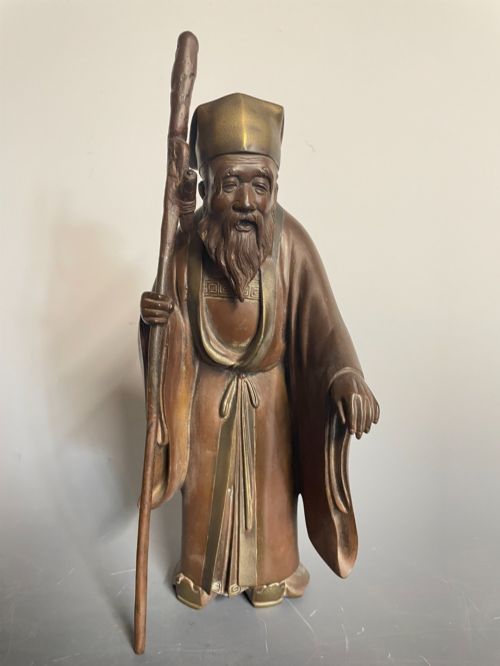
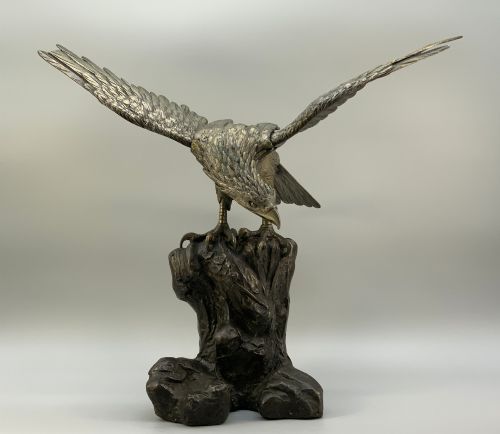
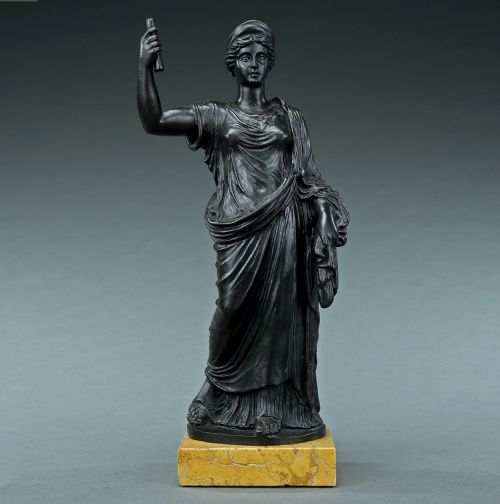
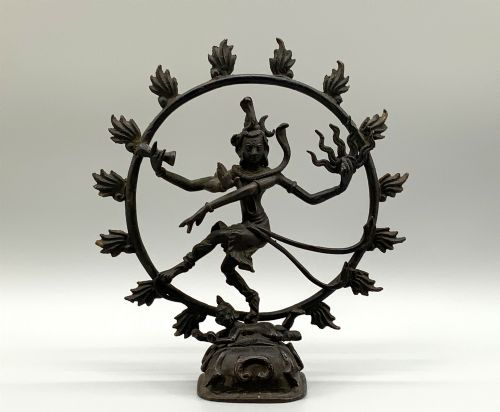
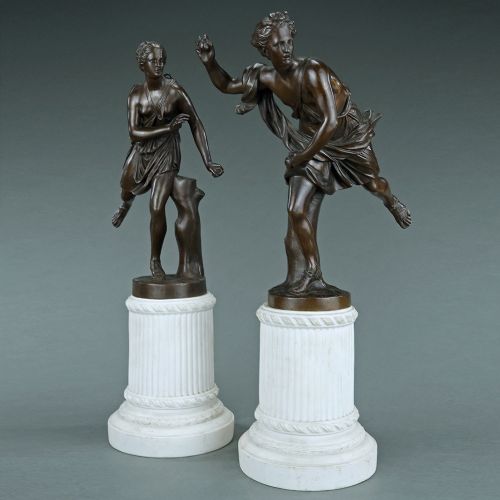
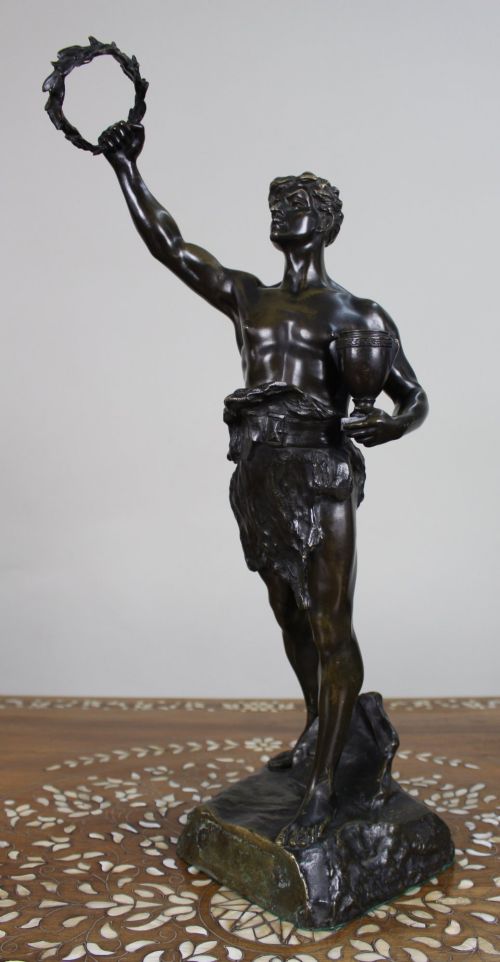
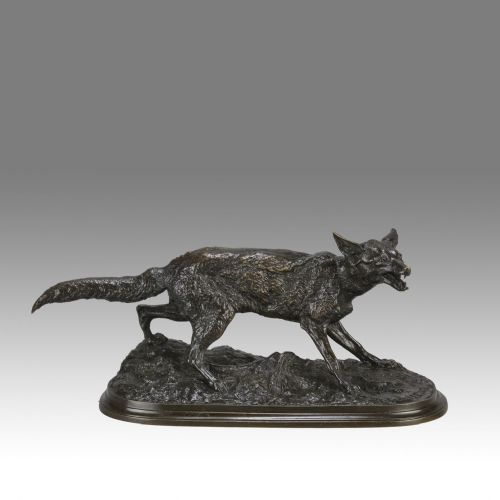
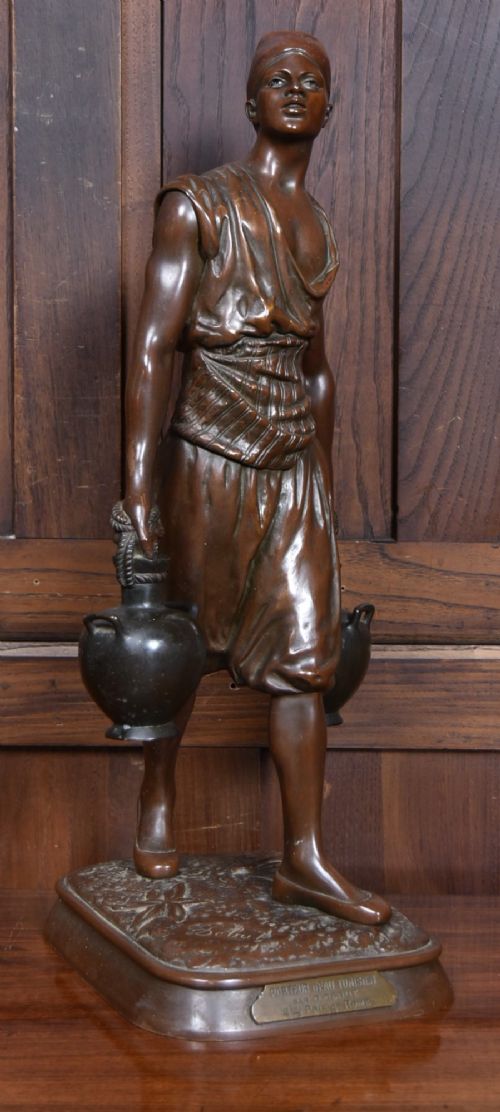
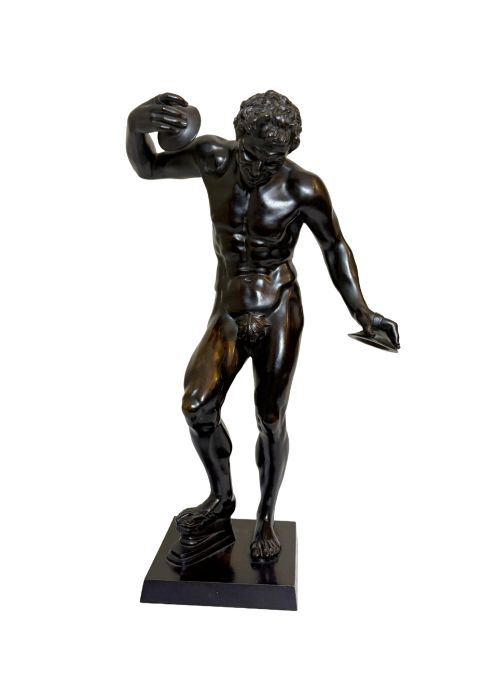
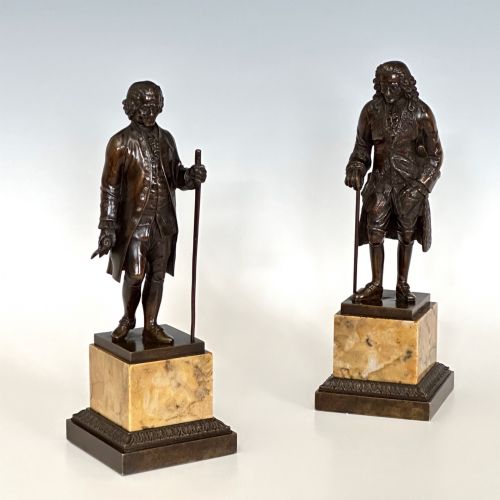
Patinated bronze figures comprise sculptural objects cast in metal, appearing in this selection predominantly as pairs of figures, cherubs, geese, and classical subjects. These pieces span periods from the nineteenth century to nineteen-sixty, drawing on Renaissance, Rococo, Meiji, and Grand Tour styles.
The assortment includes pairs of classical subjects after Giambologna, cherub musicians, and monumental Japanese geese. Sculptures representing Michelangelo's Lorenzo and Giuliano de' Medici, alongside cavaliers and bathers, represent the range of figurative subjects available.
Makers and sculptors represented in the evidence include C Dopmeyer and Salmson, alongside works after Giambologna, Falconet, and Allegrain. Bases of black slate or marble frequently accompany these metal sculptures.
How they were made
Makers utilised bronze and electrotype copper to cast these sculptures, applying dark patina finishes to the metal surfaces. These techniques allowed for intricate detail in figurative and animal subjects.
Sculptures are mounted upon or paired with bases formed from black slate, marble, or stone. The combination of cast metal and carved stone provides structural stability and textural contrast.
Retail Price Guide 2026
Typical UK retail prices for patinated bronze figures, calculated from the Sellingantiques database of over a million retail prices indexed since 2003. This retail price guide relies exclusively on Sellingantiques data; no external sources or auction records are used, so the figures do not describe the wider market.
Listings feature works cast in bronze and electrotype copper, mounted on marble, stone, and black slate bases.
What varies in quality
Quality rests in the precision of the casting and the depth of the dark patina finish across the metal surface. Sculptures executed after celebrated masters demonstrate higher fidelity to original forms.
The choice of mounting materials, such as solid marble or black slate bases, distinguishes standard production from more substantial examples. Scale and proportion also separate monumental pairs from smaller decorative works.
C Dopmeyer·Salmson
The Patinated Bronze Figures Glossary
- Patina
- A chemical or natural surface film on bronze that alters its colour and tone over time. Dark patina finishes are characteristic of the nineteenth-century examples here.
- Electrotype copper
- A method of depositing copper electrolytically into a mould to create sculptural objects. This technique produced large figures with precise surface detail.
- Grand Tour
- A cultural journey of Europe undertaken by wealthy young men in the eighteenth and nineteenth centuries. It generated demand for small bronze sculptures of classical antiquities.
- Meiji
- The period of Japanese history from eighteen-sixty-eight to nineteen-twelve. Bronzes from this era, such as large geese, show high technical skill in animal observation.
Frequently Asked Questions
What periods do these bronze figures cover?
The pieces span from the mid-nineteenth century through to nineteen-sixty. They include nineteenth-century French, Renaissance Revival, and Japanese Meiji examples.
Earlier works often reference classical antiquity or Renaissance masters, while later items reflect twentieth-century manufacturing dates.
What materials accompany the bronze?
Metal is frequently paired with stone bases, specifically black slate and marble. Electrotype copper also appears alongside traditional cast bronze.
These complementary materials provide weight and contrast to the dark patina of the figures.
Are these figures sold individually or in pairs?
Many of the listed items are offered as pairs, such as the cherub musicians, classical figures of Mercury and Fortuna, and the large Japanese geese.
Symmetrical pairings were a popular format for interior decoration during the nineteenth century.
How do after-models differ from original works?
Pieces described as after a sculptor are later interpretations of famous historical works, such as those by Giambologna or Michelangelo.
These nineteenth-century casts allowed collectors to own representations of museum masterpieces.