
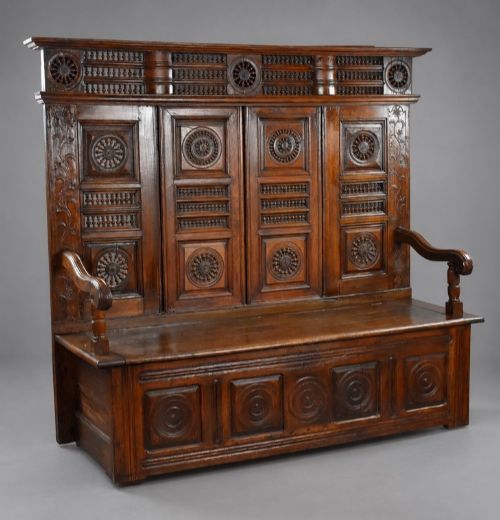
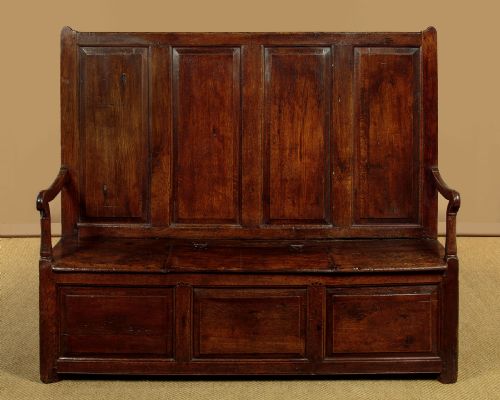
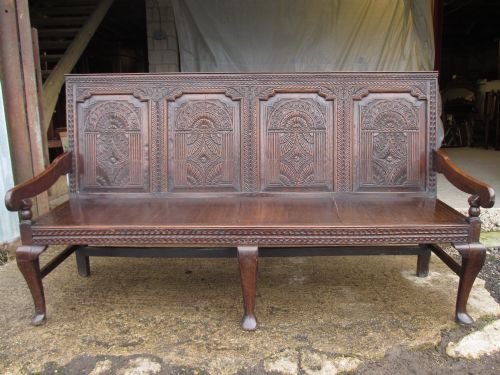
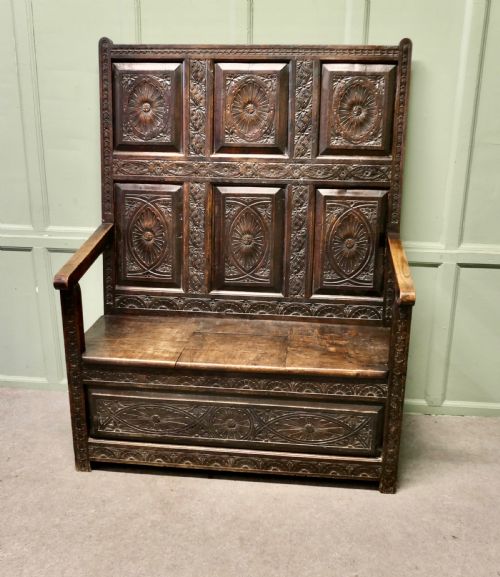
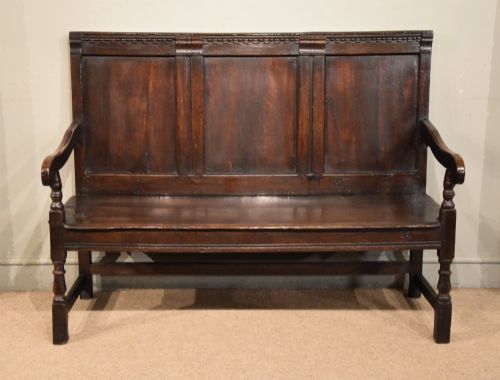
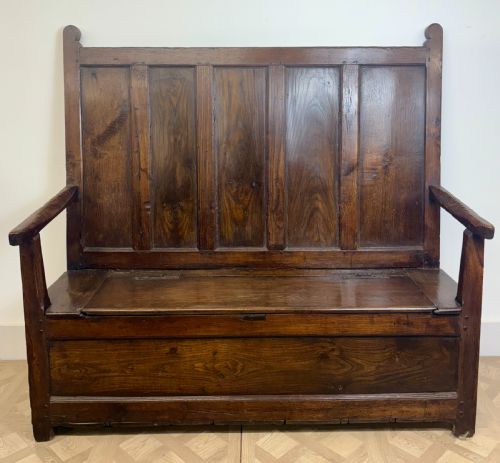
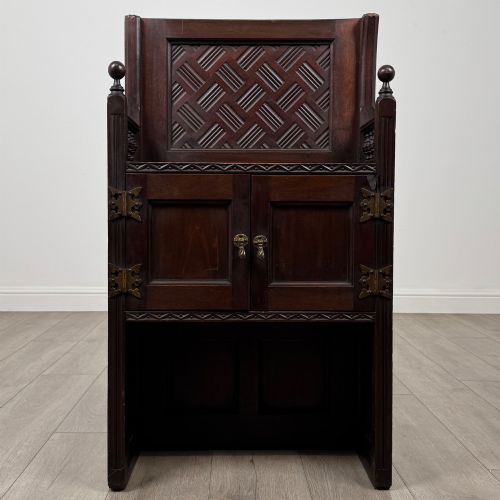
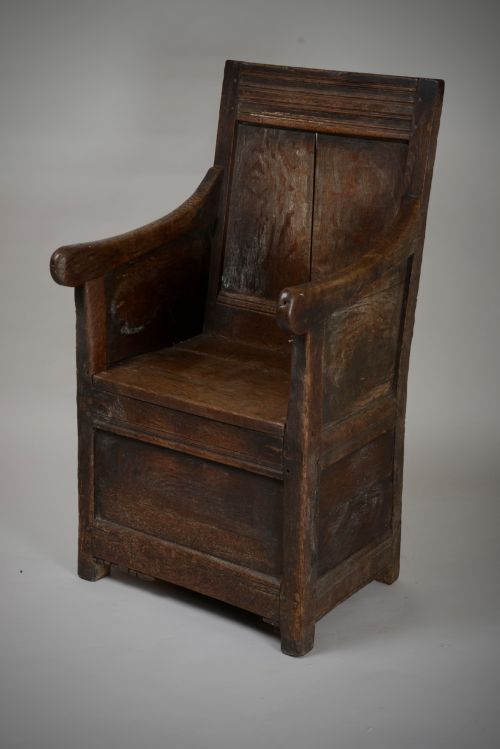
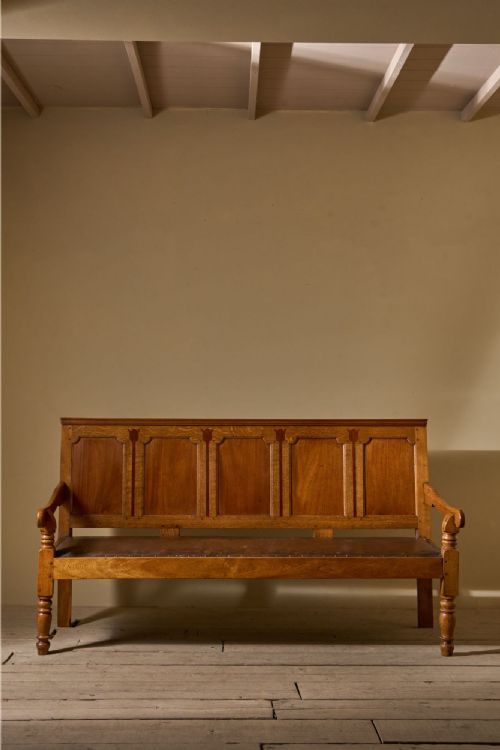
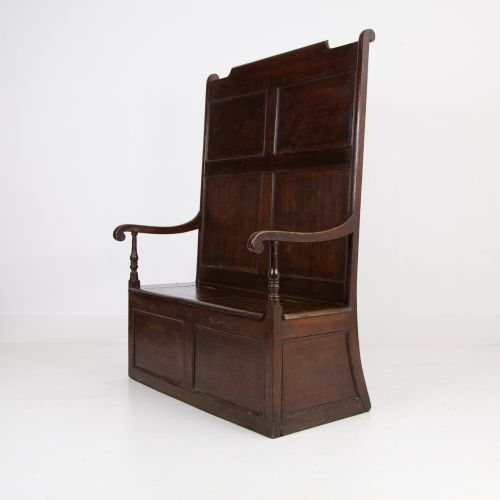
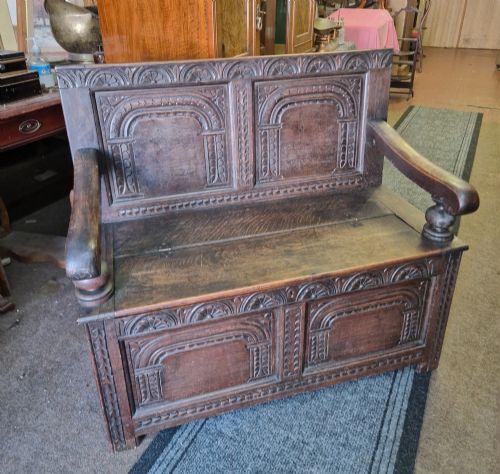
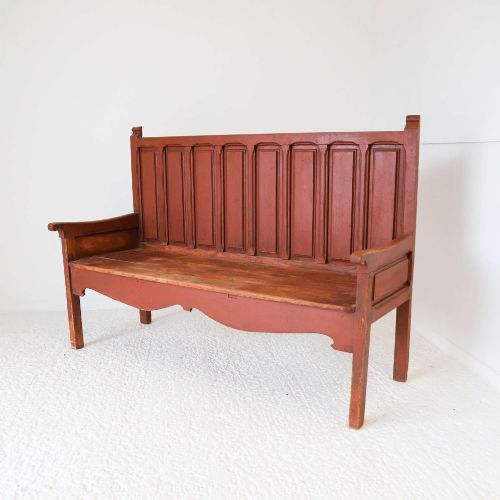
Panelled Wooden Settle
A panelled wooden settle offers solid, high-backed seating with deep historical roots, making it a commanding practical anchor for a traditional hallway or kitchen.
Panelled Wooden Settle
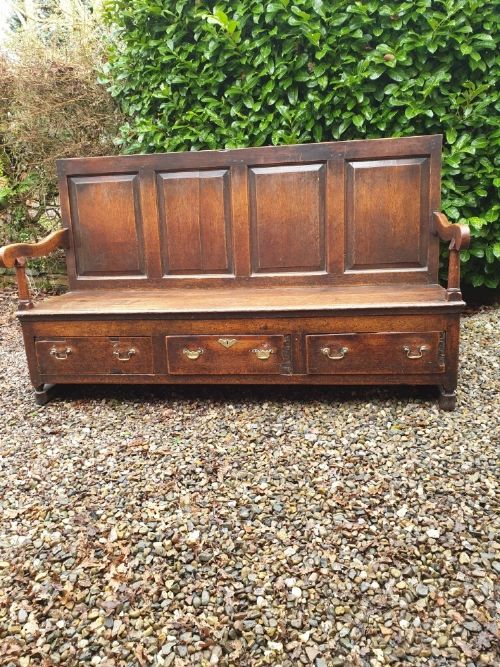
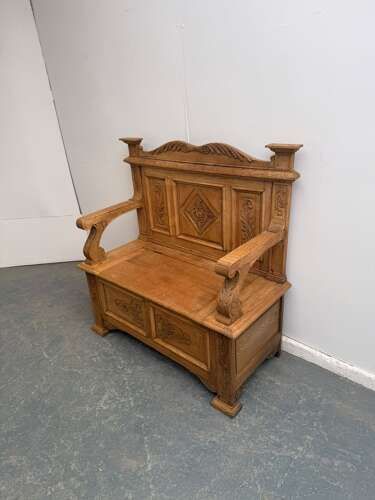
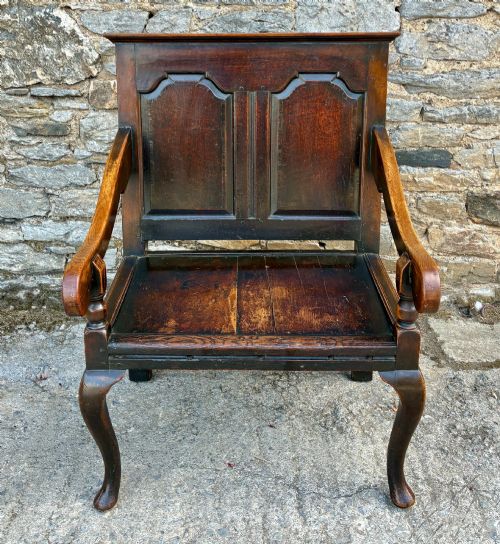
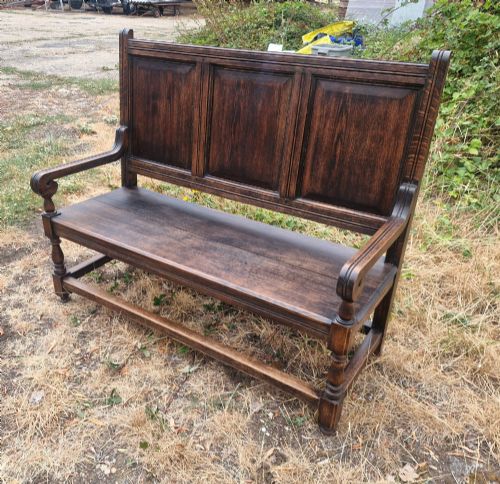
When you search for a panelled wooden settle, you encounter sturdy timber benches designed to block cold draughts in old houses. These pieces range from high-backed examples with enclosed lower storage boxes to simpler open-frame hall benches.
The functional design developed from domestic seating needs where heavy wood offered protection against chills before modern heating. Surviving examples reflect both vernacular country craftsmanship and more formal revival periods.
How they were made
Makers relied primarily on solid oak and pine, frequently combining panels with pegged frame-and-panel joints to accommodate seasonal wood movement. Secondary timbers such as ash occasionally appear in structural supports or spindles.
Carpenters utilised hand tools to shape panels, mouldings, and occasional carved decorations including tulip motifs. Wax and traditional finishes were applied to protect the timber while developing a deep natural patina over centuries of use.
Listings feature regional oak and pine examples spanning from the seventeenth century through the Edwardian era, incorporating painted surfaces and fabric elements.
What varies in quality
The standard of a panelled wooden settle depends largely on the integrity of its timber and the depth of its original surface patina. Pieces retaining their primary structural joints without excessive replacement timber command greater appreciation.
Proportion and carving execution also distinguish finer examples from standard vernacular workshop production. Well-balanced proportions and crisp, restrained detailing indicate superior regional carpentry.
The Panelled Wooden Settle Glossary
- Box settle
- A traditional seat featuring an enclosed compartment beneath the hinged wooden bench. This storage space kept blankets and household goods safe from damp floors.
- Panel-back
- A construction method where wooden panels are fitted within a grooved frame. This technique allowed timber to expand and contract without splitting.
- Vernacular
- Everyday furniture built by local craftsmen using regional traditions rather than metropolitan pattern books. These pieces reflect specific geographic styles and available local woods.
- Patina
- The surface sheen and colour developed by aged timber through handling, waxing, and exposure to light over generations. A desirable surface shows authentic signs of age.
- Lambing chair
- A specialised high-backed wooden seat incorporating enclosed sides to shield the occupant from drafts. These forms often feature integrated under-seat storage compartments.
Panelled Wooden Settle: Frequently Asked Questions
What is a panelled wooden settle?
A panelled wooden settle is a traditional high-backed bench designed with solid wooden panels to block cold drafts in historic homes. Many versions include a built-in storage box beneath the seat for household items.
These versatile pieces served practical seating and storage functions in kitchens, hallways, and large living spaces. Their sturdy construction allowed them to withstand generations of heavy daily use.
Where were settles used?
Settles were traditionally placed near hearths or in hallways to shield occupants from chilly drafts coming through doors. The high back and enclosed sides trapped body heat and blocked cold air currents.
In country houses and farmhouses, they acted as primary seating arrangements for families gathered around the main fireplace. Their enclosed box bases also helped keep living areas tidy.
How do I date a wooden settle?
Dating relies on examining the timber species, construction joinery, and tool marks visible on the underside and interior panels. Early pieces from the seventeenth and eighteenth centuries often feature pegged frame construction and hand-planed surfaces.
Stylistic clues such as carved panels or regional design traits help narrow down the period of origin. Later nineteenth-century revivals often display machine-sawn components and different fastening methods.
Are settles comfortable to sit on?
Traditional wooden settles feature upright wooden backs and solid seats designed for posture rather than lounging. Adding a fitted textile cushion or squab pad easily softens the hard wooden surface for daily use.
The ergonomic design primarily prioritized draught exclusion over plush comfort, making pads or cushions a common historical addition.