
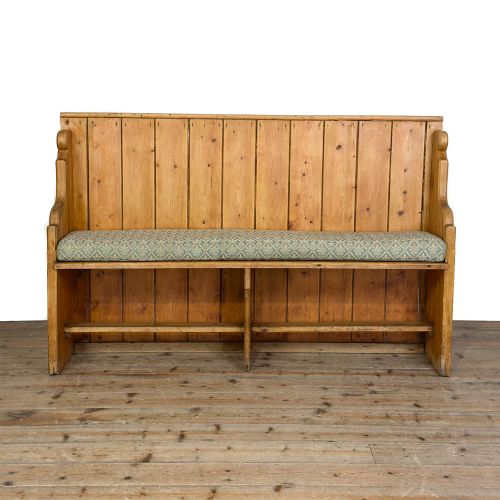
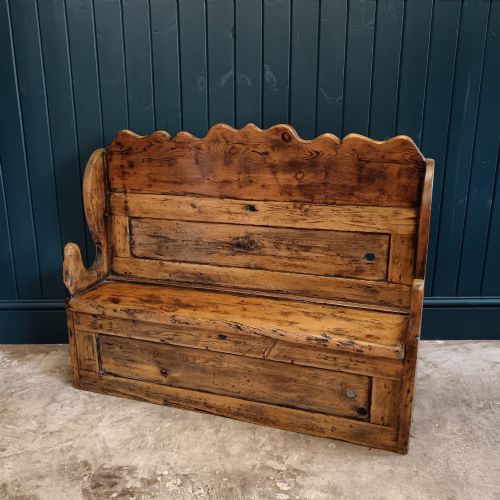
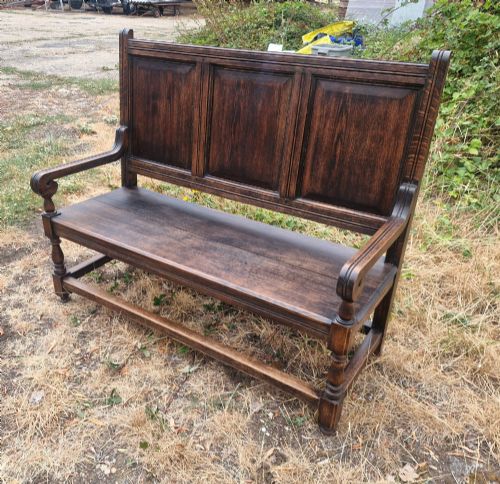
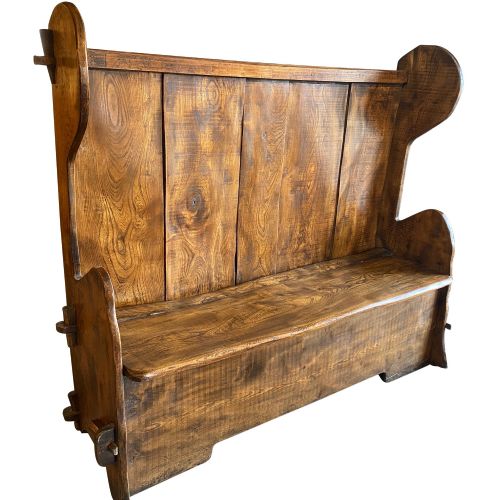
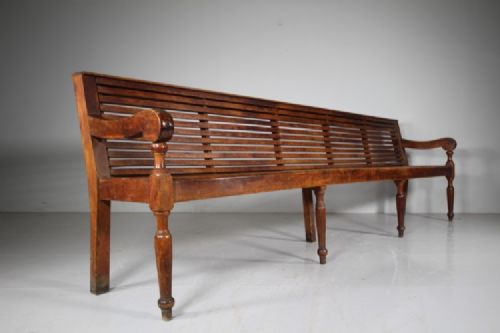


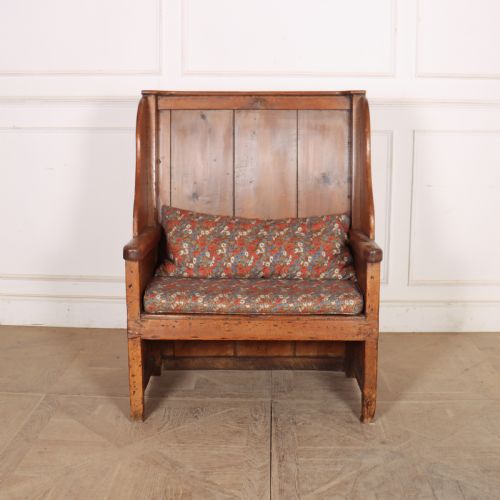


High Back Hallway Bench
A high back hallway bench offers practical seating and solid historical character, grouping together tall wooden settles and settles with storage designed to block cold drafts.
High Back Hallway Bench
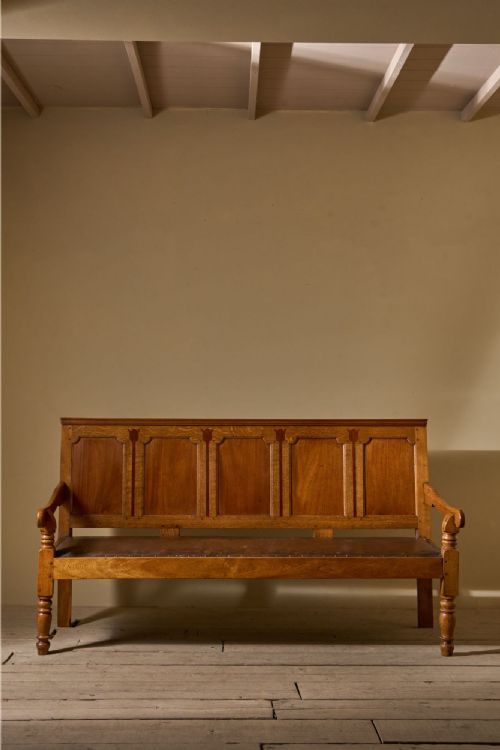
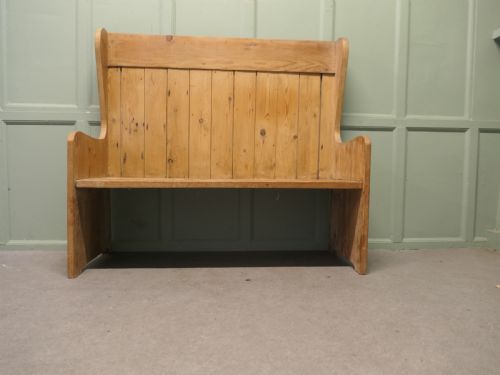
A high back hallway bench encompasses robust wooden seating pieces functioning historically as settles, hall seats, and church pews. When searching for this phrase, a buyer encounters substantial timber forms featuring high backs designed originally to retain heat by shielding sitters from draughts.
The selections span multiple centuries and regional styles, drawing heavily from English country, Georgian, and Victorian traditions. Examples range from simple pine church pews to elaborately carved oak settles with box storage beneath the seat.
Most pieces appearing here rely on sturdy domestic woods, particularly oak, pine, and elm, constructed to withstand heavy daily use in hallways, waiting rooms, and country taverns.
Materials and construction methods
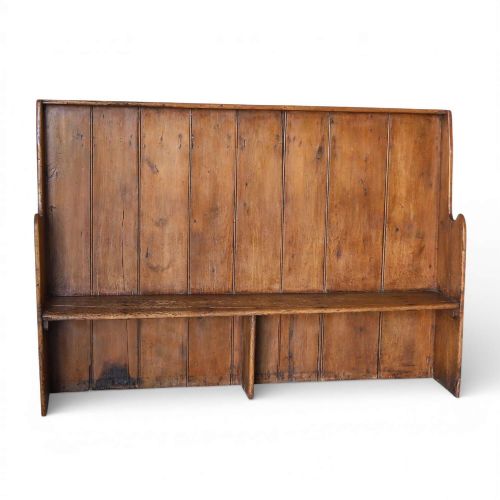
Carpenters built these tall benches primarily from solid native timbers such as oak, pine, and elm, sometimes pairing woods within a single frame. Construction methods relied on traditional joinery, including panelled backs, mortise and tenon joints, and tongue and groove boards.
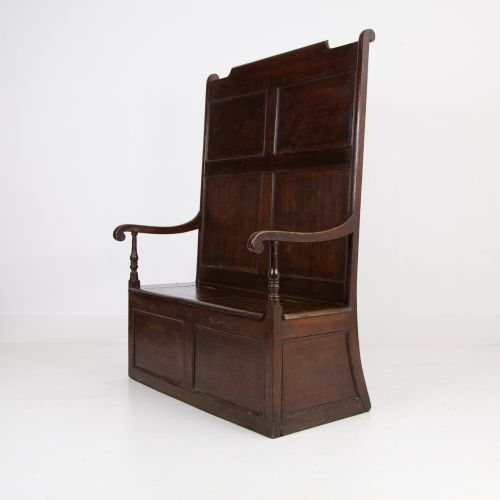
Many examples incorporate integrated storage boxes beneath the hinged seat, requiring robust framing to support both the weight of sitters and the contents stored inside. Surfaces often display natural patinas developed through decades of handling, though some regional pieces feature original painted finishes or applied tulip decorations.
Listings feature high back hallway benches spanning the seventeenth century through to the Edwardian period, constructed mainly from oak, pine, and elm.
Assessing build quality and character
Quality in these tall wooden seats rests on the integrity of the timber, the depth of carving, and the proportion of the high back relative to the base. Pieces constructed from dense, highly figured oak or seasoned country pine with deep, honey brown patinas sit at the higher end of the spectrum.
Subtle details such as finely panelled backboards, well-fitted storage boxes, and crisp hand carving distinguish superior examples from simpler utilitarian tavern benches. The presence of original painted finishes or untouched surface patinas adds significant historic interest to the piece.
Hampton & Son's
The High Back Hallway Bench Glossary
- Settle
- A wooden bench featuring a high back, solid arms, and frequently a box compartment beneath the seat for storage. This form evolved to keep draughts away from people sitting near hearths and in hallways.
- Box settle
- A specific variety of bench where the base incorporates a enclosed compartment accessed by lifting the hinged seat. These compartments provided practical storage in busy historical hallways and taverns.
- Patina
- The surface sheen and colour acquired by wood over long periods through handling, polishing, and natural ageing. A deep patina indicates decades of uninterrupted use and care.
- Panelled back
- A backrest constructed from framed wooden panels fitted within grooves, offering structural rigidity and decorative depth. This technique prevented large boards from warping over time.
- Tavern bench
- A robust seating form produced for commercial public houses and inns, designed for heavy foot traffic and communal use.
High Back Hallway Bench: Frequently Asked Questions
What is a high back hallway bench used for today?
These tall wooden seats serve as functional hallway furniture, providing a place to sit while putting on shoes alongside hidden storage beneath the seat for boots and daily clutter.
Their striking vertical profiles also make them effective statement pieces in large entryways, dining spaces, or living rooms.
How do I tell an 18th-century settle from a Victorian one?
Earlier 18th-century examples typically display simpler, hand-hewn construction in heavy oak or country pine, often featuring pegged joinery and naturally worn patinas.
Victorian pieces frequently incorporate heavier, more ornate hand-carved decoration on the back panels, reflecting the revival styles popular during the nineteenth century.
Are these benches comfortable to sit on?
Most historic settles feature upright wooden backs and solid plank seats designed for durability rather than lounging, reflecting their origins as draught-excluding seats in hallways and taverns.
Buyers often add loose seat cushions or upholstered pads to increase comfort for everyday use.
Did these benches always have storage?
Not all historical examples include storage compartments beneath the seat; many traditional church pews and tavern benches feature open underframes with simple legs.
Box settles specifically incorporate a hinged seat lid to access a deep compartment, which was useful in historic homes lacking dedicated hallway storage.