





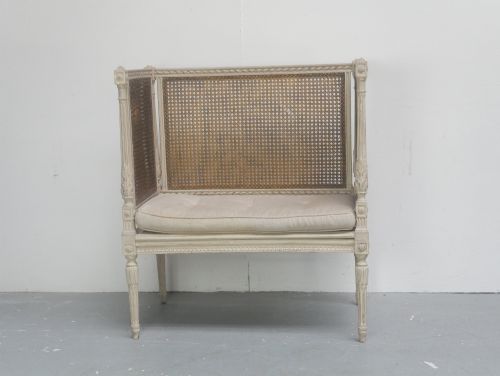
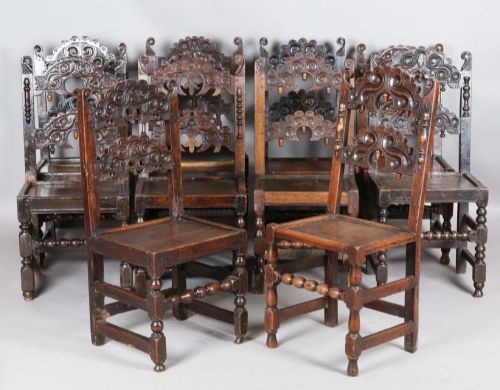
Carved Panel Hall Seat
A carved panel hall seat offers an imposing, timber-rich welcome to any entrance, bringing historical depth and practical seating together.
Carved Panel Hall Seat
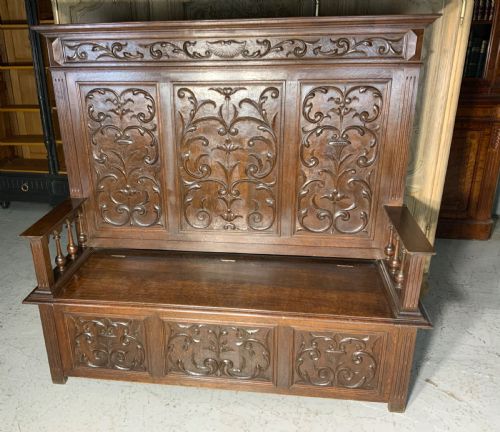
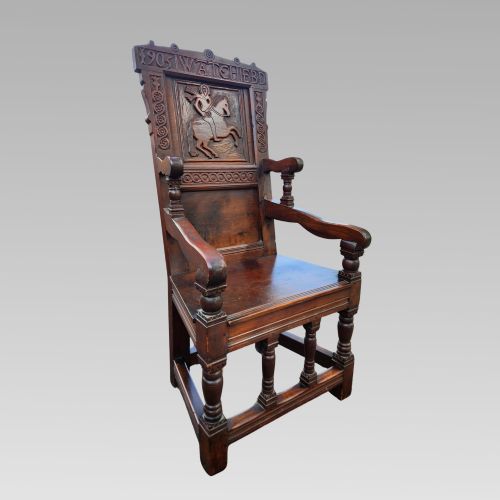
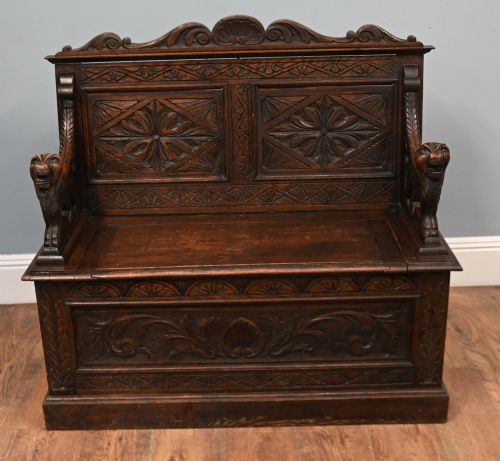
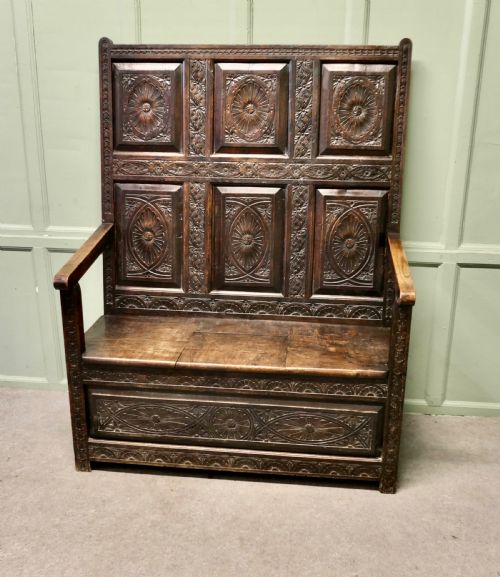
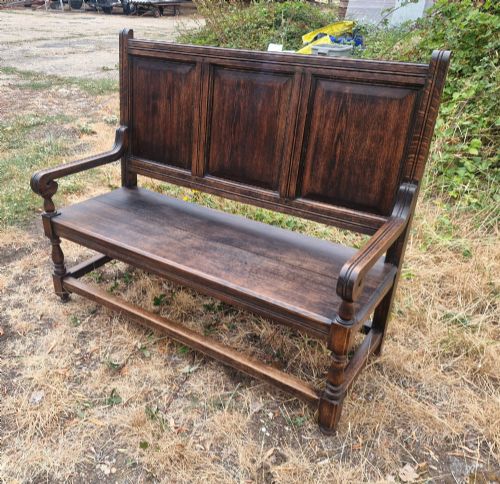
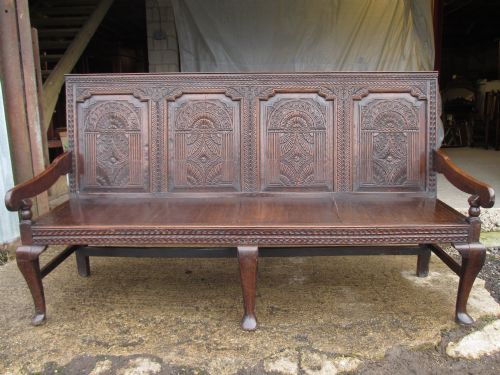
A carved panel hall seat combines the utility of an entrance bench with the visual weight of decorative woodwork, frequently appearing in forms like settles, box settles, and wainscot chairs. These pieces serve as the primary seating for hallways and passages, often incorporating high backs to shield occupants from draughts.
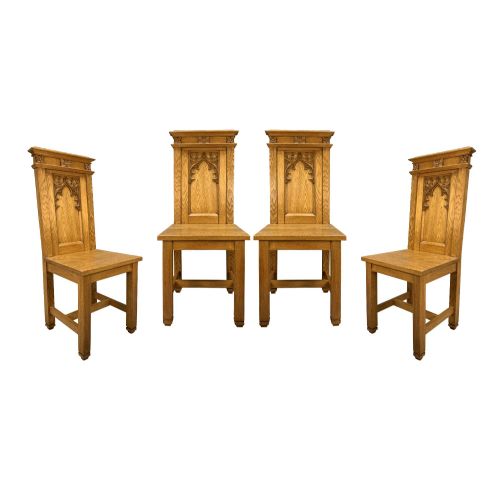
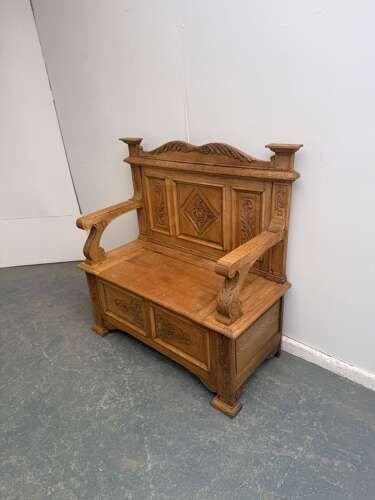
The selections available range from sturdy 17th century originals and 18th century country pieces to later Victorian revivals and Edwardian interpretations. Oak predominates, joined occasionally by mahogany, walnut, and fruitwood to form benches, settles, and hall chairs.
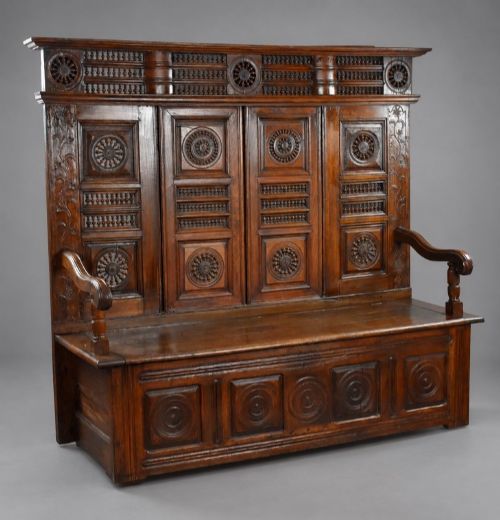
Buyers will most frequently encounter Victorian and 18th century oak examples on this page, often featuring hinged storage compartments beneath the seat or intricate linenfold and geometric carving upon the back panels.
Assessing quality and distinction
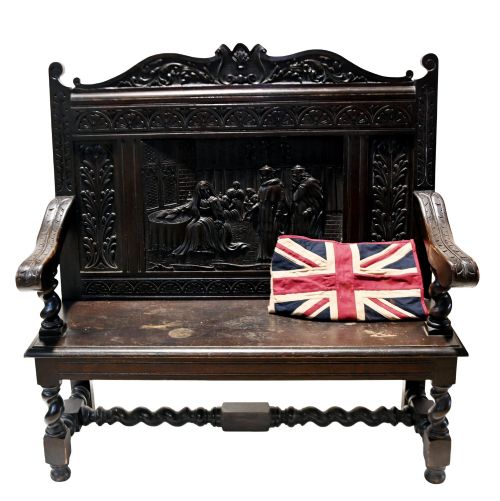
The depth, crispness, and ambition of the carving separate standard workshop production from superior examples. Master carvers imparted significant relief and anatomical precision to figures, foliage, and geometric strapwork, whereas lesser pieces rely on shallow, repetitive stamping or machine-cut detailing.
Proportion and structural integrity dictate the standing of an individual piece within its period. Examples that retain their original timber boards, hinges, and structural bracing without excessive timber replacement hold greater integrity than those heavily altered or reconstructed from disparate elements over time.
Carved Panel Hall Seat Retail Price Guide 2026
Typical asking prices for carved panel hall seat among the pieces listed under this phrase on Sellingantiques today, from the lower quarter to the upper quarter. They describe what is for sale here now, not the wider market.
Listings span multiple centuries, uniting 17th century wainscot chairs with Edwardian oak benches and Victorian box settles.
Bruce J Talbert
The Carved Panel Hall Seat Glossary
- Settle
- A wooden bench with a high back, solid arms, and frequently a box compartment beneath the seat for storage. These items provided shelter from cold draughts in unheated hallways.
- Wainscot chair
- An early wooden armchair constructed with panelled sections, particularly popular in the 17th century. The term derives from wainscot oak, imported timber valued for its quality.
- Box settle
- A variant featuring a hinged seat lid that opens to reveal a deep storage well. It combines domestic seating with trunk utility.
- Jacobean Revival
- A 19th century design movement mimicking the architectural and furniture styles of the early 17th century. Pieces from this period often display dark waxed oak and heavy geometric carving.
- Panelling
- Flat sheets of timber fitted within a surrounding frame to prevent warping and cracking. Carved panels form the primary decorative surface on the backs of these seats.
Carved Panel Hall Seat: Frequently Asked Questions
Where should I place a hall seat?
These seats suit large entrance halls, wide corridors, and reception rooms where their substantial timber backs and decorative panels can be fully appreciated.
Ensure adequate wall clearance behind high-backed settles to protect historic timber from damp external walls.
How do I care for antique oak?
Maintain the finish by applying natural beeswax sparingly and buffing gently with a soft cloth to preserve the historic lustre.
Keep wooden furniture away from direct heat sources and radiators to prevent the dry air from splitting the panels.
Are these seats comfortable to use?
Most historical benches feature rigid upright timber backs designed for posture and passage rather than lounging. Adding a loose cushion or pad can improve comfort for everyday seating.
The absence of upholstery on many early examples reflects their original purpose as sturdy, functional furniture for hallways.
How do I date an oak settle?
Examine the construction marks, tool traces, and timber grain on the underside and interior panels for clues to the period. Hand-riven boards and pegged joints usually indicate earlier centuries of manufacture.
Compare the carving style, such as Jacobean strapwork or linenfold, with established period motifs to narrow down the decade.