


Panelled Oak Box
When you search for a panelled oak box, you are looking at centuries of sturdy British joinery designed for storage and daily utility.
Panelled Oak Box
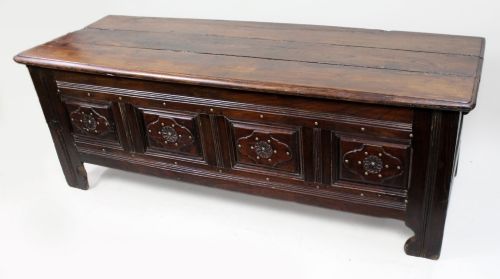
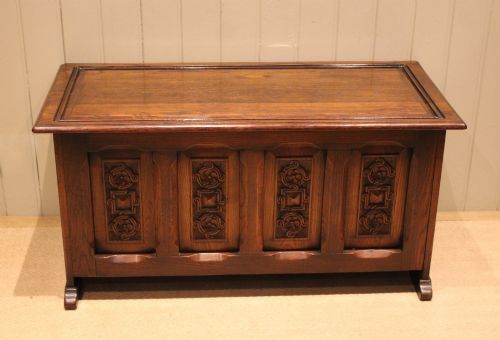
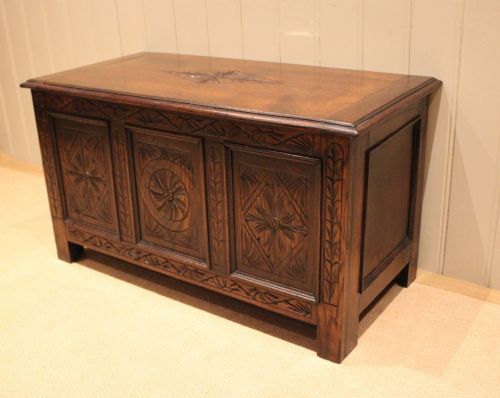
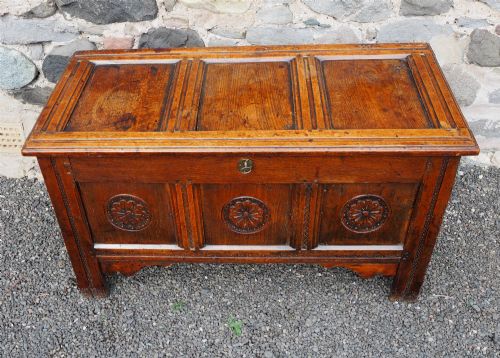
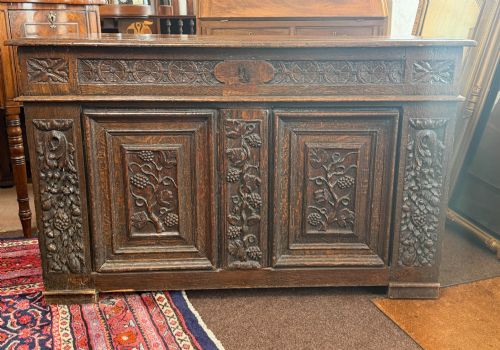
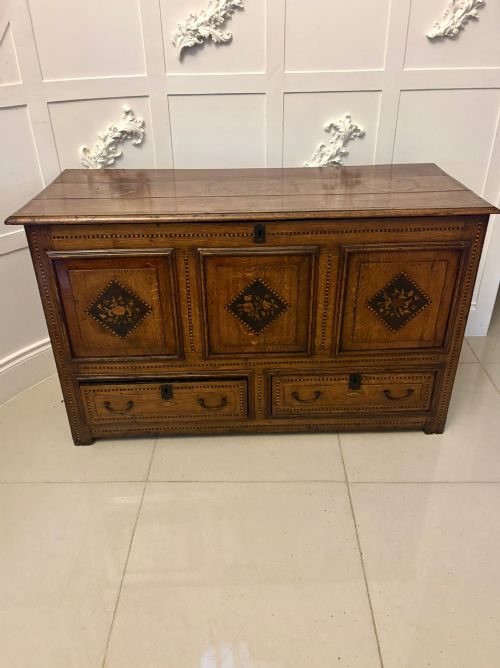
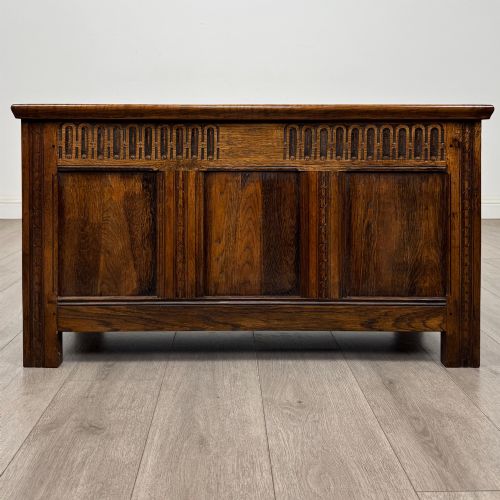
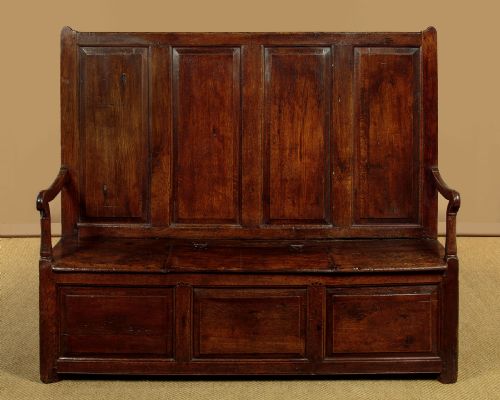
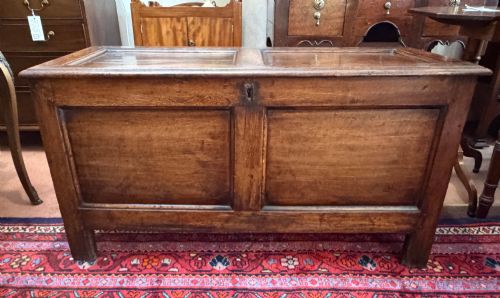
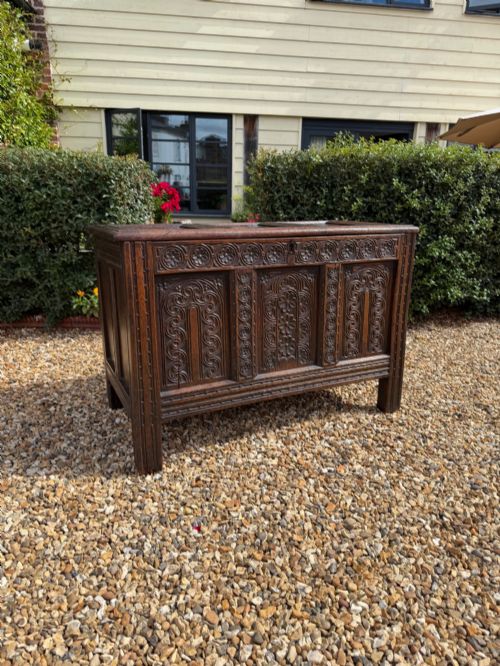
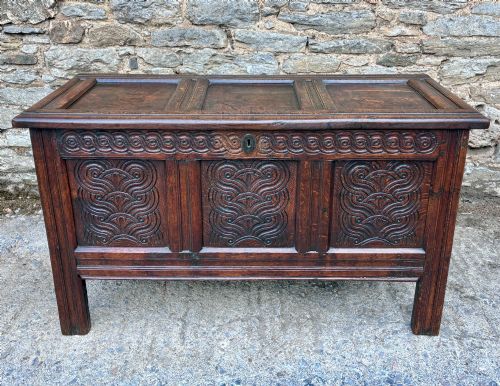
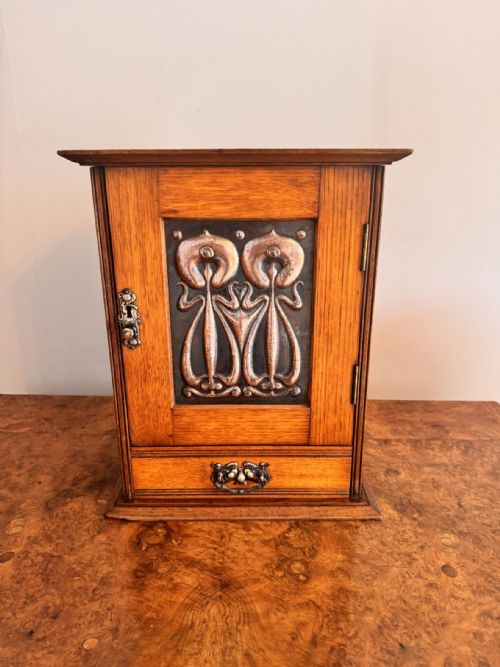
A panelled oak box takes many historical forms, appearing most frequently as seventeenth and eighteenth-century coffers, blanket chests, and mule chests with internal drawers. These sturdy pieces also surface as box settles, wall cupboards, and smaller storage boxes utilised in country houses and rural dwellings.
The regional variety spans English pieces from the Georgian era alongside Welsh examples such as the coffer bach, alongside later revival pieces from the twentieth century. Buyers encounter both plain utility items and elaborately carved or inlaid chests intended for household linen and valuables.
How They Were Made
Maker construction relies on solid oak assembled with pegged mortice and tenon joints framing recessed panels, allowing the timber to expand and contract naturally. Secondary woods like ash appear occasionally in internal elements, while iron hinges and brass escutcheons secure the lids and locks.
Surface ornamentation ranges from geometric carvings and arcading to marquetry inlay utilising wood and occasionally ebonised details. Many surviving surfaces display decades of wax polishing that accentuates the natural grain and builds deep patination.
Some seventeenth-century boxes still retain faint scratch marks on their lids from centuries of stray candle wax.
What Varies in Quality
Quality rests upon the crispness of the original joinery, the thickness of the oak boards used for the lids and panels, and the proportion of the carcass. Pieces retaining their original floorboards, hinges, and locks command greater attention from collectors.
The degree and ambition of hand carving or inlay distinguish standard utility boxes from exceptional regional pieces. A well-proportioned chest with untouched patina and minimal replacement timber represents the highest tier of craftsmanship.
The Panelled Oak Box Glossary
- Coffer
- A large wooden chest traditionally used for storing valuables, documents, or textiles. These sturdy receptacles form the backbone of early domestic furniture.
- Mule chest
- A blanket chest featuring one or more drawers built into the base beneath the main compartment. This hybrid form bridges the gap between simple coffers and full chests of drawers.
- Box settle
- A high-backed wooden bench with a storage compartment hidden beneath the hinged seat. They were placed near hearths in country houses to block draughts.
- Marquetry
- The art of applying thin pieces of wood veneer to a structure to form decorative patterns. Craftsmen utilised contrasting timbers like boxwood and ebony for visual depth.
- Patina
- The glossy sheen developed on wood surfaces over centuries through handling, dusting, and waxing. It serves as a visual indicator of age and continuous use.
Panelled Oak Box: Frequently Asked Questions
How do I date an old oak box?
Dating relies on observing construction methods, such as hand-cut pegs, ironwork, and the style of panel mouldings. Early pieces feature thicker boards and simpler, heavier framing.
Changes in locking mechanisms and secondary woods also help determine whether a piece originates from the seventeenth century or a later revival period.
How should I clean a waxed oak box?
Maintenance requires gentle dusting with a dry, soft cloth to remove surface grit without disturbing the wood. Avoid modern silicone polishes which damage antique finishes.
Applying a traditional beeswax sparingly once or twice a year helps nourish the timber and preserves the historic patina.
Were these boxes used for clothes storage?
These receptacles served as the primary wardrobe for households before fitted closets became common. Families stored woollens, household linen, and valuable garments inside to protect them from moths and dampness.
The inclusion of internal tills or lower drawers allowed smaller items to be sorted safely.