
Pair of Silver Spoons
A pair of silver spoons offers matching craftsmanship and utility across dining, serving, and display pieces spanning centuries of domestic history.
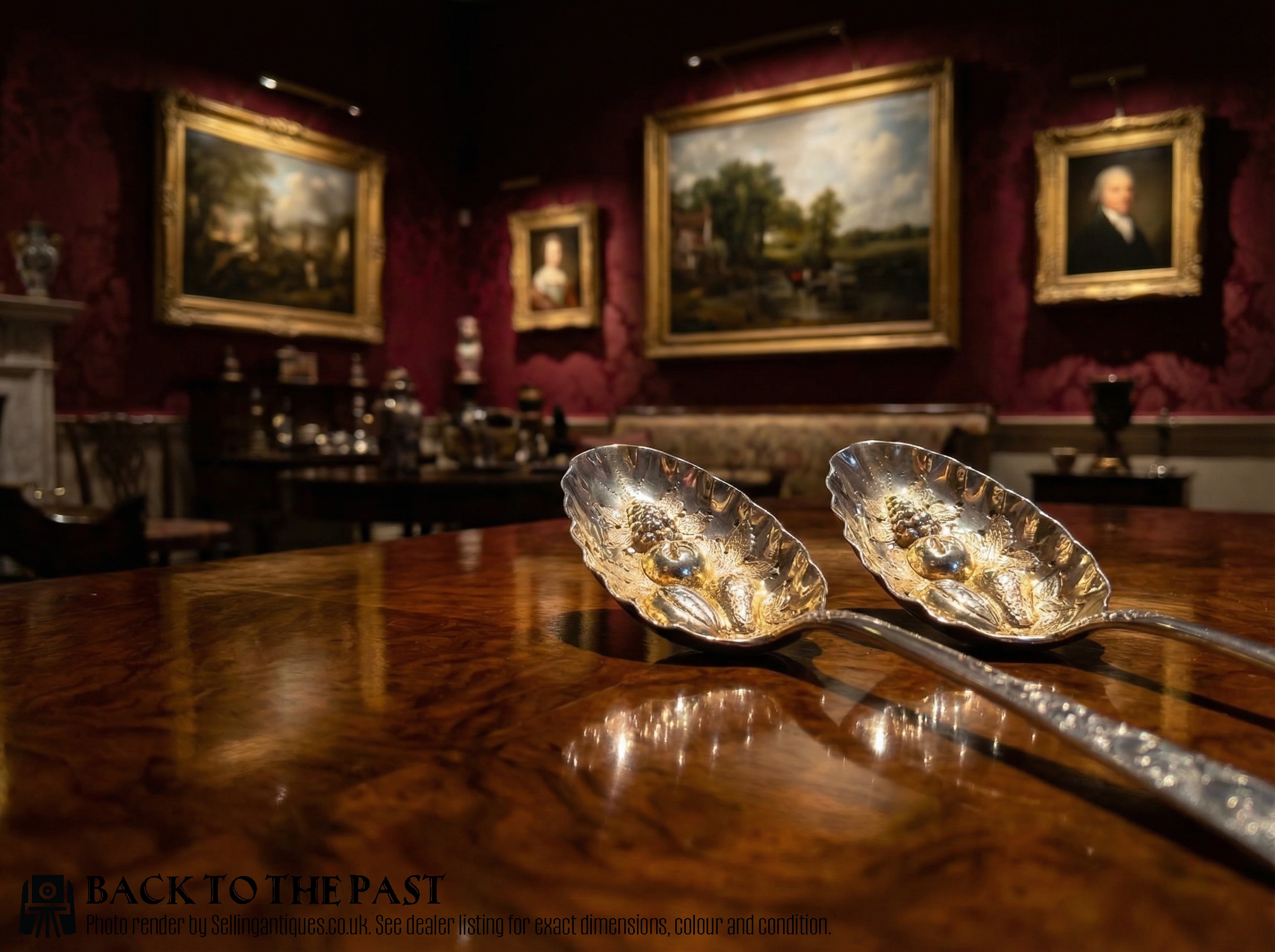
Pair of Silver Spoons
A pair of silver spoons encompasses matching sets designed for dining, serving, and condiment use across several centuries of British and European silversmithing. Buyers explore table spoons, dessert spoons, and serving pieces tailored for specific domestic rituals.
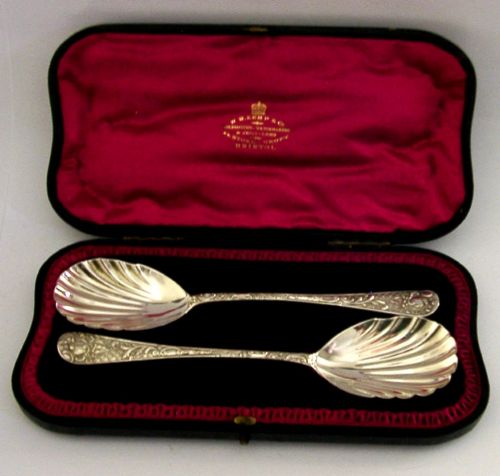
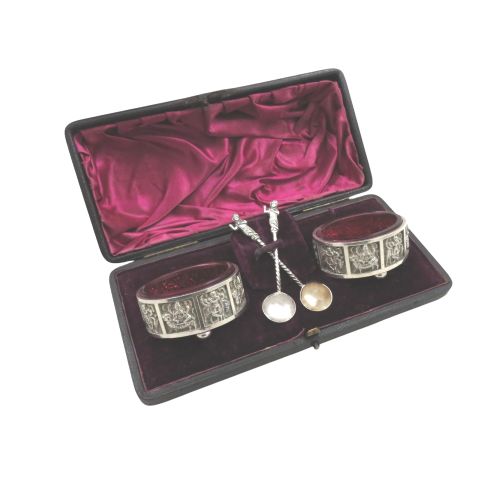
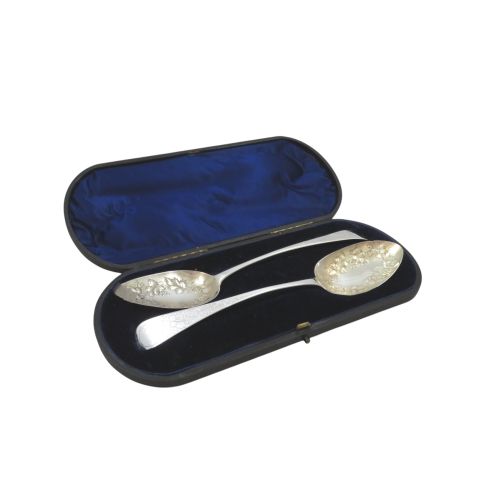
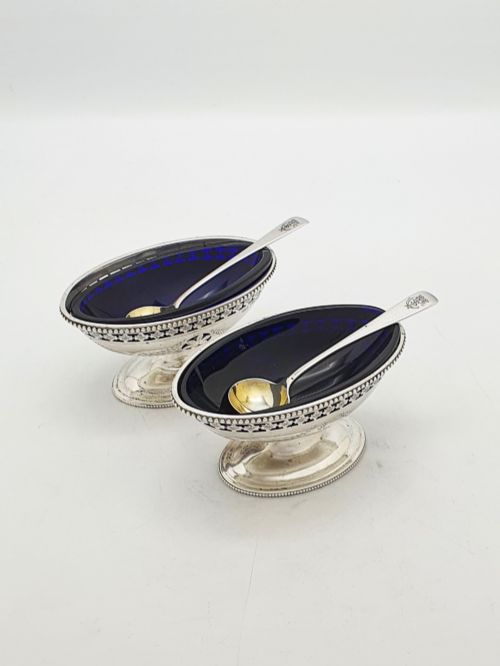
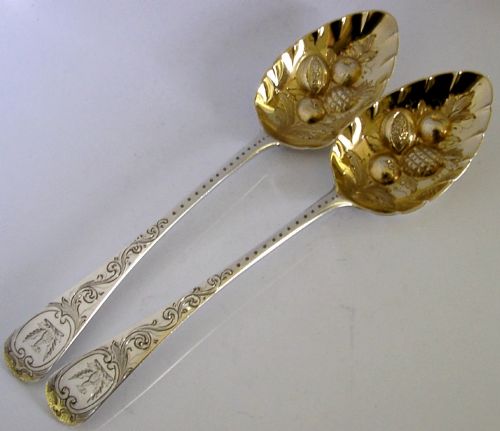
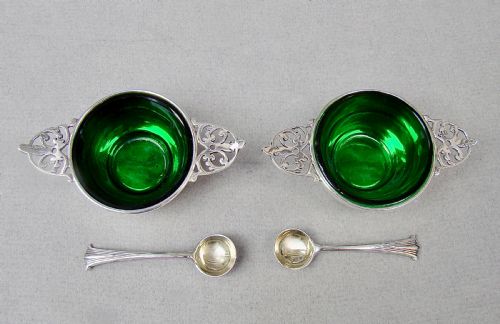
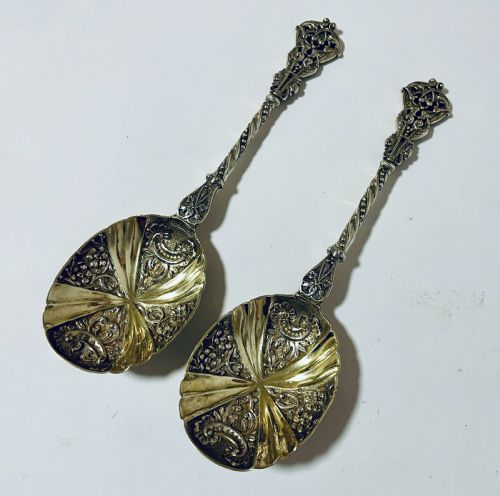
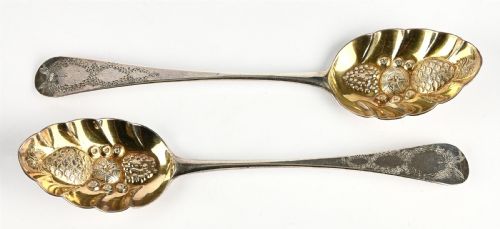
The assortment on this page frequently includes Georgian and Victorian examples, often featuring berry repoussé work, family crests, or fitted presentation cases alongside cobalt glass liners for associated salt cellars.
Materials and Techniques
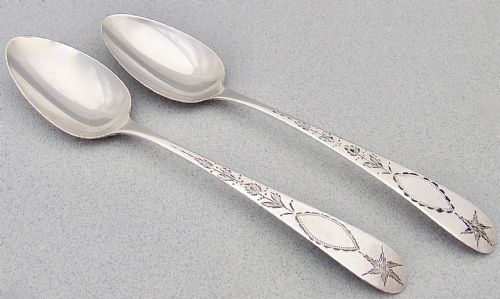
Silversmiths utilised sterling silver and silver-gilt, shaping the metal through hammering, casting, and rat tail or bright-cut engraving techniques.
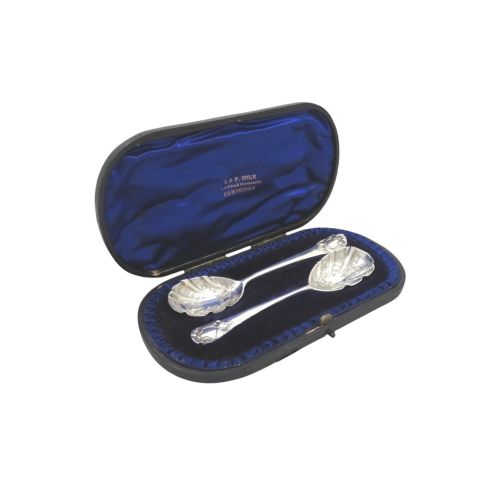
Many later Victorian and Edwardian examples incorporate fitted presentation cases lined with velvet, silk, and leatherette to protect the polished metal and glass components.
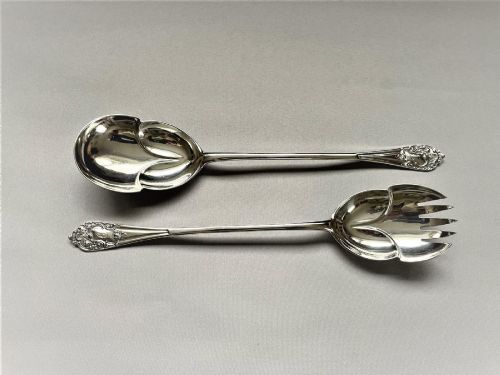
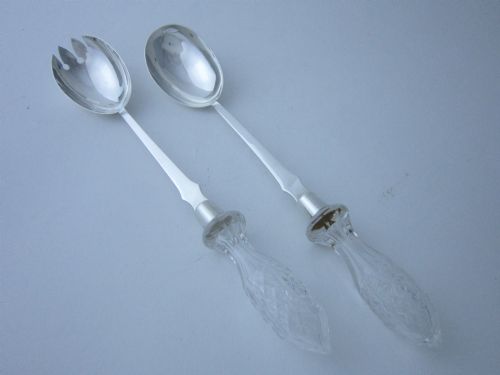
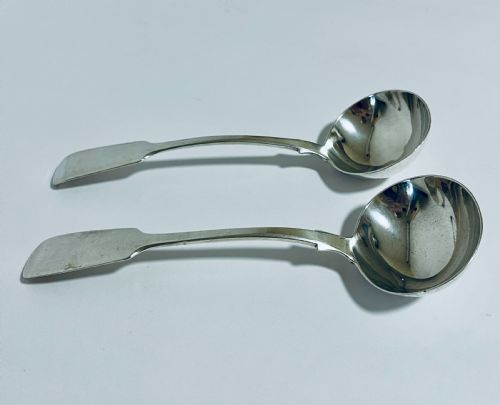
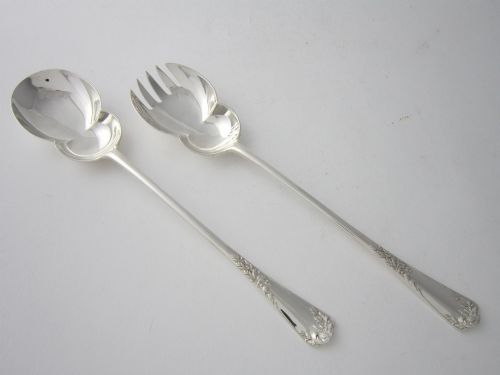
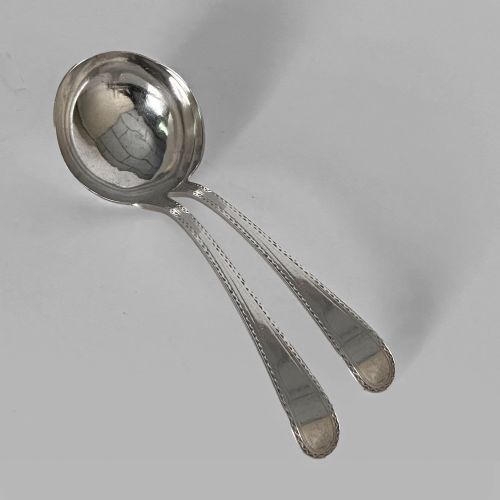
Object forms include salad servers, mustard ladles, basting spoons, and salt cellars housed in leatherette cases.
Factors of Distinction
Quality rests upon the crispness of the original chasing, the clarity of provincial and town assay marks, and the survival of matching original cases and glass inserts.
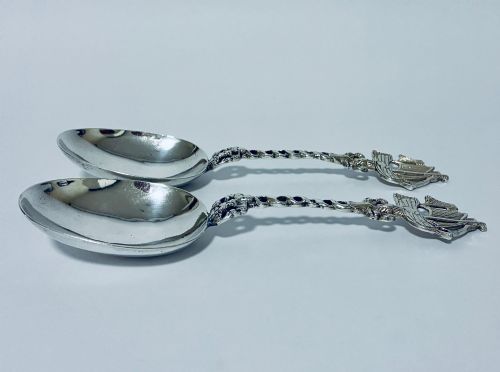
The presence of detailed hand engraving, family crests, and maker attributions from notable workshops elevates individual pairs above standard utilitarian table cutlery.
John Pittar·Josiah Williams And Co·Hester Bateman·Peter And Anne Bateman·Hamilton And Inches·John Edmonstone·John Locker·Isaac Davenport·James Tait·Richard Rae·Thomas Hart Stone·Richard Ferris·Paul Storr·Walker And Hall·Smith Nicholson And Co
The Pair of Silver Spoons Glossary
- Sterling silver
- An alloy containing a high proportion of pure silver combined with other metals to ensure structural durability.
- Silver-gilt
- A layer of gold applied to the surface of a silver object through chemical or electrochemical gilding methods.
- Rat tail
- A traditional strengthening tongue on the underside of a spoon bowl, common in earlier periods.
- Berry spoon
- A fruit or serving spoon heavily chased and engraved with fruit and foliage motifs, frequently adapted in later periods.
- Assay mark
- Official stamps indicating the standard of silver purity, the place of testing, and the year of manufacture.
Pair of Silver Spoons: Frequently Asked Questions
What were pair of silver spoons used for?
These items served various dining and serving functions, ranging from large basting and soup deployment to individual fruit, dessert, and salt consumption at the table.
Matched pairs were frequently commissioned for formal dining settings or preserved within fitted presentation cases for special household occasions.
How do I identify a Georgian pair of silver spoons?
Georgian examples often display distinct stylistic markers such as bright-cut engraving, rat tail junctions, or later Victorian berry embellishments applied over earlier bowls.
Examining the stamped assay marks and town letters reveals the exact decade and regional office responsible for testing the metal purity.
Are cased sets original to the spoons?
Presentation cases lined with velvet and silk frequently accompany Victorian and Edwardian examples, designed specifically to house the matching utensils securely.
Fitted cases often survive alongside the silver, though some pairings represent nineteenth-century retail assemblances rather than original eighteenth-century boxes.
How should I care for antique silver spoons?
Maintenance involves gentle cleaning with specialised silver cloths to preserve delicate chasing, crisp hallmarks, and any applied gold gilt surfaces.
Avoiding harsh chemical dips protects the integrity of the metal and maintains the natural patina accumulated over centuries of handling.