


Scottish Silver Flatware
These pieces of scottish silver flatware bring sturdy regional character and provincial marks straight to the dining table.
Scottish Silver Flatware
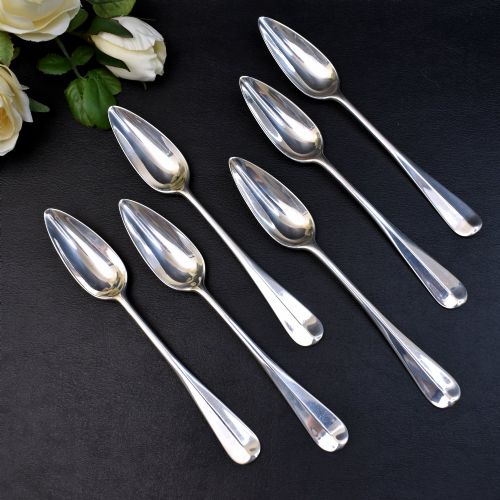
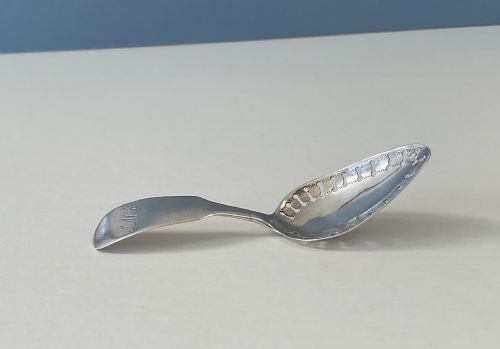
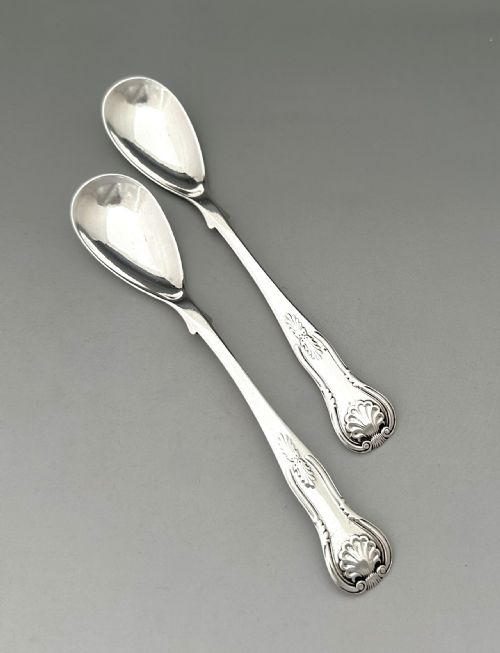
When you search for scottish silver flatware, you encounter utensils spanning the eighteenth century, the Georgian era, and the Victorian period up to the early twentieth century. The selection ranges from heavy serving spoons and hash spoons to delicate condiment spoons, tea caddy spoons, and sugar tongs.
You are most likely to meet provincial spoons originating from towns such as Inverness and Arbroath, alongside larger pieces bearing hallmarks from Edinburgh and Glasgow. These items reflect the domestic dining habits and social rituals of Scotland across three centuries of craftsmanship.
How they were made
The material recorded in the listings is sterling silver, worked into forms like rat tail tablespoons, dognose tablespoons, and basting spoons. Silversmiths utilised traditional forging and shaping techniques to produce durable cutlery designed for regular household use.
Makers shaped the heavy metal into specialised forms such as grapefruit spoons and mustard spoons, often incorporating private die stamps or provincial town marks alongside standard assay office punches.
Someone once needed a massive hash spoon weighing over two hundred grams to serve dinner.
What varies in quality
Quality in scottish silver flatware rests upon the clarity of the maker and town marks stamped into the metal, which establish regional origin and authenticity. Pieces originating from smaller provincial centres carry distinct markings that differentiate them from standard city output.
Substantial weight and the survival of crisp original bowl profiles, particularly on early forms like rat tail tablespoons and hash spoons, elevate an example. The distinction lies in the preservation of the maker's handiwork against centuries of polishing and dining use.
Hamilton & Inches·R Grey for Edmonstone·James Tait·Robert Gordon·Richard Rae·Alexander Henderson
The Scottish Silver Flatware Glossary
- Rat tail
- A strengthening tongue of metal running down the back of the spoon bowl from the stem. This feature appears frequently on early eighteenth-century tablespoons.
- Dognose
- An early style of spoon handle with a rounded tip and a central notch, popular during the Queen Anne period. It precedes the more squared-off Hanoverian pattern.
- Provincial
- Items made and marked outside the main official assay towns like Edinburgh or Glasgow. Inverness and Arbroath examples are notable instances of this regional work.
- Private die
- A custom stamp commissioned by an individual or family rather than a standard guild punch. These marks often appear on tablespoons alongside maker initials.
- Hash spoon
- An exceptionally large serving spoon intended for dishing out meat and stews at the table. These heavy pieces date primarily to the eighteenth century.
Scottish Silver Flatware: Frequently Asked Questions
What periods do these pieces cover?
The listings span from the early eighteenth century under Queen Anne and George I through the Georgian era and into Victorian and 1920s production.
This broad timeline shows how provincial Scottish silversmiths adapted their styles while maintaining traditional forms.
How do I spot provincial marks?
Provincial spoons often feature unique town initials or maker stamps that differ from standard Edinburgh or Glasgow assay office punches.
These local marks identify the specific Scottish town where the silversmith worked.
Were these spoons used daily?
Many items, from mustard spoons to heavy hash spoons, served functional roles in Scottish dining rooms over centuries of household use.
Their survival in sterling silver reflects both their robust construction and their preservation as family possessions.