
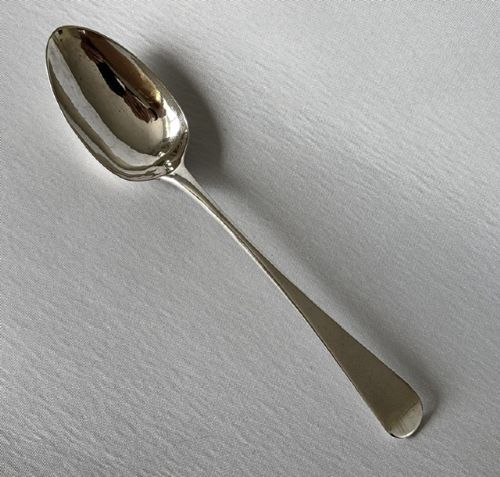
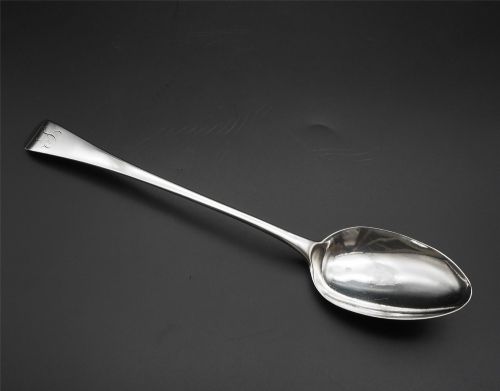
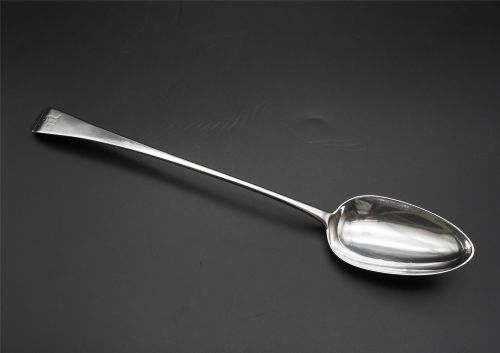
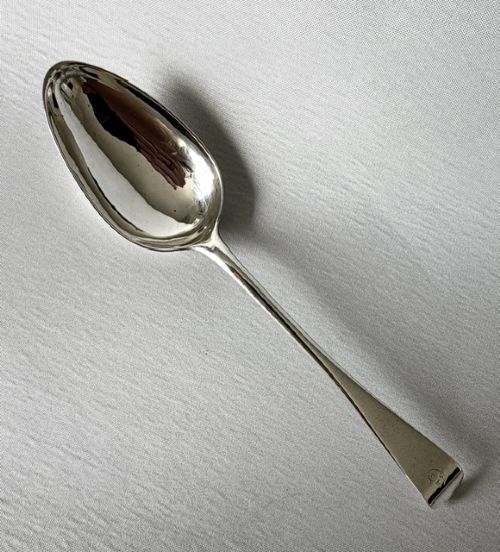


Georgian Hallmarked Silver Spoons
When you handle georgian hallmarked silver spoons, you hold the weight of domestic history in sterling metal.
Georgian Hallmarked Silver Spoons
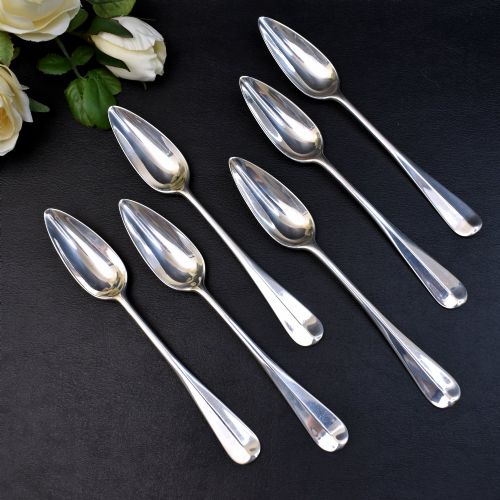
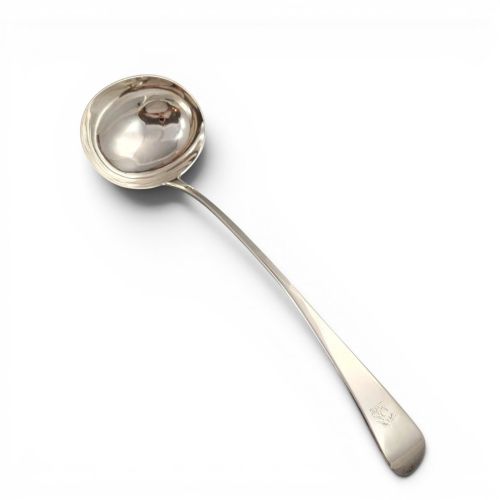
Georgian hallmarked silver spoons encompass a diverse range of domestic tableware designed for serving, stirring, and portioning food and drink in the eighteenth and nineteenth centuries.
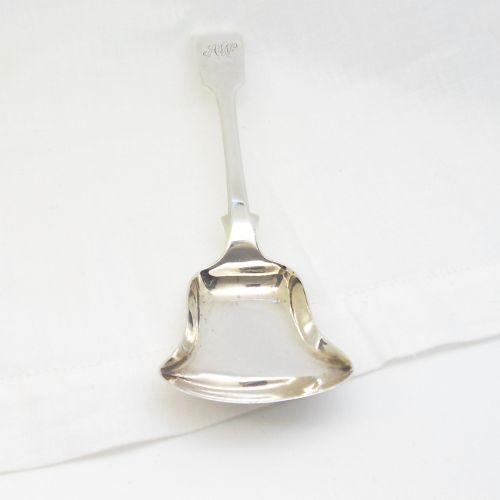
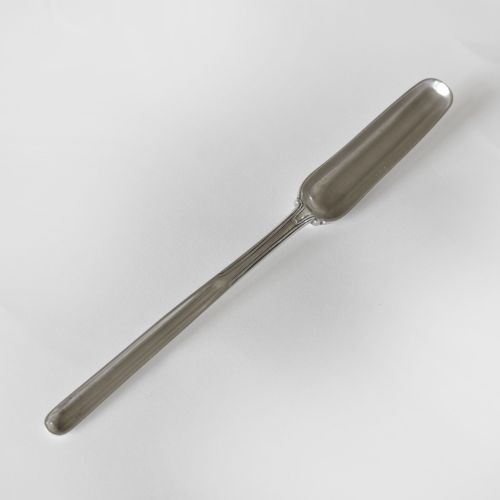
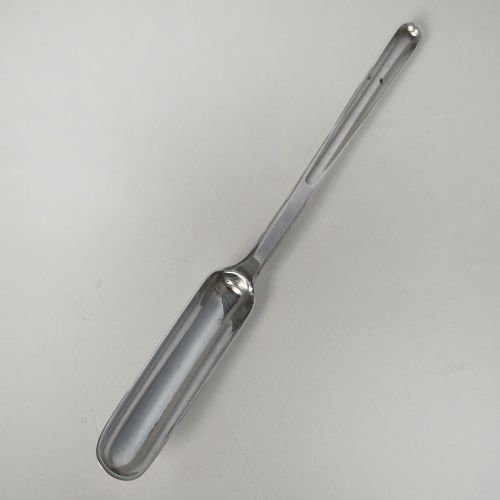
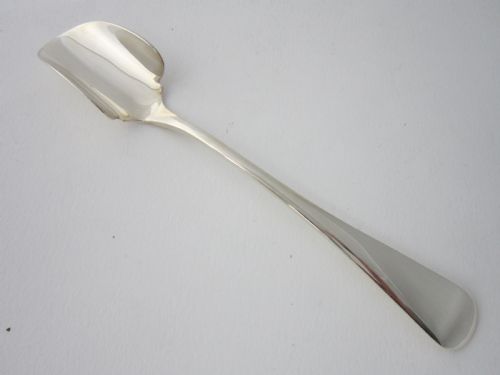
The items you encounter on this page span from large basting and soup ladles to delicate caddy spoons, marrow scoops, and teaspoons.
Most examples originate from the Georgian and Victorian eras, carrying official assay office marks that record their metallic purity and year of creation.
How they were made
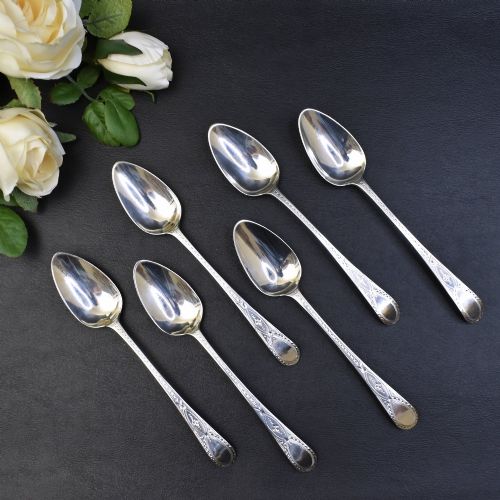
Silversmiths shaped solid sterling silver and silver gilt through hammering, casting, and hand-engraving, applying techniques like bright-cutting to create intricate surface patterns.
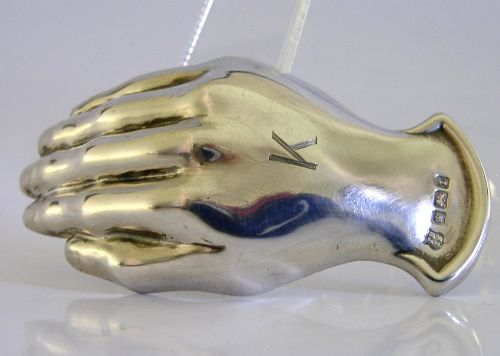
Makers utilised specialised forms such as double-struck stamping and parcel gilding to enrich serving utensils and novelty items like jockey cap caddy spoons.
Some past silversmiths shaped tea caddy spoons into tiny jockey caps to amuse tea drinkers.
What varies in quality
The distinction between standard utility items and superior pieces rests on the clarity of the town and maker hallmarks, the crispness of bright-cut engraving, and the structural integrity of the bowl and stem.
Rarity of form, such as novelty caddy spoons or provincial town marks, elevates certain examples above standard London-made tablespoons.
Peter and Jonathan Bateman·Alfred Marston·John Walton·Hamilton and Inches·James Tookey·John Wilks·Hester Bateman·Jonathan Hayne·Thomas Johnson·Stephen Adams·William Marshall
The Georgian Hallmarked Silver Spoons Glossary
- Hallmark
- An official stamp applied by an assay office to guarantee the purity of precious metals. These marks typically include a maker's mark, standard mark, town mark, and date letter.
- Sterling silver
- An alloy consisting of ninety-two point five percent silver and seven point five percent other metals, usually copper. This standard provides the necessary durability for functional tableware.
- Caddy spoon
- A short-handled spoon specifically designed for measuring loose tea leaves from a caddy. They often feature decorative bowls shaped like leaves, shells, or jockey caps.
- Marrow scoop
- A narrow, trough-like utensil used for extracting marrow from animal bones at the dining table. They typically feature a double-ended design with one large and one small scoop.
- Bright-cut
- An engraving technique utilising faceted cuts to create a sparkling, geometric pattern on the silver surface. It was particularly popular on spoons during the late eighteenth century.
Georgian Hallmarked Silver Spoons: Frequently Asked Questions
How do I date a Georgian spoon?
You determine the date by reading the assay office marks stamped into the silver, specifically the date letter corresponding to the year of testing. Provincial and London offices used distinct cycles of alphabets to record these dates.
Matching the maker's mark alongside the town mark and standard lion passant further narrows the exact period of production.
Were these spoons used daily?
Many of these pieces served practical roles in wealthy households, from stirring tea to ladling soup and basting roasting meats at the dining table. Over generations, regular use imparted subtle wear patterns to the bowls and stems.
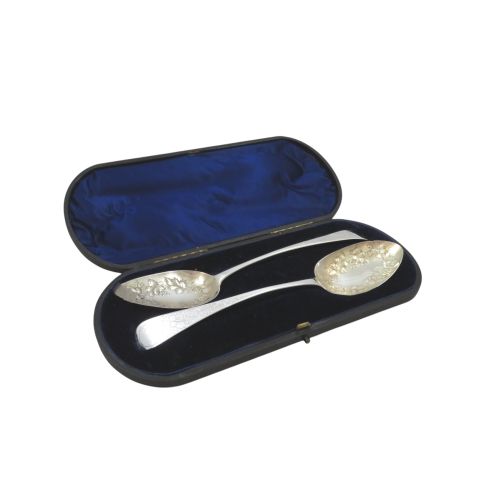
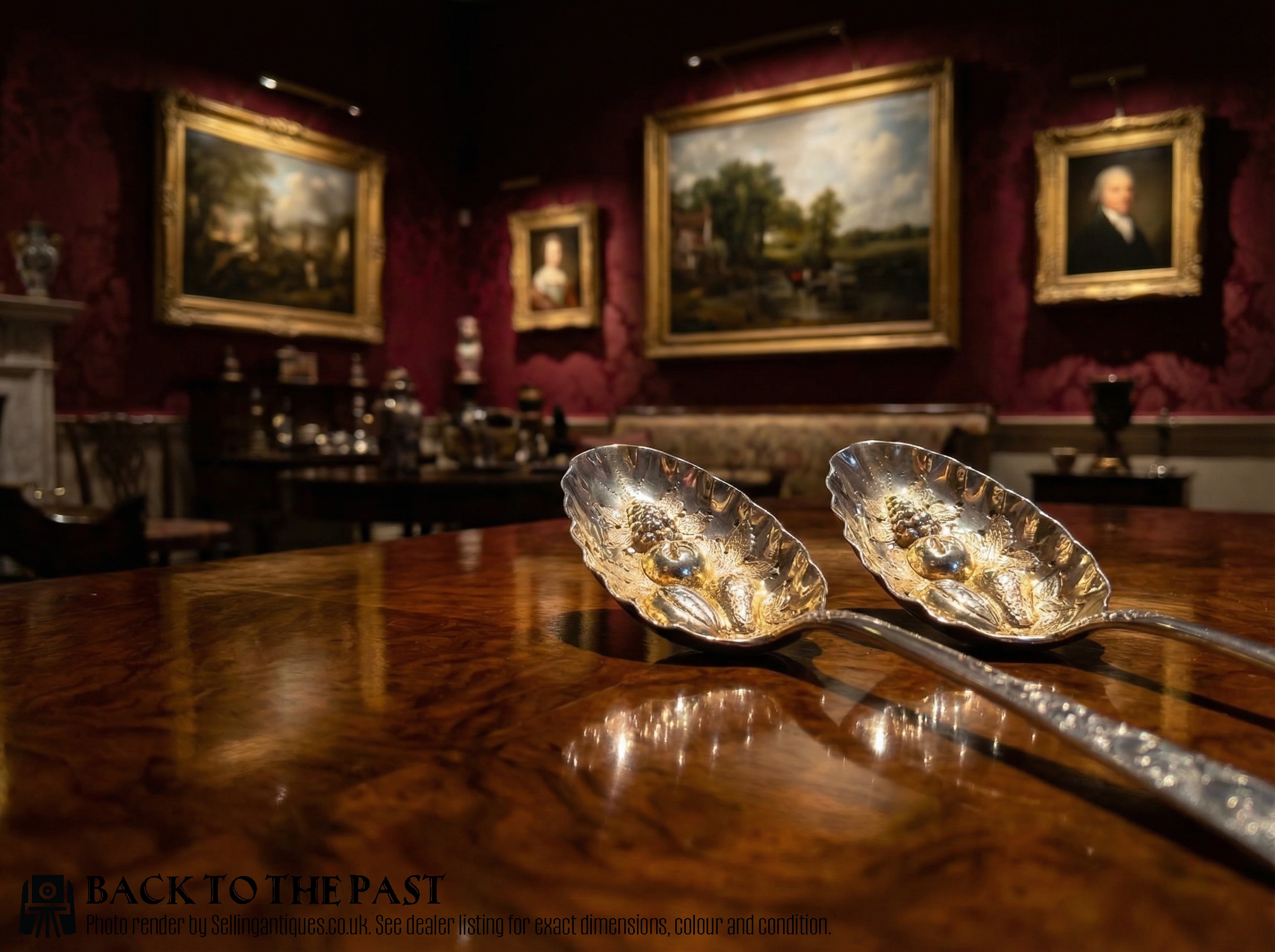
Other specialised forms, such as caddy spoons and berry spoons, occupied specific places in formal entertaining and hospitality.
What is a provincial mark?
A provincial mark indicates that a piece was assayed outside London, in cities such as Newcastle, Edinburgh, York, Chester, Dublin, or Exeter. These regional marks often feature unique town symbols alongside the maker's initials.
Collectors frequently prize provincial items for their local historical associations and relative scarcity compared to London pieces.
How should I clean antique silver spoons?
You maintain silver spoons by washing them gently in warm soapy water and drying them thoroughly with a soft cloth. Avoid harsh chemical dips that strip away the natural patina accumulated over centuries.
Occasional light polishing with a dedicated silver cloth preserves the engraved details without wearing down the delicate hallmarks.