


Georgian Silver Berry Spoons
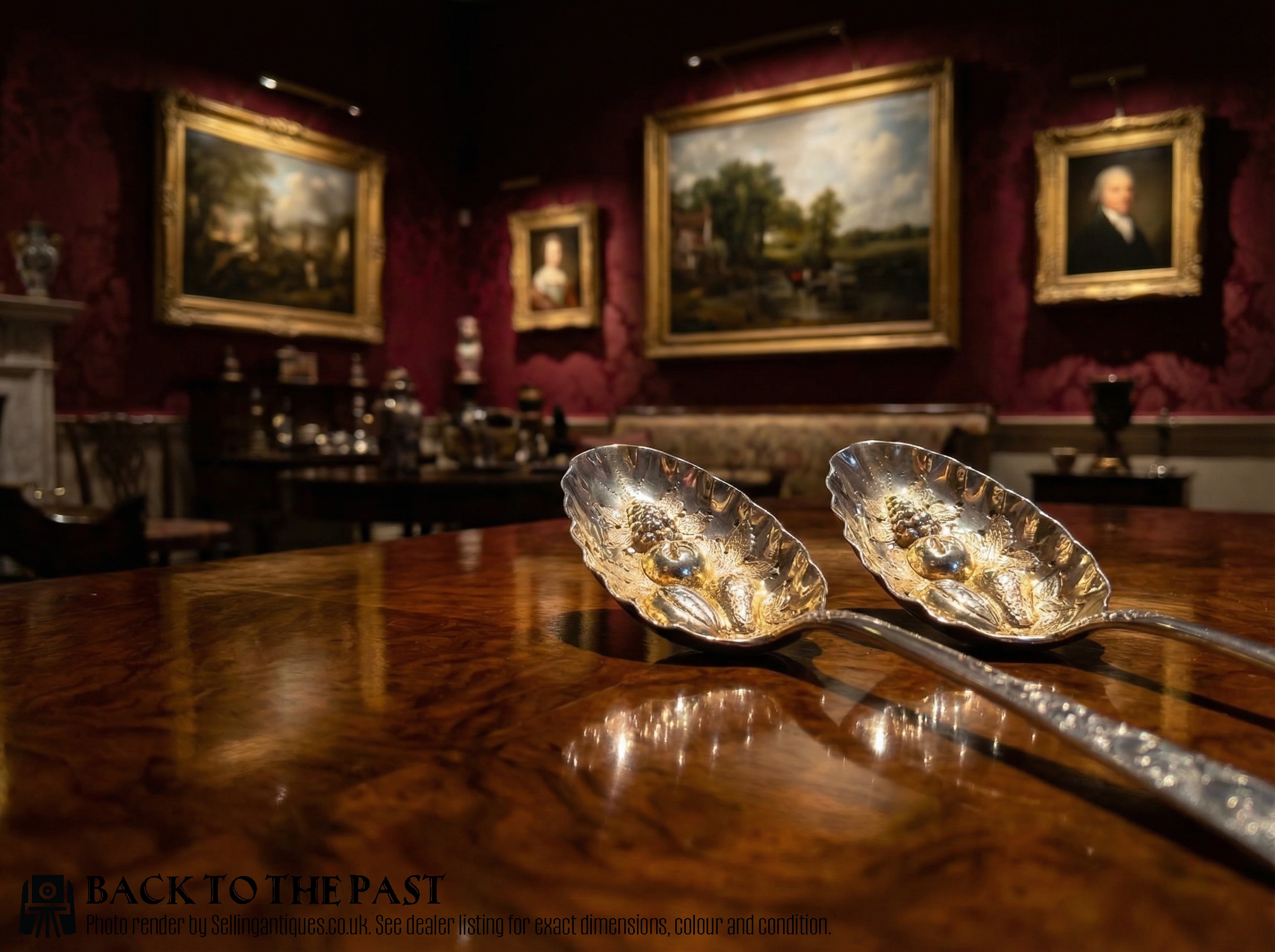
Georgian silver berry spoons are ornate serving utensils designed for fruit, combining eighteenth-century craftsmanship with later decorative fruit repoussé work.
Georgian Silver Berry Spoons
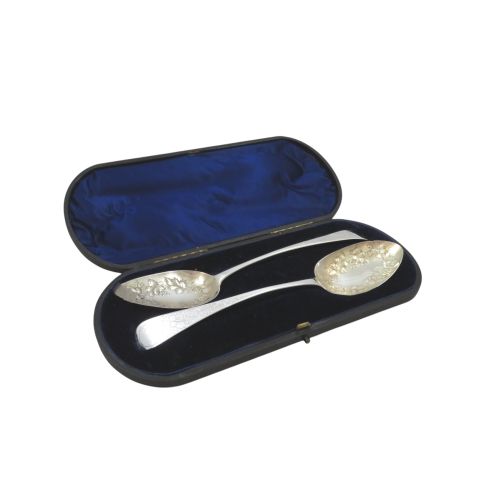
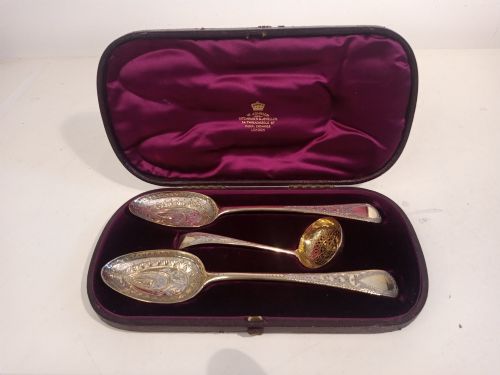
Georgian silver berry spoons are large serving flatware pieces typically originating from the eighteenth and early nineteenth centuries, spanning George III and Regency periods. Buyers examining this category most frequently encounter pairs of matching spoons, often housed in fitted protective cases lined with velvet, silk, or leatherette.
Many examples began life as standard table or dessert spoons before artisans subsequently embellished them decades later with embossed fruit and leaf motifs. Alongside traditional serving spoons, the selection encompasses specialised sifter spoons featuring pierced bowls designed for dusting sugar over fruit.
How they were made
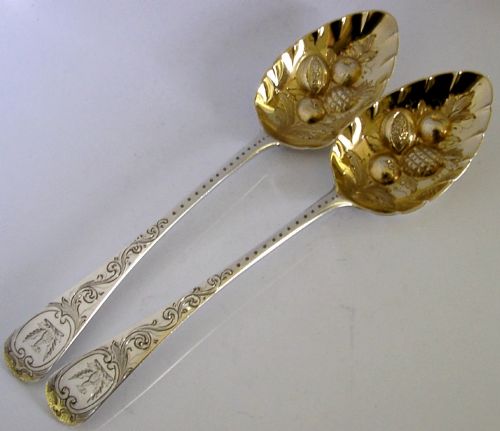
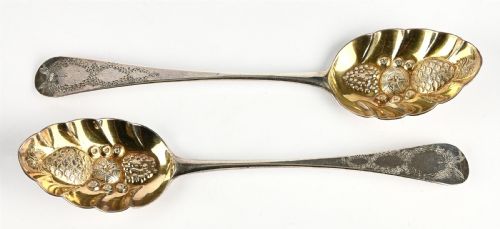
Silversmiths formed the foundational spoon blanks from sterling silver using traditional hammering and shaping techniques, later applying punches and gravers to form patterns like the feather edge or Onslow design. To achieve the distinctive berry decoration, craftsmen worked the bowl and handle from the reverse using repoussé and chasing methods, pushing the metal outward to create high-relief fruit and foliage.
Many finished pieces received a gold wash or silver-gilt application, imparting a rich yellow metal coating over portions of the sterling silver surface. The resulting utensils were then marked with standard hallmarks denoting the assay office, maker, and date of manufacture.
Some spoons wear their Victorian fruit makeovers proudly, turning austere Georgian dining into a permanent harvest festival.
What varies in quality
The distinction between average and exceptional pieces rests primarily on the depth and crispness of the chased fruit work, alongside the original structural integrity of the silver. Superior examples maintain thick gauge metal that resists bending during use, whereas lesser items suffer from thinning where excessive pressure was applied during the later repoussé transformation.
The presence of original fitted cases lined with silk or velvet alters the character of a set, as does the provenance indicated by engraved family crests upon the handle. Silversmith attribution also influences standing, with pieces bearing the marks of prominent makers commanding stronger interest among collectors.
Peter and Anne Bateman·William Chawner II·R Hennell
The Georgian Silver Berry Spoons Glossary
- Repoussé
- A metalworking technique where a design is hammered into relief from the reverse side. This method defines the raised fruit and leaf patterns seen across the bowls of these spoons.
- Chasing
- The complementary process of refining and sinking metal from the front side after repoussé work. It adds fine surface detail and texture to the embossed foliage.
- Silver-gilt
- Sterling silver that has been coated with a thin layer of gold, sometimes referred to as gold wash. This treatment provides a contrasting two-tone appearance within the bowl.
- Sifter spoon
- A specialised serving utensil featuring a pierced or perforated bowl. It was utilised for sprinkling sugar over fresh fruit or desserts.
- Hallmark
- An official stamp struck into precious metals to guarantee standard purity, originating from specific assay offices such as London, Dublin, or Newcastle.
Georgian Silver Berry Spoons: Frequently Asked Questions
Were these spoons made for berries originally?
Most of these items started as standard dining or dessert flatware during the Georgian era. Silversmiths later added the characteristic fruit and berry decoration during the Victorian period to repurpose them for serving soft fruits.
This secondary enhancement transformed plain bowls into highly ornamental pieces suited for fashionable dining rooms. Consequently, the stylistic date of the bowl's decoration often postdates the original hallmarked year of manufacture.
How do I use a sifter spoon?
Sifter spoons feature perforated bowls designed to hold granulated or caster sugar while allowing excess particles to fall through. They accompanied fruit service to dust sugar evenly over berries and desserts.
In modern settings, they function effectively for serving fine foods or as decorative display items within cabinet collections.
What do fitted cases indicate?
Fitted cases lined with silk, velvet, or leatherette suggest the spoons were valued as presentation pieces or preserved as matched sets. These boxes protected the silver gilt surfaces from tarnishing and physical damage over generations.
Original boxes matching the exact profile of the flatware add significant context for collectors studying historical presentation.
How can I tell the date?
Assay office hallmarks stamped directly onto the reverse of the stem provide the precise year of initial manufacture. These marks include letter codes and symbols corresponding to specific recording decades.
Stylistic elements like crest engravings or chased fruit motifs can reflect later decorative interventions rather than the original assay date.