




Gilded Silver Tableware
These gilded silver tableware pieces bring a rich surface sheen to the dining table, combining precious metals with historical forms.
Gilded Silver Tableware
Gilded silver tableware encompasses functional dining items finished with a layer of gold, ranging from serving spoons and salt cellars to sugar bowls and goblets. When you search for gilded silver tableware, you encounter items shaped during the Georgian, Victorian, and Edwardian eras alongside 19th-century Imperial Russian pieces.
Assessing Craftsmanship and Condition
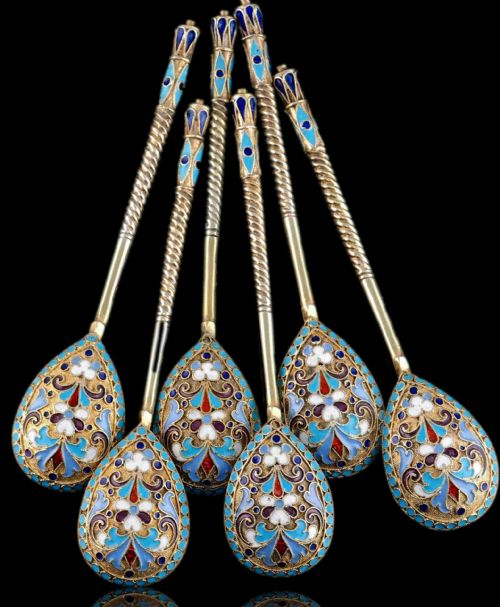
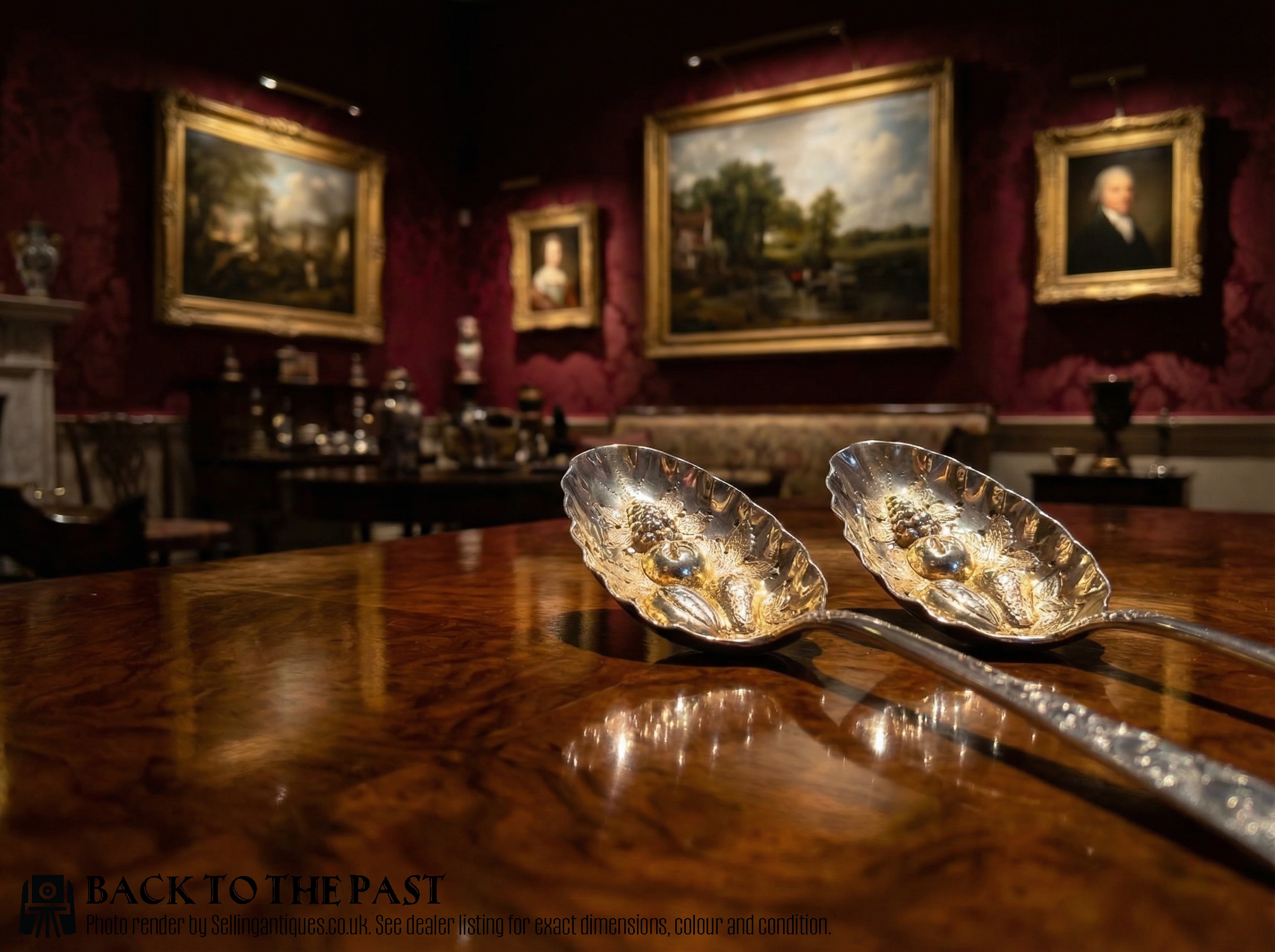
The depth and preservation of the gilding dictate much of the visual character across these objects, showing how well the gold wash or parcel gilt surface withstands centuries of handling. Crispness in chased or engraved details, such as the fruit motifs on berry spoons or the intricate patterns on cloisonne enamel, separates standard production from finer workmanship.
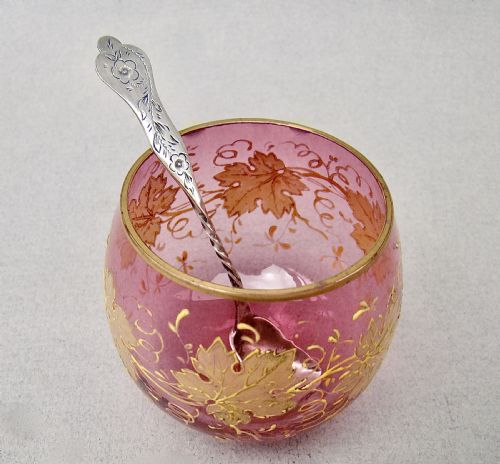
The presence of matching sets, original fitted presentation cases, and clear maker marks elevates the standing of individual pieces. Integrated materials like cranberry glass or enamel demand close harmony with the silver structure to maintain visual balance.
Materials recorded across the inventory include sterling silver, gold gilt, enamel, silk, and cranberry glass.
William Burwash·Dmitrii Nikolaevich Nikolaev·Paul Storr·Vasily Agafonov
The Gilded Silver Tableware Glossary
- Silver gilt
- Silver that has been coated with a thin layer of gold on its surface. This technique provides the rich appearance of solid gold while utilising silver as the structural base metal.
- Parcel gilt
- An object decorated with gilding on specific areas only, leaving other portions of the silver exposed to create a contrasting two-tone effect. This method highlights particular decorative motifs or interiors of vessels.
- Gold wash
- A light application of gold applied to the interior or surface of a silver object, sometimes referred to as vermeil. It protects the silver from tarnishing when in contact with food.
- Cloisonne
- An enamelwork technique where thin metal wires are soldered to a metal base to form compartments filled with coloured glass paste. Russian makers frequently employed this method on spoons.
- Hallmark
- An official stamp applied to precious metals indicating purity, the maker, and the year of assay. These marks provide definitive records for dating items accurately.
Gilded Silver Tableware: Frequently Asked Questions
What is gilded silver tableware?
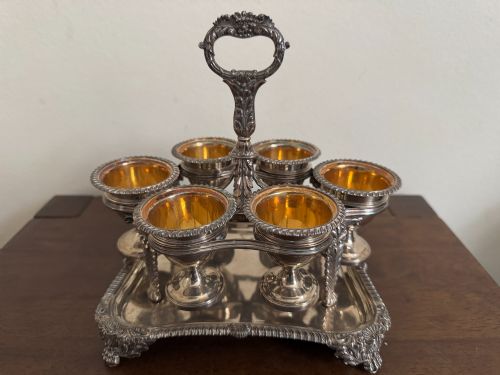
Gilded silver tableware comprises dining and serving implements made from silver and finished with a gold coating. This category includes spoons, bowls, salts, and cruet stands.
Craftsmen applied the gold layer to enhance the appearance and protect the underlying silver from food acids. These pieces date predominantly from the Georgian and Victorian periods.
How do I clean gilded silver tableware?
Cleaning requires gentle care to avoid wearing away the thin layer of gold on the surface. Standard silver dips can strip the gilding entirely.
Warm water, mild soap, and a soft cloth suit these delicate surfaces best. Professional advice helps preserve pieces with enamel or glass components.
Are these items safe for dining?
Many historical pieces serve as decorative collection items rather than daily dining utensils. The gold wash inside bowls and salts originally protected the metal from food.
Modern use depends on the structural stability and condition of the specific piece. Gentle handling preserves the historical integrity of older items.
How can I date my silver items?
British pieces carry hallmarks that identify the assay office, the maker, and the exact year of production. Reference books match these stamped letters and symbols to specific decades.
Stylistic cues such as Victorian ornamentation or Georgian proportions also help narrow down the era of manufacture.